

8 Proven Ways to Get a Reliable PCB Order in China (2026 Guide)
Securing a high-quality, cost-effective printed circuit board manufacturing partner is one of the most critical steps in hardware development. While North American and European fabricators offer excellent local support, the reality of modern electronics scaling leads almost all commercial enterprises to Asia. Operating our supply chain management directly out of the Futian Central CBD in Shenzhen—the undisputed epicenter of global hardware production—we have spent over a decade navigating the complexities of electronics manufacturing.
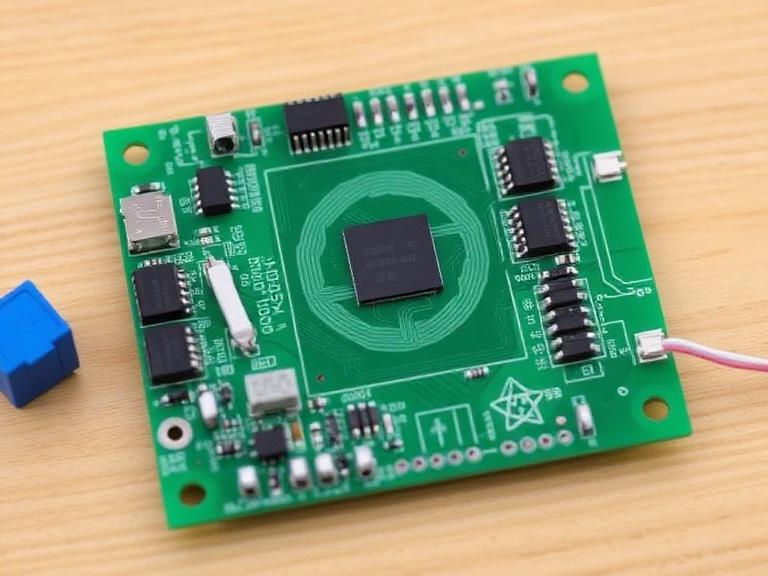
However, simply deciding to place a pcb order in china is not a strategy; it is a risk. The market is saturated with middlemen, trading companies posing as factories, and varying tiers of quality control. From our experience, the difference between a successful product launch and a disastrous recall often comes down to exactly how you source and vet your manufacturing partner. In this comprehensive guide, we will break down the commercial realities of overseas fabrication, outline the eight most reliable procurement channels, and provide actionable advice to ensure your intellectual property and capital are protected.
Quick Answer: How to Safely Place a PCB Order in China
To successfully place a pcb order in china, you must bypass trading companies and deal directly with audited manufacturers. We recommend using a full turnkey Electronic Contract Manufacturer (ECM) rather than separate fabrication and assembly houses. This single-point-of-contact approach eliminates the "blame game" if a board fails. You can find these partners through direct B2B vetting, attending major trade shows like Electronica, or partnering with established turnkey providers like Wintech. Always require an initial prototype run (First Article Inspection) before committing to high-volume production, and ensure the facility holds current ISO 9001 and IPC Class 2/3 certifications.
Table of Contents
- What It Actually Means to Place a PCB Order in China
- How the Chinese PCB Ecosystem Works
- Quick Summary: 8 Ways to Source
- The 8 Ways to Get a PCB Order in China
- Benefits of Sourcing Your PCB Order in China
- Limitations and Risks: When to Stay Local
- Who Should Source PCBs in China?
- Comparison Table: Sourcing Methods
- Common Mistakes Buyers Make
- Buying Considerations for 2026
- Expert Recommendation: The Turnkey Solution
- Frequently Asked Questions (FAQ)
- Authoritative References
What It Actually Means to Place a PCB Order in China
Placing a pcb order in china involves far more than uploading a Gerber file to a website and waiting for a box to arrive. In commercial applications, it represents a transfer of critical intellectual property (your schematic and layout) to a foreign entity that will chemically etch, drill, plate, and optionally assemble (PCBA) your electronic foundation. It requires establishing a rigorous Bill of Materials (BOM) supply chain, navigating international shipping logistics, and enforcing strict Quality Assurance (QA) protocols across thousands of miles.
In most professional situations, a "PCB order" is split into two distinct phases: Fabrication (making the bare board) and Assembly (soldering the components). Understanding this distinction is paramount, as many companies specialize in only one discipline. If you are researching how to create PCB board step by step, you must recognize that transitioning from a localized prototype to overseas mass production requires engineering documentation that leaves zero room for interpretation.
How the Chinese PCB Ecosystem Works
The Chinese PCB industry is highly clustered, primarily concentrated in the Guangdong province (Shenzhen, Dongguan, Huizhou) and the Yangtze River Delta. This clustering creates a hyper-efficient ecosystem where bare board fabricators, component distributors (like the massive Huaqiangbei market), and assembly houses operate within hours of each other.
When you initiate a pcb order in china, your data package is analyzed by CAM (Computer-Aided Manufacturing) engineers who translate your design into machine instructions. The factory sources the FR4 substrate, copper foil, and solder mask locally. Because the supply chain is entirely domestic to the factory, lead times are compressed to a degree impossible in the West. However, this speed demands perfect input data. If your pcb design and layout guide principles are flawed, the factory will efficiently produce thousands of flawed boards.
Quick Summary Table: The 8 Sourcing Methods
| Sourcing Method | Best For | Cost Efficiency | Risk Level |
|---|---|---|---|
| 1. Turnkey ECM Partners (e.g., Wintech) | Commercial scaling, complex builds, zero-hassle | High (Total Cost of Ownership) | Very Low |
| 2. Direct Factory Audits | Massive volume (100k+ units) | Very High | Low (if audited properly) |
| 3. Online Prototype Portals | Hobbyists, initial 5-piece prototypes | High (for low volume) | Moderate (Quality varies) |
| 4. Sourcing Agents / Brokers | Companies lacking internal procurement teams | Medium (Agent takes a cut) | Moderate |
| 5. B2B Platforms (Alibaba, Global Sources) | Finding generic suppliers, basic boards | High | High (Many fake factories) |
| 6. Industry Trade Shows | Building long-term B2B relationships | Medium (High travel cost) | Low |
| 7. Peer Referrals | Leveraging existing trusted networks | High | Low |
| 8. RFQ Aggregator Platforms | Comparing multiple blind quotes quickly | High | Moderate |
The 8 Ways to Get a PCB Order in China
1. Partnering with a Full Turnkey Electronic Contract Manufacturer (ECM)
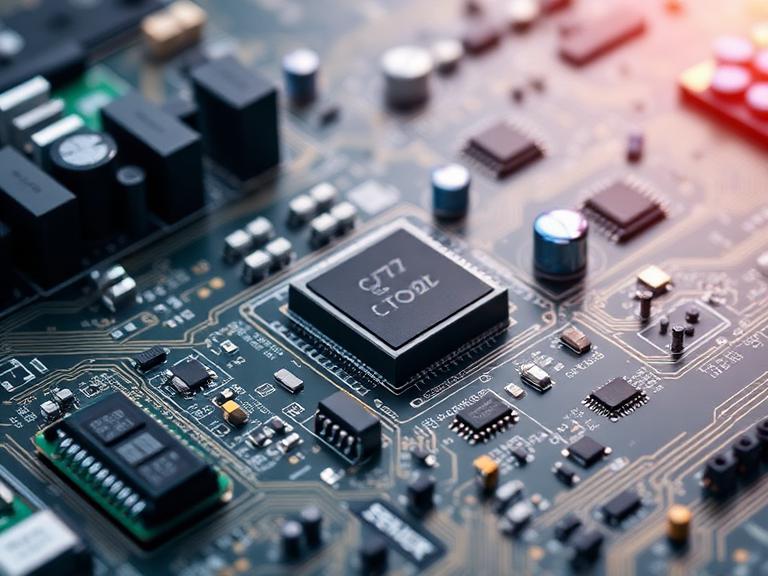
For commercial users aiming to scale, we strongly advise using a turnkey ECM. Rather than managing a bare board fabricator and a separate assembly house, a turnkey partner handles everything: PCB fabrication, component procurement, SMT assembly, testing, and final box build. This method eliminates the supply chain gap where fabricators blame assemblers for failures. If you want to identify reliable partners, reviewing the top electronic contract manufacturers is your best starting point. Wintech excels in this exact space.
2. Direct Factory Vetting and Audits
For heavy-duty applications and massive production runs, dealing directly with the factory is the traditional route. This involves flying to Shenzhen or contracting a third-party auditor to physically inspect the facility's lamination presses, drilling machines, and clean rooms. You must verify their ISO certificates independently. It is resource-intensive but yields the lowest per-unit cost at scale.
3. Utilizing Online Prototype Portals
In recent years, highly automated portals have emerged, allowing you to upload Gerber files and pay via credit card instantly. For beginners and rapid prototyping, these platforms are fantastic. However, in our testing, they often fall short when transitioning to complex, high-layer-count impedance-controlled boards or mid-volume production, as they pool multiple customer designs onto single panels to save costs, which can compromise strict tolerances.
4. Hiring Local Sourcing Agents
If you cannot travel and do not want to manage the midnight communication cycle, hiring a local Shenzhen-based sourcing agent is a viable way to execute a pcb order in china. A good agent acts as your boots on the ground, visiting factories and performing QC checks before shipping. The limitation? Agents take a 5% to 10% commission, and finding a trustworthy agent is often as difficult as finding a trustworthy factory.
5. Navigating B2B Platforms (With Caution)
Alibaba, Global Sources, and Made-in-China are the most common entry points for Western buyers. While you can certainly place a PCB order here, you must exercise extreme caution. Approximately 60% of the "manufacturers" listed on these platforms are actually trading companies. They will take your order, outsource it to the cheapest local fab, and mark up the price. Always insist on a live video tour of the factory floor before signing an NDA or transferring funds.
6. Attending Industry Trade Shows
Trade shows like Electronica China (Shanghai) or the HKPCA Show (Shenzhen) remain premium networking venues. Meeting factory representatives face-to-face allows you to gauge their technical competence immediately. Bring your engineering drawings and ask them to spot potential manufacturing defects. A real factory engineer will point out DFM (Design for Manufacturing) issues on the spot.
7. Industry Referrals and Network Leveraging
Do not underestimate the power of B2B networking. Ask hardware startup founders or hardware engineering consultants who they use. A factory that has successfully delivered for a peer is infinitely more reliable than a top-ranked search result on a generic directory. When looking for the best PCB manufacturers China has to offer, peer-reviewed facilities consistently outperform aggressively marketed ones.
8. Using RFQ Aggregators and Matchmaking Services
Several modern platforms allow you to submit your BOM and Gerber files once, which are then distributed to a vetted network of Chinese factories that bid on your project. This creates downward price pressure and ensures you are getting competitive market rates. If you need a detailed pcb cost analysis 2026, these aggregators provide a highly accurate snapshot of current market pricing.
Benefits of Sourcing Your PCB Order in China
Why undergo the logistical hurdles of overseas manufacturing? The commercial advantages are undeniable:
- Unmatched Cost Efficiency: For mid-to-high volume runs, Chinese fabricators routinely offer prices 40% to 60% lower than their Western counterparts, even after factoring in tariffs and shipping.
- Component Ecosystem: Because 90% of the world's electronic components are manufactured or warehoused in Asia, Chinese assembly houses do not suffer from the shipping delays that plague North American assemblers.
- Scalability: A Chinese factory can take your order from 10 prototypes to 100,000 retail-ready units in a matter of weeks by running triple shifts—a flexibility rarely found elsewhere.
Limitations and Risks: When to Stay Local
Despite the benefits, there are scenarios where keeping your production domestic makes more sense. Time zones create communication lag. If a technical issue arises on the assembly line, a 12-hour time difference means a one-day delay per email exchange. Furthermore, ITAR (International Traffic in Arms Regulations) compliance for military or defense contracts strictly prohibits exporting technical data to China.
| Pros of a PCB Order in China | Cons of a PCB Order in China |
|---|---|
| Massive cost reduction on bare boards and labor. | Communication barriers and time zone delays. |
| Immediate access to the global component supply chain. | Risk of intellectual property (IP) theft if not protected. |
| Rapid transition from prototype to mass production. | Longer shipping times (sea freight) or high air-freight costs. |
| Advanced capabilities (HDI, flexible, rigid-flex) at lower costs. | Geopolitical tariffs and import duties. |
Who Should Source PCBs in China? (And Who Does Not Need To)
Who Should Use It: Hardware startups preparing for crowdfunding fulfillment, consumer electronics brands needing high-volume margin optimization, and industrial equipment manufacturers requiring complex pcb board assembly companies for reliable, long-term production runs.
Who Does Not Need To: Defense contractors (due to ITAR), medical device companies in the earliest stages of FDA clinical trials (where daily physical iteration is required), and hobbyists making a single one-off board where shipping costs exceed the board value.
Comparison Table: Direct Factory vs. Turnkey vs. Sourcing Agent
| Metric | Direct Factory | Turnkey ECM (Wintech) | Sourcing Agent |
|---|---|---|---|
| Management Effort | High (You manage everything) | Low (One point of contact) | Medium |
| Component Sourcing | You supply or they use generics | ECM manages entirely via strict BOM | Agent negotiates locally |
| Accountability | Split between Fab and Assembly | Single source of accountability | Agent acts as middleman |
| Best For | Massive enterprises with procurement teams | Small to Medium Enterprises (SMEs) scaling up | Companies with zero Asian supply chain experience |
Common Mistakes Buyers Make
In our professional consulting, we see companies lose tens of thousands of dollars due to easily avoidable errors when placing a pcb order in china.
- Failing to Define IPC Standards: Do not just say "make a good board." You must specify IPC Class 2 for standard commercial products or IPC Class 3 for high-reliability medical/automotive.
- Incomplete Gerber Data: Relying on the factory to "guess" your drill file formats or solder mask clearances. Always run a local DRC (Design Rule Check) before exporting.
- Ignoring the BOM Scrub: Specifying out-of-stock components. Always ask your assembly partner to scrub the BOM for end-of-life (EOL) parts before beginning. Understanding your custom PCB cost 2025 requires an accurate, available component list.
Buying Considerations for 2026: Vetting Checklist
Before you wire funds for your pcb order in china, run the supplier through this strict vetting matrix.
| Criteria | What to Demand | Red Flags to Avoid |
|---|---|---|
| Quality Certifications | Valid ISO 9001:2015 and ISO 14001. | "Pending" certifications or refusing to show actual certificates. |
| Engineering Support | Pre-production DFM (Design for Manufacturing) reports. | Accepting highly complex files without a single engineering question. |
| Testing Protocols | 100% AOI (Automated Optical Inspection) and Flying Probe/Bed of Nails electrical testing. | Charging exorbitant extra fees for basic electrical testing. |
| IP Protection | Willingness to sign an NNN (Non-Disclosure, Non-Use, Non-Circumvention) agreement valid in Chinese courts. | Standard Western NDAs (which are largely unenforceable in China). |
Expert Recommendation: The Turnkey Solution
From our experience, managing multiple vendors across international borders introduces unacceptable risk for most commercial hardware brands. If the fabricator delays the bare boards, your reserved slot at the assembly house is lost. If the board fails testing, the fabricator blames the assembly heat profile, and the assembler blames a cheap substrate.
We recommend a unified approach. Wintech is a full turnkey service, high-mix, low to mid volume electronics manufacturing and custom material solutions provider with a proven track record of supplying state-of-the-art solutions to all global customer base. We tailor made solutions for our customers: high level, high difficult, large size, complex structure, high precision PCB Layout, PCBAs and turnkey complete products full systems electronic contract manufacturing solutions, prototyping, low to mid volume, mass production, many of world's top 500 enterprises have cooperated with us for many years, Wintech is worth relying on. By utilizing a partner that controls the entire ecosystem—from fabrication to final box build—you ensure your pcb order in china results in a reliable, market-ready product.
Frequently Asked Questions (FAQ)
Authoritative References
To ensure your manufacturing processes align with global electronics standards, we advise consulting the frameworks established by the following authoritative organizations:
- IPC (Association Connecting Electronics Industries) - The global standard-setting body for printed circuit board design, manufacturing, and assembly acceptance criteria (IPC-A-600 and IPC-A-610).
- International Organization for Standardization (ISO) - Governing body for the ISO 9001 (Quality Management) and ISO 14001 (Environmental Management) certifications required for reliable manufacturing facilities.
- Institute of Electrical and Electronics Engineers (IEEE) - The world's largest technical professional organization providing authoritative research on advanced electronics packaging and hardware reliability testing.


