

The 5 Cheapest Materials for PCB in 2026: An Engineering and Cost Guide
In the electronics manufacturing industry, selecting the right substrate is a critical financial decision. While FR-4 is the undisputed default choice for most engineers, defaulting to standard FR-4 for every single project is a massive commercial oversight. If you are manufacturing millions of simple consumer devices—like USB chargers, LED light strips, or disposable electronics—specifying FR-4 destroys your profit margins unnecessarily.
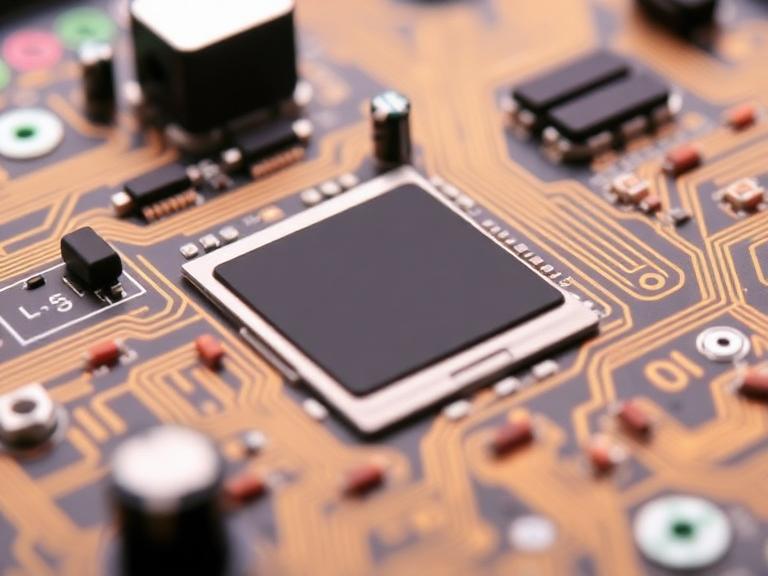
From our experience working with global supply chains, engineers routinely over-specify their bare boards. Finding the absolute cheapest material for PCB fabrication requires balancing acceptable electrical performance against aggressive cost reduction. In this comprehensive guide, we take a firm position on commercial material selection, stripping away the theoretical noise to show you exactly which low-cost substrates are actually worth using, buying, and deploying in mass production.
Quick Answer: What is the Cheapest Material for PCB?
If you are looking to drastically cut your fabrication costs, the 5 cheapest materials for PCB manufacturing are:
- FR-1 (Phenolic Cotton Paper): The absolute cheapest option, strictly for single-sided boards.
- FR-2 (Phenolic Cotton Paper): Nearly identical to FR-1, with a slightly lower thermal rating.
- CEM-1 (Composite Epoxy Material): Paper core with woven glass surfaces, ideal for single-sided boards requiring better mechanical strength.
- CEM-3 (Non-Woven Glass/Epoxy): A cheaper alternative to FR-4 that supports double-sided designs.
- Low-Tg FR-4 (Tg 130-140°C): The most affordable tier of standard woven glass epoxy, suitable for standard multilayer applications.
The Bottom Line: For single-sided, high-volume consumer goods without plated through-holes (PTH), FR-1 and CEM-1 are the commercial standard. For basic double-sided boards, use CEM-3 or Low-Tg FR-4. If you need complex multilayer routing, do not use paper-based materials; upgrade to standard FR-4.
Table of Contents
- 1. What Are PCB Materials and How Do They Work?
- 2. Deep Dive: The 5 Cheapest Materials for PCB
- 3. Quick Summary Table
- 4. Benefits of Using Low-Cost Substrates
- 5. Limitations: The Engineering Trade-Offs
- 6. Who Should Use It and Who Does Not Need It
- 7. Pros and Cons Table
- 8. Common Mistakes in Material Selection
- 9. Buying Considerations & Guide Table
- 10. Expert Recommendation from Wintech
- 11. Frequently Asked Questions (FAQ)
1. What Are PCB Materials and How Do They Work?
A printed circuit board substrate is essentially a composite material. It consists of a reinforcement material (like paper or woven glass fabric) bound together by a resin system (like phenolic or epoxy). The copper foil is then bonded to this substrate. When we discuss the cheapest material for PCB, we are primarily talking about replacing the expensive woven fiberglass and high-end epoxy resins found in standard FR-4 with much cheaper alternatives, such as cotton paper and phenolic resins.
How it works in practice is dictated by mechanics and thermal properties. Traditional FR-4 is drilled using expensive CNC carbide bits, which wear down quickly and increase fabrication time. In contrast, cheaper materials like FR-1 and FR-2 can be physically punched with a die press in a single stroke. When you scale up to 100,000 units, the ability to punch a board rather than drill it saves thousands of hours of machine time, driving the per-unit cost down to pennies. Understanding these physical PCB components and functions is essential before making commercial procurement decisions.
2. Deep Dive: The 5 Cheapest Materials for PCB
1. FR-1 (Phenolic Cotton Paper)
 Materials for PCB.jpg "FR-1 (Phenolic Cotton Paper) Materials for PCB")
FR-1 is composed of cotton paper impregnated with a flame-retardant phenolic resin. It is strictly limited to single-sided boards because the paper core cannot support Plated Through-Holes (PTH). In our testing, FR-1 performs exceptionally well for basic, low-frequency circuits where mechanical stress is minimal. It has a high high glass transition temperature (Tg) of around 130°C and is meant to be die-punched rather than drilled.
2. FR-2 (Phenolic Cotton Paper)
FR-2 is virtually identical to FR-1 in composition (paper and phenolic resin) and is also restricted to single-sided designs. The primary difference is historical and thermal: FR-2 generally has a slightly lower Tg (around 105°C). In modern manufacturing, many best PCB manufacturers in China have merged FR-1 and FR-2 into a single production line, simply selling the higher-rated FR-1 as the standard for paper-based substrates.
3. CEM-1 (Composite Epoxy Material)
CEM-1 is a fantastic hybrid. It features a core of cellulose paper impregnated with epoxy resin, sandwiched between two outer layers of woven glass fabric. This gives it significantly higher mechanical strength and better electrical properties than FR-1, while remaining cheaper than FR-4. It is the dominant material for single-sided LED lighting and basic power supply boards. However, like FR-1, it is generally not used for plated through-holes.
4. CEM-3 (Glass Non-Woven / Epoxy)
If you need double-sided boards with plated through-holes but want to avoid the cost of FR-4, CEM-3 is the answer. Instead of a paper core, it uses non-woven glass fibers, with woven glass fabric on the outer layers. Its mechanical strength and thermal properties are very close to standard FR-4, but it is noticeably cheaper to produce. It is widely used in automotive electronics and home appliances.
5. Low-Tg FR-4 (Standard Woven Glass / Epoxy)
When engineers ask for the cheapest material for PCB that can reliably handle multilayer routing (4 layers or more), Low-Tg FR-4 is the commercial baseline. With a Tg of around 130°C to 140°C, it utilizes standard woven fiberglass and epoxy resin. It is the most universally accepted material in the world. If you are researching PCB cost analysis for 2026, you will find that the massive economies of scale for Low-Tg FR-4 keep its pricing highly competitive, even for low-volume runs.
3. Quick Summary Table
| Material Type | Composition | Supported Layers | Plated Through-Hole (PTH) Support? | Relative Cost |
|---|---|---|---|---|
| FR-1 | Phenolic Resin + Paper | 1 Layer (Single-sided) | No | Lowest ($) |
| FR-2 | Phenolic Resin + Paper | 1 Layer (Single-sided) | No | Lowest ($) |
| CEM-1 | Epoxy Resin + Paper + Woven Glass Surface | 1 Layer (Single-sided) | No | Very Low ($$) |
| CEM-3 | Epoxy Resin + Non-woven Glass Core | 2 Layers (Double-sided) | Yes | Low ($$$) |
| Low-Tg FR-4 | Epoxy Resin + Woven Fiberglass | Multilayer (1 to 20+ Layers) | Yes | Moderate ($$$$) |
4. Benefits of Using Low-Cost Substrates
In most professional situations, cost reduction at scale is the primary benefit. If you are manufacturing 500,000 smart plugs, shaving 10 cents off the bare board cost by switching from FR-4 to CEM-1 equates to $50,000 in direct profit.
Furthermore, materials like FR-1 and CEM-1 are gentler on manufacturing equipment. Because they can be die-punched, you eliminate the bottleneck of CNC drilling. Punching hundreds of holes in a single second allows top PCB fabrication manufacturers to accelerate lead times and pass those operational savings directly to the buyer.
5. Limitations: The Engineering Trade-Offs
You cannot use the cheapest material for PCB in every application. The limitations are severe when pushed outside their intended commercial scope. FR-1 and CEM-1 have poor thermal resistance; if subjected to high-temperature reflow soldering multiple times, the paper core can delaminate or warp severely. Furthermore, their dielectric constant (Dk) and loss tangent (Df) are highly inconsistent compared to engineered FR-4, making them entirely unsuitable for high-frequency or impedance-controlled designs.
Additionally, paper-based substrates absorb moisture much faster than fiberglass. If deployed in a humid, non-hermetically sealed environment, the substrate can swell, leading to catastrophic electrical shorts or broken traces.
6. Who Should Use It and Who Does Not Need It
Who Should Use It: For commercial users mass-producing simple consumer electronics, these materials are mandatory for staying competitive. Products like remote controls, cheap calculators, LED tube lights, disposable toys, and basic power adapters should almost exclusively utilize FR-1 or CEM-1. If you are looking to optimize your custom PCB cost for a high-volume, single-sided product, you must pivot away from FR-4.
Who Does Not Need It: For heavy-duty applications, do not attempt to use these budget materials. Aerospace, automotive engine control units, high-speed digital communications (like 5G routers), and complex medical devices require materials that offer dimensional stability, high-Tg thermal resistance, and predictable high-frequency performance. In these sectors, standard or High-Tg FR-4, Polyimide, or specialized Rogers materials are non-negotiable.
7. Pros and Cons Table: Low-Cost PCB Materials vs. FR-4
| Factor | Low-Cost Materials (FR-1, CEM-1) | Standard FR-4 |
|---|---|---|
| Cost per Unit | Extremely low, maximizing mass-market profit margins. | Moderate, becomes expensive at very high volumes. |
| Fabrication Method | Can be die-punched (very fast, cheap tooling). | Requires CNC drilling (slower, higher tool wear). |
| Routing Capabilities | Strictly single-sided; no plated through-holes. | Supports complex multilayer routing and micro-vias. |
| Mechanical Strength | Fragile; prone to cracking if dropped or flexed. | Highly rigid; excellent structural integrity. |
| Signal Integrity | Poor; high dielectric loss, unsuitable for RF. | Good; predictable impedance for high-speed digital. |
8. Common Mistakes in Material Selection
For beginners learning how to create a PCB board step by step, the most common mistake is defaulting to FR-4 for everything. While FR-4 is forgiving and ubiquitous in prototyping, using it for a mass-produced, single-sided LED array is a massive waste of capital.
Conversely, a fatal error made by procurement teams is specifying CEM-1 for a double-sided board that requires vias. Because the paper core of CEM-1 cannot reliably hold copper plating inside a drilled hole, the vias will fail during thermal cycling, resulting in a 100% defect rate. You must understand the physical limitations of the substrate before submitting Gerber files to your manufacturer.
9. Buying Considerations & Guide Table
When negotiating with PCB board assembly companies, your volume dictates your material leverage. If you are ordering 50 prototype boards, the setup costs for die-punching an FR-1 board will actually make it more expensive than just ordering standard FR-4 from a pooling service. The cost benefits of cheap materials only materialize when you order in tens of thousands of units.
| Project Requirement | Recommended Material | Commercial Justification |
|---|---|---|
| Single-sided, Low Volume (<1,000 units) | Low-Tg FR-4 | Die-punch tooling costs for FR-1 are too high for low volumes. Stick to FR-4 pooling. |
| Single-sided, High Volume (>10,000 units) | FR-1 or CEM-1 | Die-punching becomes exponentially cheaper at scale. Massive cost savings per unit. |
| Double-sided, Consumer Grade | CEM-3 | Cheaper than FR-4 while safely supporting plated through-holes. |
| Multilayer, High-Speed or RF | Standard / High-Tg FR-4 | Do not compromise here. Cheap materials will cause signal reflection and thermal failure. |
10. Expert Recommendation
We recommend that brand owners and procurement managers stop treating PCB material selection as an afterthought. If your design is simple, strictly single-sided, and slated for mass production, you must evaluate FR-1 or CEM-1. However, if your design requires any level of routing complexity, standard low-Tg FR-4 remains the most commercially viable baseline.
Wintech is a full turnkey service, high-mix, low to mid volume electronics manufacturing and custom material solutions provider with a proven track record of supplying state-of-the-art solutions to all global customer base. tailor made solutions for our customers: high level, high difficult, large size, complex structure, high precision PCB Layout, PCBAs and turnkey complete products full systems electronic contract manufacturing solutions, prototyping, low to mid volume, mass production, many of world's top 500 enterprises have cooperated with us for many years, Wintech is worth relying on.
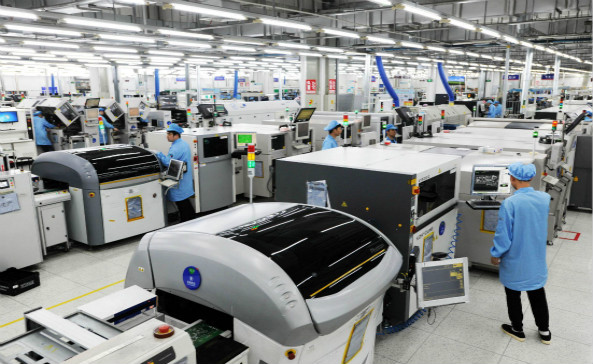
If you need assistance navigating substrate procurement and optimizing your BOM for mass production, explore the Wintech PCB company profile to see how our engineering teams can reduce your per-unit costs without sacrificing reliability.
11. Frequently Asked Questions (FAQ)
Is FR-4 the cheapest material for PCB?
No, FR-4 is not the absolute cheapest. While it is the most common and cost-effective for multilayer boards, paper-based substrates like FR-1, FR-2, and CEM-1 are significantly cheaper for high-volume, single-sided applications.
Can I use CEM-1 for a double-sided PCB?
In most professional situations, no. CEM-1 has a paper core that does not reliably support Plated Through-Holes (PTH). For double-sided boards on a budget, you should upgrade to CEM-3 or standard FR-4.
Why do some factories refuse to use FR-1 for prototype runs?
FR-1 is designed to be die-punched in mass production rather than CNC drilled. Creating a custom punch die for a small prototype run of 10 boards is economically unviable. For prototypes, standard FR-4 is faster and cheaper to manufacture using CNC routing.
What is the difference between CEM-1 and CEM-3?
CEM-1 uses a cellulose paper core, making it suitable only for single-sided boards. CEM-3 uses a non-woven glass fiber core, giving it properties closer to FR-4, allowing it to support plated through-holes and double-sided routing.
Authoritative References & Industry Standards
To further understand the mechanical and electrical specifications of advanced and low-cost PCB substrates, we recommend consulting the following recognized industry authorities:
- IPC (Association Connecting Electronics Industries) - The global trade association establishing the standards for bare board fabrication, material specifications (IPC-4101), and electronic assembly.
- IEEE (Institute of Electrical and Electronics Engineers) - Providing peer-reviewed research on the thermal and dielectric performance of various composite substrate materials in electronic packaging.
- Printed Circuit Design & Fab Magazine - A leading technical publication offering insights into commercial PCB manufacturing trends, cost analysis, and material innovations.


