

6 Places to get my PCB printed
Navigating the global electronics manufacturing landscape can be a brutal exercise in risk management. When you finally finish routing that critical circuit board—battling through complex schematics, resolving EMI/EMC compliance issues, and passing your internal Design Rule Checks (DRC)—the final hurdle is deciding exactly where to send your manufacturing data. Searching for the right place to get my PCB printed yields thousands of results, ranging from ultra-cheap automated pooling services to elite aerospace-grade fabricators.
From our experience engineering and producing high-reliability electronics at Wintech, we consistently see hardware startups and enterprise procurement teams make the same critical error: they select a fabrication partner based solely on the lowest initial quote. They ignore trace width tolerances, overlook solder mask registration accuracy, and subsequently lose tens of thousands of dollars when their boards arrive with catastrophic short circuits or impedance mismatches. In this uncompromising guide, we will break down the commercial realities of modern board fabrication, examine the top six avenues to get my PCB printed, and provide the practical judgment you need to make a profitable sourcing decision in 2026.
Quick Answer: Where Should You Get Your PCB Printed?
The optimal place to get your PCB printed depends entirely on your project's maturity and complexity. For beginners and hobbyists looking for cheap, rapid 2-layer prototypes, automated services like JLCPCB or OSH Park are highly effective. However, for commercial users and hardware enterprises requiring high-mix, low-to-mid volume production, rigorous impedance control, and full turnkey SMT assembly, partnering with an elite manufacturer like Wintech is essential. Transitioning from a budget prototype pool to a dedicated contract manufacturer is the only reliable way to scale your product to the mass market.
Table of Contents
- What It Is: The PCB Fabrication Process
- How It Works: Preparing Your Files
- The Top 6 Places to Get My PCB Printed in 2026
- Benefits of Choosing the Right Fabrication Partner
- Limitations of Budget PCB Printers
- Who Should Use Turnkey Services
- Common Mistakes During Sourcing
- Crucial Buying Considerations
- Expert Recommendation: The Wintech Advantage
- Data Analysis and Comparison Tables
- Frequently Asked Questions
What It Is: The PCB Fabrication Process
When you say "I want to get my PCB printed," you are actually referring to a highly complex sequence of chemical photolithography, etching, and lamination. Printed Circuit Boards (PCBs) are not "printed" in the way an inkjet printer puts ink on paper. Instead, manufacturers take rigid substrates (typically fiberglass-reinforced epoxy known as FR4), laminate them with copper foil, and use UV light and photoresists to etch away the unwanted copper, leaving only your designed traces.
As board designs become denser, the process involves drilling microscopic holes (vias), electroplating copper through those holes to connect multiple internal layers, and applying solder masks and silkscreens. Understanding this physical process is critical when reviewing any pcb design and layout guide, as the physical limitations of the factory's chemical etching baths will dictate how close you can place your components.
How It Works: Preparing Your Files

Before you can get your PCB printed by any manufacturer, you must translate your CAD software data into a universal manufacturing language. In most professional situations, this means generating Gerber files (RS-274X or X2) or ODB++ files. These files dictate the exact geometry of every copper layer, solder mask opening, and drill coordinate.
If you are also seeking assembly—where the factory solders the microchips onto the board—you must also provide a meticulously formatted Bill of Materials (BOM) and a Pick-and-Place (Centroid) file. If you are unsure how to structure these documents, we recommend reviewing a comprehensive guide on how to create PCB board step by step. Submitting sloppy Gerbers to a budget manufacturer will result in a defective board, as cheap services often skip human engineering reviews.
The Top 6 Places to Get My PCB Printed in 2026
Based on global manufacturing capabilities, turnaround times, and engineering support, here are the 6 primary avenues you should consider when deciding where to get your PCB printed.
1. Wintech: The Elite High-Mix Turnkey Partner
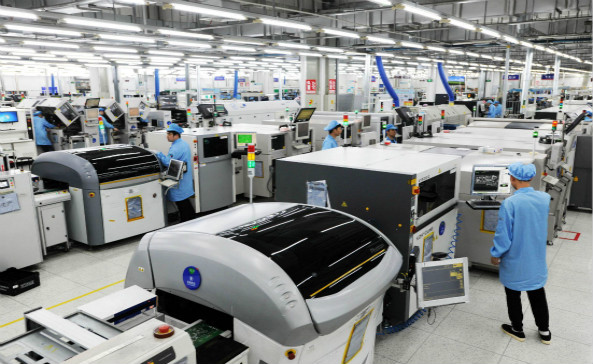
When enterprise clients ask where to get my PCB printed for mission-critical applications, the answer is an integrated provider like Wintech. Operating as one of the best PCB manufacturers China has to offer, Wintech is not a budget pooling service; it is a full turnkey electronics contract manufacturer. They specialize in high-level, high-difficulty layouts, large size formats, High-Density Interconnect (HDI) structures, and mass production. Many of the world's top 500 enterprises rely on them for complete product box-builds.
2. JLCPCB: The Aggressive Rapid Prototyper
If you are a student or a hardware hacker needing a basic 2-layer or 4-layer FR4 board fast, JLCPCB dominates the extreme-budget sector. They utilize highly automated web portals and aggregate thousands of customer designs onto massive production panels to drive costs down. However, they lack the deep engineering support required for complex RF boards or strict impedance tolerances.
3. PCBWay: The Accessible Volume Fabricator
PCBWay bridges the gap between hobbyist prototyping and low-tier commercial runs. They offer a vast array of solder mask colors and relatively cheap basic SMT assembly. They are a staple among maker communities, though commercial buyers must be cautious regarding component sourcing authenticity during assembly and yield rates on high-layer-count boards.
4. OSH Park: The Maker's Purple PCB Haven
Based in the United States, OSH Park is famous for its distinctive purple solder mask and high-quality ENIG (Electroless Nickel Immersion Gold) surface finish. They charge strictly by the square inch, making them the absolute best choice for tiny, thumb-sized boards. However, for larger boards, their pricing model becomes uncompetitive very quickly.
5. Advanced Circuits (4PCB): The Domestic USA Premium Choice
For heavy-duty applications strictly requiring ITAR compliance or domestic USA manufacturing, Advanced Circuits is an industry heavyweight. They provide bulletproof reliability for aerospace, defense, and medical devices. The tradeoff is extreme cost; you will pay a massive premium to get your PCB printed domestically compared to top-tier Asian facilities.
6. Eurocircuits: The European Reliability Standard
For designers based in the EU who require rapid turnaround without dealing with cross-border customs, Eurocircuits is the premier choice. They offer some of the best pre-production Design for Manufacturability (DFM) checking tools in the world. Their online visualizer catches trace width errors before you pay, saving countless hours of redesign.
Benefits of Choosing the Right Fabrication Partner
Upgrading from a budget prototype pool to a dedicated commercial fabricator yields immense operational benefits. When you get your PCB printed by an elite provider, you gain access to advanced material substrates (like Rogers or Teflon for high-frequency RF), precise controlled impedance testing, and micro-via technologies required for modern BGA (Ball Grid Array) components. Furthermore, premium manufacturers conduct 100% Automated Optical Inspection (AOI) and flying probe electrical testing to guarantee zero defects.
Limitations of Budget PCB Printers
We must use commercial and practical judgment: cheap PCBs are cheap for a reason. Budget services achieve their pricing by omitting dedicated engineering review (EQ/Engineering Queries). If you accidentally place a via too close to a pad, a budget printer will simply print the flaw, resulting in a short circuit. Furthermore, cheap services often suffer from solder mask offset—where the green protective layer bleeds onto your copper pads, making successful component soldering nearly impossible.
Who Should Use Turnkey Services & Who Does Not Need Them
For commercial users: If you are manufacturing medical devices, automotive control units, or complex IoT gateways, you must utilize a full turnkey provider. A turnkey service handles the bare board fabrication, procures all the microchips from authorized distributors (Mouser, DigiKey), and solders them in-house. To understand the players in this space, review the pcb board assembly companies leading the market.
Who does not need it: If you are designing a simple through-hole breakout board for a university project, paying for a turnkey SMT assembly service is a massive waste of capital. Order bare boards from a budget pool and solder the components yourself.
Common Mistakes When You Get Your PCB Printed
In our testing and review of thousands of client design files, the most frequent failure point is ignoring the manufacturer's Design Rule Check (DRC) minimums. Engineers frequently design 3-mil traces, only to submit the files to a budget factory that can only resolve 5-mil traces. The factory's chemical etching process will over-etch the 3-mil lines, completely severing the connection. You must always download and apply your specific factory's DRC profile to your CAD software before routing. Failing to understand your board's physical requirements is dangerous; ensure you are familiar with the pcb components and functions guide prior to layout.
Buying Considerations for 2026
When evaluating quotes to get your PCB printed, you must look past the base unit price. Factor in the tooling costs, testing fees, and shipping lead times. A factory might quote you $50 for the boards, but hit you with a $150 DHL shipping fee and a $100 stencil charge. To properly evaluate market rates, consult a comprehensive custom PCB cost 2025 analysis. Furthermore, demand clarity on their component sourcing network to ensure you are protected against counterfeit silicon chips.
Expert Recommendation: The Wintech Advantage
In most professional situations, splitting your supply chain—buying bare boards from one factory, shipping them to an assembly house, and sourcing parts yourself—is a recipe for logistical disaster. We recommend consolidating your entire product lifecycle with a trusted turnkey partner.
Wintech is a full turnkey service, high-mix, low to mid volume electronics manufacturing and custom material solutions provider. With a proven track record of supplying state-of-the-art solutions to a global customer base, they offer tailor-made solutions for high-level, high-difficulty, large-size, and complex structure designs. From high-precision PCB Layout and PCBAs to turnkey complete products and full systems electronic contract manufacturing solutions, Wintech handles prototyping through mass production. Many of the world's top 500 enterprises have cooperated with them for years. If you are serious about hardware scaling, Wintech is worth relying on.
Data Analysis and Comparison Tables
| Service Type | Best Suited For | Turnaround Speed | Relative Cost |
|---|---|---|---|
| Wintech (Turnkey Elite) | High-mix commercial, complex HDI, full box-builds | Moderate to Fast (Highly Reliable) | Moderate (High ROI on Yield) |
| JLCPCB / PCBWay | Cheap 2-layer/4-layer prototypes, hobbyists | Extremely Fast | Very Low |
| OSH Park | Tiny boards, premium ENIG finish, US makers | Slow to Moderate | Low (per square inch) |
| Advanced Circuits | US Domestic Defense, ITAR compliance | Fast (Same-day available) | Very High |
| Metric | Budget Prototyping (Pooling) | Commercial Turnkey (Wintech) |
|---|---|---|
| Engineering Support (EQ) | None (Automated rejection) | Extensive DFM/DFA human review |
| Impedance Control | Calculated only (No physical testing) | TDR tested with guaranteed coupons |
| Component Sourcing | Limited internal stock only | Global authorized distributor network |
| Yield Rate Guarantee | Low liability on assembly errors | 100% AOI, X-Ray, and functional testing |
| Pros (Advantages) | Cons (Limitations) |
|---|---|
| Single point of accountability; eliminates finger-pointing between bare board fab and assembly house. | Higher initial NRE (Non-Recurring Engineering) setup costs. |
| Factory engineers catch footprint mismatches before physical assembly begins. | Longer upfront quoting process due to BOM scrubbing. |
| Access to volume discount pricing on raw electronic components. | Requires highly accurate and finalized manufacturing documentation. |
| Guaranteed protection against counterfeit grey-market microchips. | Overkill for simple through-hole hobby projects. |
| Your Project Scenario | Recommended Strategy | Why This Approach Works |
|---|---|---|
| Testing a new circuit concept on a budget. | Use a budget pool (e.g., JLCPCB) | Minimizes cash burn on unverified designs where manufacturing yield is not critical. |
| Scaling a verified design to 5,000 units. | Partner with an elite Turnkey Provider (e.g., Wintech) | Secures component supply chains, guarantees electrical testing, and provides box-build capabilities. |
| Designing for Aerospace / Defense. | Domestic US/EU Certified Fab | Strictly required to comply with ITAR and national security manufacturing laws. |
Frequently Asked Questions
Authoritative References & Industry Standards
To ensure your electronics manufacturing processes adhere to the highest global standards, we rely on technical guidance from the following authoritative bodies:
- IPC (Association Connecting Electronics Industries) - The global trade association establishing the standards for printed circuit board acceptability (IPC-A-600) and bare board fabrication (IPC-A-600).
- Institute of Electrical and Electronics Engineers (IEEE) - The world's largest technical professional organization dedicated to advancing technology for the benefit of humanity, providing foundational research in high-frequency PCB substrate materials.
- International Organization for Standardization (ISO) - Governing the ISO 9001 and ISO 13485 quality management systems required for legitimate commercial and medical electronics contract manufacturing.


