

Electronics Supply Chain Management: A Practical Guide for OEMs
For an electronics OEM, supply chain problems rarely stay inside the purchasing department. A delayed semiconductor can stop an entire production line. An inconsistent PCB batch can create assembly defects. A last-minute component substitution can trigger engineering reviews, qualification delays, and unexpected costs. These problems directly affect product launches, manufacturing margins, and customer commitments.
Effective Electronics Supply Chain Management is therefore not simply about finding cheaper components. It is about coordinating suppliers, engineering, procurement, PCB fabrication, electronic manufacturing services (EMS), inventory, quality control, and logistics so that every component is available when production needs it.
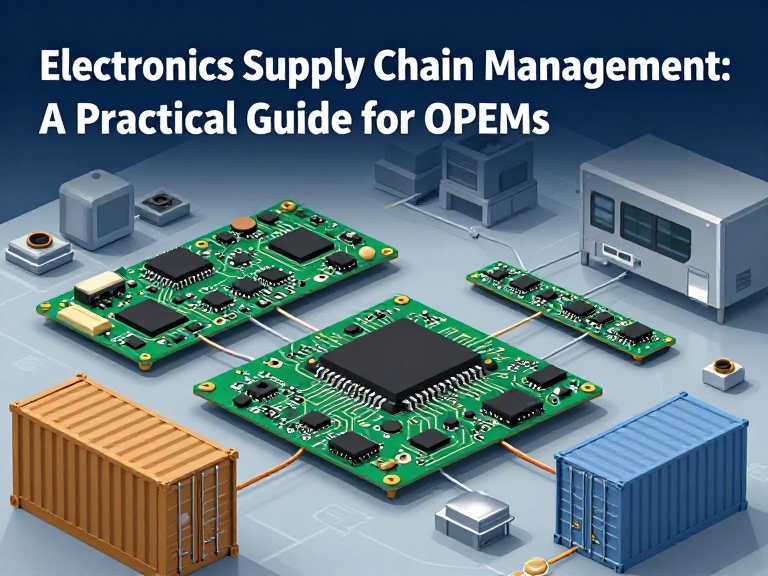
Our position is straightforward: OEMs should manage electronics supply chains around product lifecycle risk and total landed manufacturing cost, not purchase price alone. A low-cost supplier is not a good supplier if inconsistent quality, long lead times, or poor communication repeatedly disrupt production.
Quick Answer: What Is Electronics Supply Chain Management?
Electronics Supply Chain Management (ESCM) is the process of planning, sourcing, purchasing, manufacturing, inspecting, storing, and delivering electronic components and finished products across the electronics production network.
For OEMs, it connects component sourcing, PCB manufacturing, PCB assembly, EMS partners, inventory planning, quality assurance, and distribution.
- Best approach: Build a qualified, diversified supplier network with clear engineering and quality requirements.
- Biggest risk: Depending on a single source for critical or long-lead-time components.
- Most important control: Approved BOMs, component traceability, and engineering change management.
- Best cost strategy: Optimize total landed cost rather than selecting the lowest component quotation.
- Our recommendation: Integrate procurement, engineering, PCB fabrication, and assembly planning before production begins.
Table of Contents
- What Is Electronics Supply Chain Management?
- How the Electronics Supply Chain Works
- Key Components of Electronics Supply Chains
- Major Supply Chain Challenges
- Effective Management Strategies
- Supplier Sourcing and EMS Selection
- PCB Manufacturing and Assembly
- Inventory and Cost Management
- Technology and Digital Supply Chains
- Supply Chain Models Compared
- Implementation Roadmap
- Common OEM Mistakes
- Wintech Manufacturing Capabilities
- Frequently Asked Questions
- References
1. What Is Electronics Supply Chain Management?
Electronics Supply Chain Management is the coordinated management of materials, information, suppliers, production activities, and finished products throughout the electronics manufacturing lifecycle.
Unlike many conventional manufacturing industries, electronics production depends on a large number of components with different technical specifications, manufacturing processes, sourcing restrictions, and availability cycles.
An OEM developing an industrial controller, for example, may need microcontrollers, memory devices, power management ICs, resistors, capacitors, connectors, sensors, multilayer PCBs, and specialized assembly processes. Every item must meet engineering requirements and arrive according to the production schedule.
One missing component can delay the entire assembly, even when every other material is available.
What Does Electronics Supply Chain Management Include?
- Strategic sourcing: Identifying and qualifying component manufacturers, distributors, PCB suppliers, and EMS partners.
- Procurement: Purchasing electronic components, raw materials, and manufacturing services.
- Supplier management: Monitoring supplier capacity, delivery performance, quality, and commercial reliability.
- Production planning: Coordinating component availability with PCB fabrication, assembly, testing, and shipment schedules.
- Inventory management: Balancing stock availability against working capital and obsolescence risks.
- Quality management: Controlling incoming inspection, process quality, traceability, and corrective actions.
- Logistics: Managing international shipping, customs documentation, storage, and delivery.
Why Is It Different From Traditional Procurement?
Traditional procurement often focuses on price, purchase orders, supplier terms, and delivery schedules. Electronics supply chain management must also consider technical compatibility and product lifecycle risks.
For example, an OEM may receive a quotation for a microcontroller that appears commercially attractive. However, if the component is not included in the approved BOM, has a different package revision, or lacks the necessary traceability, it may not be suitable for production.
From our experience, the most reliable OEM purchasing decisions involve engineering and procurement working together. Procurement should not independently authorize substitutions that affect electrical performance, PCB footprints, thermal behavior, firmware compatibility, or regulatory compliance.
2. How the Electronics Supply Chain Works
An electronics supply chain typically begins with product requirements and ends with the delivery of assembled electronic products to customers or downstream manufacturing facilities.
For OEMs, the critical issue is maintaining alignment between engineering decisions and material availability throughout this process.
Step 1: Product Design and BOM Development
The engineering team defines the product architecture, electrical requirements, PCB layout, component specifications, and manufacturing requirements.
A bill of materials (BOM) identifies the components required to manufacture the product. A well-maintained BOM should include manufacturer part numbers, quantities, approved alternatives, lifecycle status, and sourcing information.
OEMs should evaluate component availability during design rather than waiting until the first production order. This is particularly important for semiconductor devices, specialized connectors, and components with long procurement lead times.
Engineering teams can also review free PCB design software tools to support early design work and board development.
Step 2: Supplier Identification and Qualification
Once the BOM and manufacturing requirements are established, the OEM identifies suppliers capable of meeting the technical, commercial, and quality requirements.
Supplier qualification should consider more than product availability. Buyers should review manufacturing capabilities, certifications where applicable, quality procedures, traceability systems, production capacity, and communication responsiveness.
Step 3: Component Procurement
Procurement teams issue purchase orders based on production forecasts, inventory requirements, and supplier lead times.
For critical electronic components, OEMs should establish approved sourcing channels and avoid relying on unverified spot-market purchases.
Component authenticity is especially important for semiconductors. Counterfeit, reclaimed, or incorrectly labeled components can introduce failures that are difficult to detect through basic visual inspection.
Step 4: PCB Fabrication
PCB fabrication converts the approved board design into a physical printed circuit board.
Depending on the product, the process may involve multilayer stack-ups, copper patterning, drilling, plating, solder mask application, surface finishing, and electrical testing.
Board complexity has a direct impact on production capability, lead time, and cost. OEMs should confirm manufacturing feasibility before freezing the PCB design.
Step 5: PCB Assembly and Manufacturing
After fabrication and material preparation, components are assembled onto the PCB through processes such as surface-mount technology (SMT) and through-hole assembly.
Production may include solder paste printing, component placement, reflow soldering, automated optical inspection (AOI), X-ray inspection where appropriate, and functional testing.
OEMs should confirm that the EMS provider can support the required assembly technology, component package types, production volume, and inspection standards.
Step 6: Testing and Quality Assurance
Finished assemblies undergo inspection and testing according to the product's quality requirements.
Depending on the application, testing may include in-circuit testing, functional testing, boundary scan, environmental testing, or other qualification procedures.
For products used in automotive, industrial, medical, or other demanding environments, quality planning must reflect the relevant industry and regulatory requirements.
Step 7: Packaging, Logistics, and Delivery
Finished products are packaged, documented, shipped, and delivered to the OEM or its customers.
International supply chains require attention to customs documentation, shipping terms, export controls, packaging protection, and delivery schedules.
Successful delivery is not simply a logistics achievement. It is the final result of coordinated engineering, sourcing, manufacturing, and quality management.
3. Key Components of an Electronics Supply Chain
Understanding the different supply chain participants helps OEMs identify where delays, quality problems, and cost increases are most likely to occur.
Electronic Component Manufacturers
Component manufacturers produce semiconductors, passive components, connectors, sensors, memory devices, and other electronic parts.
OEMs should distinguish between original component manufacturers, authorized distributors, independent distributors, and brokers. Their sourcing models and traceability controls are not interchangeable.
Critical components should have documented sourcing approval and clear part-number control.
PCB Fabrication Manufacturers
PCB manufacturers produce the circuit boards used in electronic assemblies. Their capabilities determine whether an OEM can manufacture the required board structure consistently.
Important manufacturing considerations include:
- Layer count and board thickness.
- Minimum trace width and spacing.
- Via and microvia structures.
- Controlled impedance requirements.
- Surface finish and copper thickness.
- Material selection and thermal performance.
- Electrical testing and quality documentation.
For complex designs, OEMs should assess specialist PCB fabrication manufacturers according to their actual board requirements rather than choosing solely by advertised layer count.
Electronic Manufacturing Services Providers
EMS providers support electronics manufacturing activities such as PCB assembly, component sourcing, testing, inspection, and sometimes complete product integration.
Some providers offer comprehensive turnkey manufacturing, while others focus on PCB assembly using materials supplied by the customer.
The difference matters commercially. An OEM should understand which party is responsible for purchasing components, managing shortages, approving substitutions, controlling inventory, and resolving quality issues.
Our guide to electronic contract manufacturers provides additional context for comparing manufacturing partners.
Logistics and Distribution Partners
Logistics companies coordinate transportation, warehousing, customs clearance, and delivery.
For high-value electronic components, logistics decisions should account for packaging protection, handling requirements, shipment visibility, and applicable storage conditions.
OEM Engineering and Procurement Teams
The OEM itself remains responsible for coordinating product requirements and supplier decisions, even when manufacturing is outsourced.
Engineering should control technical approvals, procurement should control commercial purchasing, and quality teams should establish acceptance requirements. These responsibilities must be connected through a documented change-management process.
4. Major Electronics Supply Chain Challenges Facing OEMs
Electronics supply chains are particularly sensitive to component shortages, long lead times, product obsolescence, manufacturing capacity constraints, and international trade disruptions.
OEMs that treat these issues as isolated purchasing problems usually respond too late. A better approach is to identify vulnerabilities before they affect production.
4.1 Semiconductor Shortages and Long Lead Times
Semiconductors are among the most important risk factors in electronics manufacturing. Certain processors, power devices, memory components, and specialized ICs may have limited production capacity or extended replenishment periods.
A product may require hundreds of individual BOM line items, but a shortage of just one critical IC can prevent completion of the entire assembly.
We recommend identifying critical components by supply risk, replacement difficulty, lead time, and production impact. Forecasting should prioritize these components instead of treating every BOM item equally.
4.2 Component Obsolescence
Electronic components have product lifecycles. Manufacturers may discontinue devices, replace product families, or change manufacturing processes.
Obsolescence creates additional engineering and procurement work because replacement components may require PCB footprint changes, electrical validation, firmware modifications, or new qualification testing.
OEMs should monitor component lifecycle notices and establish last-time-buy and redesign procedures for products with long commercial lifetimes.
4.3 Supplier Dependency
Depending on one supplier for a critical component or manufacturing process creates concentration risk.
However, adding multiple suppliers without qualification is not a reliable solution. Alternative suppliers must be technically approved, commercially viable, and capable of maintaining consistent quality.
We recommend dual sourcing for critical items when the economics and technical requirements support it. Where dual sourcing is impractical, establish a documented contingency plan.
4.4 Quality and Counterfeit Component Risks
Counterfeit and nonconforming components can cause intermittent failures, poor production yields, field returns, and reputational damage.
Basic visual inspection is not sufficient to establish component authenticity. Depending on the risk, OEMs may need supplier traceability records, certificates of conformity, date-code verification, and additional inspection or testing.
For high-risk procurement, use approved sourcing channels and a documented component verification process.
4.5 International Trade and Logistics Disruptions
Electronics manufacturing frequently involves multiple countries. Components may be manufactured in one region, assembled in another, and delivered to customers elsewhere.
Trade restrictions, customs delays, transportation disruptions, tariffs, and changes in export regulations can affect cost and delivery performance.
OEMs should periodically review sourcing geography and avoid building production schedules around optimistic shipping assumptions.
4.6 Rapid Engineering Changes
Engineering changes can affect PCB layouts, component selection, manufacturing instructions, and finished-product specifications.
If purchasing continues using an outdated BOM while production uses a revised design, material shortages and incorrect assembly can occur.
A controlled engineering change process should define revision approval, affected inventory, supplier communication, implementation dates, and product traceability.
5. Effective Electronics Supply Chain Management Strategies
Good supply chain management requires a combination of sourcing discipline, engineering collaboration, supplier performance monitoring, inventory planning, and production visibility.
For most OEMs, the objective should not be to eliminate every possible supply chain risk. That is unrealistic. The objective is to understand the most expensive risks and create practical controls around them.
Strategy 1: Build a Risk-Based Supplier Network
Not every component needs the same sourcing strategy.
Standard resistors and capacitors may be relatively easy to source from multiple qualified manufacturers. A specialized processor, RF component, or custom connector may require a much more detailed sourcing plan.
Classify materials according to:
- Business impact if unavailable.
- Supplier concentration.
- Lead time and replenishment uncertainty.
- Availability of qualified alternatives.
- Technical difficulty of replacement.
- Lifecycle and obsolescence exposure.
Use this classification to determine where supplier diversification, safety stock, or redesign planning is justified.
Strategy 2: Integrate Engineering and Procurement Early
Procurement should participate in the design process before the BOM is finalized.
Engineering may select a technically suitable component that is difficult to source commercially. A procurement review can identify alternatives before the PCB layout and firmware become dependent on a specific part.
For new product development, we recommend design-for-supply-chain reviews alongside design-for-manufacturing reviews.
This reduces the risk of discovering component availability problems after prototype approval.
Strategy 3: Establish Approved Vendor Lists
An approved vendor list (AVL) identifies suppliers and component manufacturers authorized for use in a product or manufacturing program.
AVLs help OEMs control sourcing decisions, manage approved alternatives, and reduce the risk of unauthorized substitutions.
However, an AVL should be actively maintained. A supplier's approval status should reflect current quality performance, sourcing channels, and manufacturing capability.
Strategy 4: Improve Demand Forecasting
Forecasting allows suppliers and EMS partners to plan capacity and materials ahead of production.
OEMs should share realistic forecasts that distinguish between committed orders, expected demand, and speculative demand.
For components with long lead times, establish forecast review cycles and communicate significant changes early.
Strategy 5: Introduce Supplier Performance Metrics
Supplier relationships should be evaluated using measurable operating results.
Useful KPIs include:
- On-time delivery: Percentage of orders delivered by the confirmed date.
- Incoming defect rate: Percentage of received materials that fail acceptance requirements.
- Supplier response time: Time taken to respond to shortages, quality issues, or engineering questions.
- Lead-time accuracy: Difference between quoted and actual replenishment time.
- Production yield: Percentage of assemblies meeting defined production acceptance criteria.
- Corrective action closure: Timeliness and effectiveness of corrective and preventive actions.
Do not rely on a single KPI. A supplier with low pricing and excellent delivery performance may still be unsuitable if its quality documentation is inadequate.
Strategy 6: Strengthen Traceability and Change Control
OEMs should maintain traceability for critical components and production batches. This becomes especially important when investigating field failures or managing product recalls.
Document component lot information, supplier details, PCB revisions, assembly batches, inspection results, and approved engineering changes according to product risk and contractual requirements.
6. How OEMs Should Select Component Suppliers and EMS Partners
Supplier selection is one of the most commercially important decisions in electronics supply chain management. The wrong manufacturing partner can increase costs through poor yields, engineering rework, delayed shipments, and inconsistent production quality.
Evaluate Technical Capabilities First
For component suppliers, confirm that the products meet the approved specifications and that sourcing documentation is appropriate.
For PCB manufacturers, evaluate board complexity, material capability, dimensional tolerances, controlled impedance, testing, and quality controls.
For EMS providers, assess SMT capability, component package support, production capacity, inspection systems, testing resources, and engineering support.
Our overview of PCB board assembly companies can help OEMs understand the different manufacturing service models available.
Compare Turnkey and Consignment Manufacturing
One important decision is whether the OEM should purchase components directly or let the EMS provider manage material procurement.
Turnkey manufacturing: The EMS provider sources the required components and manages procurement as part of the manufacturing service. This can simplify purchasing and reduce the OEM's administrative workload.
Consignment manufacturing: The OEM purchases and supplies some or all components to the manufacturing partner. This offers greater control over sourcing but increases the OEM's responsibility for material planning, inventory, and delivery coordination.
Hybrid manufacturing: The OEM supplies selected strategic or customer-controlled components while the EMS provider sources standard materials. This can be a practical compromise for complex BOMs.
Supplier Comparison Table
| Evaluation Factor | Turnkey EMS | Consignment EMS | Hybrid EMS |
|---|---|---|---|
| Component sourcing responsibility | Primarily EMS provider | Primarily OEM | Shared |
| OEM procurement workload | Lower | Higher | Medium |
| Control over component sourcing | Depends on contract and AVL | High | High for selected components |
| Inventory responsibility | Defined by commercial agreement | Primarily OEM | Shared |
| Best application | OEMs seeking integrated procurement and assembly | OEMs with established sourcing networks | OEMs with mixed sourcing requirements |
| Main consideration | Supplier transparency and sourcing control | Material availability and coordination | Clear responsibility allocation |
Questions to Ask Before Signing an EMS Agreement
- Which components will the EMS provider purchase directly?
- Are approved manufacturers and part numbers documented?
- How are shortages and obsolete components managed?
- Who is responsible for excess and obsolete inventory?
- How are component substitutions approved?
- What production inspection and testing procedures are included?
- Can the provider supply batch traceability and quality reports?
- What happens if a delivery commitment cannot be met?
- Are engineering support and NPI services included in the quotation?
For OEMs, these questions are more important than comparing headline assembly prices. A slightly higher quotation may offer substantially better control over the overall manufacturing process.
7. Why PCB Manufacturing and Assembly Are Critical to Supply Chain Management
PCB fabrication and assembly are central stages in the electronics supply chain. Even when all electronic components are available, production can still be delayed if the circuit board cannot be manufactured or assembled according to the required specifications.
PCB Design Decisions Affect Supply Chain Costs
PCB design determines material requirements, layer count, board dimensions, component placement, manufacturing complexity, and assembly processes.
A high-density design may require advanced manufacturing capabilities such as microvias, sequential lamination, controlled impedance, or specialized materials.
These requirements can reduce the number of suitable manufacturing suppliers and increase production lead times.
For this reason, OEM engineering teams should involve PCB manufacturers early when developing complex multilayer or high-density designs.
Understand the Relationship Between PCB Fabrication and PCB Assembly
PCB fabrication creates the bare circuit board. PCB assembly installs electronic components onto that board.
These processes have different manufacturing requirements, quality controls, and production schedules.
Managing them separately without proper coordination can create avoidable delays. For example, a PCB fabrication supplier may complete a batch on time, but the assembly provider may not have the required ICs or connectors available.
Integrated planning helps align bare-board delivery, component procurement, assembly scheduling, and testing.
Why Manufacturing Capability Matters
OEMs should match the PCB manufacturer to the complexity of the board rather than assuming all PCB suppliers can produce the same design.
Important factors include:
- Number of PCB layers and stack-up requirements.
- HDI and microvia manufacturing capability.
- Rigid, rigid-flex, and flexible PCB production.
- RF and controlled-impedance requirements.
- Material availability and sourcing consistency.
- Prototype and mass-production capacity.
- Electrical testing and process documentation.
For more sourcing context, review our guides to PCB manufacturers in China and PCB manufacturers in the USA.
Control the Total PCB Manufacturing Cost
The lowest bare-board quotation is not always the lowest-cost manufacturing option.
OEMs should consider material selection, fabrication yield, board complexity, testing requirements, shipping, assembly compatibility, and engineering support.
A supplier that can manufacture a difficult PCB reliably may reduce overall project costs by avoiding repeated engineering adjustments and production delays.
Our PCB cost analysis guide provides further insight into the factors affecting PCB pricing.
8. Inventory Management and Cost Optimization for Electronics OEMs
Inventory management is one of the most difficult balancing decisions in electronics manufacturing. Too little inventory creates production interruptions. Too much inventory ties up working capital and increases the risk of component obsolescence.
The correct approach is to manage inventory according to demand variability, supplier lead time, component criticality, and product lifecycle.
Use ABC Classification for Component Inventory
ABC classification groups materials according to their relative value or management importance.
- Category A: High-value or strategically critical components requiring close monitoring and management approval.
- Category B: Medium-priority materials requiring regular review.
- Category C: Lower-value, commonly available items that can often be managed through simpler replenishment rules.
However, purchase value alone should not determine supply risk. A low-cost connector that has no qualified replacement may be more operationally critical than an expensive component available from several approved sources.
We recommend combining ABC analysis with a supply-risk classification.
Calculate Safety Stock Based on Actual Risk
Safety stock provides additional inventory to protect against demand fluctuations and replenishment uncertainty.
For a simple planning model:
Reorder point = Expected demand during lead time + Safety stock.
For example, if an OEM consumes 500 units of a component per week and the replenishment lead time is four weeks, expected lead-time demand is 2,000 units. Additional safety stock should reflect actual demand variability and supplier reliability.
Do not apply the same inventory coverage to every BOM item. Critical components with uncertain lead times may justify more protection, while standard components with multiple qualified sources may need less.
Reduce Excess and Obsolete Inventory
Excess inventory is especially dangerous in electronics because component lifecycles and product designs can change quickly.
OEMs should connect purchasing forecasts to engineering revisions and product lifecycle plans. When a design change occurs, procurement should identify affected stock before new material is ordered.
Establish procedures for last-time buys, excess inventory disposition, and alternative component qualification.
Calculate Total Cost of Ownership
Component price is only one part of the purchasing decision.
A more useful evaluation includes:
- Purchase price.
- Freight, customs, and insurance.
- Inspection and testing costs.
- Inventory carrying costs.
- Potential obsolescence losses.
- Manufacturing yield and rework expenses.
- Expediting costs caused by supply disruptions.
In most professional situations, a reliable component source with predictable lead times can be commercially superior to an apparently cheaper supplier that frequently creates shortages or quality problems.
9. Technology and Digital Transformation in Electronics Supply Chain Management
As electronics BOMs become more complex and manufacturing networks become more international, spreadsheets and manual email communication become increasingly difficult to manage.
Digital supply chain tools improve visibility by connecting procurement, engineering, production planning, inventory, and supplier information.
ERP Systems
Enterprise resource planning systems integrate purchasing, inventory, finance, production planning, and order management.
For OEMs, ERP integration helps ensure that purchasing decisions are connected to actual production requirements.
MRP and Material Planning
Material requirements planning (MRP) uses BOM data, inventory balances, production schedules, and procurement lead times to calculate material requirements.
It helps purchasing teams identify shortages before production starts and supports more structured replenishment decisions.
PLM and Engineering Change Management
Product lifecycle management (PLM) systems organize product designs, engineering documentation, revisions, and approved product configurations.
Integrating PLM with procurement and manufacturing systems reduces the risk of using obsolete BOMs or unauthorized component alternatives.
Supplier Portals and Real-Time Visibility
Supplier portals can provide order confirmations, delivery updates, quality documents, and material status information.
For large OEM programs, these systems reduce the administrative burden of chasing updates across different suppliers.
Predictive Analytics and Supply Risk Monitoring
Advanced supply chain systems can analyze demand, lead-time changes, supplier performance, and inventory trends.
Predictive analytics can help identify potential material shortages, but its value depends on accurate data and realistic forecasting assumptions.
Our recommendation is to establish clean BOM, inventory, and supplier data before investing heavily in advanced analytics. A sophisticated dashboard cannot compensate for incorrect source information.
10. Electronics Supply Chain Management Models Compared
OEMs can organize their manufacturing supply chains through several operating models. The best structure depends on engineering resources, procurement experience, production scale, and the level of control required.
Quick Summary Table: Supply Chain Operating Models
| Model | OEM Responsibility | Main Advantage | Main Limitation | Best Fit |
|---|---|---|---|---|
| In-house manufacturing | High | Direct production control | High infrastructure and operating investment | OEMs with established manufacturing scale |
| Turnkey EMS | Medium | Integrated sourcing and assembly | Requires strong supplier transparency | OEMs seeking outsourced manufacturing |
| Consignment EMS | High procurement control | Direct control over materials | Higher inventory coordination workload | OEMs with established sourcing networks |
| Hybrid model | Shared | Flexible sourcing responsibilities | Requires clear responsibility boundaries | OEMs with strategic component requirements |
Which Model Should OEMs Choose?
For startups and companies launching new electronic products, turnkey EMS can simplify manufacturing coordination and reduce the need to establish a large procurement organization.
For established OEMs with strong supplier relationships and strategic component contracts, consignment manufacturing may provide greater purchasing control.
For many growing businesses, a hybrid model is the most practical option. The OEM controls strategically important components while the EMS partner manages standard procurement and production coordination.
The important point is to document ownership, purchasing responsibility, inventory liability, and approval authority before production begins.
11. How to Implement an Electronics Supply Chain Management Strategy
A supply chain improvement program does not need to begin with an expensive software project or a complete supplier restructuring. OEMs can achieve meaningful improvements through a phased approach.
Phase 1: Audit the Existing Supply Chain
Map the suppliers, components, manufacturing processes, and logistics routes involved in the current product portfolio.
Identify single-source components, long-lead-time materials, recurring shortages, quality issues, and suppliers with inconsistent delivery performance.
Phase 2: Standardize BOM and Supplier Information
Establish a controlled BOM structure with manufacturer part numbers, approved alternatives, lifecycle information, and sourcing status.
Make sure engineering and procurement use the same approved product revisions.
Phase 3: Establish Supplier Qualification Criteria
Define minimum technical, commercial, and quality requirements for component suppliers, PCB manufacturers, and EMS providers.
Use documented supplier evaluations instead of making sourcing decisions based solely on price or personal relationships.
Phase 4: Improve Forecasting and Material Planning
Connect sales forecasts and production schedules to component purchasing plans.
Review high-risk BOM items regularly and establish suitable contingency stock or alternative sourcing plans.
Phase 5: Introduce Performance Monitoring
Track supplier delivery, material quality, production yield, lead-time accuracy, and corrective action performance.
Review the results periodically and agree on improvement actions with suppliers.
Phase 6: Integrate Manufacturing and Procurement
Align PCB fabrication, component availability, assembly scheduling, inspection, and finished-product delivery.
For outsourced manufacturing, establish clear communication between OEM engineering, procurement, quality teams, and the EMS provider.
Phase 7: Review and Improve Continuously
Supply chain conditions change. New component alternatives emerge, suppliers expand or reduce capacity, and product designs evolve.
Review supplier risk, inventory policies, and sourcing strategies at regular intervals rather than waiting for a production crisis.
12. Common Electronics Supply Chain Management Mistakes OEMs Should Avoid
Mistake 1: Choosing Suppliers Based Only on Price
A low quotation can conceal longer lead times, weak traceability, inconsistent manufacturing quality, or limited engineering support.
Evaluate total landed cost and supplier performance instead of comparing unit prices in isolation.
Mistake 2: Ignoring Component Lifecycle Information
Using components approaching end-of-life without a contingency plan creates unnecessary production risk.
Check lifecycle status during design reviews and procurement planning.
Mistake 3: Making Unauthorized Component Substitutions
Components with similar appearances or electrical ratings are not automatically interchangeable. Package dimensions, pin configurations, thermal performance, tolerances, and firmware dependencies may differ.
Require engineering approval before changing an approved BOM component.
Mistake 4: Failing to Coordinate PCB Fabrication and Assembly
Separate scheduling of PCB fabrication and assembly can create unnecessary delays when material availability is not coordinated.
Confirm that bare boards, components, stencils, and production instructions will be available before the assembly schedule is finalized.
Mistake 5: Holding Too Much Inventory Without Lifecycle Planning
Buying large quantities to secure a discount may create excess stock that becomes obsolete after a product redesign or component replacement.
Evaluate demand certainty, lifecycle risk, storage conditions, and inventory ownership before committing to large orders.
Mistake 6: Failing to Define EMS Responsibilities
Unclear agreements about component sourcing, inspection, inventory ownership, and engineering changes create disputes when shortages or defects occur.
Define responsibilities in the manufacturing agreement and procurement documentation.
Mistake 7: Treating Quality Control as a Final Inspection Activity
Quality must be managed from component sourcing through PCB fabrication, assembly, testing, and delivery.
Waiting until finished-product inspection to discover a recurring material problem is expensive and inefficient.
13. How Wintech Supports Electronics Manufacturing Supply Chains
For OEMs, choosing a PCB manufacturing and assembly partner is an important part of building a reliable electronics supply chain.
The right partner should understand both the technical requirements of circuit board manufacturing and the commercial requirements of prototype development, production scaling, and repeat orders.
Wintech: China PCB Manufacturing and Assembly Solutions
Wintech provides printed circuit board manufacturing and assembly services for OEMs requiring standard and advanced PCB technologies.
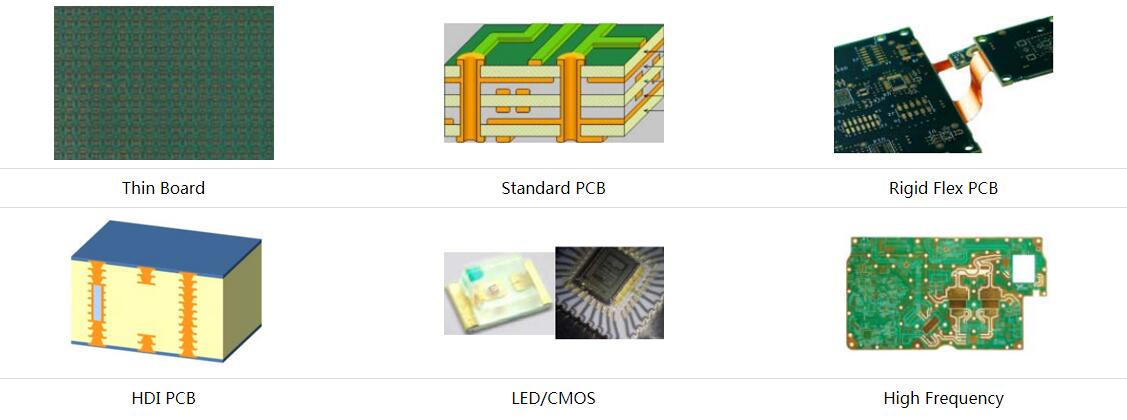
Its manufacturing capabilities include 2–70 layer PCBs, multilayer rigid PCBs, high-density interconnect (HDI) boards, microvia structures, every-layer interconnect (ELIC) PCBs, RF boards, flexible printed circuits, rigid-flex circuits, and semi-flex PCBs.
Wintech supports PCB design and layout, quick-turn prototypes, rapid prototyping, and mass manufacturing. Its services are intended to support projects ranging from early-stage development to higher-volume production.
For OEMs managing complex electronics supply chains, coordinating PCB fabrication and assembly with an experienced manufacturing partner can simplify supplier communication and improve production planning.
Explore Wintech PCB manufacturing and assembly services to review manufacturing capabilities and discuss your project requirements.
When Should OEMs Consider Wintech?
- When developing multilayer or high-density PCB designs.
- When sourcing rigid, flexible, or rigid-flex printed circuit boards.
- When requiring quick-turn PCB prototypes before production release.
- When transitioning from prototype manufacturing to repeat production.
- When evaluating a China-based PCB fabrication and assembly partner.
- When requiring a manufacturing supplier that can discuss board complexity and production feasibility.
What Information Should You Prepare Before Requesting a Quotation?
OEMs can improve quotation accuracy by preparing the following information:
- PCB Gerber files or other accepted manufacturing data.
- Bill of materials with manufacturer part numbers.
- PCB dimensions, layer count, and board thickness.
- Material and surface finish requirements.
- Controlled impedance and special fabrication requirements.
- Assembly drawings and placement files, where applicable.
- Prototype and mass-production quantities.
- Testing, inspection, and quality requirements.
- Target delivery schedule and destination.
Complete technical information helps the manufacturing partner evaluate feasibility, identify potential engineering issues, and provide a more reliable commercial quotation.
14. Expert Recommendations: Building a More Resilient Electronics Supply Chain
For OEMs, effective Electronics Supply Chain Management is a competitive advantage. It affects production continuity, product quality, working capital, and the ability to respond to changing customer demand.
We recommend focusing on five priorities rather than trying to optimize every part of the supply chain simultaneously.
| Priority | Recommended Action | Expected Business Benefit |
|---|---|---|
| Critical component sourcing | Qualify alternatives and monitor lifecycle status | Reduced shortage and obsolescence exposure |
| Supplier management | Use documented qualification and KPI reviews | More consistent delivery and quality |
| PCB manufacturing | Involve manufacturers early in complex designs | Better feasibility and production planning |
| Inventory management | Use risk-based safety stock and forecasting | Better balance between availability and working capital |
| Engineering change control | Maintain approved BOMs and revision records | Fewer sourcing and manufacturing errors |
For Startups and New Product Developers
Do not select components solely because they are easy to purchase for a prototype. Evaluate availability, lifecycle status, approved alternatives, and production suitability before committing to the design.
Establish relationships with PCB manufacturers and EMS providers early enough to identify manufacturing constraints before design release.
For Growing OEMs
As production volumes increase, informal purchasing processes become increasingly risky. Standardize BOM management, supplier approvals, forecasting, and inventory policies.
Consider turnkey or hybrid EMS arrangements if internal procurement resources cannot efficiently support the growing number of components and suppliers.
For Established Electronics Manufacturers
Focus on supply chain resilience, cost transparency, supplier performance, and product lifecycle management.
Review single-source dependencies and assess whether the existing sourcing network can support future product revisions and production growth.
Final Verdict
Electronics Supply Chain Management should be treated as a strategic manufacturing function, not simply a purchasing activity.
The most effective OEM supply chains connect engineering, component sourcing, PCB fabrication, assembly, quality management, inventory planning, and logistics through clear processes and reliable supplier relationships.
Our recommendation is to identify critical materials first, qualify suppliers according to technical and commercial requirements, coordinate PCB fabrication with assembly planning, and monitor performance using measurable indicators.
For OEMs developing complex electronic products, a qualified PCB manufacturing partner can make a meaningful difference in production consistency and supply chain coordination. The objective is not merely to buy components at a lower price. It is to build a manufacturing system that delivers the right product, at the right quality, at the right time, and at a commercially sustainable cost.
15. Frequently Asked Questions About Electronics Supply Chain Management
1. What is Electronics Supply Chain Management?
Electronics Supply Chain Management is the coordinated planning and control of electronic component sourcing, procurement, PCB fabrication, assembly, quality assurance, inventory, and logistics. It ensures that materials and manufacturing services are available to produce and deliver electronic products efficiently.
2. Why is supply chain management important for electronics OEMs?
It helps OEMs control component shortages, manufacturing delays, quality risks, inventory costs, and supplier dependency. Effective management improves production continuity and makes it easier to meet customer delivery commitments.
3. What are the biggest challenges in electronics supply chains?
The most common challenges include semiconductor shortages, long component lead times, product obsolescence, counterfeit components, supplier concentration, international logistics disruptions, and engineering changes. OEMs should identify critical BOM items and establish contingency plans before problems affect production.
4. What is the difference between an OEM and an EMS provider?
An OEM owns or manages the product requirements, design, and commercial product strategy. An EMS provider offers manufacturing services such as PCB assembly, component sourcing, testing, and production support. Their responsibilities depend on the manufacturing agreement.
5. What is turnkey PCB assembly?
Turnkey PCB assembly is a manufacturing arrangement in which the EMS provider manages component procurement and PCB assembly. It can simplify the OEM's purchasing workload, although the OEM should retain control over approved components, substitutions, traceability, and quality requirements.
6. What is the difference between turnkey and consignment manufacturing?
In turnkey manufacturing, the EMS provider generally purchases the components needed for production. In consignment manufacturing, the OEM supplies some or all components. Turnkey reduces procurement workload, while consignment gives the OEM greater direct control over sourcing and material purchasing.
7. How can OEMs reduce electronics supply chain costs?
OEMs can reduce costs through accurate forecasting, supplier consolidation where appropriate, qualified alternative sourcing, improved PCB design, reduced production defects, and better inventory management. Total landed cost should be evaluated instead of focusing only on component purchase price.
8. How should OEMs manage semiconductor shortages?
Identify critical semiconductor components, monitor manufacturer lifecycle notices, establish approved alternative parts, maintain suitable safety stock, and communicate forecasts to suppliers. Any replacement component must undergo engineering approval before production use.
9. Why is PCB manufacturing important in electronics supply chain management?
PCB fabrication determines whether the circuit board can be manufactured according to the design's electrical, mechanical, and reliability requirements. Board complexity, material availability, production capacity, and fabrication quality all affect the wider electronics manufacturing schedule.
10. How do I choose a reliable PCB manufacturing partner in China?
Evaluate technical capabilities, layer count, HDI and microvia experience, material options, quality control, electrical testing, prototype support, production capacity, communication, and delivery performance. Request a technical review and sample production before committing to larger manufacturing orders.
11. What is an approved vendor list in electronics manufacturing?
An approved vendor list identifies suppliers and component manufacturers authorized for use in a product or manufacturing program. It helps control component sourcing, manage alternatives, and reduce unauthorized substitutions. The list should be updated as suppliers and component lifecycles change.
12. Which standards are important for electronics supply chain quality?
Relevant standards depend on the product and industry. ISO 9001 addresses quality management systems, IPC standards provide guidance for electronics assembly and PCB acceptance, and industry-specific frameworks such as IATF 16949 apply to qualifying automotive supply chain operations. OEMs should identify applicable contractual and regulatory requirements rather than assuming one certification covers every need.
16. Authoritative References and Industry Standards
The following organizations provide authoritative frameworks and technical information relevant to electronics manufacturing quality, component sourcing, and supply chain management.
-
International Organization for Standardization (ISO) – ISO 9001 Quality Management Systems.
Provides the internationally recognized framework for quality management systems, including process control, supplier management, risk-based thinking, and continual improvement.
Review ISO 9001 -
IPC – Association Connecting Electronics Industries.
Develops industry standards and technical resources covering PCB design, fabrication, electronics assembly, workmanship, and product acceptance. Relevant IPC standards should be selected according to the product and contractual requirements.
Explore IPC standards and resources -
NIST – Cybersecurity Supply Chain Risk Management.
Provides guidance on identifying, assessing, and managing supply chain risks, including supplier relationships and risks associated with products and services obtained through external organizations.
Review NIST supply chain risk management resources
Practical note: These references provide general frameworks. OEMs should confirm the latest applicable editions, customer-specific requirements, and industry regulations when establishing supplier qualification and manufacturing procedures.


