

Top 10 Wholesale and Volume PCB Manufacturers in USA
Our practical view: if your program needs very large production capacity, start by evaluating manufacturers with established volume operations such as TTM Technologies and Sanmina. If your requirement is a complex, high-reliability, or medium-volume program, a specialist fabricator may provide closer engineering support and a better operational fit. The ten companies below cover different parts of that market; they are not interchangeable, and this list is a sourcing shortlist rather than a ranking by revenue or factory output.
Quick Answer: Which U.S. PCB Manufacturers Should You Contact?
For large, repeat-production PCB programs: begin with TTM Technologies and Sanmina, then compare Summit Interconnect and AdvancedPCB based on technology, volume commitment, and the exact facility assigned to your order.
For specialist or mid-volume programs: consider Sierra Circuits, American Standard Circuits, Calumet Electronics, Epec, All Flex Solutions, and Cirexx according to whether you need advanced rigid boards, RF, flex, rigid-flex, or integrated engineering and assembly support.
What wholesale and volume PCB manufacturing means: the fabrication of printed circuit boards in repeatable batches or sustained production quantities, typically supported by controlled processes, documented quality systems, production planning, and repeat-order management.
How it works: you provide fabrication data, stackup requirements, quantities, target delivery dates, and quality requirements. The manufacturer reviews manufacturability, confirms materials and process limits, produces the boards, performs the agreed inspections and tests, and ships the accepted lot.
Main benefits: repeatability, supply-chain visibility, engineering feedback, domestic production options, and better cost control when the design and forecast are stable.
Main limitations: domestic U.S. fabrication can carry a higher unit cost than some offshore alternatives. Not every U.S. board house is built for very high volume, and a company's advertised capabilities do not guarantee that every facility can manufacture your specific design.
Who should use this shortlist: OEMs, electronics brands, contract manufacturers, industrial equipment companies, and procurement teams sourcing repeat PCB production.
Who may not need a volume supplier: hobbyists, students, and teams ordering only a handful of simple prototype boards. A quick-turn prototype service is usually a more suitable starting point.
| Manufacturer | Primary fit | Technology or service focus | Best reason to evaluate |
|---|---|---|---|
| TTM Technologies | Large and complex programs | Advanced rigid, HDI, RF/microwave, flex and rigid-flex | Scale and broad advanced-technology portfolio |
| Sanmina | Integrated, high-complexity manufacturing | Complex PCB, backplane, rigid-flex and electronics manufacturing | Potential to combine board production with broader manufacturing services |
| Summit Interconnect | Advanced and high-reliability boards | Rigid, HDI, flex, rigid-flex and RF | Specialist PCB fabrication network |
| AdvancedPCB | Prototype through production | Standard and advanced rigid PCB fabrication and assembly | Useful bridge from development builds to production orders |
| Sierra Circuits | Engineering-led complex builds | HDI, multilayer, flex, rigid-flex and assembly | Design support and online quoting workflow |
| American Standard Circuits | Specialty and advanced boards | Rigid, flex, rigid-flex, RF and high-density designs | Specialized process options |
| Calumet Electronics | Domestic specialty production | Advanced multilayer and high-reliability PCB work | U.S. manufacturing focus |
| Epec | OEM sourcing and engineered builds | Rigid, flex, rigid-flex and related electronic components | Engineering and supply-chain support |
| All Flex Solutions | Flexible circuit programs | Flex and rigid-flex circuits | Specialist focus for applications where flex is essential |
| Cirexx | Complex and specialty applications | Rigid, flex, rigid-flex, RF and integrated services | Engineering support for demanding designs |
- Understanding the U.S. volume PCB market
- Top 10 manufacturers
- Manufacturer comparison table
- Domestic sourcing: pros and cons
- What to check before choosing
- Cost-benefit analysis
- When to compare Wintech
- Common sourcing mistakes
- Our recommendation
- Frequently asked questions
- References
Understanding the U.S. Wholesale and Volume PCB Market
Before contacting suppliers, separate three different requirements that are often grouped together under the phrase wholesale PCB manufacturing.
- Wholesale purchasing: buying larger quantities, often through a negotiated price structure or scheduled releases.
- Production-volume fabrication: manufacturing repeat lots with stable specifications, controlled processes, and traceable quality records.
- High-volume manufacturing: supplying sustained demand at a scale that requires capacity planning, material availability, process control, and production continuity.
A supplier that accepts a 500-piece order is not automatically equipped to support a program requiring 50,000 boards every month. Likewise, a large contract manufacturer may have substantial global manufacturing capacity but may not fabricate every bare PCB at the U.S. site you expect. Always verify the actual factory and production route.
The U.S. market has a strong role in advanced, high-reliability, defense-related, medical, industrial, RF, and specialized PCB work. However, buyers should not assume that domestic production will always be the lowest-cost option for commodity boards. A recent U.S. industry testimony has highlighted the reduced domestic share of global PCB production and the importance of strengthening the American fabrication base. That context makes it even more important to distinguish a true domestic manufacturing operation from a domestic sales office or sourcing intermediary.
For a broader overview of the supplier landscape, see our guide to PCB manufacturers in USA.
Top 10 Wholesale and Volume PCB Manufacturers in USA
The companies below are selected for their relevance to U.S. PCB sourcing, production, or specialist manufacturing. The order is editorial, not a claim that one company has more capacity or better quality than another. Before issuing a purchase order, request a current capability statement and confirm the specific manufacturing location.
1. TTM Technologies
TTM Technologies is one of the most prominent PCB manufacturers serving the U.S. and global electronics markets. Its portfolio spans conventional and advanced printed circuit boards, including HDI, RF and microwave, flex, rigid-flex, and other specialized constructions. The company serves markets such as aerospace and defense, data center computing, automotive, medical, industrial, and networking.
Why evaluate TTM: it is a logical first contact when the program requires sophisticated technology, repeat production, or a supplier with a broad manufacturing footprint. Its public financial reporting also provides useful visibility into the scale and structure of its operations.
What to verify: identify the exact U.S. facility that will build your boards, whether the requested process is available at that location, and whether the quotation assumes domestic fabrication for every production lot. Confirm capacity allocation for forecasted demand rather than relying on corporate-level scale alone.
2. Sanmina
Sanmina is a major electronics manufacturing services provider with PCB-related capabilities and a broad manufacturing network. It is relevant to buyers who want to evaluate board fabrication alongside other services such as assembly, system integration, and supply-chain management. Its manufacturing experience spans industries where product complexity, process control, and program management matter.
Why evaluate Sanmina: if your sourcing plan involves more than bare boards, an integrated manufacturing partner can reduce handoffs between fabrication, component procurement, assembly, and final product operations.
What to verify: determine whether the specific board technology will be fabricated internally, at another Sanmina facility, or through an approved partner. Ask for the facility name, country of origin, process ownership, and responsibility for nonconforming material.
3. Summit Interconnect
Summit Interconnect focuses on advanced printed circuit board manufacturing and serves customers that need demanding board technologies and engineering support. Its network of specialized facilities is relevant to aerospace, defense, medical, industrial, and other high-reliability applications.
Why evaluate Summit: a specialist PCB fabricator can be a better match than a general electronics assembler when the challenge is the board itself: layer construction, via structures, material selection, impedance control, or rigid-flex design.
What to verify: ask which facility is best suited to your stackup and whether the same facility will support repeat orders. Request details about process qualification, inspection plans, and the company's ability to maintain the same construction across revisions.
4. AdvancedPCB
AdvancedPCB serves a range of PCB requirements, from early-stage development to production orders. This makes it relevant to engineering teams that want to reduce the disruption of switching suppliers between prototype, pilot, and production phases.
Why evaluate AdvancedPCB: continuity can be valuable. A supplier familiar with the design history, engineering changes, and fabrication constraints may help reduce repeated onboarding and avoid preventable DFM issues as quantities increase.
What to verify: do not assume that prototype turnaround and production capacity are identical services. Ask for volume-specific pricing, capacity commitments, material lead times, lot traceability, and the point at which production may move to another facility.
5. Sierra Circuits
Sierra Circuits is known for PCB fabrication and assembly services, with an emphasis on engineering support and advanced board requirements. Its published service information includes rigid boards, HDI features, blind and buried vias, flex, rigid-flex, and turnkey PCB solutions.
Why evaluate Sierra: its engineering-oriented approach can help when a design needs stackup guidance, manufacturability review, or a coordinated fabrication and assembly path. This is useful for teams that want feedback before committing to a larger order.
What to verify: confirm the exact production quantity the quoted process supports, the price breaks at your forecast levels, and whether assembly is included or quoted separately. Ask whether all critical operations remain in-house for your product.
6. American Standard Circuits
American Standard Circuits is a U.S. PCB fabricator associated with advanced and specialty board technologies. Its relevance is strongest when the design needs more than a standard multilayer construction, including specialized materials, RF-related requirements, or flex and rigid-flex formats.
Why evaluate American Standard Circuits: a specialist manufacturer may provide a more direct technical conversation around construction details and process limits than a broadline supplier.
What to verify: request written confirmation of the required material system, copper weights, finished board thickness, impedance tolerances, surface finish, and any certification scope relevant to your end market.
7. Calumet Electronics
Calumet Electronics is a domestic PCB manufacturer serving applications that can require advanced multilayer construction and specialized manufacturing processes. Its U.S. manufacturing focus makes it relevant to buyers who place value on domestic supply-chain participation and direct communication with the production organization.
Why evaluate Calumet: for certain programs, manufacturing location, supply-chain visibility, and the ability to discuss technical requirements directly with the fabricator are part of the value proposition.
What to verify: ask for current layer-count limits, material availability, panel dimensions, copper capabilities, inspection methods, and available production capacity for your forecast. Validate that the required qualification applies to the exact product and facility.
8. Epec
Epec works with OEM customers on electronic components and PCB-related sourcing, including rigid, flexible, and rigid-flex circuit requirements. Its value proposition is relevant to teams that need engineering coordination and a managed sourcing relationship rather than simply uploading files for a one-time board order.
Why evaluate Epec: supplier coordination, design review, and sourcing support can matter when a product contains several interdependent electronic and mechanical components or when the buyer needs help managing a multi-part supply chain.
What to verify: clarify which operations are performed directly and which are handled through manufacturing partners. Confirm country of origin, approved factory details, audit access, change control, and responsibility for quality escapes.
9. All Flex Solutions
All Flex Solutions focuses on flexible circuit and related interconnect technologies. These boards are used where the product needs to bend, fold, fit into a constrained enclosure, or replace a cable-and-connector arrangement with a compact circuit solution.
Why evaluate All Flex: flex and rigid-flex manufacturing has different design and process considerations from conventional rigid PCB fabrication. A specialist can help with bend radius, copper design, coverlay, stiffeners, material selection, and mechanical integration.
What to verify: provide the bend-cycle expectation, dynamic or static flex classification, minimum bend radius, layer count, stiffener details, and mechanical drawings. Ask for design guidance before finalizing the layout.
10. Cirexx
Cirexx provides PCB-related engineering and manufacturing services for demanding applications, including rigid, flex, rigid-flex, and RF-oriented designs. Its integrated service approach can be relevant when the project requires close coordination between layout, fabrication, and assembly.
Why evaluate Cirexx: early technical discussion can help resolve design constraints before they become expensive production problems. This matters for unusual materials, complex stackups, and assemblies with tight mechanical or electrical requirements.
What to verify: confirm the specific facility, process ownership, current certifications, production capacity, and whether your required quantity fits the supplier's normal manufacturing model.
Comparison: Which PCB Manufacturer Fits Your Production Need?
The most useful comparison is not simply company size. It is whether the supplier's operating model matches your order profile. A manufacturer optimized for advanced low-to-medium-volume boards may not be the most economical choice for a stable commodity design with very large annual demand.
| Supplier | Most relevant buying scenario | Key question to ask | Evaluation priority |
|---|---|---|---|
| TTM Technologies | Large, complex, repeat-production programs | Which facility will build the complete order and what capacity is reserved? | Scale, technology, continuity |
| Sanmina | Integrated electronics manufacturing | Is bare-board fabrication domestic and internal for this project? | Manufacturing integration |
| Summit Interconnect | Advanced and high-reliability PCBs | Which facility and process route match this stackup? | Technical capability |
| AdvancedPCB | Prototype to production transition | How does pricing and capacity change at forecast volume? | Development continuity |
| Sierra Circuits | Complex development and production builds | Which processes are in-house and what is the repeat-lot lead time? | DFM and engineering |
| American Standard Circuits | Specialty rigid, flex, and RF designs | Can the facility meet every material and construction requirement? | Specialty process fit |
| Calumet Electronics | Domestic specialty manufacturing | What annual capacity is available for the required construction? | Domestic production |
| Epec | OEM sourcing and coordinated supply | Who is the actual fabricator and who owns quality responsibility? | Program management |
| All Flex Solutions | Flex and rigid-flex circuits | Can the design meet bend-life and mechanical requirements? | Flex specialization |
| Cirexx | Complex and specialty applications | Can the same process route support repeat orders? | Engineering support |
Domestic U.S. PCB Manufacturing: Pros and Cons
Domestic manufacturing can be the right decision, but it is not automatically the right decision for every product. We recommend judging it on total program cost, risk, quality requirements, and delivery performance rather than treating country of origin as the only deciding factor.
| Pros | Cons |
|---|---|
| Closer communication with engineering and production teams can simplify technical clarification. | Labor, overhead, and operating costs can result in a higher quoted unit price. |
| Domestic production may support customer, government, or supply-chain requirements. | Not every U.S. facility offers every advanced process or the required production capacity. |
| Shorter shipping routes can reduce some logistics risks and transit time. | Specialty materials and components may still have international supply dependencies. |
| Site visits, audits, and direct supplier engagement may be easier to arrange. | High-volume capacity may require longer planning and forecast commitments. |
| Useful for programs where traceability, controlled access, and local support are important. | Domestic origin alone does not guarantee quality, compliance, or on-time delivery. |
For buyers comparing regional supply options, our overview of best PCB manufacturers China can help frame the cost, capacity, and technology discussion. The correct comparison is between qualified factories and equivalent specifications, not between countries in the abstract.
How to Choose a Wholesale PCB Manufacturer
1. Confirm the actual production location
Ask the supplier to identify the factory that will manufacture your boards, including the location of plating, imaging, lamination, drilling, solder mask, surface finish, electrical test, and final inspection. Some suppliers operate multiple factories or use qualified partners. That is not automatically a problem, but it must be transparent.
If domestic production is a contractual or regulatory requirement, state it in the request for quotation and purchase order. Ask for country-of-origin documentation and written approval before any factory transfer.
2. Match technology to the board design
Send the actual Gerber or ODB++ data, drill files, stackup, fabrication notes, impedance requirements, and material specification. A general statement such as “we manufacture multilayer PCBs” is not enough for a demanding design.
Confirm layer count, minimum trace and space, finished hole size, aspect ratio, copper weight, board thickness, panel size, controlled impedance, via types, surface finish, and special material availability. For advanced work, ask for a DFM review before approving the quotation.
Our guide to PCB design and layout explains why design decisions made before fabrication can influence yield, cost, and lead time. You can also review our overview of PCB manufacturing to understand the main fabrication stages.
3. Check quality systems and product-level requirements
Do not rely on a logo wall. Request current certificates and check the legal entity, site address, scope, and expiry date. Depending on the application, relevant requirements may include ISO 9001, IATF 16949, ISO 13485, AS9100, ITAR registration, UL recognition, or customer-specific approvals. These are not interchangeable; choose the requirements that apply to your product and end market.
For bare-board acceptance, define the applicable IPC performance class and inspection criteria in the purchase documents. Ask how the supplier handles electrical testing, microsection analysis, impedance coupons, solderability, lot traceability, nonconformance reports, and corrective actions.
4. Evaluate repeatability, not just the first article
A successful pilot lot does not prove that the supplier can reproduce the same result for twelve months. Ask how it controls engineering changes, material substitutions, process changes, and lot-to-lot variation. For recurring orders, agree on a revision-control process and require written approval for changes that affect fit, form, function, or reliability.
5. Confirm capacity and delivery commitments
Share your forecast by month or quarter, not just the first purchase quantity. Ask for standard lead time, peak capacity, material constraints, holiday shutdown periods, and the supplier's escalation process when a delivery is at risk.
For volume orders, discuss blanket purchase orders, scheduled releases, safety stock, and consignment only where they make commercial sense. A slightly higher unit price can be worthwhile if it comes with dependable capacity and lower inventory exposure.
6. Decide whether you need fabrication only or turnkey PCBA
Some programs need bare boards only. Others benefit from a single supplier coordinating PCB fabrication, component sourcing, SMT, through-hole assembly, testing, and final delivery. A turnkey model can reduce supplier handoffs, but it also means you must evaluate component traceability, counterfeit avoidance, approved vendor controls, and assembly quality.
If you need assembled boards rather than bare PCBs, compare the supplier's PCB assembly and PCBA SMT services as a separate capability. Do not assume that a strong fabrication supplier is automatically a strong assembly supplier.
Wholesale PCB Cost-Benefit Analysis
When comparing wholesale and volume PCB manufacturers, the unit price is only one part of the purchasing decision. The real cost includes tooling, engineering time, inspection, freight, import or compliance costs where applicable, inventory, scrap, rework, and the commercial impact of late delivery.
Consider a buyer ordering 10,000 boards per year. Supplier A quotes a lower unit price but has a longer replenishment route and limited engineering support. Supplier B quotes a higher unit price but offers local technical support, shorter logistics, and a more predictable replenishment schedule. Supplier B may still be the better commercial choice if it reduces safety stock, expedite freight, and production interruptions.
Use a landed-cost model rather than deciding on the quote's first line:
- Annual board spend: unit price multiplied by forecast quantity.
- Engineering and setup: tooling, stackup review, test coupons, and first-article costs.
- Logistics: freight, insurance, customs costs where relevant, and receiving inspection.
- Quality exposure: expected scrap, rework, returns, and the cost of field failures.
- Inventory financing: cash tied up in safety stock and minimum order quantities.
- Schedule risk: line stoppages, missed customer deliveries, and expedited replacement builds.
For commercial users, a stable forecast and a frozen design often create more savings than negotiating a small discount on the first order. Ask suppliers to quote several annual-volume tiers and show the assumptions behind each tier. Confirm whether the price depends on a minimum batch size, annual commitment, material buy, or fixed release schedule.
When to Compare Wintech for PCB Manufacturing
A U.S. supplier is not always the best fit for every wholesale PCB requirement. If your program is commercially driven, needs a broad range of board technologies, or requires a route from prototype to mass production, it can be sensible to compare qualified overseas manufacturers alongside domestic options.
Wintech provides PCB design, fabrication, and assembly services from China. Its published manufacturing scope includes 2- to 70-layer printed circuit boards, including multilayer rigid PCBs, HDI, microvia, RF, ELIC, flexible printed circuits, rigid-flex, and semi-flex boards. The company describes support for prototype quantities through mass manufacturing, with engineering, quick-turn, and production services.
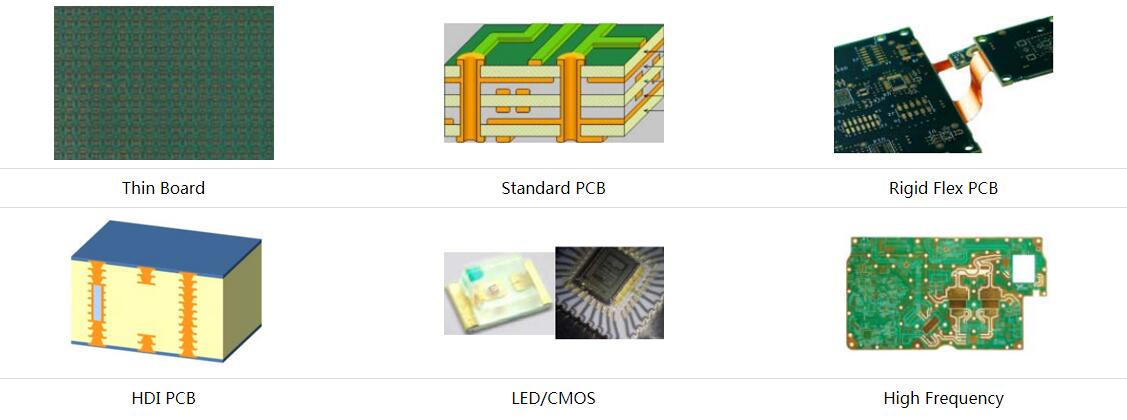
What Wintech offers: multilayer rigid PCB fabrication, high-density interconnect boards, microvia structures, RF boards, every-layer interconnect (ELIC), flexible circuits, HDI rigid-flex circuits, semi-flex boards, PCB design and layout, quick-turn prototyping, and mass manufacturing.
When it is worth requesting a quote: when you want to compare the total cost of a China-based manufacturing route, need more than a basic two-layer board, or want to coordinate fabrication and assembly with one supplier. It can also be useful when a project needs a manufacturing partner that can support both early prototypes and larger production quantities.
What to validate before choosing: request the detailed factory capability matrix, relevant certifications, sample inspection records, material traceability process, electrical test scope, production lead time, shipping terms, and a clear quality agreement. For regulated or export-controlled products, confirm all applicable legal and customer requirements before sharing design files or placing an order.
For teams planning a product launch, Wintech's quick-turn PCB prototype assembly and new product introduction (NPI) services may also be relevant. If the final product needs a complete enclosure or mechanical components, review its plastic molding, metal precision machining, and enclosures, racks, and frames capabilities.
Common Mistakes When Buying Wholesale PCBs
Choosing by unit price alone
The cheapest quote can become expensive if it excludes test requirements, uses an unapproved material equivalent, or creates long replenishment times. Compare identical technical and commercial assumptions before making a decision.
Assuming every facility has the same capabilities
Large manufacturers often operate multiple plants with different equipment, certifications, and process limits. The capability of one site does not automatically apply to another. Put the approved manufacturing location in the purchase documentation.
Confusing a PCB broker with a fabricator
A sourcing partner can add value, but buyers should know who physically manufactures the board. Ask who controls process engineering, who performs testing, who owns corrective action, and who is responsible if the product fails acceptance.
Failing to define the acceptance standard
Terms such as “IPC quality” are too vague on their own. Specify the applicable IPC standard and class, inspection requirements, electrical test expectations, and any customer-specific criteria. Align the acceptance plan before production starts.
Not planning for design revisions
Repeatedly changing the stackup, drill data, or fabrication notes can erase volume pricing benefits. Establish revision control, confirm the current released data package, and require approval for deviations.
Ordering volume before validating the pilot lot
For a new supplier or new design, use a staged qualification plan. Review first articles, test reports, and assembly fit before releasing the full production quantity. For beginners, this is one of the simplest ways to avoid turning a small engineering issue into a large inventory problem.
Expert Recommendation: Build a Shortlist Around Your Actual Production Profile
From our experience with PCB sourcing and manufacturing projects, the most effective supplier-selection process begins with the design and the production forecast—not with a generic “top manufacturer” ranking.
- For large, stable production programs: contact TTM Technologies and Sanmina first, then compare specialist suppliers if the board technology or commercial structure warrants it.
- For complex HDI, RF, rigid-flex, or high-reliability boards: evaluate Summit Interconnect, American Standard Circuits, Sierra Circuits, and Cirexx against the exact stackup and qualification requirements.
- For a prototype-to-production transition: compare AdvancedPCB and Sierra Circuits, and ask each supplier how it manages repeat lots and production capacity.
- For flexible circuits: include All Flex Solutions and other qualified flex specialists. Do not treat flex as a standard rigid-board purchase.
- For domestic sourcing requirements: confirm factory location, origin documentation, and the scope of any required certification before price negotiations.
- For cost-sensitive programs with flexible sourcing rules: compare U.S. and qualified overseas manufacturers using a common RFQ package and a total landed-cost model.
Before requesting quotes, prepare a complete package containing Gerber or ODB++ files, drill files, stackup, material requirements, board thickness, copper weight, surface finish, impedance requirements, panelization details, annual demand, order quantity, delivery schedule, and acceptance criteria. A complete RFQ produces more useful quotes and exposes capability gaps earlier.
Our related guide to top electronic contract manufacturers is useful if your sourcing project extends beyond bare PCB fabrication into component procurement and finished electronic assemblies.
Frequently Asked Questions About Wholesale and Volume PCB Manufacturers
1. What is the difference between a wholesale PCB supplier and a volume PCB manufacturer?
A wholesale PCB supplier may sell larger quantities or coordinate orders through a sourcing network. A volume PCB manufacturer is responsible for producing repeatable batches under controlled manufacturing processes. Buyers should confirm whether the supplier owns the factory or subcontracts fabrication.
2. Which U.S. PCB manufacturers are suitable for large production programs?
TTM Technologies and Sanmina are logical starting points for large or complex programs because of their broad manufacturing operations. Summit Interconnect and other specialist fabricators may also fit particular technologies or production profiles. Always verify capacity at the specific facility.
3. Are U.S. PCB manufacturers always more expensive than overseas suppliers?
Not in every situation, but domestic fabrication often has a higher quoted unit price for comparable commodity boards. The final cost depends on board complexity, quantity, yield, freight, inventory, lead time, quality requirements, and the cost of production disruption.
4. What information should I send when requesting a wholesale PCB quote?
Provide Gerber or ODB++ data, drill files, stackup, material specification, layer count, board dimensions, thickness, copper weight, surface finish, impedance requirements, quantity, annual forecast, delivery schedule, and acceptance criteria. Include special certification or country-of-origin requirements.
5. What certifications should I look for in a PCB manufacturer?
The correct certifications depend on the end market. ISO 9001 is a common quality-management foundation. Automotive, medical, aerospace, defense, and safety-related products may require additional standards, registrations, or customer approvals. Verify the certificate's scope and manufacturing-site address.
6. Can one manufacturer handle PCB fabrication and assembly?
Yes. Some suppliers offer turnkey services covering bare-board fabrication, component sourcing, SMT, through-hole assembly, inspection, and testing. Confirm which operations are performed in-house, which are subcontracted, and how component traceability is controlled.
7. Is a prototype PCB manufacturer suitable for mass production?
Not automatically. Prototype services prioritize speed and engineering iteration, while mass production requires capacity planning, stable material supply, repeatable yields, lot traceability, and long-term process control. Ask for a separate production quote and capacity review.
8. How can I reduce the cost of wholesale PCB manufacturing?
Standardize materials where possible, optimize panel utilization, avoid unnecessary tolerances, freeze the design before volume production, forecast demand accurately, and compare multiple quantity tiers. Do not remove inspection or reliability requirements simply to reduce the initial unit price.
9. Should I choose a U.S. manufacturer or an overseas PCB factory?
Choose based on product requirements, compliance, quality performance, total landed cost, lead time, communication, and supply-chain risk. Domestic manufacturing may be important for regulated or location-sensitive programs. A qualified overseas factory may be commercially attractive for other projects.
10. What is the safest way to qualify a new volume PCB supplier?
Start with a technical review and factory capability check, then place a controlled pilot order. Review first-article results, electrical test data, dimensional inspection, material records, and delivery performance. Release larger quantities only after the supplier demonstrates repeatable results.
References
The following sources provide industry, regulatory, or standards context for evaluating PCB manufacturers. They should be read alongside each supplier's current capability statement and site-specific quality documents.
- U.S.-China Economic and Security Review Commission – Testimony on the American PCB Manufacturing Base. Industry testimony discussing the domestic PCB manufacturing footprint and supply-chain context.
- IPC – Standards and Publications. The standards organization’s official resource for PCB design, fabrication, assembly, and acceptance standards.
- TTM Technologies – 2024 Form 10-K. Corporate filing with information about business operations, manufacturing footprint, markets, and reported financial performance.


