

What Should OEMs Consider When Outsourcing PCBA Manufacturing?
Every electronics original equipment manufacturer (OEM), hardware startup founder, and product development director eventually reaches the same decisive crossroads: your engineering team has validated the functional schematic, routed the multi-layer printed circuit board, and proven the firmware on prototype benches, but your internal operations cannot scale assembly. Setting up an in-house surface mount technology (SMT) line requires millions of dollars in capital expenditure: high-speed pick-and-place machines, multi-zone convection reflow ovens, automated optical inspection (AOI) stations, and automated X-ray inspection (AXI) vaults. More importantly, it requires specialized process engineering personnel capable of calibrating solder paste rheology, thermal profiling, and component feeder setups. For ninety percent of electronics hardware brands, contract manufacturing is the only commercially viable path to volume market delivery. However, signing an assembly contract without conducting rigorous technical due diligence is an enormous operational gamble. The global electronics manufacturing services (EMS) marketplace is filled with transactional brokers who cut corners: substituting grey-market components without customer sign-off, running uncalibrated thermal profiles that induce hidden micro-voiding beneath Ball Grid Arrays (BGAs), and delivering batches that fail field reliability tests within six months. Understanding what OEMs consider when outsourcing PCBA manufacturing separates market-leading hardware products from expensive warranty recalls and brand-killing field failures. As industrial PCB fabricators, SMT process engineers, and full-turnkey box-build specialists at Wintech, we review Gerber packages, inspect solder joints under automated X-ray vaults, and qualify high-density interconnect (HDI) assemblies daily. Here is our direct practitioner guide detailing the critical technical parameters, engineering audits, and supply chain safeguards that OEMs consider when outsourcing PCBA manufacturing to guarantee yield reliability and commercial profitability from initial prototype to volume production.
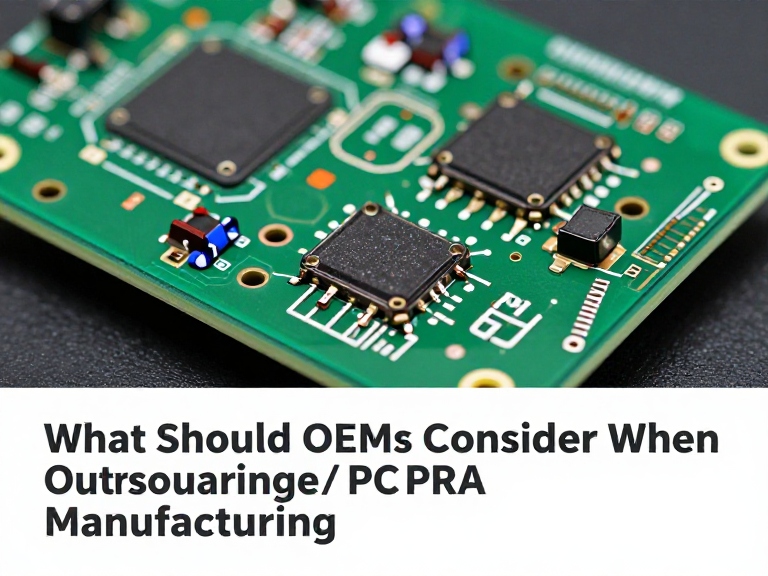
Quick Answer: What Must OEMs Consider When Outsourcing PCBA Manufacturing?
When evaluating what OEMs consider when outsourcing PCBA manufacturing, forward-thinking engineering and procurement teams audit six technical and operational pillars: (1) Engineering DFM & NPI Execution (the manufacturer's ability to run automated Design for Manufacturability, Design for Assembly, and Design for Test checks to catch layout flaws before cutting copper); (2) Component Supply Chain & Anti-Counterfeit Verification (guaranteeing 100% traceable sourcing through authorized distributors, complete moisture sensitivity level (MSL) control, and analytical component testing); (3) SMT Line Placement Precision & Equipment Matrix (verifying minimum component capability down to 01005 / 0201 passives, micro-BGA pitch handling down to 0.35mm, and multi-zone nitrogen reflow ovens); (4) Multi-Tier Quality Inspection Architecture (mandating in-line 3D Solder Paste Inspection, 3D AOI, Automated X-ray Inspection for hidden solder joints, In-Circuit Testing, and full Functional Testing); (5) Certified Industry Standards Compliance (holding ISO 9001, IATF 16949 for automotive, ISO 13485 for medical, and verified IPC-A-610 Class 2 or Class 3 workmanship); and (6) Full Turnkey Vertical Integration (combining raw board fabrication, precision SMT assembly, conformal coating, custom enclosure tooling, and complete electro-mechanical box build). Prioritizing an agile, vertically integrated partner like Wintech—capable of scaling from 2-to-70-layer board fabrication through high-reliability SMT assembly—eliminates multi-vendor finger-pointing and slashes production lead times.
Article Directory
- What It Is: The Structural Shift from Captive SMT to Contract Electronics Manufacturing
- Quick Summary Table: Core Criteria OEMs Consider When Outsourcing PCBA
- The 6 Core Technical Pillars OEMs Consider When Outsourcing PCBA Manufacturing
- Manufacturer Spotlight: Wintech Turnkey PCB & PCBA Assembly Solutions
- Direct Technical Comparison: Tier-1 Mega-EMS vs. Agile Specialized OEM Partner vs. Assembly Broker
- Pros and Cons: Full Turnkey Outsourcing vs. Consignment Assembly vs. In-House Production
- Commercial Realities: Balancing Unit Cost Against Quality Yield and Warranty Liabilities
- Who Should Outsource PCBA Manufacturing vs. Who Should Maintain In-House Assembly
- 5 Costly Mistakes OEMs Make When Outsourcing PCBA Manufacturing
- Essential Sourcing Checklist: Auditing an EMS Assembly Facility
- Expert Sourcing Verdict: The Hardware OEM Manufacturing Blueprint
- Frequently Asked Questions
- Authoritative References & Electronics Assembly Standards
What It Is: The Structural Shift from Captive SMT to Contract Electronics Manufacturing
To evaluate what OEMs consider when outsourcing PCBA manufacturing with technical competence, one must first dismantle the outdated perception that printed circuit board assembly (PCBA) is simply a matter of soldering components to a board. In modern microelectronics, component density has escalated dramatically. With passive components shrinking to 01005 (0.4mm × 0.2mm) footprints, multi-thousand-pin Fine-Pitch Ball Grid Arrays (FBGA) featuring ball pitches below 0.4mm, and high-frequency RF routing requiring micro-vias, electronic assembly has transformed into a high-precision chemical and metallurgical discipline.
When an OEM decides to outsource, they are transferring their intellectual property files into one of two operational models:
- Consignment Assembly Model: The OEM purchases, verifies, kits, and ships all raw printed circuit boards, active microcontrollers, passive capacitors, and connectors to the EMS provider. The contract assembler acts strictly as a labor and equipment provider, charging a conversion fee per placement. While this model gives the OEM absolute control over component batch lot numbers, it ties up immense internal operating capital in inventory holding, forces internal teams to manage hundreds of component vendor line items, and creates complex accountability disputes if component defects cause assembly line fallout.
- Full Turnkey PCBA Model: The OEM hands over the complete engineering data package: bill of materials (BOM), Gerber/ODB++ layout files, pick-and-place centroid data, and functional test specifications. The turnkey EMS partner manages the entire procurement lifecycle: fabricating the bare circuit boards, sourcing certified electronic components through global franchised supply lines, manufacturing precision laser-cut stencils, executing SMT and through-hole soldering, programming microcontrollers, conducting environmental stress screening, and packaging finished boards.
In most professional situations, leading technology companies transition rapidly toward full turnkey partnerships. Managing component procurement across dozens of disparate manufacturers is an operational distraction for engineering-focused OEMs. Partnering with a comprehensive provider that unifies raw PCB Manufacturing with precision PCB Assembly & PCBA SMT operations eliminates the friction of multi-vendor finger-pointing and allows engineering teams to focus on core product innovation.
Quick Summary Table: Core Criteria OEMs Consider When Outsourcing PCBA
| Evaluation Vector | Target Technical Benchmark | Primary Engineering Driver | Catastrophic Failure Prevented | OEM Value Impact |
|---|---|---|---|---|
| 1. DFM / NPI Engineering | Automated Valor/Genesis DFM run prior to tooling | Checks pad-to-trace ratios, solder dam width, thermal relief | Tombstoning, solder bridges, unroutable traces | Prevents 4-6 week tooling redesign cycles |
| 2. Supply Chain Integrity | 100% Franchised Traceability; ISO/IEC 17025 lab verification | Direct OCM lot trace, MSL Level 3+ dry-bake storage | Counterfeit ICs, ghost silicon, oxidized leads | Protects against catastrophic field recall liabilities |
| 3. SMT Placement Precision | Placement accuracy ±0.025mm; fine-pitch ≤ 0.35mm BGA | Dual-gantry multi-head mounters with optical alignment | BGA bridging, skewed passives, open solder joints | Guarantees first-pass yield on high-density boards |
| 4. Thermal Reflow Profiling | 10-to-12-zone nitrogen reflow; real-time KIC thermal profiling | Controlled peak delta-T (≤ 5°C) across board mass | Component popcorning, de-lamination, cold joints | Preserves intermetallic layer structural integrity |
| 5. Multi-Tier Inspection | In-line 3D SPI + 3D AOI + 3D AXI (X-ray) + ICT / FCT | Volumetric solder paste verification, 100% hidden-joint audit | Head-in-Pillow (HiP) voids, internal BGA bridging | Drives final defect rates below 50 PPM |
| 6. Vertical Turnkey Scope | Bare PCB + SMT + Conformal Coat + Box Build integration | Internal CNC machining, wire harnesses, plastic enclosures | Interface misalignment between board and chassis | Delivers dock-to-stock finished, packaged goods |
The 6 Core Technical Pillars OEMs Consider When Outsourcing PCBA Manufacturing
1. Engineering DFM, DFA, and NPI Methodology
The first parameter that experienced OEMs consider when outsourcing PCBA manufacturing is the technical depth of the EMS provider's front-end engineering team. A transactional assembler blindly loads whatever Gerber and pick-and-place files you send into their machines, stamps out boards, and leaves you to figure out why thirty percent of the batch does not boot. A true manufacturing partner subjects your design to rigorous Design for Manufacturability (DFM), Design for Assembly (DFA), and Design for Testability (DFT) scrutiny before a single stencil is cut.
In our testing and design audits, over eighty percent of prototype assembly defects are baked into the layout:
- Component Spacing and Stencil Aperture Ratios: Placing a tall electrolytic capacitor or inductor immediately adjacent to an 0402 passive resistor prevents the SMT placement nozzle from seating correctly and blocks automated optical inspection cameras from viewing the solder fillet. DFM engineers optimize component spacing and design stepped stencils to deposit precise solder paste volumes.
- Thermal Relief and Tombstoning Prevention: When one pad of a small two-pin passive component is connected to a massive ground plane while the opposing pad connects to a thin trace, the ground plane acts as a thermal heat sink during reflow. The solder on the thin trace melts first, exerting surface tension that pulls the component vertical on one end—a defect known as tombstoning. DFM engineers enforce correct thermal relief spokes to balance heat absorption.
- Structured NPI Process: Fast-scaling brands rely on structured New Product Introduction NPI workflows, starting with small-batch Quick Turn Fast PCB Prototype Assembly runs (5 to 50 pieces) to validate assembly yields, refine thermal profiles, and generate comprehensive Engineering Change Orders (ECO) before releasing master panels for volume production.
2. Component Supply Chain Traceability and Anti-Counterfeit Verification
The global semiconductor supply chain has become increasingly complex. Component obsolescence, erratic factory lead times, and sudden microchip allocations have created an aggressive black market for counterfeit semiconductors: recycled microchips pulled off e-waste boards, sanded clean, and laser-etched with fraudulent part numbers; empty plastic silicon packages containing zero internal dies; and down-binned processors marked as high-reliability industrial grades. For OEMs building mission-critical products across Industrial automation, Automotive Electronics, or Communications infrastructure, an unvetted component can cause intermittent field lockups that are impossible to diagnose via firmware.
When analyzing what OEMs consider when outsourcing PCBA manufacturing, certified component sourcing integrity is non-negotiable. Settle for nothing less than:
- Strict Franchised-Only Procurement Protocols: Sourcing 100% of Bill of Materials line items through authorized, tier-one franchised distributors (such as Arrow, Avnet, DigiKey, Mouser) with unbroken Certificate of Conformance (CoC) paperwork tracing back to the Original Component Manufacturer (OCM).
- Independent Laboratory Validation for Open-Market Buys: In the rare event that an obsolete component must be sourced from secondary markets, the EMS provider must maintain verified testing protocols: decapsulation die microscopic verification, X-ray inspection of internal bond wires, X-Ray Fluorescence (XRF) elemental leadframe spectrometry, and full pin correlation testing.
- Strict Moisture Sensitivity Level (MSL) Management: Plastic-encapsulated integrated circuits absorb atmospheric humidity. If an MSL 3 or MSL 4 rated microchip is placed into a 245°C reflow oven without proper baking, the internal moisture instantly expands into high-pressure steam, cracking the silicon package internally—a catastrophic defect known as the popcorn effect. The manufacturer must operate cleanroom dry-cabinet storage and vacuum-sealing baking ovens governed by standards like IPC/JEDEC J-STD-033.
3. SMT Placement Precision, Reflow Profiling, and Soldering Metallurgy
The mechanical capability of an SMT line dictates the complexity of the products an OEM can bring to market. If your product architecture requires high-density computing powered by systems in Computing & Storage or green energy controllers in Clean Technology, your boards will inevitably incorporate ultra-fine-pitch BGAs, Quad Flat No-Lead (QFN) packages, and microscopic passives.
When auditing an assembly line, verify these mechanical benchmarks:
- Pick-and-Place Machine Caliber: Modern lines must utilize high-speed, dual-gantry mounters (such as Fuji, ASM Siplace, or Panasonic) equipped with optical vision centering capable of placing components down to 01005 passives and 0.3mm micro-BGAs with a positioning repeatability of at least ±0.025mm at 3-sigma.
- Multi-Zone Convection Reflow with Nitrogen Inerting: Solder quality is dictated by the thermal reflow curve. Settle for nothing less than a 10-zone or 12-zone convection reflow oven equipped with a continuous nitrogen ($N_2$) inerting environment (maintaining oxygen levels below 500 PPM). Nitrogen displacement prevents surface oxidation of copper pads and solder powder during reflow, significantly improving wetting angles and eliminating micro-voiding beneath large ground pads.
- Wave and Selective Soldering for Mixed Technology: If your board design combines dense SMT components on one side with heavy through-hole connectors, inductors, or transformers on the reverse, hand-soldering with manual irons produces erratic quality and dangerous thermal shock. The facility must deploy programmable selective soldering machines that micro-jet flux and molten solder precisely onto through-hole pins without disturbing adjacent surface-mount parts.
4. Multi-Tier Quality Inspection: SPI, AOI, AXI, and Functional Testing
A manufacturing line is only as reliable as its inspection infrastructure. A critical reality that OEMs consider when outsourcing PCBA manufacturing is that defects must be caught at the exact process step where they occur, rather than at the end of the line. Solder paste printing accounts for roughly 60% to 70% of all PCBA defects; discovering an insufficient solder volume bridge after a multi-pin BGA has already been soldered down requires expensive rework and risks damaging the raw PCB substrate.
A tier-one PCBA operation enforces a four-stage inspection hierarchy:
- In-Line 3D Solder Paste Inspection (3D SPI): Positioned immediately after the stencil printer. The 3D SPI uses structured moiré light or laser triangulation to measure the height, area, volume, and alignment of every single printed solder paste deposit. If paste volume on a 0.4mm BGA pad drops below 75% or bridges across adjacent pads, the board is automatically rejected and washed clean before any expensive active silicon is placed.
- 3D Automated Optical Inspection (3D AOI): Deployed both pre-reflow (to verify component presence, polarity, and orientation) and post-reflow. Unlike older 2D cameras that struggle with reflective solder surfaces, 3D AOI projects multi-directional light to measure the true physical height and curvature of solder fillets, catching lifted leads, tombstoning, and component coplanarity defects.
- Automated X-Ray Inspection (2D/3D AXI): Critical for components with hidden solder connections underneath the chip package: BGAs, Land Grid Arrays (LGAs), and QFN thermal ground pads. High-resolution X-ray reveals internal solder voiding (mandating voiding levels stay strictly under 15% to 25% per IPC standards), bridges, solder balls, and Head-in-Pillow (HiP) defects where the component lead rested in paste without properly fusing.
- In-Circuit Testing (ICT) & Functional Testing (FCT): ICT utilizes a dedicated bed-of-nails fixture or flying-probe tester to measure resistance, capacitance, diode junctions, and trace continuity across all onboard test points. Following ICT, the board is powered up inside custom-engineered Functional Test fixtures that flash firmware, verify RF wireless output power, calibrate sensors, and validate communication bus lines (CAN, SPI, I2C, Ethernet) under full electrical load.
5. Certified Quality Management Systems and Workmanship Standards
Certificates hanging on a factory lobby wall do not guarantee quality on their own; however, the absence of verified certifications is a bright red warning flag. The manufacturing standards that OEMs consider when outsourcing PCBA manufacturing must align directly with the regulatory requirements of the end-market sector.
Ensure the contract manufacturer maintains active, audited registrations:
- ISO 9001:2015: The foundational baseline for quality management systems across production consistency, calibration records, and corrective action workflows (CAPA).
- IATF 16949: Essential for automotive electronics. Enforces extreme statistical process control, Failure Mode and Effects Analysis (FMEA), and Advanced Product Quality Planning (APQP).
- ISO 13485: Mandatory for medical device manufacturing. Requires comprehensive risk management, cleanroom manufacturing controls, and sterile batch traceability.
-
IPC-A-610 Workmanship Classifications: Your manufacturing contract must explicitly dictate the workmanship standard:
- IPC Class 2 (Standard Commercial): Standard for consumer electronics, commercial appliances, and general computing where sustained performance is expected but non-critical.
- IPC Class 3 (High Reliability / Harsh Environment): Mandatory for medical life-support, aerospace, military, and harsh industrial automation where un-interrupted operation is life-critical. Enforces tighter barrel fill requirements (75% minimum on through-holes) and strict visual inspection thresholds.
6. Full Turnkey Vertical Integration and Box-Build Capabilities
The final and most commercially significant factor that forward-thinking OEMs consider when outsourcing PCBA manufacturing is the contractor's ability to take the product across the finish line. An assembled circuit board is useless to your end customer until it is flashed with software, conformally coated, wired with internal cabling, fastened inside a structural chassis, tested as a complete electro-mechanical unit, and packaged inside retail-ready cartons.
If your PCBA assembler only places components, you are forced to manage an inefficient secondary supply chain: shipping raw PCBAs to a second vendor for conformal coating, sending them to a third vendor for wire harness assembly, and coordinating with a fourth vendor for enclosure assembly. This fragmented approach inflates shipping freight costs, multiplies packaging waste, and creates massive finger-pointing if the finished device rattles or fails an IP67 water-ingress test. Partnering with a vertically integrated EMS provider that operates in-house Plastic Molding, custom Metal Precision Machining, and custom Enclosures & Racks & Frames fabrication allows you to ship dock-to-stock finished, packaged goods directly to your distribution centers.
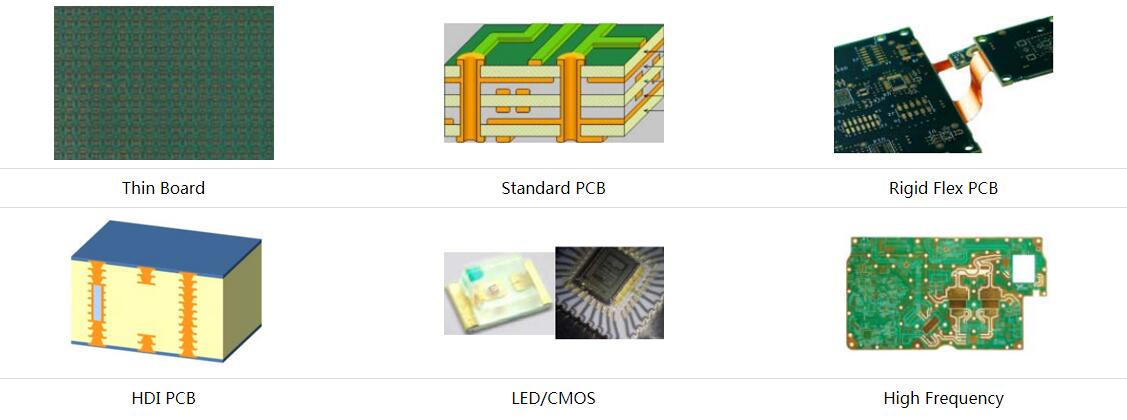
Enterprise Manufacturing Spotlight: Wintech Turnkey PCB & PCBA Assembly Solutions
Navigating the complex mechanical, chemical, and component supply challenges of electronics manufacturing requires a vertically integrated partner with proven global delivery capabilities. Wintech operates as a premier China-based turnkey PCB fabrication and SMT assembly manufacturer, delivering agile high-mix, high-reliability production from initial NPI through mass volume manufacturing.
| Bare PCB Fabrication Scope | 2 to 70 layered high-density interconnect (HDI) PCBs, Microvia, RF, Every Layer InterConnect (ELIC), Rigid-Flex, and flexible printed circuits (FPC) |
| SMT Assembly Precision | Ultra-fine pitch placement down to 01005 passives, 0.3mm micro-BGA packages, QFNs, and high-pin-count processors |
| Quality Assurance Fleet | In-line 3D Solder Paste Inspection (SPI), high-resolution 3D AOI, Automated 3D X-Ray Inspection (AXI), and custom functional test fixtures |
| Standards & Workmanship | ISO 9001 certified, IATF 16949 automotive capabilities, and certified IPC-A-610 Class 2 and Class 3 assembly protocols |
| Full Box-Build Integration | Complete electro-mechanical box build: in-house plastic injection molding, precision CNC metal machining, and custom sheet metal enclosures |
Process Engineer's Sourcing Advice: Eliminate multi-vendor coordination bottlenecks and secure end-to-end accountability. Review our complete manufacturing capabilities directly on the official PCB Manufacturing services portal, or evaluate our high-layer-count capabilities across our dedicated PCB Manufacturing engineering division.
Direct Technical Comparison: Tier-1 Mega-EMS vs. Agile Specialized OEM Partner vs. Assembly Broker
| Operational Parameter |
Tier-1 Global Mega-EMS (Foxconn, Jabil, Flex) |
Agile Specialized OEM Partner (Wintech Manufacturing Model) |
Low-Cost Assembly Broker (Third-Party Trading Intermediary) |
|---|---|---|---|
| Minimum Annual Order Value | $5M – $50M+ (Rejects low-to-mid volumes) | Flexible (Agile NPI prototypes to high volume) | Low (Accepts small one-off orders) |
| Engineering DFM Attention | Impersonal; reserved strictly for top-paying accounts | Dedicated engineering review on every BOM line | Zero (Blind placement without review) |
| Supply Chain Transparency | High, but heavily bureaucratic allocation | 100% Transparent franchised OCM trace records | Opaque (High risk of grey-market components) |
| Production Flexibility & NRE | Rigid change orders; $20k+ tooling and setup | Rapid NRE turnaround; agile line changeovers | Low cost upfront, massive quality rework cost |
| Internal Bare PCB Fabrication | Subcontracted out to separate board fabricators | Direct vertically integrated in-house PCB production | Outsourced to cheapest local shop |
| Customer Engineering Access | Filtered through multiple layers of account managers | Direct line to SMT process engineers & QA directors | Sales agents with zero technical engineering depth |
Pros and Cons: Full Turnkey Outsourcing vs. Consignment Assembly vs. In-House Production
| Manufacturing Strategy | Documented Operational Advantages (Pros) | Real-World Industrial Liabilities (Cons) |
|---|---|---|
|
Full Turnkey Outsourcing (e.g., Wintech Complete Service) |
|
|
|
Consignment Assembly (OEM Supplies All Raw Materials) |
|
|
|
Captive In-House SMT Line (OEM Buys Machines & Assembles) |
|
|
Commercial Realities: Balancing Unit Cost Against Quality Yield and Warranty Liabilities
The single most destructive financial mistake an electronics OEM can make during procurement is choosing an EMS partner based solely on the lowest placement quote per surface-mount component. In commercial electronics manufacturing, the assembly quote on a spreadsheet accounts for only a fraction of the product's true commercial cost. The real financial driver is First-Pass Yield (FPY) and the catastrophic cost of field warranty returns.
Consider the real-world manufacturing mathematics of an IoT or industrial controller project running 10,000 units:
- The "Cheap" Assembly Broker Trap: A low-cost assembler quotes $4.00 less per board by using uncalibrated 2D optical inspection, running non-inerted atmospheric reflow ovens, and sourcing passives from unvetted regional distributors. On paper, the OEM saves $40,000 upfront.
- The Production Fallout: Because the assembler skipped 3D Solder Paste Inspection, twenty percent of the micro-BGA packages suffer from intermittent Head-in-Pillow solder joints. The boards pass simple factory power-on tests, but once deployed in customer environments subject to thermal cycling and industrial vibration, the solder joints fracture.
- The Financial Catastrophe: The OEM is hit with a fifteen percent field failure rate. Recalling 1,500 units deployed in the field costs over $300,000 in truck rolls, expedited replacement shipping, technician diagnostic labor, and permanent loss of enterprise client trust. The initial $40,000 "savings" turns into a catastrophic quarter-million-dollar loss.
In most professional situations, we recommend evaluating manufacturing partners on their Cost of Quality (CoQ). Investing in a qualified partner that maintains automated 3D SPI, automated X-ray inspection for every BGA, and certified component supply chains protects your enterprise from existential field failure liabilities.
Who Should Outsource PCBA Manufacturing vs. Who Should Maintain In-House Assembly
Every commercial hardware enterprise must balance internal core competencies against manufacturing overhead. Deciding when to outsource versus when to maintain internal assembly operations is a straightforward commercial calculation.
Organizations That Must Outsource PCBA Manufacturing:
- Hardware Startups & Emerging Scale-Ups: Venture-backed hardware brands and fast-growing IoT companies whose core enterprise value lies in proprietary software, user experience, and industrial design. Burning venture capital on SMT pick-and-place equipment and cleanroom leases is a massive misallocation of funds.
- Medium-to-High Volume Commercial Electronics Brands: Companies producing thousands of units per month across computing, automotive telematics, consumer devices, and clean energy systems. You need the volume component purchasing leverage and automated mass-production speeds that only dedicated EMS plants can deliver.
- High-Reliability Industrial & Medical OEMs: Companies whose products require certified cleanroom assembly, automated 3D X-ray inspection, and ISO 13485 / IATF 16949 compliance. Building and certifying an internal line to these regulatory standards costs millions of dollars and takes years of auditing.
When Maintaining In-House Assembly Makes Sense:
- Classified Defense & Top-Secret Aerospace Research: Facilities developing proprietary cryptographic hardware or defense systems subject to extreme government security clearances where hardware files cannot legally leave a secure domestic vault.
- Rapid Pure-R&D Lab Benching: Maintaining a small benchtop manual pick-and-place or compact prototype reflow oven for immediate same-day proof-of-concept testing of two-layer experimental circuit designs before handing them off to commercial partners.
5 Costly Mistakes OEMs Make When Outsourcing PCBA Manufacturing
Factory Floor Advisory: The "Unfrozen Bill of Materials" Disaster
The most common mistake we witness occurs when an OEM engineering team sends a preliminary Bill of Materials (BOM) to an assembler for quotation, updates component footprints or capacitor dielectric values during final firmware testing, but fails to issue a formal, version-controlled engineering change notification (ECN) to the production floor. The assembler purchases the original line items; when the components arrive at the high-speed mounter, the SMT machine attempts to place a 0603 passive on a newly revised 0402 footprint, instantly stalling the production line. Never release a PCBA order into procurement without locking the BOM, schematic, and centroid coordinate files under strict, signed version control.
- Specifying Obsolete or End-of-Life (EOL) Components: Designing a board around a microcontroller or power management IC without running a real-time lifecycle status check. If the chip enters EOL or has a 52-week factory allocation backlog, your entire product rollout stalls, forcing a painful board redesign. Require your EMS partner to run automated BOM lifecycle scrubbing to flag EOL and Not-Recommended-for-New-Designs (NRND) parts before fabrication.
- Neglecting Test Point Access on Dense Layouts: Routing high-speed traces and packing components so tightly that zero room is left for dedicated In-Circuit Test (ICT) pads. Without physical test points connected to critical voltage nets, ground planes, and programming pins, the assembler cannot run automated bed-of-nails or flying-probe testing. You are forced to rely solely on functional pass/fail testing, drastically increasing diagnostic troubleshooting time when a board fails to boot.
- Failing to Account for Solder Mask Dam Tolerances on Fine-Pitch ICs: Designing QFN or micro-BGA packages with less than 0.08mm (3 mils) of solder mask clearance between adjacent copper pads. If the PCB fabricator cannot hold a physical solder mask dam between pins, molten solder will flow across the bare laminate during reflow, creating microscopic solder bridges beneath the chip that are invisible to optical cameras.
- Accepting Vague "Equivalents" Without Engineering Sign-Off: Permitting an offshore assembler to use "equivalent" alternative components for capacitors, resistors, or crystal oscillators without reviewing the specific datasheet. In high-speed digital and RF circuits, a cheap capacitor with an unverified Equivalent Series Resistance (ESR) or a crystal oscillator with high frequency drift will cause intermittent microprocessor crashes and failed EMC electromagnetic emissions testing.
- Treating PCB Fabrication and PCB Assembly as Separate Silos: Contracting raw board fabrication with Factory A and assembly with Factory B. When an assembly line encounters solder de-wetting, barrel cracking, or board warpage, Factory B will blame Factory A's surface finish, while Factory A will blame Factory B's reflow thermal profile. Partnering with a unified provider that controls both PCB Manufacturing and PCB Assembly & PCBA SMT under one roof establishes absolute single-source accountability.
Essential Sourcing Checklist: Auditing an EMS Assembly Facility
Before transferring intellectual property, signing Master Services Agreements (MSA), or releasing production deposits to any contract manufacturing partner, require prospective facilities to verify compliance across these four non-negotiable operational benchmarks:
1. Verified SMT Machinery Fleet and Placement Caliber
Demand documented equipment lists and video/on-site verification of the SMT floor:
- Do they operate automated in-line 3D Solder Paste Inspection (SPI) with closed-loop feedback to the stencil printer?
- Are pick-and-place machines calibrated for minimum component handling matching your design (e.g., 0201/01005 passives and 0.35mm pitch BGAs)?
- Do they operate multi-zone convection reflow ovens equipped with nitrogen purging, monitored by daily KIC thermal profilers?
- Review assembly workmanship guidelines established by IPC International: IPC-A-610 Acceptability of Electronic Assemblies & J-STD-001 Requirements for Soldered Electrical Assemblies.
2. Traceable Component Procurement and Moisture Storage
Audit their material management warehouse:
- Are components sourced exclusively through authorized franchised distribution with unbroken chain-of-custody documentation?
- Do they maintain dedicated, climate-controlled desiccant dry cabinets maintaining relative humidity strictly below 5% RH for moisture-sensitive surface-mount devices (SMDs)?
- Do they operate cleanroom reel-labeling systems tracking exact internal lot codes, date codes, and feeder assignments for complete batch trace recall capabilities?
3. Certified Quality Management Systems and Regulatory Audits
Ensure the facility maintains active, unexpired third-party audited certifications:
- Active registration under ISO 9001:2015 Quality Management Systems.
- Industry-specific credentials: IATF 16949 for automotive electronics, or ISO 13485 for medical devices.
- Compliance with national physical calibration and traceability standards governed by the National Institute of Standards and Technology (NIST) Physical Measurement Standards.
4. Total Vertical Value-Add Integration
A high-competence EMS partner does not stop at bare surface-mount soldering. Verify their ability to deliver end-to-end electro-mechanical completion:
- Automated selective conformal coating and potting dispensing to protect boards from moisture and industrial chemicals.
- Custom In-Circuit (ICT) and Functional Test (FCT) engineering teams that write automated firmware testing scripts.
- Turnkey box-build integration: assembling the finished boards directly into custom plastic or metal enclosures, conducting cable harnessing, and delivering fully packaged retail units ready for end-user deployment.
Expert Sourcing Verdict: The Hardware OEM Manufacturing Blueprint
In our professional assessment across decades of electronics manufacturing and global supply chain operations, the verdict is definitive: what OEMs consider when outsourcing PCBA manufacturing should never be reduced to a race to the lowest placement price per component. Saving pennies on an SMT quote while accepting unverified component brokers, missing 3D SPI inspection, and un-optimized DFM layouts is an expensive operational blunder that destroys enterprise hardware brands.
Here is your clear, actionable procurement roadmap:
- Conduct DFM Before Freezing Layouts: Involve your manufacturing partner during the routing phase. Running automated DFM/DFA checks catches thermal bridging, tombstoning risks, and component shadow zones while layout changes take minutes rather than weeks.
- Mandate In-Line 3D SPI and 3D AXI for All Dense Assemblies: Never allow an assembler to build boards containing BGAs, QFNs, or 0201 passives without volumetric 3D solder paste inspection and automated X-ray inspection. Zero-defect assembly requires catching paste and voiding defects before boards leave the line.
- Insist on 100% Franchised Component Traceability: Close the door on counterfeit silicon. Demand verified distributor paper trails and strict MSL baking protocols for all surface-mount integrated circuits.
- Partner with a Vertically Integrated Turnkey Leader: Eliminate fragmented multi-vendor supply chains. Partner directly with an experienced, asset-backed manufacturing expert like Wintech. By unifying 2-to-70-layer bare PCB fabrication, precision high-speed SMT assembly, automated testing, and complete box-build enclosure integration under one roof, Wintech gives your enterprise single-source accountability, guaranteed IPC Class 2/3 quality, and scalable production agility that brings your products to market on schedule, on budget, and built to perform for years in the field.
Frequently Asked Questions
The core factors OEMs consider when outsourcing PCBA manufacturing include the electronic manufacturing services (EMS) provider's technical surface mount technology (SMT) capabilities, design for manufacturability (DFM) engineering depth, component supply chain traceability to prevent counterfeit parts, comprehensive inspection infrastructure (3D SPI, AOI, AXI X-ray), certified quality management systems (ISO 9001, IATF 16949, ISO 13485), and full turnkey box-build integration capabilities.
OEMs must demand verified procurement pathways from franchised distributors (such as Arrow, Avnet, DigiKey, or Mouser) with complete traceability back to the original component manufacturer (OCM). When sourcing obsolete or broker parts is unavoidable, the contract manufacturer must perform incoming analytical validation: decapsulation die verification, X-ray inspection of internal leadframes, XRF elemental metallurgy checks, and electrical pin correlation against OCM datasheets.
Design for Manufacturability (DFM) evaluates panelization, component spacing, thermal relief, solder mask dams, and testpoint distribution before fabrication. In our testing, running early DFM identifies acid traps, tombstoning hazards, solder bridging risks under ultra-fine pitch BGAs, and automated optical inspection shadow zones, preventing multi-week board redesigns and reducing initial yield losses by up to 30 percent.
IPC Class 2 covers dedicated service electronic products where sustained performance and extended life are required, but uninterrupted service is not critical. IPC Class 3 applies to high-reliability electronic systems (such as medical life-support, aerospace, and critical automotive applications) where un-interrupted uptime is mandatory, equipment downtime is unacceptable, and the operating environment is harsh. Class 3 enforces significantly tighter tolerances on barrel fill for through-hole joints (75% minimum), solder voiding under QFN/BGA thermal pads (under 15-25%), and stricter surface contamination limits.
Authoritative References & Electronics Assembly Standards
- IPC International: IPC-A-610 Acceptability of Electronic Assemblies & J-STD-001 Requirements for Soldered Electrical and Electronic Assemblies
- International Organization for Standardization (ISO): ISO 9001 Quality Management Systems & ISO 13485 Medical Devices Standards
- National Institute of Standards and Technology (NIST): Measurement Standards, Metrology, and Traceability Protocols for Microelectronics


