

Box Build Assembly vs PCBA: What Is the Difference?
Every electronics original equipment manufacturer (OEM) eventually faces a decisive manufacturing milestone: should you source populated circuit boards and manage final mechanical assembly in-house, or hand over complete turnkey electromechanical production to an integrated contract manufacturing partner? In engineering discussions and procurement contracts, the debate over Box Build Assembly vs PCBA is frequently oversimplified as a choice between a board and a box. In actual factory operations, this distinction represents two fundamentally different manufacturing tiers, commercial risk profiles, and supply chain commitments. Making the wrong procurement call can tie up your internal engineering team with manual chassis integration, inflate freight expenses, and leave your brand vulnerable to warranty finger-pointing between separate board fabricators and mechanical assemblers.
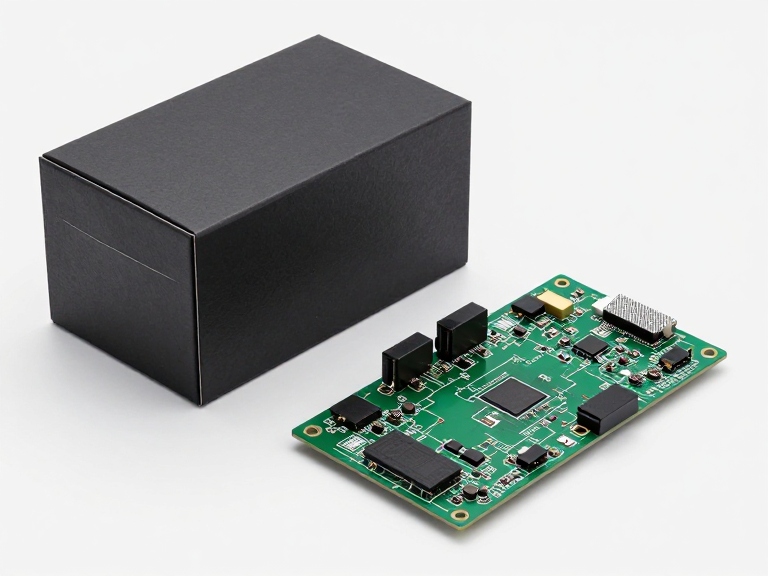
Quick Answer: Box Build Assembly vs PCBA
The definitive operational difference in Box Build Assembly vs PCBA lies in the level of product completion and functional integration. PCBA (Printed Circuit Board Assembly) is the process of populating bare boards with active and passive surface-mount and through-hole components to create an operational electronic sub-assembly. Box Build Assembly (also known as full systems integration) encompasses the complete electromechanical build: installing the finished PCBA into an enclosure, routing custom wire harnesses, integrating displays, power supplies, and thermal heat sinks, flashing firmware, and conducting comprehensive system-level functional testing. If you operate an internal factory equipped for final mechanical packaging and manual calibration, purchasing PCBA alone makes sense. If you want a shippable, retail-ready or field-deployable commercial unit with unified single-source accountability, turnkey Box Build Assembly is the superior commercial choice.
Article Directory
- What Is PCBA and How Does Board-Level Assembly Work?
- What Is Box Build Assembly and How Does System Integration Work?
- Quick Summary Table: Box Build Assembly vs PCBA
- The 6 Core Differences Analyzed: Engineering to Commercial Risk
- Turnkey Solution Spotlight: Wintech PCB Manufacturing & Box Build
- Detailed Comparison Table: Technical, Operational, and Supply Chain Factors
- Pros and Cons: PCBA Sourcing vs. Full Turnkey Box Build
- Decision Framework: Who Should Buy PCBA vs. Who Needs Box Build
- Total Cost of Ownership (TCO) & Supply Chain Economics
- Common Procurement and Engineering Mistakes
- Essential Sourcing Considerations When Vetting an EMS Partner
- Expert Recommendations for Production Programs
- Frequently Asked Questions
- Authoritative Regulatory & Industry Standards
What Is PCBA and How Does Board-Level Assembly Work?
Printed Circuit Board Assembly (PCBA) is the foundational electronic stage of hardware manufacturing. It transforms an unpopulated, non-functional bare board—whether a rigid FR-4 panel, flexible circuit, or high-density interconnect (HDI) substrate—into an active electronic module. The process is governed by strict industry criteria, primarily IPC-A-610 (Acceptability of Electronic Assemblies) and J-STD-001 (Requirements for Soldered Electrical and Electronic Assemblies).
In modern surface-mount technology (SMT) lines, PCBA involves several high-speed automated stages:
- Solder Paste Stenciling: Automated vision-aligned printers deposit precise volumes of solder paste onto bare copper surface pads.
- High-Speed Pick-and-Place: Robotic gantry mounters place microscopic passive chips (down to 01005 packages) and high-pin-count micro-BGAs at speeds exceeding 40,000 components per hour.
- Thermal Reflow Soldering: Multi-zone nitrogen reflow ovens expose the populated board to precise thermal profiles, melting the solder alloy without thermal shock to delicate silicon dies.
- Through-Hole Insertion: Heavy connectors, electrolytic capacitors, and power chokes are inserted manually or via automated odd-form placement before passing across selective soldering or wave soldering machines.
- Board-Level Inspection: Automated Optical Inspection (AOI), 3D X-ray Inspection (AXI) for hidden solder balls beneath BGA packages, and In-Circuit Testing (ICT) verify electrical continuity and component orientation.
The output of this process is an assembled board. It can execute logic, modulate power, and process signals, but it cannot survive environmental vibration, liquid ingress, or user handling without mechanical protection. Early alignment during PCB Design & Layout ensures that thermal relief, pad geometry, and trace clearances support high-yield SMT production.
What Is Box Build Assembly and How Does System Integration Work?
Box Build Assembly represents the complete electromechanical integration phase that turns individual sub-assemblies into a finished product. Also referred to as systems integration, a box build goes far beyond placing a populated board into a plastic or metal case. It combines electronics, mechanical hardware, cable routing, thermal dissipation, software loading, and structural packaging into a unified assembly workflow.
From our experience on production floors, a true commercial box build involves complex interdisciplinary operations:
- Enclosure Preparation & Chassis Integration: Machining, stamping, or injection-molding housings, installing threaded inserts, mounting standoffs, and applying environmental gaskets (rated up to IP67 or IP68).
- Wire Harness & Cable Interconnects: Manufacturing point-to-point wiring harnesses, crimping terminals, routing ribbon cables, and integrating high-voltage lines in compliance with IPC/WHMA-A-620 standards.
- Thermal Management Implementation: Applying phase-change thermal interface materials (TIM), installing silicone gap pads, and mechanically torquing heat sinks or liquid cooling blocks to high-power components.
- Display & Human-Machine Interface (HMI) Mounting: Installing capacitive touchscreens, membrane switches, pushbuttons, status LED light pipes, and external communication ports.
- Firmware Programming & In-System Calibration: Flashing proprietary embedded code via JTAG or automated test fixtures, calibrating onboard sensors, and writing unique MAC addresses and serial numbers.
- Full-System Burn-In & Functional Testing: Powering the complete device under simulated maximum operational loads inside thermal chambers to catch early component mortality before packaging.
When completed, a box build delivers a unit that can be placed straight into retail packaging or deployed directly into an industrial control cabinet.
Quick Summary Table: Box Build Assembly vs PCBA
| Evaluation Dimension | PCBA (Board-Level Assembly) | Box Build Assembly (Systems Integration) | Operational Impact |
|---|---|---|---|
| Primary Deliverable | Populated, soldered printed circuit board | Fully assembled, operational finished product | Box build provides a complete deployable unit |
| Engineering Scope | Purely electronic component assembly | Electromechanical, structural, and thermal integration | Box build requires mechanical tooling and cable skills |
| Primary Industry Standards | IPC-A-610, J-STD-001 | IPC/WHMA-A-620, ISO 9001, UL 508A, ISO 13485 | Box build involves systemic electrical safety certifications |
| Testing Regimen | AOI, Flying Probe, In-Circuit Test (ICT) | Full Functional Test (FCT), Hi-Pot, Burn-in, Environmental | Box build verifies real-world operational performance |
| BOM Complexity | Dozens to hundreds of electronic components | Electronics BOM plus plastics, metals, screws, cables, packaging | Box build expands supply chain procurement scope |
| OEM Labor Responsibility | OEM must handle chassis assembly and final test | OEM handles marketing, software, and distribution | Box build frees OEM capital and factory floor space |
The 6 Core Differences Analyzed: Engineering to Commercial Risk
1. Bill of Materials (BOM) Scope and Procurement Complexity
The BOM for a standard PCBA contains electronic line items: microcontrollers, passives, diodes, power ICs, and board-to-board headers. While managing semiconductor allocations requires strategic procurement, the supply chain is consolidated among electronic component distributors.
In contrast, a Box Build BOM introduces diverse mechanical and electromechanical commodities: custom aluminum extrusion chassis, sheet-metal brackets, injection-molded ABS plastics, silicone keypads, cable assemblies, o-rings, thermal pads, DIN-rail clips, and retail carton packaging. If you source PCBA only, your procurement team must manage dozens of disparate mechanical vendors. A delay from a single plastics tooling shop will stall your entire production run, even if your circuit boards were completed weeks ahead of schedule. Sourcing a turnkey box build consolidates that supply chain risk onto the contract manufacturer.
2. Assembly Tooling and Mechanical Skill Sets
PCBA lines rely on cleanroom or ESD-controlled SMT machinery: screen printers, pick-and-place nozzles, reflow ovens, and optical inspection towers. Operators focus on solder paste rheology, feeder setup, and component polarity.
Box build operations require distinct mechanical tooling and assembly techniques: calibrated pneumatic torque drivers, thermal heat-staking presses, custom harness crimping applicators, ultrasonic plastic welders, and adhesive dispensing robots. Squeezing a delicate, populated PCBA into a tight cast-aluminum housing without pinching a wire harness or cracking a ceramic multilayer capacitor requires mechanical dexterity. In our testing of field-failed hardware, mechanical stress fractures on surface-mount components caused by poor enclosure assembly technique account for a significant share of intermittent circuit failures.
3. Test Architecture: Board Verification vs. System Functional Testing
A board that passes an automated optical inspection test and an in-circuit bed-of-nails check can still fail catastrophically once placed inside a chassis. PCBA testing only proves that components are soldered correctly according to the netlist. It cannot confirm how the circuit performs under thermal throttling inside a sealed IP67 enclosure, whether an internal antenna suffers detuning from nearby metal brackets, or whether the device reboots under high vibration.
Box Build Assembly incorporates comprehensive end-to-end Functional Testing (FCT). The EMS partner powers up the complete unit, injects real-world sensor signals, tests wireless communication protocols through RF shielding enclosures, runs display diagnostics, and executes high-voltage dielectric withstand (Hi-Pot) testing to verify user safety against electrical shock. This ensures that every unit leaving the facility operates reliably out of the box.
4. Sourcing Logistics and International Freight Economics
Shipping bare PCBAs is logistically compact. A thousand circuit boards can be vacuum-sealed in anti-static moisture-barrier bags and shipped across continents on a single air-freight pallet. However, once those boards land at your domestic facility, you must unpack them, handle them across internal workstations, fit them into bulky sheet metal housings, and pack the finished products into heavy retail cartons.
When you transition to a turnkey box build, your contract manufacturer sources enclosures and heavy hardware regionally, integrates the product completely, and packs it directly into distribution-ready master cartons. While finished systems occupy more shipping volume, consolidating your manufacturing steps into a single integrated facility eliminates secondary handling, intermediate packaging, and multiple international transit hops.
5. Single-Source Accountability vs. Multi-Vendor Blame
In most professional situations, the most frustrating scenario in electronics manufacturing is the multi-vendor dispute. You source the PCBA from Vendor A, custom wire harnesses from Vendor B, and CNC enclosures from Vendor C. Your internal team assembles the product, and during final testing, the touchscreen ribbon cable tears, the mounting standoffs short out a power rail, or the device fails FCC/CE electromagnetic emissions tests.
Vendor A claims their board layout meets design files. Vendor B insists their cable lengths match drawings. Vendor C insists their enclosure tolerances fall within specification. Your engineering team is left absorbing the financial loss and troubleshooting the integration failure. With turnkey box build integration, accountability rests with one partner. If the final unit fails functional testing, the manufacturer owns the resolution from root-cause analysis through rework.
6. Capital Expenditure (CapEx) and Facility Footprint
Performing mechanical assembly, manual cabling, firmware programming, testing, and box packaging in-house requires dedicated physical space, ESD flooring, assembly benches, torque verification tools, and warehouse storage for bulky raw components. It also requires managing manual labor schedules and floor supervisors.
Contracting a turnkey box build converts those fixed overhead capital expenditures into flexible variable costs. Your enterprise can operate with a streamlined engineering, software development, and marketing team, leaving physical assembly line balancing, workforce training, and equipment maintenance to the contract manufacturer.
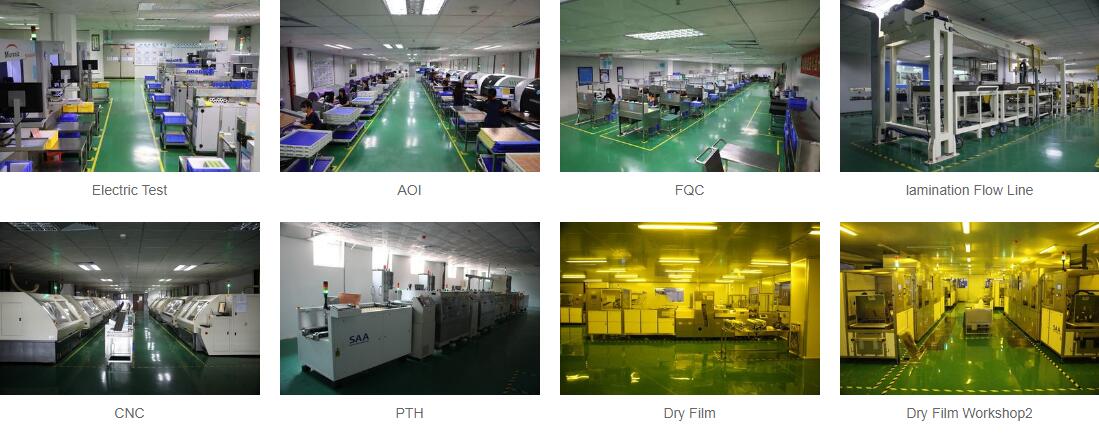
Integrated Manufacturing Standard: Wintech Turnkey Solutions
Navigating the transition from board-level prototypes to full electromechanical production requires a partner with deep fabrication expertise and structured system-integration capabilities. Wintech stands as an established global manufacturer, providing complete turnkey integration from complex raw board fabrication to finished box builds.
| Bare Board Capabilities | 2 to 70 layered rigid PCBs, advanced HDI, Rigid-Flex, and high-frequency RF substrates |
| SMT & Through-Hole | High-speed automated pick-and-place, micro-BGA placement, nitrogen reflow, AOI/3D X-ray |
| Mechanical Integration | Custom enclosure fitting, precision wire harness routing, thermal interface assembly |
| Testing Regimen | In-Circuit Test (ICT), full functional testing (FCT), environmental burn-in, safety Hi-Pot |
| Certified Facilities | ISO 9001, ISO 13485 (Medical), IATF 16949 (Automotive), IPC Class 2 & Class 3 |
Procurement Recommendation: Review Wintech's comprehensive PCB Manufacturing service to learn how unified fabrication and box-build assembly eliminate multi-vendor friction across your production runs.
Detailed Comparison Table: Technical, Operational, and Supply Chain Factors
| Operational Parameter | PCBA Only | Sub-System Assembly | Full Turnkey Box Build Assembly |
|---|---|---|---|
| Input Materials | Bare PCB, electronic SMD/THT components, solder paste | PCBA, internal mounting bracket, direct wire pigtails | Full electromechanical BOM (PCBA, chassis, cables, HMI, packaging) |
| Workmanship Standards | IPC-A-610, J-STD-001 | IPC-A-610, IPC/WHMA-A-620 | IPC-A-610, IPC/WHMA-A-620, UL 508A, ISO systemic standards |
| Supply Chain Management | Electronics distributors (Digi-Key, Mouser, direct fab) | Electronics plus select specialized harness vendors | Global supply chain spanning plastics, metal fabricators, cables, hardware |
| Firmware & Software | Unprogrammed or basic board-level bootloader flash | Core firmware programming and module check | Final production firmware, unique MAC/IMEI programming, cloud test |
| Packaging Deliverable | ESD anti-static bubble wrap, waffle trays, moisture bags | Intermediate protective partitions, bulk master boxes | Custom foam inserts, retail packaging, serial labeling, user manuals |
| Warranty Scope | Component placement and solder joint integrity only | Sub-module electrical connectivity | Complete product functionality, enclosure fit, environmental seal |
| Target Buyer | OEMs with in-house mechanical lines | OEMs performing final customization | OEMs requiring direct warehouse-ready shipment |
Pros and Cons: PCBA Sourcing vs. Full Turnkey Box Build
| Manufacturing Route | Commercial & Operational Pros | Strategic & Logistical Cons |
|---|---|---|
|
Sourcing PCBA Only (Board-Level Focus) |
|
|
|
Turnkey Box Build Assembly (Complete Systems Integration) |
|
|
Decision Framework: Who Should Buy PCBA vs. Who Needs Box Build
Selecting between board-level procurement and turnkey system integration is a commercial decision that should be guided by your operational footprint, production volume, and internal technical strengths.
Who Should Purchase PCBA Only:
- OEMs with Established Domestic Assembly Lines: If your company already owns automated screw-driving machinery, wire harness processing equipment, and trained technicians, purchasing PCBA keeps your internal assembly lines utilized.
- Highly Customized, Low-Volume Products: If a single core circuit board serves twenty different product variants that require custom enclosure modifications on an order-by-order basis, assembling the final chassis internally avoids building finished goods inventory prematurely.
- High-Security Intellectual Property Applications: In specialized defense or banking operations where firmware must be flashed in an air-gapped, secure domestic facility, sourcing unprogrammed boards preserves complete control over proprietary code.
Who Should Contract Turnkey Box Build Assembly:
- Fast-Growing Hardware Startups & Scale-ups: Emerging hardware companies rarely have the capital to build and manage their own factory lines. Partnering with an EMS provider for full box build allows the team to focus on software development, marketing, and sales channels.
- Industrial & Energy Equipment Manufacturers: In rugged sectors like Industrial automation and Energe & Oil & Gas, equipment must withstand harsh environments. Procuring complete units tested for ingress protection and thermal cycling ensures field reliability.
- Medical Device Companies: In regulated Medical Device programs, production demands strict process control under Medical Device Certified ISO13485 EMS OEM standards. Single-source box build streamlines regulatory audits and device history record (DHR) tracking.
- Automotive and Commercial Transportation: High-reliability applications in Automotive Electronics require adherence to Automotive Electronics Certified ISO16949 EMS OEM standards, where unified tracking of electronic and mechanical assembly prevents field recalls.
- Specialized Telecommunications & Infrastructure: Mission-critical gear in Communications, enterprise Computing & Storage, and sustainable Clean Technology benefits from turnkey burn-in testing to guarantee high uptime upon deployment.
Total Cost of Ownership (TCO) & Supply Chain Economics
When procurement managers review initial supplier quotes, sourcing PCBA only often looks cheaper on the surface. That conclusion usually stems from comparing an individual board invoice against a comprehensive box-build quote without calculating the hidden operational costs of in-house integration.
A rigorous Total Cost of Ownership calculation must account for several indirect expenses:
1. Multi-Tier Freight and Tariff Overhead
When you purchase PCBA from one vendor, sheet metal from a second, and wire harnesses from a third, you pay individual freight, customs clearance, and handling fees on every shipment. If parts originate overseas, managing multiple import customs entries adds administrative cost. With a turnkey box build, the contract manufacturer consolidates raw components locally, assembling the product close to the parts suppliers and shipping a completed, packaged unit in optimized freight containers.
2. The Cost of Scrap and Yield Degradation
If your internal staff damages a $300 PCBA while forcing it into an enclosure with uncalibrated tools, your company absorbs 100% of that scrap expense. When you contract a turnkey box build, the contractual agreement typically defines yield rates on the finished unit. If the manufacturer damages a board during assembly, they bear the responsibility for repairing or replacing the sub-assembly before billing you for the finished product.
3. Working Capital and Inventory Carrying Costs
Managing an in-house assembly line requires carrying weeks of buffer stock: thousands of fasteners, display bezels, packaging boxes, and wire bundles sitting on warehouse shelves. Holding that inventory ties up cash reserves. A turnkey box-build agreement shifts component stocking and buffer inventory management to the EMS partner, freeing up working capital for your business.
Common Procurement and Engineering Mistakes
Factory Floor Warning: The most frequent mistake in electromechanical procurement is tossing 2D drawings and a raw PCB layout over the wall to an EMS provider without supplying a comprehensive Assembly Work Instruction (AWI) and 3D CAD tolerance stack-up model. Mechanical interference issues account for more production delays than component shortages.
- Neglecting Design for Assembly (DFA) in Mechanical Design: Mechanical engineers often design sleek product enclosures without consulting electronics manufacturing specialists. The result is an enclosure that requires awkward manual hand assembly, uses four different screw drive types, or routes delicate cables over sharp metal bracket edges that sever insulation under vibration.
- Underestimating Test Specification Requirements: Moving from PCBA to box build requires clear functional test instructions. If you tell an EMS provider simply to "power the unit and confirm the LED turns green," they cannot detect malfunctioning I/O channels, drifting sensors, or intermittent serial communication errors. You must supply dedicated test fixtures, test scripts, and clear pass/fail criteria.
- Splitting Tooling Ownership and Firmware Control: Sourcing injection-molded plastics from an unvetted local vendor while having an overseas EMS assemble the electronics often creates dimensional fit problems. When parts do not fit cleanly, the plastics supplier blames the board manufacturer, and the board manufacturer blames the plastics shop. Keep tooling oversight tightly coordinated.
- Failing to Audit Electrostatic Discharge (ESD) Controls in Mechanical Bays: Many contract manufacturers maintain clean, ESD-safe SMT rooms, but let their mechanical box-build areas slip on protection standards. If mechanical technicians assemble enclosures without grounded wrist straps or ESD-safe tools, static discharge can damage integrated circuits just inches away from packaging.
Essential Sourcing Considerations When Vetting an EMS Partner
When transitioning production programs to an integrated EMS provider, evaluate candidates across four operational criteria:
1. Quality Management System (QMS) Registrations
Look beyond standard ISO 9001 certifications. Confirm whether the supplier holds specialized quality management registrations aligned with your specific industry. If you manufacture medical diagnostic hardware, verify certified ISO 13485 cleanroom procedures. For automotive electronics, insist on IATF 16949 compliance. In aerospace or mission-critical projects, verify IPC Class 3 soldering and inspection standards, such as those applied in Military Defense & Aerospace manufacturing environments.
2. Traceability and Quality Assurance Protocols
Ask how the supplier tracks components through their facility. Top-tier providers use barcode or laser-etched QR serialization down to the individual board level. This links every IC lot number, solder paste batch, torque value, and functional test log to the unit's serial number. Review the provider's structured approach to Quality Assurance and verify their commitment to Continuous Improvement programs to ensure manufacturing defects are addressed systematically.
3. Test Engineering Development Capabilities
Does the contract manufacturer have an in-house test engineering team capable of designing custom automated test equipment (ATE)? A qualified partner should be able to design custom bed-of-nails fixtures, write LabVIEW functional test sequences, and construct environmental burn-in racks that thoroughly exercise your product's firmware and communication ports.
4. Provenance and Operational History
Tour the facility or conduct a detailed virtual audit. Review the provider's corporate background through documents like the Wintech Company Profile. Verify that their SMT lines, cable fabrication workshops, mechanical assembly lines, and warehouse packing bays operate under one integrated management structure rather than using unvetted subcontractors.
Expert Recommendations for Production Programs
From decades of combined production experience, we recommend following a disciplined manufacturing path based on product maturity:
- Proof of Concept & Alpha Prototypes: Sourcing PCBA only is ideal during early engineering development. It allows your core design team to handle the boards directly, probe test points with oscilloscopes, modify trace cuts by hand, and adjust mechanical fit inside rapid 3D-printed plastic prototypes.
- Beta Pilots & Design Validation Testing (DVT): Begin collaborating with an integrated EMS partner during pilot runs. Hand over your preliminary 3D CAD files and schematic libraries to conduct Design for Manufacturability (DFM) and Design for Assembly (DFA) reviews before freezing production tooling.
- Commercial Production & Scale: Transition to full turnkey Box Build Assembly for volume manufacturing. Consolidating fabrication, assembly, functional testing, and final retail boxing with a single certified partner delivers the lowest Total Cost of Ownership and protects your operational bandwidth.
Frequently Asked Questions
PCBA (Printed Circuit Board Assembly) involves only soldering surface-mount and through-hole electronic components onto a bare fabricated circuit board. Box Build Assembly, also known as complete electromechanical system integration, takes that populated PCBA and installs it into an enclosure alongside wire harnesses, cable assemblies, power supplies, thermal solutions, displays, and user interfaces to produce a fully packaged, ready-to-use finished product.
The unit purchase price of a Box Build is higher because it encompasses sheet metal or plastic enclosures, cabling, mechanical fasteners, and final packaging. However, when evaluating Total Cost of Ownership (TCO), Box Build Assembly frequently reduces overall costs by eliminating fragmented vendor markups, duplicated freight charges, internal warehouse labor, and multi-tier assembly scrap rates.
PCBA testing focuses on board-level electrical integrity using Automated Optical Inspection (AOI), In-Circuit Testing (ICT), and flying probe checks. Box Build Assembly testing involves full-system functional validation, environmental burn-in testing, high-potential (Hi-Pot) electrical safety testing, software flashing, and end-user operational simulation under real-world loads.
Yes, top-tier Electronic Manufacturing Services (EMS) providers such as Wintech operate vertically integrated facilities that execute bare board fabrication, high-speed SMT assembly, custom cable harness fabrication, and final box-build mechanical integration under unified ISO 9001, ISO 13485, and IATF 16949 quality management systems.
Authoritative Regulatory & Industry Standards
- IPC International: Standards for Printed Board Assembly (IPC-A-610) and Cable Harness Requirements (IPC/WHMA-A-620)
- International Organization for Standardization (ISO): Medical Devices Quality Systems (ISO 13485) and General Quality Management (ISO 9001)
- IEEE Standards Association: System-Level Reliability and Electronic Systems Integration Protocols


