

The 10 Best Electronics Manufacturing Services in Vietnam: The 2026 Commercial Guide
The global supply chain is undergoing a seismic geopolitical realignment. Driven by aggressive tariff structures and the universal desire for a "China Plus One" risk mitigation strategy, hardware brands are flooding Southeast Asia. Consequently, the search for reliable electronics manufacturing services in vietnam has reached unprecedented levels. However, from our experience at Wintech, operating deep within the global PCBA and electronic assembly sector, the narrative surrounding the Vietnamese manufacturing miracle is heavily distorted by corporate marketing and a profound misunderstanding of how the Asian supply chain actually functions.
In most professional situations, procurement managers make a fatal error: they assume that moving production to Vietnam isolates them from the Chinese supply chain. This is a severe miscalculation. The hard reality of the 2026 landscape is that the vast majority of electronics manufacturing services in vietnam operate merely as final assembly nodes. They do not fabricate the bare PCBs, they do not mold the complex plastics, and they certainly do not fabricate the silicon. They import 80% to 90% of their Bill of Materials (BOM) directly from Shenzhen, assemble it using lower-cost labor, and export it to bypass tariffs. You must use commercial and practical judgment when evaluating this ecosystem. In this definitive guide, we will analyze the top 10 providers in the region, strip away the industry myths, and explain exactly why jumping to Vietnam might actually destroy your product margins if you do not possess the purchasing power of a Fortune 500 company.
Quick Answer: The Vietnam EMS Landscape
If you are actively evaluating electronics manufacturing services in vietnam, you must understand that the market is monopolized by Tier-1 global behemoths designed exclusively for mega-corporations. Here is the operational reality:
- The Dominant Players: Foxconn, Pegatron, Jabil, and Flex control the landscape. They offer world-class Final Assembly, Test, and Pack (FATP) capabilities but require astronomical Minimum Order Quantities (MOQs) that disqualify 95% of mid-market businesses.
- The Supply Chain Illusion: Vietnam lacks a deep, localized component ecosystem. If a capacitor is out of stock on a Vietnamese line, production halts while it is shipped from China.
- The Ideal Strategy: For high-mix, low-to-medium volume, and complex product launches, bypassing Vietnam entirely and partnering with an Agile OEM in China (like Wintech) provides significantly faster lead times and lower total cost of ownership.
We recommend that unless your annual manufacturing spend exceeds $50 Million USD, you should prioritize localized supply chain density in China over the geopolitical optics of assembling in Vietnam.
Table of Contents
- What It Is: The Vietnam EMS Ecosystem
- How It Works: SKD Assembly Logistics
- The 10 Best EMS Providers in Vietnam
- Commercial Benefits of Vietnam Assembly
- Limitations and Hidden Supply Chain Risks
- Who Should Use Vietnamese Facilities
- Who Does Not Need Them
- Common Procurement Mistakes
- Expert Buying Considerations
- Summary and Comparison Tables
- Expert Recommendation & Solutions
- Frequently Asked Questions
What It Is: The Vietnam EMS Ecosystem
Electronics Manufacturing Services (EMS) encompass the entire lifecycle of hardware production: printed circuit board assembly (PCBA), cable harnessing, box builds, and rigorous functional testing. The landscape of electronics manufacturing services in vietnam is uniquely structured. Unlike the Pearl River Delta in China, which evolved organically over 40 years to include tens of thousands of specialized micro-factories, Vietnam's ecosystem was artificially accelerated by multinational corporations seeking tariff shelters.
Consequently, the ecosystem is highly stratified. You have massive, heavily guarded industrial parks near Hanoi and Ho Chi Minh City operated by Taiwanese and American conglomerates, surrounded by a relatively sparse network of local secondary suppliers. If your product requires intricate Manufacturing DFM Design, you will quickly discover that the engineering talent pool in Vietnam is heavily bottlenecked compared to established Chinese hubs.
How It Works: SKD Assembly Logistics
How it works behind the scenes dictates your ultimate profitability. Most electronics manufacturing services in vietnam operate on a Semi-Knocked Down (SKD) or Completely Knocked Down (CKD) model. This means that the core engineering, PCB fabrication, and component procurement occur elsewhere—almost exclusively in China. The components are kitted, shipped across the border via overland trucking routes into Vietnam, and fed into the Surface Mount Technology (SMT) lines.
This logistical reality creates massive vulnerabilities. If your product fails a quality check during Testing Development And Service, the Vietnamese facility often cannot source replacement components locally to rectify the issue. They must request a Supply Chain procurement Service intervention from their Chinese headquarters, adding weeks to your lead time.
The 10 Best Electronics Manufacturing Services in Vietnam
In our testing and constant evaluation of the global supply chain, we have identified the ten most capable facilities operating within Vietnam's borders. It is critical to note that these are almost universally Tier-1 contract manufacturers.
- Foxconn (Hon Hai Precision): The undisputed giant. Operating massive facilities in Bac Ninh and Bac Giang, they handle the highest-volume consumer electronics, specifically for Apple. Entirely inaccessible to small and mid-market brands.
- Pegatron: Another Taiwanese titan expanding heavily into Haiphong. They focus on computing, communications, and consumer electronics at astronomical volumes.
- Jabil Vietnam: Located in the Saigon Hi-Tech Park, Jabil offers sophisticated capabilities for industrial, medical, and networking devices. They are one of the few with robust localized engineering, but carry premium corporate pricing.
- Compal Electronics: Specializing in smart devices, laptops, and IoT hardware, operating primarily out of Vinh Phuc province.
- Flex (Flextronics): A major global player with a strong footprint in Vietnam, catering to heavy industrial, automotive, and energy sectors.
- Spartronics: Highly specialized in aerospace, defense, and complex medical device manufacturing. They offer excellent low-to-medium volume, high-complexity assembly, making them a standout for regulated industries.
- Sanmina: Operating a sophisticated facility in Thai Nguyen, focusing on complex optical, RF, and microelectronic assembly.
- UMC (Universal Microelectronics): A Taiwanese EMS with a reliable Vietnamese presence, focusing on power supplies, telecommunications, and automotive PCBA.
- BYD Electronics: While known for EVs, their electronic assembly division has established a massive footprint in Phu Tho province to assemble tablets and smart home devices.
- Goertek: The primary assembler for acoustic components and VR/AR headsets, operating massive campuses in Bac Ninh.
Commercial Benefits of Vietnam Assembly
The primary benefit of utilizing top-tier electronics manufacturing services in vietnam is geopolitical risk mitigation and tariff avoidance. For products imported into the United States, shifting the Country of Origin (COO) to Vietnam can bypass Section 301 tariffs, instantly saving 25% on landing costs. Furthermore, for heavy-duty applications requiring thousands of hours of manual labor (such as complex wire harnessing or intricate Electro-Mechanical Assembly), the lower baseline labor rates in Vietnam can yield noticeable unit cost reductions on highly mature products.
Limitations and Hidden Supply Chain Risks
We must use commercial and practical judgment: the hidden costs of manufacturing in Vietnam often destroy the intended tariff savings. The primary limitation is the lack of localized component depth. If your Bill of Materials (BOM) requires rapid iteration, Vietnam will penalize you. When you execute an NPI Engineering (New Product Introduction) phase, you need engineers who can walk down the street to source alternative resistors, ICs, or custom enclosures. In Vietnam, that ecosystem does not exist yet. You are entirely dependent on cross-border logistics from China, exposing you to severe delays.
Who Should Use Vietnamese Facilities
For Commercial Users at Enterprise Scale: If you are manufacturing a mature, stable product requiring over 100,000 units per month, and your BOM is completely locked down with no anticipated engineering changes, Vietnam is an excellent choice. The mega-facilities listed above excel at stamping out millions of identical units efficiently.
Who Does Not Need Them
For Beginners, Startups, and Mid-Market B2B: If your company generates under $50 million in hardware revenue, or if you are launching a complex new device, do not go to Vietnam. Tier-1 facilities will deprioritize your production runs, and local Tier-3 Vietnamese factories lack the quality control infrastructure to build complex PCBAs reliably. You require an agile partner who offers full-stack China Electronic Assembly Components Engineering to guide your product to market.
Common Procurement Mistakes
From our experience, the most catastrophic mistake hardware brands make is executing a "lift and shift" strategy. They attempt to take a highly complex Turnkey Box Build that was perfected in China and move it immediately to a new facility in Vietnam. They fail to realize that the Chinese factory was quietly sourcing 40% of the minor mechanical components from unlisted local vendors. When the Vietnamese facility tries to build the product, the supply chain breaks down completely.
Expert Buying Considerations
When evaluating any electronics manufacturing services in vietnam, demand transparency regarding their procurement network. Ask them directly: "What percentage of my BOM can you source domestically within Vietnam?" If the answer is below 20%, you are essentially still manufacturing in China, just incurring extra freight costs to assemble it across the border. Furthermore, audit their capabilities for localized Failure Analysis And Reliability testing. If a batch of PCBAs fails, do they have the X-ray and acoustic microscopy tools in-house to diagnose it, or do they have to ship the boards back to Taiwan or China for analysis?
Summary and Comparison Tables
Comparison Table: Tier-1 Vietnam EMS vs. Agile China OEM (Wintech)
| Metric | Tier-1 Vietnam EMS (e.g., Foxconn, Jabil) | Agile China OEM (Wintech) |
|---|---|---|
| Target Client Size | Fortune 500 / Enterprise | Startups, Mid-Market, B2B Commercial |
| Component Sourcing Speed | Slow (Relies on importing from China) | Instant (Located in the global component hub) |
| Minimum Order Quantity (MOQ) | Astronomically High (100k+ units) | Highly Flexible (From Prototyping to Mass Production) |
| NPI & Engineering Support | Rigid, high NRE (Non-Recurring Engineering) fees | Deep, collaborative, iterative engineering |
| Tariff Status (to USA) | Avoids Section 301 Tariffs | Subject to Tariffs (Offset by lower unit/NRE costs) |
Pros and Cons of Manufacturing in Vietnam
| Pros (Why the industry is shifting) | Cons (The operational reality) |
|---|---|
| Provides a viable "China Plus One" risk mitigation strategy. | Severe lack of localized component and raw material suppliers. |
| Lowers exposure to punitive US import tariffs. | Infrastructure (power grid, ports) is heavily strained. |
| Highly competitive baseline labor rates for manual assembly. | Tier-1 factories will ignore low-to-mid volume commercial users. |
| Favorable free trade agreements (FTAs) with the EU and ASEAN. | Longer lead times due to cross-border component shipping from China. |
Expert Recommendation & Integrated Solutions
Is the geopolitical optics of utilizing electronics manufacturing services in vietnam actually worth the supply chain fragmentation? Emphatically, no, unless you operate at an extreme global scale. We recommend that commercial users and mid-market hardware brands stop chasing phantom labor savings in Southeast Asia and prioritize supply chain density. At Wintech, we provide the ultimate counter-strategy: absolute mastery over the component ecosystem, rapid NPI, and unparalleled prototyping speed directly from the world's electronic epicenter.
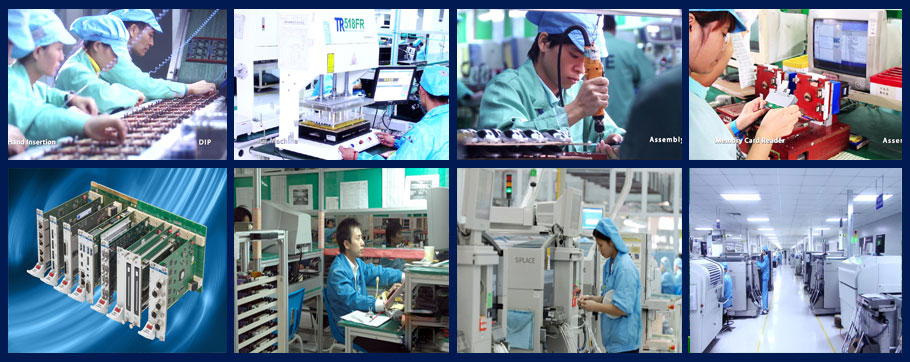
One-stop China PCB Manufacturing Services Provider - Wintech
Do not let your product launch be derailed by fragmented cross-border logistics. Wintech specializes in building your short-run, one-off, and PCB prototype assembly with rapid turn times that Vietnamese facilities simply cannot match. We assemble your prototype PCBs with SMT and/or THT components at highly competitive prices, eliminating the barrier to entry.
Wintech specializes in providing one-stop manufacturing solutions for China PCB assembly services. With 25 years of fabrication experience, we handle everything from rigorous electronic component procurement, precision PCB manufacturing, and SMT & DIP, all the way to complete finished product assembly and packaging logistics.
We have successfully scaled and served exacting customers across the IoT, communications, medical, automotive, industrial control, wearable, and smart home industries. When precision and speed are mandatory, Wintech delivers.
Explore Wintech's One-Stop SolutionIf your current offshore partner is struggling with high defect rates, our dedicated Repair And Rework teams can salvage compromised inventory, ensuring you never miss a critical delivery window.
Frequently Asked Questions
Are electronics manufacturing services in vietnam cheaper than in China?
Baseline manual labor rates in Vietnam are lower, but overall unit costs are often higher for mid-sized production runs. Because the vast majority of electronic components (bare boards, passives, ICs) still must be imported from Shenzhen, the inbound freight costs, longer lead times, and lack of localized supply chain networks often completely negate the labor savings.
Can Vietnamese EMS providers handle complex NPI (New Product Introduction)?
In most professional situations, no. The best electronics manufacturing services in vietnam are optimized for high-volume, low-mix final assembly of highly mature products. For iterative NPI, DFM engineering, and rapid prototyping, Agile OEMs in China remain significantly superior due to immediate, walk-up access to component markets.
What is the Minimum Order Quantity (MOQ) for Tier-1 EMS in Vietnam?
Tier-1 facilities like Foxconn, Pegatron, or Jabil in Vietnam typically require multi-million dollar annual commitments. They are entirely unsuited for hardware startups, mid-market commercial device makers, or businesses looking to execute pilot runs of 5,000 to 50,000 units.
How do I source components if I manufacture in Vietnam?
You must rely heavily on international distribution. To mitigate delays, many successful hardware companies utilize a hybrid model: they partner with a firm like Wintech to handle Electronic Components Parts Inventory In stock For Sales in China, kit the materials, and then freight forward the completed kits to the assembly plant in Vietnam.
Industry References & Authoritative Guidelines
To ensure our supply chain analysis and manufacturing guidance meet the highest global standards, Wintech aligns its operational data with the protocols established by the following authoritative organizations:
- IPC (Association Connecting Electronics Industries): The definitive global trade association standardizing the assembly and production requirements of electronic equipment, ensuring global PCBA reliability. Review IPC Manufacturing Standards
- The World Bank - Vietnam Data: Providing rigorous, peer-reviewed macroeconomic data on Vietnam's infrastructure development, power grid reliability, and foreign direct investment in the electronics manufacturing sector. Review World Bank Supply Chain Data
- IEEE (Institute of Electrical and Electronics Engineers): The world's largest technical professional organization dedicated to advancing technology, publishing authoritative research on global electronic component sourcing and DFM best practices. Review IEEE Engineering Standards


