

How Inventory Management Affects Electronics Manufacturing Costs
Inventory management affects electronics manufacturing costs far beyond the price paid for components. It determines how much cash is tied up in stock, how often production stops because a critical part is missing, how much material becomes obsolete, and whether a manufacturer can meet delivery commitments without paying for expensive emergency purchases. For most electronics businesses, the lowest-cost inventory strategy is not to hold the most stock or the least stock. It is to hold the right components, in the right quantities, at the right time.
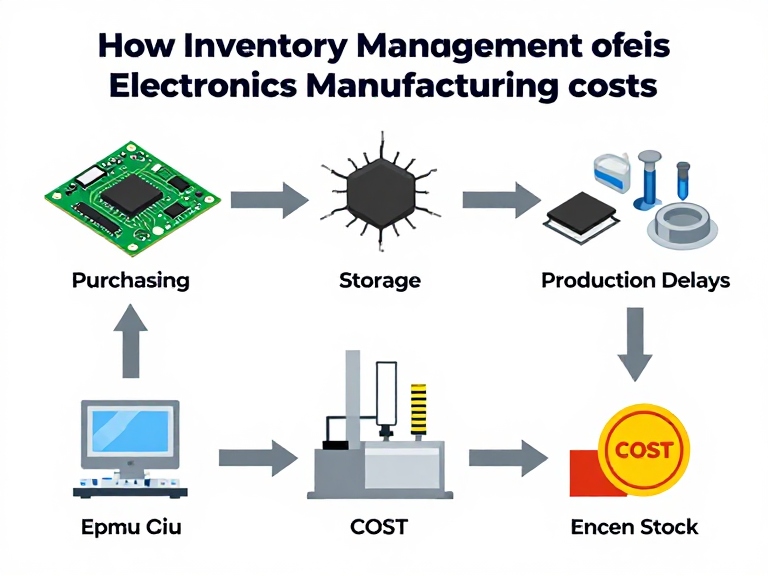
Quick Answer: How Does Inventory Management Affect Electronics Manufacturing Costs?
Inventory management affects electronics manufacturing costs by controlling material purchasing, storage, working capital, production continuity, component obsolescence, scrap and delivery performance. Poor inventory control creates two expensive problems: excess stock consumes cash and becomes outdated, while insufficient stock causes production delays, line stoppages and costly expedited orders.
For PCB and PCBA manufacturers, the most effective approach combines demand forecasting, accurate bills of materials (BOMs), supplier lead-time monitoring, component traceability, safety-stock policies and regular inventory reviews. We recommend managing components according to their supply risk and production impact rather than applying one stock rule to every part.
- What inventory management means in electronics manufacturing
- The main inventory-related manufacturing costs
- How overstocking increases manufacturing costs
- How stockouts and shortages disrupt production
- Inventory management methods compared
- BOM planning, component sourcing and traceability
- How supplier management affects inventory costs
- Inventory technology and manufacturing visibility
- Common inventory management mistakes
- Choosing a manufacturing partner with strong inventory control
- Expert recommendations
- Frequently asked questions
1. What Is Inventory Management in Electronics Manufacturing?
Inventory management is the process of planning, purchasing, receiving, storing, tracking and issuing the materials required to manufacture electronic products. It covers more than finished products sitting in a warehouse. In electronics manufacturing, inventory includes raw materials, electronic components, PCB substrates, soldering materials, mechanical parts, work in progress (WIP), spare parts and finished assemblies.
That range makes inventory control particularly important. A production order may require hundreds of individual components. If one low-cost resistor, connector or specialized integrated circuit is unavailable, the manufacturer may be unable to complete the board or release the finished assembly. The cost of the missing part can be small; the cost of the production delay can be substantial.
What inventory management is responsible for
- Demand planning: Estimating material requirements from customer orders, forecasts and production schedules.
- Purchasing: Selecting suppliers, ordering quantities and controlling purchase timing.
- Receiving and inspection: Confirming that materials, quantities, specifications and documentation match purchase requirements.
- Storage and preservation: Maintaining suitable conditions for moisture-sensitive, electrostatic-sensitive and shelf-life-controlled materials.
- Stock tracking: Recording inventory locations, lot numbers, quantities and material status.
- Production issuing: Making sure the correct components reach the correct production order.
- Obsolescence control: Identifying excess, aging or discontinued components before they become financial losses.
For an electronics manufacturer, good inventory management connects purchasing decisions directly to production reality. It should be aligned with engineering revisions, BOM changes, supplier lead times and customer delivery schedules. A warehouse system that shows a high stock balance is not necessarily useful if the components are for an outdated product revision or cannot be traced to an approved source.
2. The Main Ways Inventory Management Affects Electronics Manufacturing Costs
Inventory decisions influence both visible and hidden costs. Purchase invoices are easy to measure, but they are only part of the total. Storage, capital financing, handling, inspection, production disruption and obsolete material can make a seemingly inexpensive purchasing strategy costly over time.
| Cost category | How inventory decisions affect it | Practical cost-control action |
|---|---|---|
| Purchase cost | Large orders may qualify for price breaks but can increase excess stock and exposure to price changes. | Compare total landed cost with realistic consumption, not unit price alone. |
| Carrying cost | Stored inventory ties up cash and creates warehousing, insurance, handling and financing expenses. | Set stock targets based on demand, lead time and component risk. |
| Shortage cost | Missing components can delay production, trigger line changes and cause late deliveries. | Identify critical parts and set appropriate replenishment triggers. |
| Obsolescence cost | Engineering revisions and component lifecycle changes can make stock unusable. | Coordinate purchasing with engineering and product lifecycle reviews. |
| Quality cost | Poor storage, uncontrolled sourcing or weak traceability can increase defects and rework. | Use approved suppliers, incoming inspection and lot-level traceability. |
| Expediting cost | Urgent freight and last-minute sourcing increase material costs. | Monitor supplier lead times and plan for realistic replenishment windows. |
| Administrative cost | Manual stock reconciliation and inaccurate records consume staff time. | Improve inventory data discipline and integrate purchasing with production planning. |
Inventory carrying cost: the expense that is easy to underestimate
Carrying cost is the cost of holding inventory over time. It can include warehouse space, labor, insurance, handling, financing and the risk of damage or obsolescence. The exact percentage varies by business, product mix, storage requirements and financing conditions. There is no universal carrying-cost rate that should be applied to every electronics manufacturer.
Consider a manufacturer that buys a large quantity of a specialized controller to secure a lower unit price. If the customer changes the design six months later, the remaining controllers may no longer be usable. The initial discount is then offset by excess stock, write-offs and additional purchasing for the revised design.
We recommend evaluating purchasing decisions using total cost of ownership. A lower component price is not a genuine saving if the order creates more inventory than the business can reasonably consume.
3. How Overstocking Increases Electronics Manufacturing Costs
Overstocking occurs when a manufacturer holds more material than it can reasonably use within the relevant planning period. It often starts with good intentions: securing a bulk discount, protecting against shortages or avoiding repeated purchase orders. The problem is that electronics components do not all have stable demand or long product lifecycles.
Cash flow becomes less flexible
Money invested in excess components cannot be used for tooling, engineering, testing, equipment maintenance or other business priorities. This is particularly important for small and mid-sized electronics manufacturers that need to balance customer payment terms with supplier deposits and production expenses.
Components can become obsolete
Electronics products are frequently revised. A customer may replace a processor, alter a connector, change a power specification or redesign a PCB layout. Components purchased for the previous BOM may become surplus even if they are physically undamaged.
Component lifecycle changes create another risk. A supplier may announce a last-time-buy date, a part may become discontinued, or a newer generation may replace the original. Buying too early or in excessive quantities can leave a manufacturer holding stock that does not match future demand.
Storage and handling can affect material quality
Some electronic components require controlled handling and storage. Moisture-sensitive devices need appropriate moisture control and handling procedures. Electrostatic-sensitive components require suitable ESD protection. Solder paste and other materials may have defined storage temperatures and shelf lives.
Inventory that is technically available but has exceeded its usable storage conditions is not productive inventory. It may require additional inspection, baking, retesting or disposal. For high-value assemblies, the cost of a material-related defect can exceed the original component cost.
When bulk purchasing is worth considering
Bulk purchasing can make commercial sense when demand is stable, the component is used across multiple products, the supplier has reliable quality and the material has a low risk of becoming obsolete. It is less attractive for custom parts, rapidly changing designs, expensive ICs or components with uncertain demand.
Our recommendation is to negotiate price breaks without automatically accepting the largest quantity tier. Ask the supplier whether scheduled releases, blanket orders or staged deliveries are possible. This can secure pricing while reducing the amount of material physically held at one time.
4. How Stockouts and Component Shortages Increase Manufacturing Costs
Understocking creates the opposite problem. A stockout happens when a required component is unavailable at the point it is needed. In electronics manufacturing, one missing item can hold up an otherwise complete production order.
The real cost of a missing component
Suppose a PCBA production order is scheduled to run on Monday. Most components are available, but one specialized connector has not arrived. The production team may need to delay the build, reschedule the line, switch to another job or wait for an emergency shipment. Each option creates additional cost.
- Idle production capacity: Equipment and labor may be underused while the missing material is sourced.
- Schedule disruption: Other jobs may need to be moved to accommodate the delayed order.
- Expedited freight: Air freight or urgent courier services can raise landed material costs.
- Supplier substitution risk: Emergency sourcing can introduce counterfeit, nonconforming or unapproved components if controls are weak.
- Late delivery exposure: Missed customer deadlines can affect service levels, contractual commitments and future business.
For commercial users, the most expensive shortage is not always the component with the highest unit price. A low-cost part with a long replenishment lead time and no approved alternative may be more disruptive than an expensive component that is readily available.
Why safety stock needs to be selective
Safety stock is additional inventory held to absorb uncertainty in demand or supply. It is useful, but applying the same safety-stock rule to every component creates unnecessary carrying cost. A practical policy considers lead-time variability, demand volatility, supplier reliability, component value and the operational impact of a shortage.
We recommend protecting production against high-risk components first. For stable, widely available passive components, a leaner replenishment policy may be sufficient. For long-lead-time processors, specialized connectors or customer-specific parts, additional protection may be justified.
5. Inventory Management Methods Compared for Electronics Manufacturing
No single inventory method is best for every electronics factory. The right system depends on product volume, BOM complexity, supplier performance, demand stability and the cost of a production interruption.
| Method | How it works | Best use case | Main advantage | Main limitation |
|---|---|---|---|---|
| ABC analysis | Classifies inventory by value or business importance. | Factories with large component catalogs. | Directs management attention toward high-impact materials. | Value alone may overlook low-cost parts that can stop production. |
| Just-in-Time (JIT) | Materials arrive close to the time they are required. | Stable demand and reliable supplier networks. | Reduces inventory holding and storage requirements. | Vulnerable to supply disruption and lead-time variability. |
| Material Requirements Planning (MRP) | Calculates material needs from the BOM, production plan and inventory records. | Multi-level BOMs and planned production schedules. | Connects material purchasing with actual production requirements. | Depends on accurate BOMs, inventory data and lead times. |
| Economic Order Quantity (EOQ) | Balances ordering costs against inventory carrying costs. | Items with relatively stable demand and predictable costs. | Provides a structured starting point for order quantities. | Basic assumptions may not reflect volatile electronics demand. |
| Safety stock | Holds additional inventory to cover uncertainty. | Critical or long-lead-time components. | Reduces the risk of shortages and production interruption. | Raises carrying cost and can become obsolete if poorly controlled. |
| Consignment inventory | Supplier-owned stock is held at or near the manufacturer until used, subject to agreement. | Repeated consumption of selected components. | Can reduce the buyer's upfront inventory investment. | Requires clear ownership, usage, replenishment and liability terms. |
| Vendor-managed inventory (VMI) | Supplier monitors agreed stock data and manages replenishment. | Stable, recurring material requirements. | Can reduce administrative workload and improve replenishment coordination. | Requires accurate data sharing and dependable supplier performance. |
Which method should an electronics manufacturer choose?
For most professional situations, a combination works better than relying on one method. MRP should connect the BOM and production plan to purchasing requirements. ABC analysis can prioritize management attention. Safety stock should protect selected high-risk components. JIT or scheduled deliveries may work for stable, repeat-use materials where suppliers can meet agreed lead times.
JIT is not automatically the cheapest option. If a factory has volatile demand, long international shipping routes or components with unpredictable availability, an overly lean inventory policy can increase total cost through emergency procurement and lost production time.
6. BOM Planning, Component Sourcing and Traceability: Where Cost Control Starts
A bill of materials is the foundation of electronics inventory planning. It identifies the parts and quantities required to build a product or assembly. If the BOM is inaccurate, purchasing quantities, production schedules and stock availability calculations will also be unreliable.
Keep engineering revisions connected to purchasing
When engineering changes a PCB design, the material plan must reflect the new revision. Otherwise, a factory may continue purchasing components that are no longer required or issue old parts to a new production order. Revision control should include approved substitutions, effective dates and clear rules for using or disposing of remaining stock.
For new products, inventory planning should begin during the New Product Introduction (NPI) process. Engineering, purchasing, quality and production teams should review component availability, lifecycle status, lead times, minimum order quantities and alternative parts before mass production begins. Wintech's New Product Introduction and NPI service is relevant to manufacturers planning this transition from prototype to repeat production.
Component traceability is a cost-control measure
Traceability records where a component came from, which lot it belongs to and where it was used. In electronics manufacturing, this can help isolate quality issues, support customer audits and reduce the scope of unnecessary rework or recalls.
Without reliable lot records, a manufacturer may have to quarantine more stock than necessary when a supplier issue is identified. With effective traceability, the investigation can focus on affected batches and production orders. This does not eliminate quality risk, but it can make containment more precise and less expensive.
Storage controls protect the value of inventory
Inventory accuracy is not just a matter of counting boxes. Components must remain suitable for use. Manufacturers should establish storage and handling rules for ESD-sensitive devices, moisture-sensitive components, temperature-controlled materials and shelf-life-limited consumables.
For high-reliability electronics, the purchasing team should also ensure that supplier documentation and incoming inspection requirements match the product's quality needs. A low-priced component with weak provenance can create much higher downstream costs.
7. How Supplier Management Affects Electronics Inventory Costs
Inventory performance depends heavily on supplier performance. A manufacturer cannot run a reliable low-stock strategy if its suppliers frequently change delivery dates, provide incomplete documentation or fail to communicate lifecycle changes.
Evaluate suppliers on more than unit price
When choosing component suppliers or an electronics manufacturing partner, compare the full commercial and operational picture:
- Lead-time reliability: Does the supplier deliver within the agreed window, or does the quoted lead time regularly change?
- Quality consistency: Are incoming materials supported by appropriate documentation and quality controls?
- Lifecycle visibility: Does the supplier communicate end-of-life notices, last-time-buy windows and product changes?
- Flexibility: Can the supplier support staged releases, forecast updates or changes in production volume?
- Traceability: Can material lots be traced through purchasing, receiving and production?
- Problem resolution: How quickly are shortages, quality issues and delivery deviations addressed?
For buyers comparing manufacturing partners, the number of suppliers listed on a website is less important than the supplier's ability to manage approved sourcing, material availability and production commitments. Our guide to electronic manufacturing services companies can be used as a starting point for understanding the wider EMS landscape. A broader global PCB manufacturers list may also help buyers structure their initial supplier research.
Dual sourcing: when is it worth the extra effort?
Dual sourcing means qualifying more than one supplier for a component or material. It can reduce dependence on a single source, especially for critical parts with long lead times. However, it also adds qualification, documentation and purchasing complexity.
We recommend dual sourcing when the component is difficult to replace, has a meaningful impact on production continuity, or comes from a supply market with recurring disruption. For ordinary parts with stable availability, the cost of qualifying and maintaining a second source may outweigh the benefit.
8. How Inventory Technology Improves Manufacturing Cost Control
Inventory software does not solve poor planning by itself. It does, however, make it easier to keep purchasing, warehouse and production records aligned. The most useful system is one that gives teams a reliable view of what is available, what is reserved, what is on order and what is required by upcoming production.
ERP and MRP integration
An ERP system can connect purchasing, inventory, finance, sales and production records. MRP functionality uses demand, BOM data, stock balances and lead times to calculate material requirements. This reduces dependence on disconnected spreadsheets and manual calculations.
Barcode and lot tracking
Barcode scanning can improve receiving, location control, picking and material issuing. Lot tracking supports traceability and helps prevent material from being issued to the wrong production order. These controls are particularly valuable where a factory handles many similar-looking components or multiple customer revisions.
Inventory dashboards and exception alerts
Managers should be able to identify materials that are below reorder points, delayed on purchase orders, approaching shelf-life limits or no longer required by current demand. Exception-based alerts are usually more useful than asking employees to review every stock item manually.
What should be measured?
| KPI | What it tells you | How to use it |
|---|---|---|
| Inventory turnover | How frequently inventory is consumed or sold over a period. | Identify slow-moving stock and compare similar product groups. |
| Days inventory outstanding | How long inventory is held before being consumed or sold. | Monitor working-capital exposure and stock aging. |
| Inventory accuracy | How closely recorded stock matches physical stock. | Improve MRP reliability and reduce production planning errors. |
| Stockout frequency | How often required materials are unavailable. | Identify weak replenishment policies and supplier risks. |
| Obsolete inventory value | The value of stock that is no longer expected to be used. | Highlight design-change and purchasing-control problems. |
| Supplier on-time delivery | How reliably suppliers meet committed delivery dates. | Adjust safety stock and supplier selection decisions. |
| Material-related production delays | Production interruptions caused by missing or unsuitable materials. | Connect inventory performance to actual manufacturing output. |
Do not chase a high inventory turnover ratio without checking the service level. A factory can improve turnover simply by holding less stock, but if stockouts and late deliveries increase, the business may be worse off. Inventory KPIs should be reviewed together rather than optimized in isolation.
9. Common Inventory Management Mistakes in Electronics Manufacturing
- Buying only to obtain a lower unit price. Bulk discounts can create excess stock, cash-flow pressure and obsolescence. Compare total cost, not price per piece alone.
- Using inaccurate BOM data. Incorrect quantities or outdated revisions lead to wrong purchasing decisions and material shortages.
- Applying one safety-stock level to every component. High-risk, long-lead-time components need different treatment from common, low-risk parts.
- Ignoring component lifecycle information. End-of-life notices and last-time-buy windows should be part of purchasing and engineering reviews.
- Failing to track inventory by lot. Weak traceability makes quality investigations slower and can increase the amount of stock that must be quarantined.
- Relying entirely on spreadsheets. Manual files can be useful for small operations, but they become difficult to control as BOM complexity and transaction volume grow.
- Overusing emergency procurement. Frequent urgent orders usually indicate a forecasting, supplier communication or replenishment problem.
- Ignoring storage conditions. Incorrect handling can make expensive components unsuitable for production even when the recorded quantity is accurate.
- Measuring inventory without measuring production impact. Low stock is not a success if the factory cannot meet delivery commitments.
10. Choosing an Electronics Manufacturing Partner with Strong Inventory Control
For an OEM or product company outsourcing PCB fabrication and assembly, the manufacturing partner's inventory practices can directly affect product cost, lead time and delivery reliability. A low assembly quotation does not tell you whether the supplier can secure critical components, control substitutions or manage excess materials after a forecast changes.
Questions to ask a PCB and PCBA manufacturer
- How are BOMs checked before purchasing begins?
- Can the manufacturer identify long-lead-time and lifecycle-sensitive components before production?
- Are components purchased through approved and traceable sourcing channels?
- How are shortages communicated, and who approves alternative components?
- Can the supplier support scheduled material releases or staged production?
- How are customer-owned materials, excess inventory and unused components recorded?
- Can the supplier provide lot traceability and material status reports?
- How are engineering changes reflected in purchasing and stock control?
A capable partner should be able to explain its process in practical terms. Look for evidence of coordination between engineering, purchasing, quality and production—not just a claim that the company has a warehouse or an inventory management system.
Compare manufacturing services by the problem they solve
PCB fabrication and PCBA are related but different services. PCB fabrication produces the bare printed circuit board. PCB assembly places and solders electronic components onto the board. Some projects also require design support, prototyping, mechanical parts and final integration.
If you are evaluating a supplier for a complete project, review whether its service scope matches your production needs. Wintech provides PCB manufacturing, PCB assembly and PCBA SMT, and quick-turn PCB prototype assembly. For products that require mechanical integration, additional capabilities such as enclosures, racks and frames may also be relevant.
When should you upgrade your manufacturing partner?
Consider changing or upgrading your supply arrangement when repeated shortages are delaying builds, material substitutions are poorly controlled, inventory reports are unreliable or engineering changes routinely leave excess stock. Before switching suppliers, identify whether the root cause is the manufacturer's process, your own forecast quality, unstable product design or a combination of these factors.
A new supplier cannot eliminate uncertainty in your demand forecast. However, a manufacturing partner with stronger BOM review, procurement planning, traceability and production coordination can make that uncertainty easier to manage.
11. Expert Recommendation: Build an Inventory Strategy Around Production Risk
From our experience in PCB manufacturing and assembly, inventory cost control works best when purchasing decisions are connected to engineering and production schedules. The goal should not be to minimize every stock balance. It should be to reduce the combined cost of holding inventory and failing to have the right material when production needs it.
Our recommended approach
- Segment components by risk and importance. Use ABC analysis alongside supply risk, lead time, lifecycle status and production impact. Do not classify parts by purchase value alone.
- Make BOM accuracy a formal control. Require revision approval and clear substitution rules before purchasing for production.
- Protect critical components selectively. Set safety stock or alternative sourcing for parts that can stop production and are difficult to replace.
- Use scheduled purchasing where demand is predictable. Consider blanket orders and staged deliveries to balance supplier pricing with cash flow.
- Review aging and excess inventory monthly. Identify parts that are no longer required before they become write-offs.
- Measure inventory and delivery performance together. Review stockouts, inventory accuracy, obsolete stock, supplier delivery and production delays as a connected set of indicators.
- Improve supplier communication. Share realistic forecasts, confirm order commitments and agree how engineering changes or demand shifts will be handled.
For beginners, start with accurate stock records, a controlled BOM and a weekly review of shortages and excess inventory. For growing manufacturers, integrate MRP with purchasing and production planning. For high-mix or high-volume operations, add stronger lot traceability, supplier performance analysis and automated exception reporting.
For heavy-duty production environments with complex assemblies or long component lead times, the investment in disciplined inventory control is usually worthwhile. The savings come not only from lower warehouse stock, but also from fewer production interruptions, less emergency freight, better material traceability and fewer obsolete components.
Wintech: PCB Manufacturing and Assembly Support
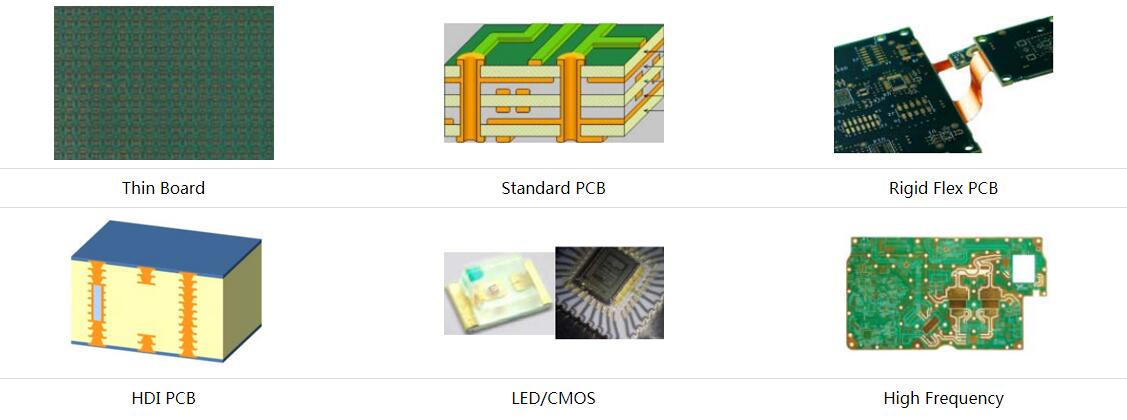
Wintech provides PCB design and layout, PCB fabrication and assembly services, including multilayer rigid PCBs, HDI PCBs, microvia, RF, ELIC, flexible printed circuits and rigid-flex circuits. The company supports projects ranging from prototypes to mass production, with 2–70 layer PCB capabilities.
For product developers and OEM purchasing teams, choosing a manufacturing partner should involve more than comparing bare-board prices. Material planning, production coordination, quality control and the ability to support changing project requirements all influence the final manufacturing cost.
Explore Wintech PCB manufacturing services or review the Wintech company profile.
12. Quick Summary: How Inventory Management Affects Electronics Manufacturing Costs
| Inventory issue | Cost impact | Recommended action |
|---|---|---|
| Excess inventory | Higher carrying cost, tied-up cash and obsolescence. | Use demand-based purchasing, aging reviews and staged deliveries. |
| Component shortages | Production delays, idle capacity and expedited freight. | Set selective safety stock and monitor supplier lead times. |
| Inaccurate BOMs | Wrong purchases, material shortages and unusable stock. | Control engineering revisions and BOM approvals. |
| Weak traceability | Longer quality investigations and wider material quarantine. | Track supplier, lot and production usage information. |
| Poor supplier performance | Unreliable replenishment and delivery commitments. | Measure on-time delivery, quality and communication. |
| Manual inventory processes | Record errors, slow reconciliation and poor visibility. | Use ERP/MRP integration and barcode-based transactions where justified. |
| Uncontrolled engineering changes | Excess old-revision components and unexpected reorders. | Connect engineering change control with purchasing and inventory. |
| Inappropriate storage | Material degradation, inspection costs and scrap. | Apply suitable ESD, moisture and shelf-life controls. |
13. Frequently Asked Questions
How does inventory management affect electronics manufacturing costs?Inventory management affects purchasing costs, working capital, storage, production continuity, material quality, obsolescence and delivery performance. Poor control can create both excess inventory and component shortages. A balanced strategy reduces the combined cost of holding stock and not having the right materials when production needs them.
Why is inventory management important in PCB manufacturing?PCB and PCBA production depends on the timely availability of many materials and electronic components. A single missing or unsuitable component can delay an entire production order. Accurate BOMs, supplier lead-time monitoring, traceability and material planning help reduce those risks.
How does overstocking increase electronics manufacturing costs?Overstocking ties up working capital and increases storage, handling and financing costs. It also exposes manufacturers to component obsolescence, engineering changes, shelf-life limits and demand reductions. Bulk purchasing is worthwhile only when the expected savings exceed the cost and risk of holding the additional stock.
How do component shortages affect production costs?Shortages can stop production, disrupt schedules, reduce equipment utilization and require expensive emergency purchasing or freight. They may also delay customer deliveries. The impact can be especially high when a low-cost component has a long lead time and no approved substitute.
What is the best inventory management method for electronics manufacturing?There is no single best method for every factory. MRP is useful for calculating requirements from BOMs and production plans. ABC analysis helps prioritize management attention, while selective safety stock protects critical components. JIT, consignment or vendor-managed inventory may suit stable, repeat-use materials with reliable suppliers.
What is safety stock in electronics manufacturing?Safety stock is additional inventory held to protect production against unexpected demand or supply delays. It should be set according to component criticality, lead-time variability, supplier reliability and the cost of a shortage. Applying the same buffer to every component usually creates unnecessary inventory cost.
How can manufacturers reduce obsolete electronic components?Manufacturers can reduce obsolete stock by controlling BOM revisions, reviewing component lifecycle status, coordinating engineering changes with purchasing and monitoring slow-moving inventory. Scheduled purchasing and staged deliveries can also reduce the amount of material exposed to design changes.
How does ERP software improve inventory management?ERP software can connect purchasing, inventory, finance and production records. When supported by accurate BOMs and stock transactions, it improves material visibility and helps teams identify shortages, excess stock and delayed purchase orders. Software cannot compensate for inaccurate data or weak process ownership.
What should I ask an electronics manufacturing service provider about inventory control?Ask how the provider validates BOMs, sources components, manages lead times, controls substitutions, tracks lots, handles excess stock and responds to shortages. Also confirm how engineering changes affect purchasing and whether the supplier can provide material status and traceability reports.
Is just-in-time inventory suitable for every electronics manufacturer?No. JIT can reduce holding costs when demand and supplier delivery are predictable. It can increase risk when components have long or unstable lead times, supply is concentrated or production cannot tolerate interruptions. Many manufacturers use JIT for stable materials and safety stock for critical components.
References
- National Institute of Standards and Technology (NIST) – Manufacturing Extension Partnership. U.S. government manufacturing resource covering operational improvement, supply-chain practices and manufacturing competitiveness.
- IPC – Association Connecting Electronics Industries. Industry standards and technical resources for electronics manufacturing, PCB design, assembly, materials and quality practices.
- GS1 – Traceability Standards. Standards-based guidance on identifying, capturing and sharing supply-chain traceability information.
Practical note: Inventory policies should be adapted to the manufacturer's product mix, component lifecycle, supplier lead times, quality requirements and customer delivery commitments. No single stock formula is suitable for every electronics production environment.


