

How to Handle Obsolete and End-of-Life Components in PCBA Manufacturing
An obsolete electronic component can turn a stable printed circuit board assembly into a sourcing, engineering, and delivery problem. A microcontroller reaches end of life, a power-management IC becomes unavailable, or a connector supplier announces a last-time-buy deadline. The production line may still be capable of building the board, but the approved bill of materials is no longer secure.
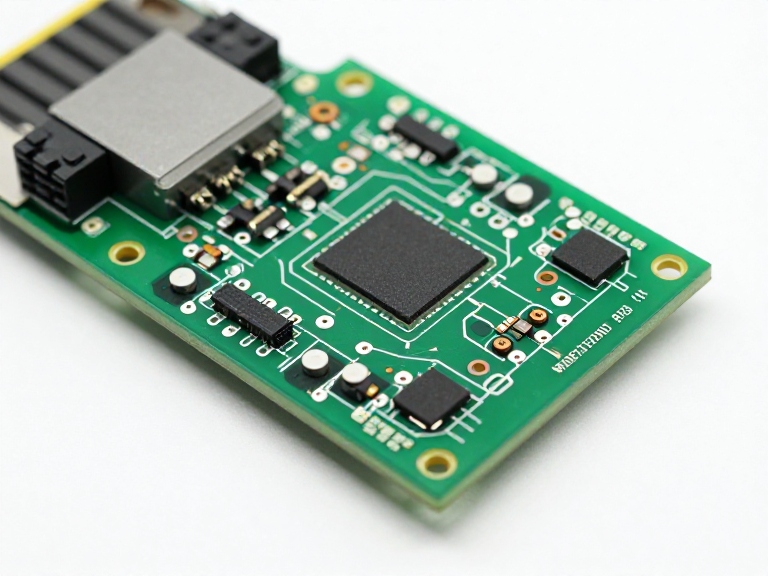
Handle obsolete and end-of-life (EOL) components in PCBA manufacturing through a controlled lifecycle process: monitor supplier notices, assess the affected BOM, verify remaining stock and traceability, evaluate last-time-buy options, qualify approved alternatives, and validate any redesign before production release. Do not replace a component simply because its headline specifications look similar. Confirm electrical, mechanical, thermal, firmware, regulatory, and long-term supply compatibility. For critical products, build an obsolescence plan before the original component becomes unavailable.
What Should You Do When a Component Becomes Obsolete?
Start by identifying every product and assembly affected by the part number—not by immediately purchasing whatever inventory is still available. Determine whether the component is discontinued, approaching end of life, temporarily constrained, or simply difficult to source. These situations require different responses.
Next, establish the business exposure. Check on-hand inventory, open purchase orders, supplier commitments, production demand, service requirements, and the remaining product lifecycle. A part used in one low-volume legacy board may justify a last-time buy. The same decision may be financially irresponsible for a high-volume product expected to remain in production for another decade.
From our perspective, the most expensive mistake is treating obsolescence as a purchasing problem alone. A replacement can change circuit behavior, PCB layout, thermal performance, firmware compatibility, assembly yield, and product certification. Procurement, engineering, quality, and manufacturing must work from one approved change process.
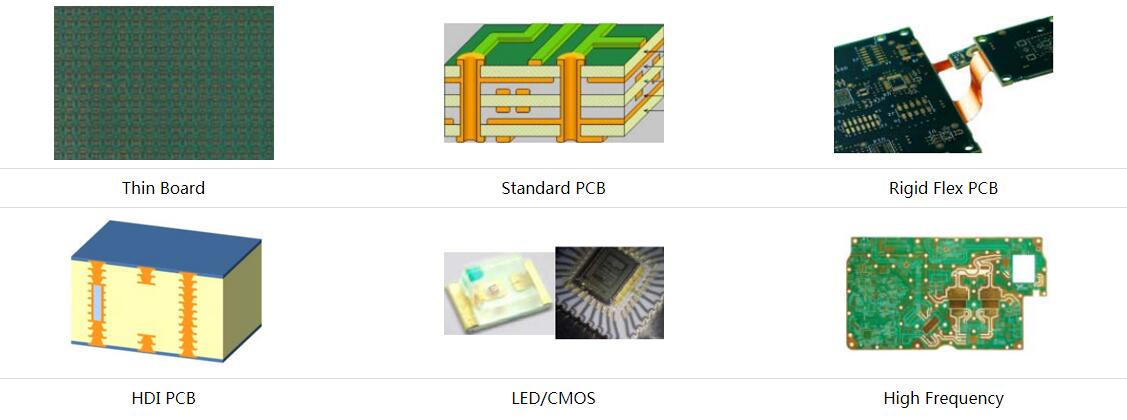 Component lifecycle planning should be integrated with PCB fabrication, assembly engineering, and production control.
- What Are Obsolete and End-of-Life Components?
- Why Components Become Obsolete
- Quick Summary: Obsolescence Response Options
- How to Handle EOL Components: 9 Practical Steps
- How to Evaluate Replacement Components
- Last-Time Buy vs. Redesign vs. Authorized Broker
- Pros and Cons of Common Strategies
- Risks of Poor Obsolescence Management
- Choosing a PCBA Manufacturing Partner
- Cost-Benefit Analysis and Lifecycle Planning
- Expert Recommendation
- Frequently Asked Questions
- References
What Are Obsolete and End-of-Life Components in PCBA Manufacturing?
An obsolete electronic component is a part that is no longer available through its original production and distribution channels, or is no longer supported for new procurement. End of life, commonly abbreviated as EOL, is the formal stage in which a manufacturer announces that it intends to discontinue a product or stop accepting orders after specified dates.
In practice, the terms are related but not identical. An EOL notice is often an advance warning. Obsolescence may occur later, after the final order window and remaining inventory have been exhausted. A component can also become difficult to obtain before formal discontinuation because of allocation, factory capacity changes, material shortages, or a supplier's decision to prioritize other product families.
In PCBA manufacturing, the affected item may be an active integrated circuit, passive component, connector, relay, oscillator, memory device, power module, sensor, or electromechanical part. Even a low-cost resistor or connector can stop production if it is a controlled, qualified part with no approved substitute.
It is useful to distinguish component obsolescence from a temporary shortage. A shortage may improve when supply recovers. An EOL notice indicates a lifecycle decision by the manufacturer and normally requires a longer-term response.
Why Do Electronic Components Become Obsolete?
Electronic component lifecycles are affected by technology, market demand, manufacturing economics, and supplier strategy. Common causes include:
- Technology transitions: Newer processors, memory devices, power semiconductors, and communication interfaces replace older generations.
- Low market demand: Manufacturers discontinue parts that no longer justify production capacity.
- Manufacturing process changes: A fabrication node, package, material, or production line may be retired.
- Supplier consolidation: Mergers, acquisitions, and portfolio rationalization can remove previously available part numbers.
- Regulatory or material changes: Environmental requirements or restrictions on substances can force redesign or discontinuation.
- Business decisions: Suppliers may focus resources on higher-volume or higher-margin product families.
The impact is especially serious for industrial, medical, automotive, and infrastructure products with long service lives. A machine may remain in use for 10 to 20 years, while some electronic components have much shorter commercial lifecycles.
For a broader understanding of how individual parts support board operation, see this guide to PCB components and their functions. Knowing which components are functionally critical helps prioritize lifecycle monitoring.
Quick Summary: Obsolete Component Management Options
| Response Option | When It Makes Sense | Main Benefit | Main Risk |
|---|---|---|---|
| Last-time buy | Product demand and remaining service life are reasonably predictable. | Preserves the existing design. | Excess, aging, or unusable inventory. |
| Authorized distributor stock | Genuine remaining inventory is available. | Better traceability and lower counterfeit exposure. | Limited quantity or high price. |
| Qualified alternate component | A technically compatible substitute exists. | Can restore supply without a full redesign. | Hidden electrical, mechanical, or reliability differences. |
| PCB or circuit redesign | No suitable drop-in replacement exists or future supply risk is high. | Creates a more sustainable design. | Engineering, validation, and certification costs. |
| Authorized broker sourcing | Original parts are unavailable through normal channels. | May support legacy production or repairs. | Counterfeit, remarking, storage, and traceability risks. |
| Product redesign or phase-out | Demand is low or the product is near end of service. | Avoids disproportionate investment. | Customer transition and support obligations. |
How to Handle EOL Components in PCBA Manufacturing: 9 Practical Steps
1. Monitor Manufacturer Lifecycle Notices
Do not wait until a buyer cannot place an order. Establish a process for tracking product-change notifications (PCNs), end-of-life notices, last-time-buy announcements, and product discontinuation information from component manufacturers.
For critical components, monitor the manufacturer's official product page and lifecycle communications. Ask authorized distributors to provide alerts for affected part numbers. Maintain an internal record of the date a notice was received, the manufacturer's stated order deadline, final shipment date, and any recommended replacement.
We recommend assigning lifecycle monitoring to a named owner within procurement or component engineering. A notice that sits in an inbox without an assigned action is not an effective control.
2. Identify Every Affected BOM and Product
Once an EOL notice arrives, search all active bills of materials for the exact manufacturer part number. Include alternate BOMs, product variants, service assemblies, repair kits, spare boards, and products that are temporarily inactive but still supported.
Then classify the exposure by business impact. A discontinued component used in a high-volume controller deserves faster attention than a part used in a rarely ordered accessory. Check whether the component is single-source, whether a qualified alternate already exists, and whether the part is essential to safety or product functionality.
A controlled BOM should include manufacturer name, exact part number, approved alternates, lifecycle status, and revision history. Avoid relying on informal descriptions such as “similar 10k resistor” or “equivalent connector.”
3. Calculate Remaining Demand Before a Last-Time Buy
A last-time buy (LTB) can be a sensible way to protect an existing design, but only when the quantity is calculated carefully. Estimate demand across the remaining production schedule, forecast uncertainty, warranty obligations, repair requirements, and spare-parts commitments.
Include expected scrap, process loss, engineering builds, and service demand. Then compare the required quantity with current inventory and open orders. Buying too little can leave the product exposed again; buying too much can tie up cash and create obsolete stock of your own.
For commercial users, the calculation should include storage conditions, shelf-life limitations where relevant, moisture sensitivity, packaging integrity, and the ability to maintain traceability over the expected storage period.
4. Prioritize Authorized and Traceable Sources
When the original part is still available, start with the component manufacturer or an authorized distributor. This generally provides stronger traceability and a clearer route for confirming product authenticity than buying from an unknown broker.
If authorized stock is exhausted, do not treat an online listing as proof of genuine supply. Request the original packaging, date and lot codes, certificates or declarations where applicable, chain-of-custody records, and inspection evidence. Assess whether additional electrical testing, X-ray inspection, decapsulation, or other authenticity analysis is appropriate for the risk level.
For high-reliability products, an attractive price is not a reason to bypass source qualification. A counterfeit or mishandled component can cause failures that are much more expensive than the original shortage.
5. Search for a Technically Qualified Replacement
Check whether the original manufacturer has recommended a successor part. Then evaluate alternatives from other manufacturers. A replacement should be compared across the parameters that matter to the circuit and the assembly process—not only nominal voltage, current, resistance, capacitance, or package size.
Review electrical characteristics, operating temperature, tolerances, timing, noise, power dissipation, pinout, package dimensions, thermal resistance, qualification status, and availability. For programmable devices, include firmware, bootloader, programming tools, and software-library implications.
A replacement that is “pin compatible” may still have different startup behavior, timing, protection thresholds, or transient response. Engineering must determine whether these differences affect the real application.
6. Validate Mechanical and PCB Footprint Compatibility
Package names can be misleading. Two components may appear to share the same package family but differ in body dimensions, lead spacing, terminal finish, height, land pattern, or thermal pad requirements.
Check the recommended PCB footprint against the actual component datasheet. Review pick-and-place orientation, polarity marking, solder paste design, stencil aperture, reflow profile, and inspection access. A package change can affect solder-joint reliability and manufacturing yield even when the circuit operates correctly.
If the substitute requires a different footprint or pin mapping, update the PCB layout and fabrication outputs. Wintech's PCB manufacturing services and PCB assembly and PCBA SMT capabilities are relevant when a component change moves beyond a simple approved BOM substitution.
7. Run Engineering Tests and Production Validation
Do not release an alternate component to mass production based only on a datasheet comparison. Build engineering samples and test the affected functions under representative operating conditions.
Depending on the component and product, validation may include functional testing, temperature testing, power cycling, signal integrity, electromagnetic compatibility, thermal performance, vibration, environmental exposure, and accelerated life testing. The exact plan should be risk-based. A connector replacement may need mechanical mating and contact-resistance checks; a power IC replacement may require transient, thermal, and protection-circuit evaluation.
For regulated or safety-critical products, determine whether the change triggers additional verification, validation, customer approval, or regulatory review. Keep the test plan, results, deviations, and engineering approval with the change record.
8. Update the BOM, Approved Vendor List, and Production Documents
Once the replacement is qualified, update the controlled documentation before production. This normally includes the BOM, approved vendor list (AVL), schematic, PCB layout, assembly drawing, work instructions, inspection criteria, test procedures, and firmware records where relevant.
Make the change traceable to a formal engineering change order (ECO) or equivalent process. Specify which product revisions can use the new part and whether mixed production is allowed. If old and new components are both approved, the manufacturing system must identify which source and revision were used in each build.
Clear documentation prevents an approved engineering substitution from becoming an uncontrolled purchasing decision on the factory floor.
9. Establish a Long-Term Obsolescence Management Plan
Do not close the issue immediately after the first successful production run. Record the new component's lifecycle status, expected availability, approved sources, and any remaining supply risks. If the replacement is already mature or single-sourced, the company may simply have moved the problem forward by a few years.
For products with long service lives, consider periodic BOM reviews, lifecycle-risk scoring, second-source qualification, and planned redesign windows. A product roadmap should identify critical components whose lifecycle is shorter than the expected product support period.
This is where obsolescence management becomes a design discipline rather than an emergency procurement activity.
How to Evaluate Replacement Components Without Creating New Problems
A replacement component should be treated as a controlled engineering change. Use a structured review that covers at least five areas.
Electrical Compatibility
Compare minimum and maximum ratings, recommended operating conditions, tolerances, timing, leakage, power consumption, noise, transient response, and protection behavior. Do not design around absolute maximum ratings as normal operating values.
Mechanical and Thermal Compatibility
Check package dimensions, pinout, land pattern, height, thermal pad, solderability, and heat dissipation. For power devices, a different package or thermal resistance can change junction temperature and long-term reliability.
Firmware and Software Compatibility
For microcontrollers, memory devices, sensors, and communication ICs, verify register maps, instruction sets, boot behavior, timing, drivers, and programming tools. A hardware-compatible part may still require software changes.
Quality and Qualification Status
Review the supplier's quality documentation and relevant qualification data. Depending on the application, this may include AEC-Q100 or AEC-Q200 qualification, industrial temperature ratings, safety approvals, or other product-specific requirements. A qualification label does not replace system-level validation.
Supply Continuity
Check whether the proposed replacement is active, has multiple authorized sources, and has a credible lifecycle outlook. Ask about manufacturing location, lead-time history, minimum order quantity, and allocation policy. A technically excellent part with fragile supply may be a poor long-term choice.
Last-Time Buy vs. Redesign vs. Authorized Broker Sourcing
There is no single response that fits every EOL event. The best strategy depends on product lifetime, volume, component criticality, and the availability of qualified alternatives.
| Strategy | Advantages | Disadvantages | Best Application |
|---|---|---|---|
| Last-time buy from authorized channel | Preserves the existing design and supports continuity with known parts. | Requires cash, demand forecasting, storage, and inventory control. | Stable products with predictable remaining demand. |
| Qualified alternate component | Can maintain the existing PCB with limited engineering changes. | Requires datasheet review, sample testing, and formal approval. | Parts with a genuine electrical and mechanical alternative. |
| PCB or circuit redesign | Can remove dependency on an obsolete part and improve future sourcing flexibility. | Higher engineering, validation, and possible certification costs. | Long-life products or components with no suitable substitute. |
| Authorized broker or independent distributor | May locate remaining original inventory for legacy builds. | Higher authenticity, storage, and traceability risk. | Critical legacy repairs when normal channels are exhausted. |
| Product phase-out | Avoids disproportionate investment in a low-demand product. | Requires customer communication and service planning. | Products near the end of their commercial or support life. |
Pros and Cons of Common Obsolescence Strategies
| Strategy | Pros | Cons |
|---|---|---|
| Last-time buy |
|
|
| Qualified alternate |
|
|
| Redesign |
|
|
| Broker sourcing |
|
|
Risks of Poor Obsolescence Management in PCBA Manufacturing
Counterfeit and Substandard Components
Urgent shortages create pressure to buy from unfamiliar sources. Counterfeit parts may be remarked, reclaimed, refurbished, or incorrectly represented. Some may pass a basic visual inspection but fail under electrical or environmental stress. Source qualification and risk-based authenticity testing are essential when purchasing outside authorized channels.
Uncontrolled Engineering Substitutions
Replacing a part without engineering approval can cause intermittent faults, thermal problems, EMI issues, or field failures. A substitute should never be introduced solely because the package looks similar or the nominal value matches.
Production Delays and Expedited Costs
Late discovery of EOL status can force premium freight, emergency procurement, schedule changes, and unplanned engineering work. It can also disrupt the entire PCBA schedule if the affected part is required before assembly can proceed.
For a realistic view of scheduling dependencies, review this PCB assembly lead time guide. Component availability should be checked alongside fabrication and assembly capacity when committing to a delivery date.
Product Reliability and Warranty Exposure
A poorly qualified alternate can increase defect rates or shorten product life. The impact may not appear during initial functional testing. It can emerge later through temperature cycling, vibration, long operating hours, or repeated power transitions.
Loss of Traceability
If procurement, engineering, and production records do not identify the exact manufacturer and lot used, failure analysis becomes harder. Maintain traceability from component receipt through assembly lot and finished product where the product risk or customer requirements justify it.
How to Choose a PCBA Manufacturing Partner for Obsolete Components
A capable PCBA partner should not simply ask purchasing to find a replacement. It should help evaluate the manufacturing consequences of the change and make sure the approved solution can be built consistently.
1. Check BOM Review and Component Engineering Support
Ask whether the manufacturer can review BOM completeness, identify lifecycle risks, check manufacturer part numbers, and flag single-source or difficult-to-procure components. Clarify whether component engineering is performed in-house or through an external partner.
2. Verify Procurement Controls and Source Traceability
Ask how the supplier qualifies distributors, manages independent sources, records date codes and lot numbers, and handles suspect or nonconforming components. For critical parts, request a documented escalation process before any broker purchase is made.
3. Review Engineering Change and NPI Processes
A component replacement should flow through a controlled review and validation process. A manufacturer with structured New Product Introduction (NPI) support can help coordinate sample builds, design feedback, process review, and production release.
4. Evaluate Prototype and Quick-Turn Capability
When a substitute requires a layout change, the ability to produce engineering prototypes quickly can shorten the validation cycle. Review quick-turn PCB prototype assembly options and confirm whether the supplier can support the required board revision, component sourcing, and test schedule.
5. Confirm Manufacturing Scope
Some projects require more than assembly. A redesign may involve multilayer PCB fabrication, HDI structures, rigid-flex circuits, or other specialized board technologies. Wintech provides PCB manufacturing services covering 2–70 layer boards, including HDI, rigid, rigid-flex, and flexible printed circuits, alongside prototype and mass-production support.
When evaluating any supplier, review the actual process capabilities, quality controls, sourcing model, and communication responsibilities. A company name or low quotation is not enough to establish that it can manage a difficult obsolescence event.
For additional supplier evaluation context, see this overview of top electronic contract manufacturers.
Cost-Benefit Analysis: When Should You Buy Stock and When Should You Redesign?
The financial decision should be based on total lifecycle cost, not the immediate unit price of the obsolete component. A last-time buy can appear economical because it avoids engineering work, but the inventory may become stranded if demand falls. A redesign may appear expensive, but it can protect a product line that will remain commercially important for years.
Compare the following cost categories:
- Remaining original component inventory and purchase price.
- Expected demand during production, warranty, and service periods.
- Storage, handling, insurance, and inventory financing.
- Engineering hours for alternate evaluation and PCB redesign.
- Prototype fabrication, assembly, and validation testing.
- Certification, customer approval, and documentation updates.
- Potential yield loss, field failure, warranty, and downtime exposure.
- Future component availability and second-source options.
For example, if a low-volume industrial controller has only two years of expected production remaining, a carefully calculated last-time buy may be more sensible than a full redesign. If the same obsolete microcontroller is used in a product expected to remain in production for another eight years, redesigning around a more sustainable device may provide better long-term value.
Use a scenario comparison rather than relying on a single forecast. Model expected demand, a higher-demand case, and a lower-demand case. Include service inventory separately from production demand so that warranty obligations are not accidentally consumed by routine builds.
Expert Recommendation: Build Obsolescence Management into the PCBA Lifecycle
Our recommendation is to treat component lifecycle status as part of design and production planning from the beginning. For new products, review component longevity during design selection. Avoid choosing a critical part solely because it is available today or has an attractive price.
For existing products, prioritize components that have no approved alternate, long replenishment times, high failure impact, or a lifecycle shorter than the product's remaining support period. Maintain a controlled BOM and approved vendor list, and review them at defined intervals.
For heavy-duty, industrial, and long-life applications, we recommend a documented obsolescence strategy that includes supplier monitoring, risk scoring, alternate qualification, and redesign triggers. Do not wait for the last-time-buy deadline to start engineering work.
Wintech supports PCB fabrication and PCBA manufacturing from prototype through mass production. When an obsolete component forces a design change, involving the PCB and assembly manufacturer early can help identify footprint, sourcing, process, and production risks before a revised board is released.
Need Support with PCB Redesign or PCBA Production?
Wintech provides PCB fabrication and assembly services for multilayer rigid boards, HDI, rigid-flex, and flexible printed circuits, with support from prototype to mass production. If an EOL component is affecting your BOM, prepare the affected part numbers, current board revision, target demand, and any proposed replacement data before requesting an engineering and manufacturing review.
Explore PCB assembly and PCBA SMT services or review PCB manufacturing capabilities.
Frequently Asked Questions About Obsolete Components in PCBA Manufacturing
1. What is an EOL component in electronics manufacturing?
An EOL component is an electronic part that its manufacturer has announced will be discontinued. The announcement often includes a final order date and a last shipment date. After the remaining supply is exhausted, the component may become difficult or impossible to source through normal channels.
2. What is the difference between EOL and obsolete components?
EOL is generally the formal discontinuation stage announced by the manufacturer. Obsolete describes a part that is no longer available or supported for normal procurement. An EOL notice may provide a transition period before the part becomes fully obsolete.
3. Should manufacturers always make a last-time buy?
No. A last-time buy is appropriate when remaining demand, service obligations, storage conditions, and inventory costs can be estimated with reasonable confidence. If the product has a long remaining lifecycle or demand is uncertain, qualifying an alternate or redesigning the board may be a better investment.
4. Can an obsolete component be replaced with an equivalent part?
Sometimes, but equivalence must be established through engineering review. Compare electrical specifications, package and pinout, thermal performance, timing, firmware compatibility, qualification status, and supply continuity. Validate the replacement in the actual application before production release.
5. How can PCBA manufacturers reduce counterfeit component risks?
Use authorized sources whenever possible, qualify independent suppliers, maintain traceability, review packaging and lot information, and apply risk-based authenticity testing when required. Critical components should not be purchased from unknown sources simply to meet a delivery deadline.
6. What is a PCN in component lifecycle management?
A Product Change Notification (PCN) is a supplier communication describing a change to a product or its manufacturing process. PCNs may cover package changes, materials, manufacturing locations, process revisions, or other characteristics. Engineering should review whether the change affects form, fit, function, reliability, or qualification.
7. When is a PCB redesign necessary for an obsolete component?
A redesign may be necessary when no suitable drop-in replacement exists, the new component has a different pinout or footprint, performance requirements cannot be met, or the original design creates an unacceptable future supply risk. Redesign is also worth considering when the product has a long remaining lifecycle.
8. How should companies manage obsolete components in long-life products?
Maintain a lifecycle-controlled BOM, monitor supplier notices, identify single-source components, qualify alternates, plan last-time buys where appropriate, and define redesign triggers. Review the plan periodically and include service and spare-parts demand in the forecast.
9. What information should I provide to a PCBA manufacturer when a component becomes obsolete?
Provide the affected BOM and manufacturer part number, PCB revision, product demand forecast, current inventory, supplier EOL notice, proposed replacement datasheet, target delivery schedule, and any relevant test or certification requirements. This allows engineering and procurement teams to evaluate sourcing and manufacturing impacts together.
References
- ISO — IEC 62402:2019, Obsolescence Management. International guidance for establishing and maintaining an obsolescence management process across a product's lifecycle.
- JEDEC — JESD48, Product Discontinuance. Industry standard addressing the notification process for discontinuing semiconductor products.
- U.S. Defense Logistics Agency — Counterfeit Prevention. Government resources and guidance related to counterfeit electronic parts and supply-chain risk controls.


