

How EMS Providers Support Products From Prototype to Mass Production
Hardware is brutally unforgiving. A prototype that works perfectly on a laboratory workbench will almost certainly fail on an automated assembly line if it has not been engineered for scale. How EMS Providers Support Products is by acting as the critical bridge across this "valley of death," integrating Design for Manufacturability (DFM), aggressive supply chain sourcing, and rigorous New Product Introduction (NPI) protocols to transform a fragile concept into a robust, mass-produced reality.
Quick Answer
Electronic Manufacturing Services (EMS) providers do much more than simply solder components to a board. They support the entire product lifecycle by providing the following core functions:
- Engineering and DFM: Identifying design flaws that cause high defect rates before production begins.
- Supply Chain Management: Sourcing raw materials globally, managing component obsolescence, and securing volume discounts.
- New Product Introduction (NPI): Running pilot builds to test the assembly process and establish quality control benchmarks.
- Mass Production & Scaling: Utilizing Surface Mount Technology (SMT), automated optical inspection (AOI), and full system integration to deliver finished goods.
In most professional situations, partnering with a competent EMS partner is the only financially viable method for an OEM to achieve commercial scale without investing millions in proprietary factory infrastructure.
Table of Contents
- What It Is: The Modern EMS Partner
- How It Works: The Lifecycle Roadmap
- The Commercial Benefits of Early Integration
- Limitations and Capital Realities
- Who Should Use an EMS Provider
- Who Does Not Need One
- Common Mistakes OEMs Make
- Expert Buying Considerations
- Industry Comparison Tables
- Wintech Manufacturing Service Solutions
- The Expert Recommendation
- Frequently Asked Questions
What It Is: The Modern EMS Partner
Historically, contract manufacturers were treated as mere "board stuffers." An Original Equipment Manufacturer (OEM) would throw a schematic over the wall, and the factory would blindly build exactly what was on the paper, regardless of how inefficient or failure-prone the design was. Today, that model is entirely obsolete.
A modern Electronic Manufacturing Services provider is an extension of your own engineering and procurement departments. Understanding How EMS Providers Support Products requires recognizing that they are deeply integrated technology partners. They offer a holistic suite of services encompassing printed circuit board assembly (PCBA), mechanical box builds, firmware flashing, and outbound logistics. From our experience, an EMS partner is the entity that assumes the colossal risk of inventory management and capital equipment depreciation so that you, the OEM, can focus strictly on research, development, and sales.
How It Works: The Lifecycle Roadmap
The journey from a single 3D-printed prototype to thousands of boxed units per week follows a strict, unforgiving roadmap. A top-tier EMS provider navigates this through specific, highly controlled phases.
Phase 1: Design for Manufacturability (DFM) and Design for Testing (DFT)
Before a single machine is turned on, the EMS engineering team tears your design apart digitally. They look for components placed too close together that will cause solder bridging. They look for test points that are inaccessible to automated probes. By utilizing advanced Wintech Engineering Capability protocols, the EMS provider forces design revisions that drastically reduce the cycle time on the SMT (Surface Mount Technology) line, directly lowering your per-unit cost.
Phase 2: Supply Chain and Sourcing
Hardware is useless if you cannot buy the chips to run it. An EMS provider leverages their massive purchasing power to secure components that you could never acquire as a standalone startup. They utilize a dedicated Wintech Supplychain Service team to identify End-of-Life (EOL) components in your Bill of Materials (BOM) and suggest drop-in replacements that will remain in production for the next decade.
Phase 3: New Product Introduction (NPI)
The NPI phase is the most critical juncture. The EMS provider builds a small pilot run (e.g., 50 to 100 units). The goal here is not speed; the goal is discovering every possible way the assembly line can fail. They program the Automated Optical Inspection (AOI) machines, calibrate the solder paste printers, and build custom testing jigs.
Phase 4: Mass Production and Quality Control
Once NPI is signed off, the product moves to volume manufacturing. At this stage, the EMS provider implements relentless quality control. Through In-Circuit Testing (ICT), X-Ray inspection for BGA components, and environmental burn-in testing, they ensure the thousandth unit operates exactly identically to the first. This is where Quality Assurance systems become the backbone of the operation.
The Commercial Benefits of Early Integration
Why is it critical to understand How EMS Providers Support Products? Because involving them late costs you millions. The primary benefit of engaging an EMS provider during the prototype phase is the eradication of redesign loops. If you design a board around a microprocessor that has a 52-week lead time, you will miss your market window. An EMS partner catches this in week one.
Furthermore, an EMS provider gives you immediate access to millions of dollars in capital equipment. You do not need to buy reflow ovens, wave soldering machines, or clean rooms. You rent their infrastructure on a per-unit basis, turning fixed capital expenditures into manageable variable costs.
Limitations and Capital Realities
We must apply commercial judgment: outsourcing to an EMS is not a magic bullet. The primary limitation is the loss of absolute control. You are handing over your intellectual property and trusting an external entity to maintain your brand's reputation. If they fail a quality check, your customers suffer.
Secondly, competent EMS providers require upfront financial commitments. There are Non-Recurring Engineering (NRE) costs to program the machines and build the testing fixtures. If your product is a highly customized, low-volume artisanal gadget, the NRE costs will destroy your profit margin.
Who Should Use an EMS Provider
For Commercial Users and Scalable Startups: Any hardware company aiming to produce more than 500 units annually must utilize an EMS. If you are developing products that face intense regulatory scrutiny, you have no choice. For example, building a heart monitor requires a Medical Device Certified ISO13485 EMS OEM. Building a vehicle sensor requires an Automotive Electronics Certified ISO16949 EMS OEM. You cannot pass FDA or automotive audits manufacturing out of a garage.
Who Does Not Need One
For Beginners and Bespoke Makers: If you are building 10 custom guitar pedals a month for a niche audience, an industrial EMS provider is overkill. The setup costs and Minimum Order Quantities (MOQs) will not make financial sense. Stay with in-house, manual assembly until your demand outstrips your manual labor capacity.
Common Mistakes OEMs Make
In our testing and industry consulting, the most catastrophic mistake an OEM makes is treating the EMS as a vendor rather than a partner. Do not hide design files. Do not withhold testing parameters. When OEMs throw a finalized, flawed design "over the wall" and demand a quote, the EMS is forced to inflate the price to cover the unknown manufacturing risks.
Another profound error is selecting an EMS based solely on the lowest per-unit quote. A cheap quote usually indicates that the EMS is skipping critical testing phases like AOI or Flying Probe. The money you save on the assembly line will be lost tenfold when you have to process field returns for dead-on-arrival units.
Expert Buying Considerations
When evaluating an EMS provider, look strictly at their industry pedigree. If you are building drones, do they have experience in Military Defense & Aerospace? Do they have dedicated NPI lines separated from their mass production lines so your pilot run does not get delayed by a larger customer's volume order? You must physically (or virtually) audit their facility. Look for clean floors, organized component reels, and strict ESD (Electrostatic Discharge) protocols.
Industry Comparison Tables
Quick Summary: Product Lifecycle Stages
| Lifecycle Stage | OEM Responsibility | EMS Provider Support |
|---|---|---|
| Prototyping | Core concept, schematic design, initial breadboard. | DFM review, component lifecycle analysis. |
| NPI (New Product Introduction) | Provide finalized BOM and testing parameters. | Build testing jigs, program SMT lines, run pilot build. |
| Mass Production | Forecast demand, manage sales channels. | Volume procurement, automated assembly, rigorous QA. |
| Post-Production | Field deployment, end-user support. | Warranty repair, component obsolescence management. |
Comparison: Tier 1 vs. Mid-Tier EMS Providers
| Feature | Tier 1 EMS (Foxconn, Flex) | Mid-Tier EMS (Wintech) |
|---|---|---|
| Target Customer | Apple, Sony, Fortune 500 | Scaling Startups, Mid-Market OEMs, Specialized Tech |
| Agility & Speed | Slow, rigid bureaucratic processes | Highly agile, rapid NPI pivots |
| Minimum Volumes | Millions of units annually | Hundreds to tens of thousands |
| Customer Service | Impersonal for sub-$50M accounts | Direct access to senior engineering teams |
Pros and Cons of Outsourcing to an EMS
| Pros | Cons |
|---|---|
| Zero capital expenditure on factory equipment. | Requires sharing proprietary design files (IP risk). |
| Instant access to global component supply chains. | Subject to NRE (Non-Recurring Engineering) setup fees. |
| Expert DFM ensures a lower defect rate. | Less control over daily floor operations. |
| Scalability from 100 units to 100,000 units seamlessly. | Requires excellent communication and documentation to succeed. |
Wintech Manufacturing Service Solutions
To truly execute the transition from prototype to mass production, you need a partner equipped with both the machinery and the mindset for excellence.
Wintech Manufacturing Service
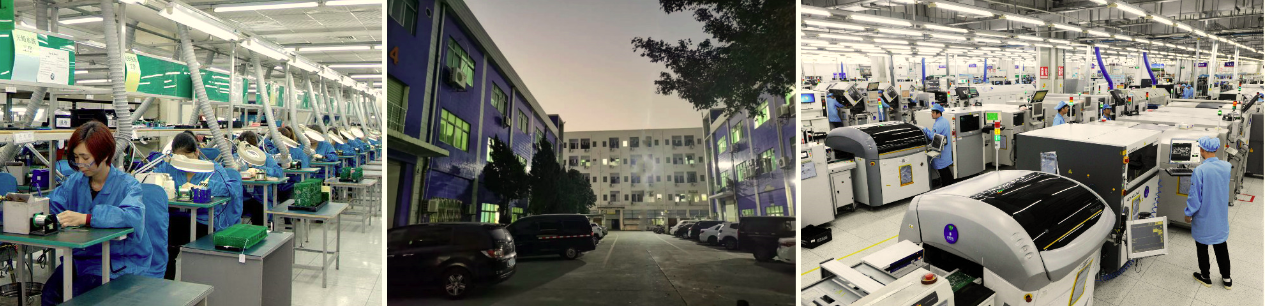
Wintech offers the most advanced manufacturing technologies and supply chain management capabilities in the electronics manufacturing services business. With our diverse experience building microelectronics, printed circuit board assembly (PCBA) and simple to complex systems integration, we’ve distinguished ourselves by adding a wide range of solutions that make us the premier end-to-end, one-stop-shop for delivering innovative products.
Our team of experts in electronic manufacturing is known for its operational excellence and we work collaboratively to design and implement tailored supply chains to each customer’s individual needs to bring flexibility and speed to meet demanding deadlines.
With the Wintech focus on providing quality services, we have become one of the top global electronics manufacturing companies in the world today. We are able to work with our customers to provide cutting edge technology in our electronics manufacturing services that help to manage costs while increasing durability and component reliability throughout its life cycle.
The Expert Recommendation
We recommend engaging your EMS partner the moment your breadboard prototype proves your core concept. Do not wait until your CAD files are locked. How EMS Providers Support Products best is by preventing you from engineering yourself into a manufacturing corner. In heavy-duty applications, whether you are dealing with medical devices or aerospace telemetry, the manufacturing process is just as important as the product design itself. Partner with a mid-tier, agile EMS like Wintech that possesses the ISO certifications required for your industry, and treat them as an extension of your own company. It is the only reliable path to a successful hardware launch.
Frequently Asked Questions
Authoritative Industry References
- IPC Standards (Association Connecting Electronics Industries) - Providing global standards for printed circuit board acceptability and electronic assemblies.
- International Organization for Standardization (ISO) - Governing body for critical manufacturing quality management systems such as ISO 13485 and ISO 9001.
- EMSNOW - Leading industry publication providing expert analysis and global news on the electronic manufacturing services sector.


