

How Quality Management Improves Electronics Manufacturing Reliability
A circuit board can pass its initial functional test and still fail after months of vibration, temperature cycling, electrical stress, or continuous operation. For electronics manufacturers, this is why quality management must extend far beyond final inspection. A disciplined quality management system controls the entire manufacturing process, reduces hidden defects, and makes product performance more predictable from prototype to mass production.
From our experience in PCB fabrication and electronics manufacturing, reliability is not something that can be inspected into a finished product. It is built through engineering controls, qualified materials, stable production processes, traceability, and consistent verification. Manufacturers that treat quality as a production strategy rather than a paperwork requirement are better positioned to control defects, protect delivery schedules, and reduce the total cost of ownership for their customers.
Quick Answer: How Does Quality Management Improve Electronics Manufacturing Reliability?
Quality management improves electronics manufacturing reliability by identifying and controlling potential failures at every production stage, from component sourcing and PCB fabrication to SMT assembly, soldering, testing, and final shipment.
A properly implemented quality management system helps manufacturers:
- Prevent recurring manufacturing defects through standardized processes.
- Improve soldering, assembly, and PCB fabrication consistency.
- Identify defective components and material variations before production.
- Reduce rework, scrap, field failures, and warranty costs.
- Maintain traceability and provide evidence of manufacturing compliance.
- Improve production consistency when scaling from prototypes to mass production.
Our recommendation: Choose an electronics manufacturing partner that combines documented quality procedures with measurable process controls, automated inspection, functional testing, and corrective-action management. A certificate alone is not enough to demonstrate manufacturing reliability.
Table of Contents
- What Is Quality Management in Electronics Manufacturing?
- How Quality Management Improves Manufacturing Reliability
- Key Benefits of Quality Management
- Limitations and Pros vs. Cons
- Essential Quality Management Processes
- Quality Management Approaches Compared
- Which Industries Need Stronger Quality Controls?
- How to Choose a Reliable Electronics Manufacturer
- Cost-Benefit Analysis and Upgrade Recommendations
- Common Quality Management Mistakes
- How Wintech Supports Electronics Manufacturing Quality
- Frequently Asked Questions
- References
1. What Is Quality Management in Electronics Manufacturing?
Quality management in electronics manufacturing is the structured approach used to ensure that materials, components, production processes, and finished electronic products consistently meet defined engineering and customer requirements.
It covers much more than checking whether a printed circuit board works after assembly. A reliable quality management system establishes standards for purchasing, incoming inspection, engineering documentation, production operations, equipment maintenance, inspection, testing, and continuous improvement.
What Does an Electronics Quality Management System Include?
- Quality planning: Establishing product specifications, acceptance criteria, inspection plans, and production controls before manufacturing begins.
- Supplier quality management: Qualifying component and material suppliers and monitoring their performance.
- Process control: Defining approved production parameters for PCB fabrication, solder paste printing, SMT placement, reflow soldering, and other processes.
- Inspection and testing: Verifying that products meet electrical, mechanical, and visual requirements.
- Nonconformance management: Identifying defective products, containing affected batches, investigating root causes, and implementing corrective actions.
- Continuous improvement: Using production data and defect trends to improve process capability and product consistency.
Quality Management Is Not the Same as Final Inspection
Consider a PCB assembly containing hundreds of components. A final functional test might identify a board that does not power on, but it may not reveal the underlying cause. The failure could originate from an incorrect component, insufficient solder paste, a poor solder joint, PCB contamination, or an incorrect design revision.
Final inspection identifies symptoms. Quality management investigates and controls the conditions that create those symptoms.
For manufacturers handling complex multilayer boards, HDI structures, fine-pitch components, and high-density assemblies, this distinction is particularly important. The earlier a process deviation is detected, the less expensive it generally is to correct.
2. How Quality Management Improves Electronics Manufacturing Reliability
Quality management improves reliability by connecting preventive engineering controls with measurable production verification. The objective is to reduce variation before it becomes a product defect.
2.1 Better Control of Raw Materials and Electronic Components
Component quality directly affects finished product performance. A PCB assembly can have excellent solder joints and still fail because of counterfeit, damaged, incorrectly specified, or poorly stored components.
Professional manufacturers establish approved supplier lists, component verification procedures, material identification systems, and incoming inspection requirements. Depending on product risk, these controls may include documentation reviews, dimensional checks, electrical verification, and component authenticity screening.
Moisture-sensitive components also require controlled storage and handling. Improper exposure can cause moisture-related damage during reflow soldering, including package cracking or internal delamination.
We recommend that customers with critical electronics establish clear component sourcing requirements before approving a production quotation. Component substitutions should never happen without appropriate engineering authorization.
2.2 More Consistent PCB Fabrication
PCB fabrication reliability depends on controlling multiple interconnected variables, including copper thickness, dielectric materials, layer registration, drilling accuracy, plating quality, solder mask application, and surface finish.
For multilayer and HDI boards, dimensional accuracy and interconnection integrity become particularly important. Small process deviations can affect impedance, electrical continuity, insulation performance, and long-term reliability.
Quality management establishes manufacturing specifications and inspection checkpoints for these characteristics. Depending on the board design and acceptance requirements, manufacturers may use:
- Automated optical inspection (AOI).
- Electrical continuity and isolation testing.
- Microsection analysis for internal structure verification.
- Impedance testing for controlled-impedance designs.
- Dimensional and layer-registration inspection.
- Thermal and environmental qualification where specified.
Customers developing advanced boards should also understand the PCB design and layout requirements that influence manufacturability. Good quality management begins before the first production panel enters the fabrication line.
2.3 Improved SMT Assembly and Soldering Consistency
Surface-mount technology introduces several variables that directly influence assembly reliability. These include solder paste volume, stencil condition, component positioning, placement accuracy, reflow temperature profile, and board handling.
A stable process uses approved machine programs, controlled solder paste handling, stencil inspection, placement verification, and documented reflow profiles.
AOI systems help identify visible assembly issues such as missing components, incorrect polarity, component misalignment, and certain soldering defects. However, AOI cannot detect every hidden defect, especially those beneath bottom-terminated components such as BGAs.
For these assemblies, X-ray inspection can provide additional information about solder joint formation. Electrical testing and functional verification provide further layers of protection.
2.4 Early Defect Detection Reduces Production Risk
Defects become more expensive as products move through the manufacturing process. An incorrect resistor identified during incoming inspection is relatively straightforward to address. The same component discovered after assembly, enclosure installation, and final testing can require substantial rework.
Quality management introduces inspection checkpoints where they deliver the greatest value. Examples include incoming material verification, first-article inspection, solder paste inspection, post-reflow AOI, electrical testing, and final product verification.
For beginners sourcing PCB assembly, we recommend asking manufacturers how they handle first-article approval and engineering changes. These two procedures have a direct impact on preventing avoidable production mistakes.
2.5 Traceability Makes Failure Investigation More Effective
Traceability links finished products to relevant manufacturing information, including component batches, material lots, production dates, machine programs, inspection results, and test records.
When a field failure occurs, traceability allows quality engineers to investigate whether the issue affects one board, one production batch, a particular component lot, or a broader manufacturing process.
Without traceability, manufacturers may need to investigate a much larger product population or rely on incomplete production records. This can increase recall exposure, investigation costs, and customer disruption.
3. Key Benefits of Quality Management in Electronics Manufacturing
The commercial value of quality management is not limited to reducing the number of rejected boards. It affects manufacturing efficiency, customer satisfaction, production planning, and long-term product support.
| Quality Management Area | Operational Benefit | Reliability Impact | Business Value |
|---|---|---|---|
| Supplier qualification | More consistent incoming materials | Reduces component-related failures | Fewer material disruptions |
| PCB process control | Stable fabrication parameters | Improves electrical and structural consistency | Less scrap and rework |
| SMT process control | Consistent placement and soldering | Reduces assembly defects | Higher production efficiency |
| Automated inspection | Earlier defect identification | Improves defect detection coverage | Lower downstream repair costs |
| Traceability | Faster root-cause investigations | Improves corrective-action accuracy | Reduced quality investigation costs |
| Reliability testing | Better understanding of product performance | Identifies weaknesses under specified conditions | Greater customer confidence |
| Continuous improvement | Reduced process variation | More consistent production output | Better long-term manufacturing economics |
3.1 Reduced Defect Rates and Rework
Every defect consumes resources. Rework requires labor, replacement materials, additional inspection, and sometimes repeat testing. Some boards cannot be repaired economically and must be scrapped.
By analyzing recurring defects and controlling their root causes, manufacturers can reduce avoidable losses. For commercial users ordering repeated production batches, even modest improvements in defect prevention can create meaningful savings over the product lifecycle.
3.2 More Predictable Production Schedules
Quality problems frequently cause production delays. An unexpected component shortage, failed inspection batch, or recurring soldering issue can disrupt delivery commitments.
Consistent quality management helps identify risks earlier and improves manufacturing planning. This is particularly valuable for customers managing product launches, seasonal demand, and scheduled industrial equipment production.
3.3 Better Long-Term Product Reliability
A functional test confirms that a product performs under the test conditions applied at that time. It does not necessarily demonstrate resistance to years of thermal cycling, vibration, humidity, or electrical stress.
For demanding applications, quality management should connect production controls with an appropriate reliability qualification plan. Testing must reflect the product's operating environment rather than relying on a generic test package.
4. Limitations of Quality Management: What It Cannot Guarantee
Quality management substantially improves manufacturing control, but it should not be presented as a guarantee that electronic products will never fail.
A manufacturing quality system cannot independently correct an inherently defective circuit design, an unsuitable component selection, or an unrealistic operating specification. It also cannot guarantee that every possible failure mode will be detected by a finite inspection and testing plan.
Pros and Cons of Quality Management Systems
| Pros | Cons and Limitations |
|---|---|
| Reduces recurring production defects through preventive controls. | Requires investment in personnel, equipment, training, and documentation. |
| Improves consistency across repeated manufacturing batches. | Implementation can increase lead time during initial process qualification. |
| Improves traceability and failure investigation. | Incomplete records or poor execution can weaken traceability. |
| Supports customer audits and applicable industry requirements. | Certification alone does not prove actual product reliability. |
| Reduces rework, scrap, and downstream quality costs. | Testing cannot identify every possible latent failure. |
| Supports continuous improvement and better process decisions. | Requires management commitment and consistent execution. |
5. Essential Quality Management Processes in Electronics Manufacturing
A practical quality management system should connect engineering, procurement, production, inspection, and customer feedback. The following processes are especially important when evaluating a PCB manufacturing or electronics assembly partner.
5.1 Quality Standards and Process Documentation
Documented procedures create consistent expectations across manufacturing shifts and production batches. Work instructions should specify approved materials, machine settings, inspection criteria, handling procedures, and product acceptance requirements.
ISO 9001 provides a widely recognized framework for quality management systems. It emphasizes process control, customer requirements, risk-based thinking, performance evaluation, and continual improvement.
For electronics assembly, IPC standards can also provide relevant workmanship and acceptance criteria. Depending on the product, IPC-A-610 is commonly used for electronic assembly acceptability, while J-STD-001 addresses soldered electrical and electronic assemblies.
The applicable revision, product class, contractual requirements, and acceptance criteria should be agreed upon by the manufacturer and customer before production.
5.2 Incoming Quality Control (IQC)
Incoming quality control checks whether purchased materials meet established specifications before they enter production.
For PCB manufacturing and assembly, IQC may include verification of laminate materials, copper-clad boards, solder paste, electronic components, connectors, and packaging materials.
For commercial users, the most important question is whether the manufacturer can identify the source and batch of materials used in a particular production run.
5.3 In-Process Quality Control (IPQC)
IPQC monitors manufacturing conditions during production rather than waiting until the finished product is available.
Typical controls include:
- PCB drilling and plating process monitoring.
- Layer alignment and registration verification.
- Solder paste printing inspection.
- SMT component placement verification.
- Reflow profile monitoring.
- Assembly workmanship inspection.
- Production equipment calibration and maintenance.
Manufacturers should define reaction plans for process deviations. Recording a measurement without specifying what happens when it exceeds an acceptance limit is not effective process control.
5.4 Final Quality Control (FQC)
Final quality control confirms that completed products meet the agreed requirements. Depending on product complexity, it may include visual inspection, dimensional verification, electrical testing, functional testing, and packaging inspection.
We recommend that customers define the final inspection scope before mass production. A vague requirement such as "100% quality inspection" does not explain what is actually checked.
5.5 Corrective and Preventive Action
When a defect occurs, the manufacturer should contain affected products, establish the scope of the issue, investigate the root cause, and verify the effectiveness of corrective action.
For example, repeated solder bridging may be associated with stencil aperture design, solder paste condition, printing pressure, or PCB pad geometry. Simply repairing defective boards does not resolve the underlying issue.
Structured root-cause analysis, supported by production data, helps prevent recurrence. Corrective action should be verified using subsequent production results rather than considered complete immediately after implementation.
5.6 Statistical Process Control
Statistical process control (SPC) uses process measurements to identify variation and detect unusual changes. It can help manufacturers distinguish normal process variation from conditions that require investigation.
For suitable processes, control charts can monitor measurable characteristics such as dimensions, thickness, or other critical parameters. Process capability indices such as Cp and Cpk may also be used when their statistical assumptions and measurement conditions are appropriate.
For professional electronics manufacturing, SPC is most useful when applied to meaningful process characteristics rather than generating reports that nobody uses to make production decisions.
6. Quality Management Approaches Compared
Not every quality control approach delivers the same level of protection. A manufacturer should select controls based on product complexity, failure consequences, production volume, and customer requirements.
| Approach | Primary Focus | Strength | Limitation | Best Application |
|---|---|---|---|---|
| Final inspection only | Finished product defects | Simple to implement | Detects problems late and may miss hidden defects | Low-risk, simple products with limited process complexity |
| Process-based quality management | Prevention throughout production | Controls defects at their source | Requires disciplined execution | Most commercial electronics production |
| Automated inspection | Visual and measurable defects | Fast and repeatable for defined inspection tasks | Limited by inspection coverage and programming | High-volume SMT and PCB manufacturing |
| Reliability qualification | Performance under specified stress conditions | Provides evidence about environmental and operational robustness | Requires time, equipment, and appropriate test design | Automotive, medical, industrial, and other demanding applications |
| Integrated quality management | Suppliers, engineering, production, testing, and improvement | Connects preventive controls with verification and traceability | Higher organizational and implementation requirements | Complex and long-lifecycle electronics products |
Which approach should you choose? For most professional electronics manufacturing projects, process-based quality management combined with appropriate automated inspection and electrical testing offers the most practical foundation. Add reliability qualification when the operating environment or consequences of failure justify it.
7. Which Industries Need Stronger Electronics Quality Controls?
All electronics manufacturers need quality controls, but the required level of verification differs considerably between applications.
Automotive Electronics
Automotive electronics face temperature changes, vibration, electrical transients, humidity, and long service-life expectations. Quality systems must address component traceability, process consistency, engineering changes, and product qualification.
For automotive supply chains, IATF 16949 is a particularly relevant quality management standard. Manufacturers should also understand applicable customer-specific requirements and the use of automotive component qualification practices.
Explore Wintech's automotive electronics certified ISO 16949 EMS and OEM solutions for more information about this application area.
Medical Devices
Medical electronics may be integrated into monitoring equipment, diagnostic systems, patient-support devices, and other applications where failures can have serious consequences.
Manufacturers should understand the applicable regulatory framework, risk management requirements, component traceability, and verification expectations for the specific device. ISO 13485 is an important quality management standard for medical device organizations, but certification should be assessed alongside actual product and process controls.
Learn more about PCB assembly for medical device applications.
Industrial Electronics
Industrial electronics often operate continuously in environments involving heat, dust, vibration, electrical interference, or unstable power conditions.
For these products, reliability depends on component selection, thermal design, PCB construction, soldering consistency, and suitable environmental qualification.
Wintech's industrial electronics manufacturing applications provide a relevant starting point for evaluating these requirements.
Military and Aerospace Electronics
Military and aerospace electronics may require stringent documentation, configuration control, material traceability, specialized workmanship requirements, and extensive qualification testing.
These projects should be evaluated against their specific contractual and regulatory requirements. Buyers should not assume that general-purpose electronics manufacturing certification automatically qualifies a supplier for aerospace or defense production.
See military, defense, and aerospace PCB manufacturing for application-related information.
Communications and Computing Equipment
Networking equipment, computing systems, and storage devices depend on stable signal integrity, power delivery, thermal management, and reliable interconnections.
High-density PCB designs may require tighter control over impedance, via structures, component placement, and assembly workmanship. Quality planning should reflect the board's electrical design and expected operating conditions.
Related applications include communications electronics and computing and storage electronics.
8. How to Choose a Reliable Electronics Manufacturer
Selecting an electronics manufacturing partner is a quality decision as much as a purchasing decision. A low quotation is not necessarily economical if the supplier cannot maintain production consistency or resolve defects effectively.
From our experience, buyers should evaluate the following factors before committing to a long-term manufacturing relationship.
8.1 Verify Relevant Certifications
Request current certificates and check their validity, certification scope, issuing body, and covered manufacturing locations. A certificate should correspond to the actual facility producing your order.
Depending on your application, relevant frameworks may include ISO 9001, IATF 16949, ISO 13485, and applicable IPC requirements. Not every project needs every certification.
8.2 Evaluate Manufacturing Capabilities
Ask whether the manufacturer can support the specific board construction and assembly requirements of your project.
Important capabilities may include:
- Multilayer rigid PCB fabrication.
- HDI PCB and microvia manufacturing.
- Rigid-flex and flexible PCB fabrication.
- Fine-pitch SMT assembly.
- Through-hole assembly and mixed-technology production.
- AOI, X-ray, electrical testing, and functional verification.
- Prototype, pilot production, and volume manufacturing.
Buyers comparing suppliers should also review electronic contract manufacturers and understand how their technical capabilities match the intended application.
8.3 Request Evidence of Process Control
Do not stop at asking whether a manufacturer has quality control. Ask how that control works in practice.
Useful questions include:
- How are incoming electronic components verified?
- What inspection stages are applied during PCB assembly?
- How are soldering defects identified and investigated?
- Can the manufacturer provide first-article inspection records?
- How are nonconforming products isolated?
- How are engineering changes approved and documented?
- Can production batches be traced to material lots?
- What reliability tests are available for the project?
8.4 Review Test Reports and Quality Metrics
Professional manufacturers should be able to explain how they monitor quality performance. Depending on the production environment, relevant indicators include first-pass yield, defect rates, rework rates, scrap rates, customer returns, and corrective-action closure performance.
Ask for representative reports or an explanation of their reporting process. For confidential projects, suppliers may provide anonymized examples or arrange controlled access.
8.5 Assess Engineering Communication
Manufacturing quality depends on accurate communication between customer engineers and supplier engineers.
A reliable partner should identify unclear specifications, flag manufacturability risks, confirm approved design revisions, and document technical changes before production.
For buyers comparing suppliers internationally, the ability to discuss DFM, material alternatives, testing requirements, and production constraints is often more valuable than a small difference in quoted unit price.
Additional supplier research can begin with our guides to PCB manufacturers in China and PCB manufacturers in the USA.
9. Cost-Benefit Analysis: Is Better Quality Management Worth the Investment?
For commercial electronics buyers, the correct comparison is not simply between the production cost of a quality-controlled board and a cheaper alternative. The more useful comparison is total manufacturing and ownership cost.
A lower-cost supplier may initially appear attractive, but recurring defects can introduce hidden expenses throughout the supply chain.
9.1 Understand the Total Cost of Quality
The cost of quality can be understood through four categories:
- Prevention costs: Supplier qualification, employee training, process planning, design reviews, and preventive maintenance.
- Appraisal costs: Inspection equipment, testing, audits, calibration, and verification activities.
- Internal failure costs: Scrap, rework, retesting, production delays, and material replacement before shipment.
- External failure costs: Returns, warranty claims, field repairs, recalls, customer disruption, and reputational damage.
Investing more in prevention and appropriate appraisal can reduce the likelihood of expensive failures later. The exact financial return depends on defect frequency, product complexity, failure consequences, and production volume.
9.2 Example: Comparing Two Manufacturing Proposals
Consider a hypothetical commercial order for 10,000 PCB assemblies. The following example illustrates why the lowest initial quotation may not produce the lowest total cost.
| Cost Item | Supplier A: Lower Initial Price | Supplier B: Stronger Quality Controls |
|---|---|---|
| Quoted unit price | $8.00 | $8.30 |
| Initial order quantity | 10,000 | 10,000 |
| Initial production cost | $80,000 | $83,000 |
| Assumed additional quality-related costs | $5,000 | $1,500 |
| Total illustrative cost | $85,000 | $84,500 |
Note: These figures are hypothetical assumptions for illustrating total cost analysis, not actual Wintech quotations or measured industry defect rates.
In this example, Supplier B has a higher quoted unit price but a lower total illustrative cost after accounting for additional quality-related expenses.
For commercial users, the lesson is straightforward: compare supplier quotations alongside inspection coverage, process controls, traceability, rework responsibility, and expected failure costs.
9.3 When Should You Upgrade Quality Controls?
We recommend upgrading quality management when one or more of the following conditions apply:
- Production is moving from prototype to mass manufacturing.
- Field failures or customer returns are increasing.
- The PCB design introduces fine-pitch components, BGAs, HDI structures, or complex multilayer construction.
- The product operates under demanding thermal, mechanical, or environmental conditions.
- The application requires formal traceability or regulatory documentation.
- Production volumes are increasing and manual inspection is becoming insufficient.
- Multiple suppliers or production locations are involved.
For beginners, we recommend prioritizing incoming material control, first-article approval, in-process inspection, and clearly defined electrical testing before investing in more specialized equipment.
10. Common Quality Management Mistakes in Electronics Manufacturing
Even manufacturers with formal quality systems can experience reliability problems when procedures are poorly implemented. These are some of the mistakes buyers should watch for.
Mistake 1: Treating Certification as Proof of Product Quality
A valid management system certificate demonstrates that an organization has been assessed against a particular standard and scope. It does not independently guarantee the quality of every board it manufactures.
Better approach: Verify certificates, but also examine inspection procedures, production controls, test coverage, and quality records.
Mistake 2: Relying Only on Final Functional Testing
A board may pass a basic functional test while still containing defects that affect long-term durability. Functional testing cannot replace material verification, process monitoring, or appropriate environmental qualification.
Better approach: Build inspection and testing checkpoints around identified failure risks.
Mistake 3: Ignoring Design for Manufacturability
Some manufacturing problems originate in the design itself. Inadequate component spacing, unsuitable pad geometry, poor thermal design, or unclear fabrication notes can increase production risk.
Better approach: Conduct a DFM review before production. Review the essential PCB components and their functions when assessing design requirements and manufacturing implications.
Mistake 4: Allowing Uncontrolled Component Substitutions
Component substitutions can affect electrical characteristics, package dimensions, thermal behavior, and product qualification status.
Better approach: Require documented approval for substitutions and verify that alternatives meet the original engineering requirements.
Mistake 5: Failing to Investigate Recurring Defects
Repairing defective boards without identifying the root cause creates a cycle of repeat problems and unnecessary production expense.
Better approach: Use structured root-cause analysis and verify corrective-action effectiveness.
Mistake 6: Applying the Same Inspection Plan to Every Product
A basic consumer control board and a high-reliability industrial controller do not necessarily require identical inspection or qualification procedures.
Better approach: Set inspection depth according to design complexity, application risk, contractual requirements, and failure consequences.
11. How Wintech Supports Reliable Electronics Manufacturing
At Wintech, we recognize that electronics manufacturing reliability depends on controlling the complete production process, not simply delivering a finished PCB that passes a final inspection.
Wintech provides PCB design and layout support, PCB fabrication, PCB assembly, prototype manufacturing, and mass production services. Our manufacturing capabilities cover 2-70 layer PCBs, including multilayer rigid PCBs, high-density interconnect (HDI) PCBs, microvia structures, every-layer interconnect (ELIC) PCBs, RF boards, flexible printed circuits, rigid-flex circuits, and semi-flex boards.
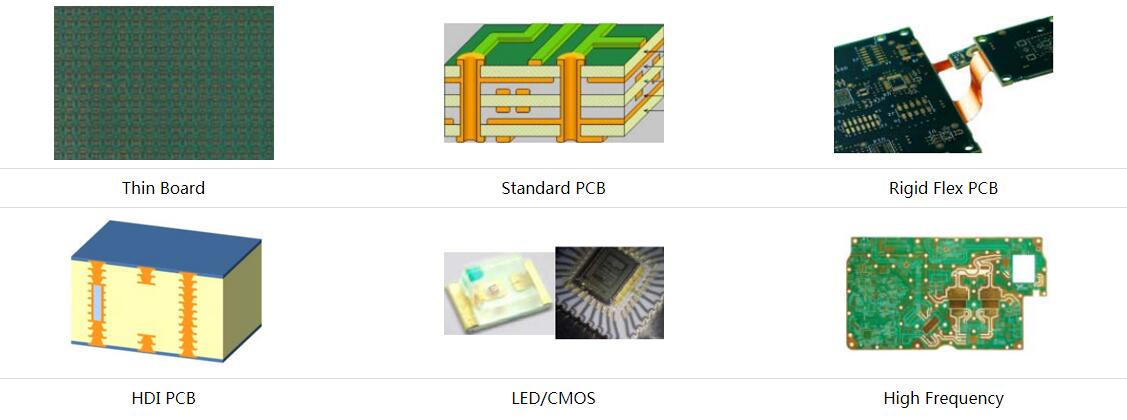 Wintech PCB fabrication and electronics manufacturing capabilities.
11.1 PCB Fabrication for Different Technical Requirements
Different electronic applications require different PCB structures and manufacturing capabilities. A standard multilayer rigid PCB has different engineering requirements from an HDI board with microvias or a rigid-flex assembly.
Our PCB manufacturing services support a range of board technologies and production quantities, from quick-turn prototypes to mass manufacturing. This allows customers to evaluate manufacturability and production requirements before scaling their projects.
Explore Wintech PCB manufacturing services for further information about available technologies and production capabilities.
11.2 Engineering and Manufacturing Coordination
PCB reliability is influenced by decisions made during design, material selection, fabrication, and assembly. Coordinating these stages helps identify potential manufacturing challenges earlier.
For example, HDI designs require careful consideration of via structures, layer stack-up, registration, and fabrication capabilities. Assembly designs also require attention to component footprints, soldering conditions, and inspection accessibility.
We encourage customers to provide complete Gerber or manufacturing data, BOM files, assembly drawings, technical specifications, and special quality requirements when requesting a quotation.
11.3 Prototype-to-Mass-Production Support
Prototype manufacturing is an opportunity to identify design and process risks before larger production commitments are made. A controlled transition should include design revision confirmation, first-article verification, process review, and agreed acceptance criteria.
For customers planning a new product launch, we recommend discussing the complete manufacturing roadmap with the supplier instead of treating prototype and mass production as unrelated purchasing activities.
11.4 Who Should Consider Wintech?
Wintech's PCB manufacturing and assembly capabilities are relevant to customers seeking:
- Multilayer PCB fabrication with different layer-count requirements.
- HDI, microvia, RF, and other advanced PCB technologies.
- Rigid, flexible, and rigid-flex printed circuit boards.
- PCB design and layout support.
- Quick-turn prototype manufacturing.
- Scalable production from prototypes to mass manufacturing.
Contact Wintech for PCB fabrication and assembly services to discuss your manufacturing requirements.
12. Frequently Asked Questions About Quality Management and Electronics Manufacturing Reliability
1. How does quality management improve electronics manufacturing reliability?
Quality management improves electronics manufacturing reliability by controlling materials, production processes, inspection procedures, and testing requirements. It helps identify defects earlier, reduce process variation, improve traceability, and prevent recurring manufacturing problems. These controls make finished electronics more consistent and reduce the risk of failures during operation.
2. What quality standards are important in electronics manufacturing?
Important standards depend on the product and application. ISO 9001 provides a general quality management framework, while IATF 16949 is relevant to automotive supply chains and ISO 13485 applies to medical device quality management systems. IPC-A-610 and IPC J-STD-001 are commonly referenced for electronic assembly acceptability and soldering requirements. Customers should confirm the applicable revisions and contractual requirements.
3. What is the difference between quality assurance and quality control?
Quality assurance focuses on establishing processes and systems that prevent defects, while quality control focuses on checking whether materials, processes, and finished products meet defined requirements. In electronics manufacturing, quality assurance includes supplier qualification and process planning, whereas quality control includes AOI, electrical testing, and final inspection. Both are necessary for consistent production.
4. Can quality management eliminate all PCB manufacturing defects?
No. Quality management reduces defect risks but cannot guarantee that every possible defect or latent failure will be eliminated. Some failures originate from design limitations, component behavior, environmental conditions, or failure modes that are difficult to detect through routine inspection. A risk-based combination of preventive controls, testing, and continuous improvement provides stronger protection.
5. Why is traceability important in electronics manufacturing?
Traceability connects finished products with their production history, component batches, materials, process records, and inspection results. It helps manufacturers identify affected production lots, investigate failures, implement corrective actions, and support customer or regulatory requirements. Traceability is especially valuable for automotive, medical, industrial, and other applications with demanding documentation requirements.
6. What inspections are commonly used in PCB assembly?
Common PCB assembly inspections include solder paste inspection (SPI), automated optical inspection (AOI), X-ray inspection, visual workmanship inspection, electrical testing, and functional testing. The appropriate combination depends on board design, component packages, production risks, and customer acceptance criteria. For example, X-ray inspection can help assess hidden solder joints under BGA components.
7. Is a certified electronics manufacturer always more reliable?
Not necessarily. Certification provides evidence that a manufacturer has been assessed against a particular management standard and scope, but it does not automatically establish the quality of every production batch. Buyers should also evaluate manufacturing equipment, process controls, inspection coverage, traceability, corrective-action procedures, and relevant production experience.
8. When should an electronics manufacturer upgrade its quality management system?
An upgrade is worth considering when production volumes increase, defect rates rise, new product designs introduce more complex components, customers require additional traceability, or products enter more demanding industries. Moving from prototype production to mass manufacturing is another important point to review supplier qualification, inspection coverage, process validation, and statistical process monitoring.
9. What should buyers ask before choosing a PCB assembly manufacturer?
Buyers should ask about relevant certifications, PCB fabrication capabilities, component sourcing controls, SMT inspection procedures, electrical testing, first-article approval, traceability, engineering change management, and corrective-action procedures. They should also clarify acceptance criteria, warranty responsibilities, production lead times, and the scope of quality documentation provided with each order.
10. Does quality management increase electronics manufacturing costs?
Quality management introduces costs for inspection equipment, training, process documentation, testing, and supplier qualification. However, effective preventive controls can reduce scrap, rework, production delays, returns, and warranty expenses. The commercial value should therefore be assessed through total manufacturing and ownership costs rather than unit price alone.
13. References and Industry Standards
The following authoritative organizations provide standards and technical guidance relevant to quality management and electronics manufacturing reliability. Manufacturers should verify the current editions and applicability of each standard before using it in a production contract.
- International Organization for Standardization (ISO): ISO 9001:2015 Quality Management Systems — Requirements. A foundation for process-based quality management, customer satisfaction, and continual improvement.
- IPC International: IPC Standards and Electronics Industry Resources. Industry standards and technical resources for printed circuit boards, electronic assembly, and workmanship acceptance.
- International Automotive Task Force (IATF): IATF 16949 Automotive Quality Management System Resources. Official information concerning automotive-sector quality management requirements.
Final Recommendation: Make Quality Management Part of Your Manufacturing Strategy
Reliable electronics manufacturing requires more than sophisticated equipment or a final functional test. It requires consistent control of materials, engineering specifications, fabrication parameters, assembly processes, inspection procedures, and production records.
For electronics buyers, the most important decision is choosing a manufacturing partner that can demonstrate how quality is maintained throughout the production lifecycle. Evaluate actual capabilities, request clear inspection and testing plans, and make sure acceptance criteria are agreed upon before mass production begins.
At Wintech, we believe that manufacturing reliability starts with engineering discipline and continues through every production stage. Whether you need a multilayer rigid PCB, HDI PCB, flexible circuit, rigid-flex board, quick-turn prototype, or mass production support, a well-defined quality strategy is essential to achieving consistent results.
Looking for a PCB manufacturing partner? Explore Wintech's PCB manufacturing and assembly capabilities and discuss your next electronics project with our team.


