

How an Integrated EMS Provider Reduces Manufacturing Complexity
Hardware hardware development is notorious for delays, finger-pointing, and budget overruns. If you are managing a supply chain where one vendor handles your bare circuit boards, a second vendor sources the components, a third handles the surface mount technology (SMT), and a fourth is molding your plastic enclosures, you do not have a supply chain. You have a logistical nightmare.
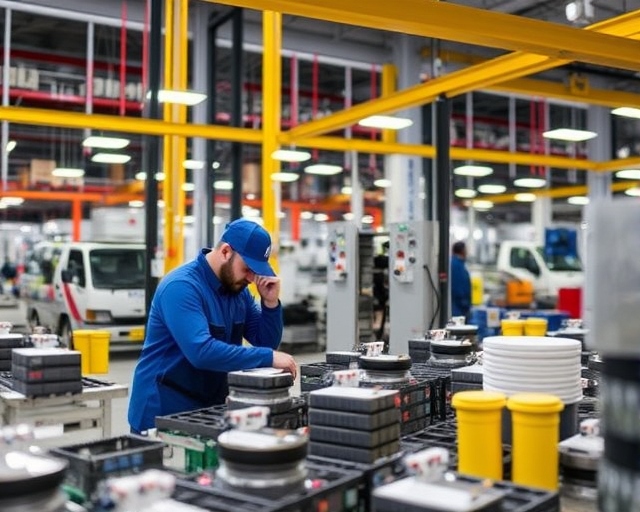
From our experience at Wintech, the fragmented manufacturing model is broken. When a final assembly fails quality control, the plastic molder blames the PCB assembler, the assembler blames the component supplier, and your product launch is delayed by six months. We consistently see hardware companies bleed capital simply because they refuse to consolidate their vendor lists. Taking a clear position on this: operating without an integrated partner is commercial negligence. By centralizing operations under one roof, an integrated EMS provider reduces manufacturing complexity, enforces strict accountability, and drastically accelerates time-to-market.
Quick Answer: How an EMS Provider Reduces Manufacturing Complexity
An integrated EMS provider reduces manufacturing complexity by consolidating the entire hardware production lifecycle into a single, centralized workflow. Instead of coordinating multiple disparate vendors across different time zones, OEMs rely on one partner for:
- Single-Source Accountability: If a unit fails testing, there is no vendor finger-pointing. The EMS partner is 100% responsible for resolving the defect.
- Unified Engineering: Mechanical and electrical engineers work under the same roof, ensuring the PCB perfectly fits the custom enclosure on the first iteration.
- Streamlined Logistics: By eliminating the shipping of sub-assemblies between different factories, you cut freight costs and eliminate weeks of transit delays.
We recommend partnering with an integrated EMS facility to transition from a chaotic, multi-vendor headache to a streamlined, single-purchase-order operation.
Table of Contents
- What It Is: The Integrated EMS Model
- How It Works: Consolidation Mechanics
- The True Commercial Benefits
- Limitations and Risks
- Who Should Use It vs. Who Does Not Need It
- Common Mistakes in Vendor Selection
- Buying Considerations
- Expert Recommendation & Embedded Content
- Comparison Table: Integrated vs. Fragmented
- Pros and Cons Table
- Frequently Asked Questions
What It Is: The Integrated EMS Model
An integrated Electronics Manufacturing Services (EMS) provider is a contract manufacturer that handles the entire product lifecycle from initial design validation through to final box-build assembly and logistics. They do not just populate circuit boards; they manage the supply chain, fabricate the bare boards, procure the components, assemble the electronics, inject the plastics, machine the metals, and ship the finished product in its retail packaging.
In the traditional model, a hardware startup might hire a design firm to lay out a board, send gerber files to a bare board house, ship those boards to an assembly house, and then ship the finished PCBA to an entirely different factory that handles Plastic Molding or Metal Precision Machining. An integrated EMS model tears down these silos. It is a one-stop-shop that takes responsibility for the entire Bill of Materials (BOM).
How It Works: Consolidation Mechanics
Understanding how an integrated EMS provider reduces manufacturing complexity requires looking at the mechanics of the workflow. In a fragmented system, your procurement team must issue twenty different purchase orders, manage twenty different lead times, and coordinate freight between each tier of the supply chain.
When you transition to an integrated provider, you issue a single purchase order. The EMS handles everything internally. For example, while the bare printed circuit boards are being fabricated, the procurement team is already securing the silicon components, and the mechanical team is dialing in the injection molding tooling. By the time the PCB Assembly & PCBA SMT phase begins, the enclosures are already waiting on the assembly line. This concurrent engineering and production schedule eliminates the "wait-and-ship" bottleneck that plagues multi-vendor strategies.
The True Commercial Benefits
The benefits of this consolidation are massive. The primary advantage is speed. When you eliminate the need to ship sub-assemblies across the world from a PCB fab to a mechanical assembly house, you shave weeks off your production schedule. In highly competitive sectors like Industrial hardware, getting to market a month earlier than your competitor dictates your market share.
Furthermore, an integrated EMS provider reduces manufacturing complexity by protecting your Intellectual Property (IP). Sending your schematics, source code, and mechanical CAD files to six different factories exponentially increases the risk of intellectual property theft. A single, integrated, highly secure facility keeps your proprietary technology under one roof with a single Non-Disclosure Agreement (NDA).
Limitations and Risks
We must use commercial and practical judgment when discussing this model; it is not without risk. The primary limitation is vendor lock-in. When one factory handles your entire product, from PCB layout to final box build, shifting production to a new vendor in the event of a dispute is highly disruptive.
Additionally, fully integrated EMS providers often require higher Minimum Order Quantities (MOQs) to justify setting up complex, end-to-end assembly lines. If you are only looking to build five units in a garage, a massive integrated facility may decline your project. However, premium partners offer dedicated low-volume lines to solve this exact issue.
Who Should Use It vs. Who Does Not Need It
Who Should Use It: We recommend an integrated EMS strategy for commercial hardware companies operating in mission-critical environments. If you are developing Automotive Electronics, the liability of a component failure is astronomical. You need a single partner who owns the quality control process from end to end. Similarly, for heavy-duty applications in aerospace or medical devices, the traceability provided by an integrated supplier is a regulatory necessity.
Who Does Not Need It: If your company produces simple, non-electronic injection-molded toys, you do not need an electronics manufacturing services provider. You simply need a reliable plastic molder. Likewise, hobbyists building one-off Arduino projects should stick to simple prototype shops.
Common Mistakes in Vendor Selection
In our testing and industry observation, the most catastrophic mistake Original Equipment Manufacturers (OEMs) make is treating the EMS as a dumb assembly line. OEMs frequently hand over a completed, highly flawed PCB Design & Layout and demand it be built without allowing the EMS to conduct a Design for Manufacturability (DFM) review. This arrogance leads to massive yield failures.
Another common mistake for beginners is chasing the lowest possible quote on the bare PCB, failing to realize that the cheap vendor will reject 15% of the boards, causing the final assembly line to stall. A true integrated partner absorbs this risk, optimizing the total landed cost rather than just the lowest individual component price.
Buying Considerations
When selecting a partner, you must look beyond their SMT lines. Evaluate their New Product Introduction NPI process. A reliable EMS provider reduces manufacturing complexity by assigning a dedicated NPI engineer to your project to smooth the transition from prototype to mass production.
Ask hard questions about their supply chain network. Do they have direct relationships with major component distributors? How do they handle counterfeit mitigation? Furthermore, inspect their mechanical capabilities. If they outsource the creation of Enclosures & Racks & Frames, they are not truly integrated. They are just acting as a broker.
Expert Recommendation & Embedded Content
In most professional situations, we insist that clients stop juggling vendors and commit to a strategic partnership with a fully integrated facility. The overhead cost of managing multiple factories will quickly consume any perceived savings gained by hunting for the cheapest individual suppliers.
The Wintech Advantage
Wintech offers the most advanced manufacturing technologies and supply chain management capabilities in the electronics manufacturing services business. with our diverse experience building microelectronics, printed circuit board assembly (PCBA) and simple to complex systems integration, we’ve distinguished ourselves by adding a wide range of solutions that make us the premier choice for OEMs globally.
Whether you are launching next-generation consumer wearables or ruggedized industrial IoT sensors, partnering with Wintech guarantees single-source accountability, rigorous quality control, and accelerated market entry.
Comparison Table: Integrated EMS vs. Fragmented Supply Chain
| Operational Metric | Integrated EMS Provider | Fragmented Supply Chain |
|---|---|---|
| Accountability | Single point of contact. The EMS owns the entire yield rate and failure analysis. | Multiple vendors. High risk of finger-pointing when defects occur. |
| Logistics & Freight | Zero internal shipping. Components move seamlessly from SMT to box build on the same floor. | High freight costs and transit risks moving sub-assemblies between different factories. |
| Time-to-Market | Accelerated. Concurrent engineering allows plastics and PCBs to be developed simultaneously. | Delayed. Sequential manufacturing creates massive bottlenecks. |
| IP Security | High. Proprietary data remains under one roof and one strict NDA. | Low. IP is scattered across multiple vendors, increasing the risk of theft. |
| Quality Control | End-to-end traceability. Issues are caught before final assembly. | Inconsistent standards across different factories lead to final assembly failures. |
Pros and Cons of Using an Integrated EMS Provider
| Pros of an Integrated EMS | Cons of an Integrated EMS |
|---|---|
| Drastically reduces the administrative burden on your internal procurement and engineering teams. | Creates a high dependency on a single manufacturing partner (Vendor Lock-in). |
| Total landed cost is often lower due to reduced freight, fewer administrative hours, and higher overall yields. | May require higher Minimum Order Quantities (MOQs) compared to specialized boutique prototype shops. |
| Provides access to enterprise-level supply chain leverage, mitigating component shortages during global crises. | Transitioning an existing product line from multiple vendors to a single integrated provider takes significant initial effort. |
| Streamlines the NPI process, turning rough prototypes into mass-manufacturable products quickly. | Requires thorough, upfront vetting, as a failure by the EMS impacts your entire product line. |
Frequently Asked Questions
Exactly how does an EMS provider reduces manufacturing complexity?
An EMS provider reduces manufacturing complexity by acting as a single point of responsibility. They manage the entire Bill of Materials (BOM), handle global component sourcing, perform the PCB assembly, manufacture the mechanical enclosures, and conduct the final box-build testing. This eliminates the need for the OEM to coordinate logistics, quality control, and communications across five or six different specialized factories.
Is an integrated EMS more expensive than managing vendors myself?
When looking purely at the line-item cost of a bare PCB, a specialized vendor might appear cheaper. However, when you calculate the total landed cost—including freight between vendors, administrative overhead for your purchasing team, and the cost of scrapping units due to miscommunications between disjointed factories—an integrated EMS is almost always more cost-effective for commercial volume production.
What is the difference between Contract Manufacturing (CM) and Electronics Manufacturing Services (EMS)?
While the terms are often used interchangeably in the hardware industry, an EMS specializes specifically in printed circuit board assemblies and complex electronics integration. A general Contract Manufacturer might only handle metal stamping or basic plastic injection. A true tier-one EMS provider integrates electronics assembly with mechanical manufacturing to deliver a complete, finished product.
Can an integrated EMS help with component shortages?
Absolutely. Because integrated EMS providers manufacture for dozens of OEMs simultaneously, they have massive purchasing power and direct lines to tier-one component distributors. They can often leverage their supply chain network to secure allocations of scarce silicon that a standalone startup could never access on their own.
Industry References & Authoritative Sources
To ensure our recommendations align with the highest tiers of global manufacturing compliance and supply chain best practices, we base our methodologies on guidelines established by the following authoritative organizations:
- IPC (Association Connecting Electronics Industries): Global trade association standardizing assembly and production requirements for electronic equipment and assemblies. View IPC Standards
- ISO (International Organization for Standardization): Providing the foundational quality management systems (such as ISO 9001 and ISO 13485) required for high-reliability integrated manufacturing facilities. View ISO Quality Management
- Supply Chain Management Review: Leading industry publication analyzing global logistics, vendor consolidation strategies, and EMS market trends for commercial hardware production. View SCMR Industry Insights


