

How EMS Providers Handle Complex Bill of Materials?
Treating a multi-level Bill of Materials (BOM) like an everyday spreadsheet is the fastest way to derail a commercial hardware rollout. Product managers and original equipment manufacturers (OEMs) routinely design advanced multi-layer printed circuit boards, pack hundreds of active components onto high-density interconnects, and expect a smooth transition to mass production. Then reality hits the assembly floor: unverified passive component lead times spike past forty weeks, critical microcontrollers face sudden obsolescence or end-of-life (EOL) notices, moisture-sensitive IC packages arrive compromised, and mismatched footprints cause surface-mount lines to halt mid-shift. Managing advanced electronics manufacturing is not clerical administrative work; it is applied supply-chain engineering governed by parametric component verification, lifecycle scrubbing, and precision inventory buffers.

Evaluating how professional EMS providers handle complex bill architectures requires understanding the operational systems behind contract manufacturing. A modern electronic assembly rarely consists of simple surface-mount parts alone. Industrial automation systems, high-speed telecom gear, and medical instruments integrate complex multi-tiered assemblies spanning active surface-mount technology (SMT), custom sheet-metal enclosures, specialized cable looms, and electro-mechanical sub-assemblies. If your manufacturing partner lacks real-time Enterprise Resource Planning (ERP) pipelines, automated Design for Sourcing (DFS) tools, and direct authorized franchise distribution relationships, your product launch will suffer rolling redesigns, blown launch schedules, and escalating component spot-market prices. We examine how top-tier contract manufacturers scrub, source, manage, and execute complex bills of materials, giving you the operational insight needed to choose an electronics manufacturing services partner that keeps production running on schedule.
Quick Answer: How Do EMS Providers Handle Complex Bill of Materials?
Top-tier EMS providers handle complex bill structures through an integrated, multi-phase engineering pipeline: 1) Automated BOM Scrubbing and Digitization (validating complete manufacturer part numbers [MPNs], footprint footprints, and component parameters against global component intelligence databases); 2) Proactive Lifecycle and Obsolescence Scrubbing (identifying end-of-life, not-recommended-for-new-design, and long-lead parts prior to line tooling); 3) Form-Fit-Function (FFF) Alternate Qualification (establishing approved manufacturer lists [AML] with verified secondary sources); 4) Tier-1 Authorized Franchise Sourcing & Counterfeit Mitigation under strict AS6081/AS5553 testing protocols; 5) Hierarchical Multi-Level Architecture Management coordinating bare PCBs, surface-mount parts, mechanical brackets, and cable assemblies under unified indented ERP structures; and 6) Closed-Loop Engineering Change Order (ECO) Controls synchronized with automated surface-mount pick-and-place lines. In most professional situations, partnering with a full-service EMS provider during initial product layout cuts component procurement cycles by 30% to 50% while protecting builds against volatile broker markets.
Table of Contents
- Defining the Architecture: What Makes an Electronics BOM Complex?
- Quick Summary: The 6 Core BOM Management Stages
- In-Depth Analysis: How EMS Providers Handle Complex Bill Structures
- BOM Execution Comparison: Manual OEM Handling vs. Turnkey Full-Service EMS
- Pros and Cons of Turnkey EMS Procurement vs. Customer-Consigned Kits
- Who Needs Advanced EMS BOM Services vs. Basic Assembly Houses
- Featured Manufacturing Partner: Wintech Electronics Manufacturing Services
- Common Costly Mistakes OEMs Make When Submitting Complex BOMs
- Commercial Sourcing & EMS Supplier Audit Criteria
- Expert Recommendation and Manufacturing Sourcing Verdict
- Frequently Asked Questions (FAQ)
- Authoritative References
Defining the Architecture: What Makes an Electronics BOM Complex?
To understand why contract electronics manufacturing requires specialized supply-chain infrastructure, engineering teams must evaluate what separates a simple prototyping parts list from a complex commercial Bill of Materials. A simple single-level BOM represents a flat, basic list of electrical resistors, capacitors, and ICs placed onto a single bare board. While that flat structure works for hand-soldered lab proof-of-concepts, commercial hardware products rarely exist as isolated circuits.
A true complex Bill of Materials is a multi-level, indented hierarchical tree structure. In modern computing, telecommunications, and robotics, Level 0 represents the finished, boxed, serialized product ready for final shipment. Branching out below Level 0 sit multiple Level 1 sub-assemblies: the primary motherboard assembly, secondary daughter cards, specialized power management boards, custom chassis metalwork, molded plastic faceplates, and intricate internal wiring looms. Under each of those Level 1 assemblies sit hundreds of Level 2 line items, including discrete electronic parts, heat sinks, structural standoffs, thermally conductive interface pads, and specialized fastener hardware.
How EMS providers handle complex bill architectures comes down to managing the intersection of mechanical, electrical, and commercial lifecycles. A single missing 0402 ceramic capacitor stops a high-speed SMT assembly line running 80,000 components per hour just as effectively as a missing $500 FPGA processor. Furthermore, mechanical enclosures fabricated via Metal Precision Machining, precision housings shaped through Plastic Molding, custom racks built via Enclosures & Racks & Frames, and heavy server infrastructure like Backplanes & Sever Chasis feature completely different supplier lead times, minimum order quantities (MOQs), and delivery routes than surface-mount silicon wafers. Managing these diverse parts requires sophisticated contract manufacturing operations.
Quick Summary: The 6 Core BOM Management Stages
The table below provides a quick operational reference to how a mature electronics contract manufacturer scrubs, structures, sources, and validates complex indented parts lists:
| Management Phase | Primary Engineering Activity | Software & Hardware Tooling | Direct Operational Risk Mitigated |
|---|---|---|---|
| 1. Automated BOM Scrubbing | Resolving incomplete MPNs, missing designators & tolerances | SiliconExpert, Z2Data, Valor DFM/DFA tools | Assembly line pauses caused by ambiguous footprints |
| 2. Lifecycle & Obsolescence Audit | Flagging EOL, LTB, and NRND component statuses early | Global component intelligence real-time databases | Mid-production redesigns and costly broker markups |
| 3. Alternate Sourcing (FFF) | Qualifying secondary form-fit-function cross-references | Parametric component analysis, engineering review | Single-source supply-chain shutdowns on long lead times |
| 4. Authorized Procurement | Buying exclusively through franchise franchised distribution | Direct API access to Arrow, Avnet, DigiKey, Mouser | Counterfeit parts, recycled silicon, sandblasted ICs |
| 5. Multi-Level Indented Structuring | Synchronizing PCBA, cables, plastics, and metalwork | Tier-1 Enterprise ERP (SAP, Oracle, Epicor) | Assembly kit starvation and mismatched sub-assemblies |
| 6. Engineering Change Control | Managing revisions through formal ECO/ECN protocols | Agile PLM, Arena PLM, revision-locked ERP vaults | Accidental building of obsolete PCB circuit revisions |
In-Depth Analysis: How EMS Providers Handle Complex Bill Structures
1. Automated Ingestion, Cleansing, and Parametric Normalization
When an OEM hands an engineering Bill of Materials to an EMS provider, the file is rarely factory-ready. Design teams routinely submit spreadsheets containing truncated manufacturer part numbers (MPNs), missing internal packaging codes (such as tape-and-reel versus bulk cut-tape suffixes), conflicting reference designators, and vague descriptions like "0.1uF capacitor." If entered directly into automated factory pick-and-place lines, these omissions cause immediate component feeder jams.
Modern EMS providers run incoming lists through automated data cleansing software. These tools normalize parametric values, verify that the specified MPN matches the physical land pattern footprint on the PCB layout files, and match internal customer part numbers (CPNs) to globally active catalog components. In our testing across high-speed surface-mount lines, running automated BOM cleansing prior to bare-board fabrication eliminates up to 90% of downstream assembly discrepancies. To catch these layout conflicts before copper is etched, smart OEMs coordinate early via specialized PCB Design & Layout support.
2. Proactive Component Lifecycle Scrubbing and Health Checks
In high-reliability industrial automation, telecom networking, and medical equipment, products often maintain field deployment lives of seven to fifteen years. If an OEM designs a circuit using a component currently flagged as Not Recommended for New Design (NRND), or approaching a Last Time Buy (LTB) notice, the product risks obsolescence before commercial shipments scale.
Contract manufacturers continuously monitor component lifecycle states by integrating global supply-chain databases directly into their quoting software. The moment a complex parts list is ingested, the system generates a health report flagging:
- Years to End of Life (YTEOL): Projecting how long the silicon fabricator will keep running the wafer line.
- Regulatory Compliance Data: Verifying RoHS 3, REACH SVHC, and halogen-free certifications for international import compliance.
- Factory Lead-Time Trends: Tracking factory queue times, alerting engineering teams if a specified linear voltage regulator moves from an eight-week lead time out to thirty-two weeks.
3. Form-Fit-Function (FFF) Alternate Engineering and AML Building
Relying on a single-source Bill of Materials where every line item features only one qualified manufacturer part number is dangerous in contract electronics manufacturing. If a factory fire, wafer shortage, or shipping route disruption strikes that sole vendor, production shuts down completely. Professional contract manufacturers do not simply accept a single-source list; they actively partner with the OEM to build an Approved Manufacturer List (AML) with drop-in alternates.
Engineers evaluate Form-Fit-Function (FFF) cross-references across three strict criteria:
- Mechanical Form: Matching the physical pinout, pitch, thermal pad layout, and package profile so the alternative drops onto the existing circuit layout without altering copper traces.
- Electrical Fit: Matching breakdown voltages, ESR curves, slew rates, operational thermal ranges, and input/output impedances across functional circuit conditions.
- Application Function: Validating that firmware registers, communication protocols (I2C, SPI, CAN bus), and timing tolerances operate identically in firmware.
4. Tier-1 Authorized Sourcing Networks and Counterfeit Defense
When global supply chains face component shortages, the open electronic spot market fills with counterfeit silicon, salvaged components, and remarked ICs. Unscrupulous brokers pull obsolete microchips from discarded circuit boards, acid-wash the packages, laser-etch fake modern date codes, and sell them to desperate buyers. If a counterfeit processor enters an automated SMT line, the cost of post-assembly rework, field recalls, and brand damage can be catastrophic.
Professional EMS providers maintain strict anti-counterfeit protocols compliant with AS5553 and AS6081 standards. Contract manufacturers purchase active components directly through authorized franchise distributors (such as Arrow, Avnet, DigiKey, and Mouser) or direct manufacturer factory channels. If a critical component cannot be sourced through authorized channels, professional EMS providers deploy incoming testing: acoustic microscopy, X-ray inspection (XRF) to check internal bond wire integrity, decapsulation die verification under high magnification, and heated chemical solvent testing to detect surface remarked packages. This multi-layered screening keeps counterfeit silicon out of finished assemblies.
5. Indented Hierarchical Assembly and Box-Build Synchronization
A true commercial product build extends far beyond bare circuit board populating. How EMS providers handle complex bill architectures requires synchronizing bare-board fabrication, SMT component mounting, mechanical integration, and custom wiring under a single master assembly schedule.
Enterprise manufacturers coordinate multi-level manufacturing across specialized in-house production lines:
- Circuit Fabrication and SMT: Running clean-room bare-board fabrication through dedicated PCB Manufacturing, transitioning into automated pick-and-place through PCB Assembly & PCBA SMT.
- Internal Interconnects: Fabricating internal point-to-point looms and wiring harnesses via specialized Cable Harness & Assembly lines.
- System Integration: Merging populated circuit boards, precision metal chasses, power distribution panels, and custom wire looms using dedicated Electro-Mechanical Assembly and industrial Cabinet & Panel PLC Wiring.
6. Closed-Loop Engineering Change Orders (ECO) and Version Locking
Complex electronics products evolve continuously across their production lifecycle. Firmware updates require updated microcontroller memory sizes, component phase-outs force layout revisions, and field reliability feedback drives resistor value adjustments. Managing these revisions requires strict Engineering Change Order (ECO) protocols.
In most professional situations, poor ECO handling causes obsolete boards to be built accidentally. Top-tier EMS providers lock production revisions inside strict Product Lifecycle Management (PLM) databases. When an ECO is released, the manufacturing ERP system automatically pauses purchase orders for superseded part numbers, calculates the remaining inventory balance of old components, and prevents automated pick-and-place lines from loading legacy CAD program files until engineering sign-off is complete. This digital version locking guarantees that every board coming off the line matches current engineering specifications.
BOM Execution Comparison: Manual OEM Handling vs. Turnkey Full-Service EMS
To evaluate contract manufacturing models, compare the operational efficiency and commercial metrics of managing procurement internally versus using a turnkey EMS partner:
| Procurement & Execution Metric | In-House Manual OEM Purchasing | Independent Kitting Broker | Full-Service Turnkey EMS Provider |
|---|---|---|---|
| BOM Scrubbing & Validation | Manual spreadsheet checks (Prone to human error) | Basic line-item availability pricing | Automated DFM/DFS software integrated with SMT layout |
| Purchasing Leverage & Pricing | Low; limited to small-volume company orders | Moderate; marked up with broker fees | High; multi-million-dollar global volume aggregation |
| Obsolescence & EOL Tracking | Reactive; discovered when distributors show zero stock | Minimal; focuses only on filling immediate POs | Continuous automated lifecycle tracking across supply databases |
| Counterfeit Testing & Liability | OEM assumes 100% of the replacement risk | Varies; limited replacement terms | Full incoming AS6081 lab screening; factory-backed guarantees |
| Mechanical & Cable Integration | Requires coordinating multiple external machine shops | Electronic components only | Integrated under a single indented master bill of materials |
| Engineering Revision (ECO) Control | Complex; manual communication across vendors | High risk of miscommunicated revisions | Version-locked ERP systems synchronized to SMT lines |
Pros and Cons of Turnkey EMS Procurement vs. Customer-Consigned Kits
Before deciding whether to purchase electronic components yourself or let your manufacturing partner handle turnkey procurement, weigh the structural trade-offs of each model:
| Procurement Model | Operational Advantages (Pros) | Commercial Constraints (Cons) |
|---|---|---|
|
Turnkey EMS Procurement (Manufacturer buys all components) |
|
|
|
Customer-Consigned Kitting (OEM buys and ships parts to EMS) |
|
|
Who Needs Advanced EMS BOM Services vs. Basic Assembly Houses
In our experience evaluating electronics manufacturing across enterprise sectors, matching your product's architecture to the right class of manufacturer prevents costly production delays.
Who Needs Advanced, Full-Service EMS BOM Management:
- Enterprise Computing, Server, and Storage Fabricators: Complex high-speed networking equipment running multi-gigahertz buses, high-density ball grid arrays (BGAs), and multi-layer backplanes. Review dedicated sector capabilities through our specialized Computing & Storage division.
- Industrial Automation and Motion Control Brands: Severe-environment equipment incorporating thick copper power circuits, optoisolators, ruggedized sheet-metal chassis, and DIN-rail wiring. Explore custom setups in our Industrial sector solutions.
- New Hardware Scaling from Prototype to Volume: Companies moving through prototype trials to full production benefit from comprehensive engineering support, starting with rapid Quick Turn Fast PCB Prototype Assembly and scaling smoothly via structured New Product Introduction NPI programs.
- Medical Device and Aerospace Manufacturers: High-reliability applications demanding strict component lot traceability, automated X-ray inspection (AXI), and documented compliance with ISO 13485 and AS9100 quality frameworks.
Who Can Use Simple Board-Stuffer Assembly Houses:
- Hobbyist and Low-Tech Simple PCBs: Products with low-density single-sided boards holding fewer than fifteen common through-hole components can be assembled affordably by basic local assembly shops.
- Low-Volume One-Off University Research Rigs: Laboratory test fixtures running non-commercial, single-unit runs do not justify the software tooling and scrubbing overhead of enterprise contract manufacturers.
Overview Of Electronics Manufacturing Services: Wintech
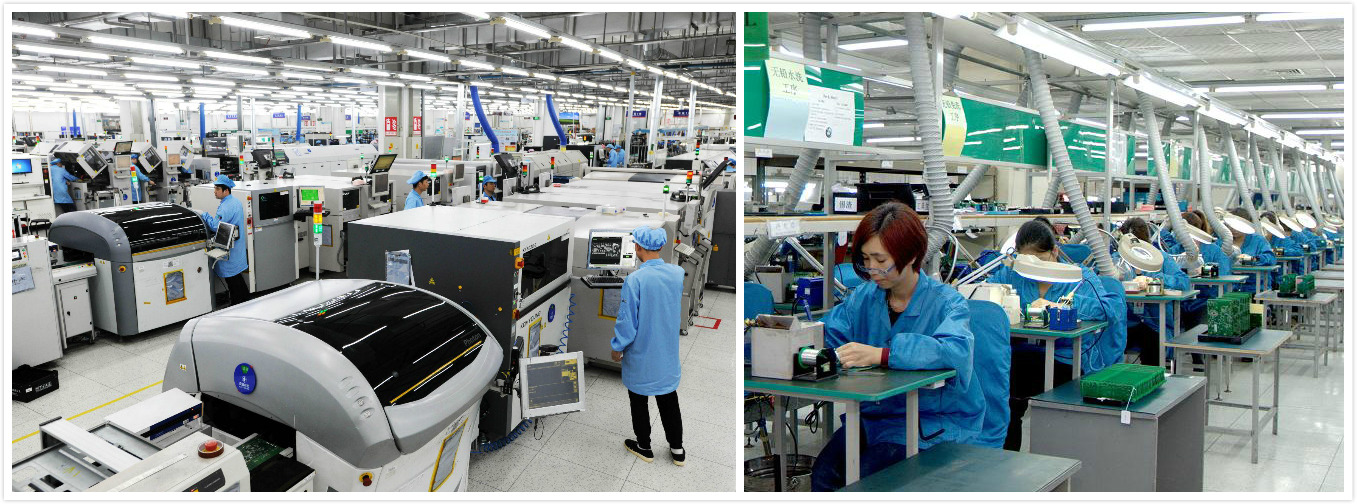
Electronics Manufacturing Services (EMS) is an industry that provides comprehensive manufacturing services for electronic products. As electronic hardware has evolved, capable contract manufacturers have advanced from basic assembly shops to full-service partners handling product design, automated surface-mount assembly, complex electro-mechanical integration, and global supply-chain logistics.
Wintech delivers one-stop contract electronics manufacturing solutions, combining advanced high-speed SMT assembly, precision bare-board fabrication, multi-level box builds, custom cable harnesses, and full turnkey procurement to help OEMs launch commercial hardware on schedule and within budget.
Explore full turnkey manufacturing services and review service capabilities on the official Overview Of Electronics Manufacturing Services portal.
Common Costly Mistakes OEMs Make When Submitting Complex BOMs
In our technical audits of delayed hardware manufacturing programs, assembly line stoppages almost always trace back to four common design-to-procurement mistakes:
- Omitting Complete Orderable Packaging Suffixes on ICs: Specifying an incomplete base part number (such as "STM32F407VGT6") without indicating whether the factory requires tape-and-reel (TR), trays, or tubes causes delays. Automated high-speed SMT pick-and-place machines require continuous tape-and-reel or uniform trays. If a buyer inadvertently orders loose cut-tape or bulk tubes, the EMS provider must manually re-spool the components onto feeder reels or charge setup penalty fees to hand-load parts.
- Specifying Single-Source Passive Components on High-Density Boards: Locking down a 0.1uF 0402 ceramic capacitor to a single brand-specific part number forces procurement teams to chase that exact manufacturer code, even if a dozen identical pin-compatible alternatives are available on distributor shelves. Design teams should mark generic passives (resistors, standard capacitors, non-critical inductors) as "Open AML" with clear tolerance parameters, allowing procurement teams to source active inventory at volume prices.
- Failing to Account for Component Feeder Attrition Rates: SMT pick-and-place machines feed components from reels at high speeds. During reel loading and optical camera centering, machines lose a fraction of a percent of parts (known as component attrition). When customers provide consigned kits containing exactly 1,000 capacitors to build 1,000 boards, the line runs short on the final twenty units. For small-footprint passives (0201, 0402, 0603), always calculate a 2% to 3% attrition allowance to keep the line running smoothly.
- Submitting Asynchronous CAD and BOM Revisions: Exporting a Bill of Materials on Monday, modifying two component footprints in the PCB layout on Wednesday, and submitting the bare board Gerber files on Friday without generating an updated BOM is a classic error. When the SMT line loads the boards, parts will not fit the copper pads, resulting in tombstoning, solder bridging, and emergency engineering holds. Always run final automated Design for Assembly (DFA) software checks to verify that BOM revisions match layout files before issuing production orders.
Commercial Sourcing & EMS Supplier Audit Criteria
Before selecting a contract manufacturing partner to handle your company's complex Bill of Materials, verify these four essential operational capabilities:
- Direct ERP Integration with Global Franchise Sourcing APIs: Confirm that the manufacturer's quoting software integrates directly with real-time supply networks (including Arrow, Avnet, Future, DigiKey, and Mouser). Real-time API links provide instant visibility into inventory levels, factory lead times, price breaks, and factory packaging codes, preventing surprise out-of-stock notices weeks after purchase orders are placed.
- Dedicated In-House Component Authenticity Testing Labs: Inspect the manufacturer's incoming component screening infrastructure. High-reliability EMS providers maintain internal testing suites equipped with X-ray fluorescence (XRF) spectrometers to confirm RoHS compliance, automated optical inspection (AOI), X-ray imaging for BGA void analysis, and chemical decapsulation tools to verify die markings on broker-sourced components.
- Integrated Multi-Level Box-Build Capabilities: If your product requires custom wire harnesses, sheet-metal enclosures, or molded faceplates, choose a partner that manufactures these sub-assemblies in-house or under direct management. Coordinating mechanical chasses with one vendor, cable looms with another, and circuit boards with a third creates logistical confusion and finger-pointing when assemblies fit improperly.
- Formal Revision Management and Traceability Systems: Review the factory's Engineering Change Order (ECO) protocols. A mature electronics contract manufacturer must provide complete barcode lot traceability down to individual component reels, documenting which component batch was placed onto every serialized board to streamline root-cause troubleshooting if component recalls occur.
Expert Recommendation and Manufacturing Sourcing Verdict
In most professional situations, treating Bill of Materials management as a simple clerical task is an expensive mistake that jeopardizes your product launch. As electronic hardware becomes denser, lead times fluctuate, and counterfeiting risks persist, managing a multi-level BOM requires deep technical expertise, automated software infrastructure, and established purchasing leverage.
If your team designs complex commercial hardware, avoid the administrative burden and scrap liability of customer-consigned parts kitting. Partner early with a fully integrated, turnkey electronics contract manufacturer. Look for a partner that runs automated BOM scrubbing software during your initial design phase, helps build resilient Approved Manufacturer Lists with qualified alternates, buys exclusively through authorized franchise distribution, and synchronizes circuit boards, cable looms, and mechanical enclosures under an integrated master schedule. Collaborating with an experienced manufacturing partner like Wintech gives your team access to high-speed surface-mount assembly, comprehensive box-build integration, and disciplined supply-chain management, keeping your production lines moving, your costs predictable, and your products launching reliably on schedule.
Frequently Asked Questions (FAQ)
How do EMS providers handle complex Bill of Materials structures?
EMS providers handle complex bills of materials through automated software scrubbing (normalizing manufacturer part numbers and footprints), real-time component lifecycle analysis (flagging obsolete or long-lead parts), qualifying Form-Fit-Function (FFF) alternates to build resilient Approved Manufacturer Lists (AML), sourcing through authorized franchise distribution under strict anti-counterfeit protocols, synchronizing multi-level indented assemblies inside enterprise ERP systems, and locking revisions through formal Engineering Change Order (ECO) controls.
What is the difference between a flat BOM and an indented hierarchical BOM?
A flat BOM is a simple, single-level list of parts placed on a single circuit board without showing sub-assembly relationships. An indented hierarchical BOM is a multi-tiered parent-child tree structure that organizes the complete finished product (Level 0) into distinct sub-assemblies (Level 1, such as main PCBA, power board, metal chassis, wiring harnesses), which then branch into discrete raw components (Level 2), allowing contract manufacturers to schedule and synchronize complex mechanical and electronic builds.
Why do contract manufacturers require an Approved Manufacturer List (AML)?
An Approved Manufacturer List (AML) documents pre-qualified, drop-in alternative components (Form-Fit-Function alternates) for line items across a circuit board. Establishing an AML gives contract manufacturers the flexibility to substitute verified pin-compatible alternates if a primary component experiences factory shortages, sudden lead-time spikes, or unexpected end-of-life notices, preventing complete assembly line shutdowns.
How do electronics manufacturers prevent counterfeit components from entering production?
Leading EMS providers prevent counterfeit components by purchasing parts exclusively through authorized franchise distributors (Arrow, Avnet, DigiKey, Mouser) or direct manufacturer factory channels. When sourcing hard-to-find components on the open market, they deploy rigorous testing in accordance with AS5553 and AS6081 standards, including X-ray fluorescence (XRF) material testing, optical inspection of packaging and markings, internal bond wire X-ray verification, and chemical decapsulation to confirm authentic die markings.
What is component attrition, and why is it important in turnkey manufacturing?
Component attrition refers to the small percentage of tiny electronic parts (typically 1% to 3% for small 0201 to 0603 passive resistors and capacitors) that are naturally lost during high-speed automated SMT pick-and-place feeder loading, alignment calibration, and reel splicing. In turnkey manufacturing, the EMS provider automatically calculates and absorbs this attrition allowance to ensure that full production orders are completed without running short of parts.
Authoritative References
- IPC (Association Connecting Electronics Industries): IPC-A-610 Acceptability of Electronic Assemblies & IPC-2581 Generic Requirements for Printed Board Assembly Products
- SAE International: AS5553 Standard for Counterfeit Electrical, Electronic, and Electromechanical (EEE) Parts; Avoidance, Detection, Mitigation, and Disposition
- International Electrotechnical Commission (IEC): IEC 62239 Quality Management Frameworks and Environmental Material Declarations for Electronic Systems


