

How Electronics Manufacturing Services Help OEMs Scale Production: An Expert Guide
Scaling hardware production is fundamentally brutal. Original Equipment Manufacturers (OEMs) who attempt to transition from a successful prototype to mass production using in-house resources almost always encounter catastrophic delays, bloated overhead, and paralyzing supply chain bottlenecks. In the modern hardware ecosystem, attempting to build your own surface mount technology (SMT) lines and negotiate with thousands of individual component brokers is a severe misallocation of capital.
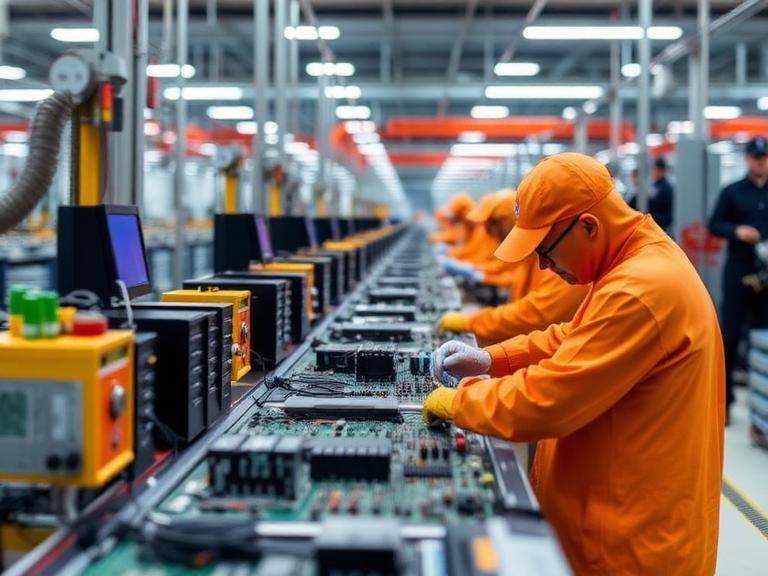
From our experience engineering and delivering millions of PCB assemblies at Wintech, the difference between a hardware startup that succeeds and one that files for bankruptcy is their manufacturing strategy. To survive and dominate market share, OEMs must leverage Electronics Manufacturing Services (EMS). The EMS industry does not just assemble boards; it provides the robust, global infrastructure necessary to transition an idea into a scalable, market-ready physical product. In this comprehensive guide, we will cut through the generic industry jargon to explain exactly how Electronics Manufacturing Services operate, why they are indispensable for scaling, and how to determine if your company is ready to outsource its production.
Quick Answer: How EMS Scales Production
Partnering with tier-one Electronics Manufacturing Services allows OEMs to scale rapidly by providing immediate access to three critical pillars:
- Capital Efficiency: Eliminates the need for OEMs to purchase multi-million dollar SMT lines, automated optical inspection (AOI) machines, and wave soldering equipment.
- Supply Chain Leverage: EMS providers possess massive purchasing power, securing allocation for critical microcontrollers and passive components during global shortages.
- Design for Manufacturability (DFM): Expert engineers identify and eliminate board layout flaws before mass production, drastically reducing scrap rates and accelerating time-to-market.
In most professional situations, handing off production to an EMS partner is the only mathematically viable way to scale from 1,000 units to 100,000 units without diluting your company's core focus on intellectual property and marketing.
Table of Contents
- What Are Electronics Manufacturing Services?
- How It Works: The EMS Integration Model
- The Commercial Benefits of EMS for OEMs
- Limitations and Hard Truths of Outsourcing
- Who Should Use EMS & Who Does Not Need It
- Common Mistakes in Selecting an EMS Partner
- Expert Buying Considerations
- Summary and Comparison Tables
- Expert Recommendation: Partnering with Wintech
- Frequently Asked Questions (FAQ)
What Are Electronics Manufacturing Services?
Electronics Manufacturing Services refer to companies that design, manufacture, test, distribute, and provide return/repair services for electronic components and assemblies for original equipment manufacturers (OEMs). The concept is also broadly referred to as Electronics Contract Manufacturing (ECM).
Historically, an OEM would buy raw circuit boards, source their own resistors, capacitors, and ICs, and solder them together in their own factory. Today, an EMS provider handles this entire lifecycle. When evaluating the pcb components and functions guide, you quickly realize the sheer complexity of modern boards. A premium EMS partner manages the Bill of Materials (BOM), procures the components, prints the solder paste, places the components via high-speed pick-and-place robots, solders them via reflow ovens, and subjects the final board to rigorous automated testing.
How It Works: The EMS Integration Model
The engagement between an OEM and an EMS provider follows a strict, highly engineered protocol to ensure zero defects during the scaling phase.
First, the OEM submits their Gerber files, BOM, and pick-and-place files. The EMS engineering team immediately performs a Design for Manufacturability (DFM) and Design for Testing (DFT) review. This is where theoretical engineering meets physical reality. The EMS team will flag obsolete parts, components placed too close to the board edge, or thermal relief issues that could cause tombstoning during reflow.
Next comes the New Product Introduction (NPI) phase. The EMS provider runs a small prototype batch. In our testing, this NPI run is where 90% of manufacturing anomalies are caught and corrected. Once the prototype is validated and approved by the OEM, the EMS locks in the supply chain and opens the floodgates for mass production. Finally, the EMS can provide "Box Build" services, where the bare PCBA is installed into its final plastic or metal housing, packaged with user manuals, and shipped directly to the end customer.
The Commercial Benefits of EMS for OEMs
The benefits of utilizing Electronics Manufacturing Services are rooted in pure operational leverage and risk mitigation.
1. Agility and Speed to Market
Building a factory takes years. Partnering with an EMS gives you access to a fully operational, ISO-certified factory overnight. This allows you to launch your product months or years ahead of competitors who are struggling with in-house logistics. If you need clarity on timelines, reviewing a pcb assembly lead time guide will demonstrate how EMS providers compress schedules through parallel processing.
2. Massive Cost Reductions
When you manufacture in-house, you pay retail or low-tier wholesale prices for components. An EMS provider purchases millions of components annually, unlocking tier-one pricing from distributors like Digi-Key, Mouser, and direct silicon manufacturers. When you analyze a realistic custom PCB cost 2025 breakdown, the savings generated by an EMS's procurement network often offset the assembly labor costs entirely.
3. Focus on Core Competencies
OEMs should be innovating, designing IP, and executing aggressive marketing campaigns. Every hour your engineering team spends tracking down a missing reel of capacitors is an hour they are not developing your next flagship product. EMS handles the physical execution so you can handle the innovation.
Limitations and Hard Truths of Outsourcing
We must present commercial and practical judgment: outsourcing to an EMS provider is not a magic bullet, and it requires relinquishing a degree of absolute control. When you outsource, your production schedule is subject to the EMS provider's capacity. If you choose a low-tier provider, you may find your production run delayed because they prioritized a larger client.
Furthermore, intellectual property (IP) theft is a legitimate concern if you contract with unverified overseas factories. This is why strict Non-Disclosure Agreements (NDAs) and partnering with reputable organizations—such as the best PCB manufacturers China has to offer or top-tier domestic firms—is mandatory for security.
Who Should Use EMS & Who Does Not Need It
Who Should Use EMS: For commercial users, funded hardware startups moving past their Series A, and established mid-to-large cap OEMs, utilizing Electronics Manufacturing Services is an absolute necessity. If your volume exceeds 500 to 1,000 units annually, the math overwhelmingly favors outsourcing. Furthermore, for heavy-duty applications requiring specific aerospace, automotive, or medical certifications (like ISO 13485), leveraging an already-certified EMS facility is the only viable path.
Who Does Not Need It: For beginners or hobbyists building 10 to 50 units for a niche Kickstarter, engaging a full-scale EMS is a waste of capital. The NPI setup fees and tooling costs will destroy your margins. You are better off hand-soldering or using rapid-prototyping services. Additionally, ultra-classified military or defense contractors may be legally required to keep all manufacturing highly restricted and in-house.
Common Mistakes in Selecting an EMS Partner
If you select an EMS solely because their per-board assembly quote is 4 cents cheaper than the competitor, you will pay for it tenfold in poor yield rates, counterfeit components, and communication blackouts. A cheap assembly quote often hides aggressive markups on the BOM or completely ignores vital testing procedures like In-Circuit Testing (ICT) or X-ray inspection for BGA components.
Another major error is failing to involve the EMS provider early in the design phase. Tossing a completed, highly flawed design over the wall and demanding a quote leads to massive delays. Involve their DFM engineers while your board is still in Altium or Eagle.
Expert Buying Considerations
When selecting from the pcb board assembly companies available on the global market, you must demand transparency. Audit their facility. Do they have modern 3D SPI (Solder Paste Inspection) machines? Do they offer conformal coating services for harsh environments?
Geography also matters. While offshore manufacturing offers aggressive pricing, many OEMs are exploring nearshoring strategies. Reviewing PCB manufacturers in USA or electronic contract manufacturers Canada can provide advantages in IP protection, shorter freight times, and avoiding complex import tariffs, albeit at a higher labor cost.
Summary and Comparison Tables
Quick Summary Table: Core EMS Services
| Service Category | Function Provided | Impact on OEM Scaling |
|---|---|---|
| NPI & Prototyping | Rapid iteration and DFM optimization. | Ensures the design is actually capable of being mass-produced without high defect rates. |
| Supply Chain Management | Procurement, component cross-referencing, and anti-counterfeit measures. | Prevents line-down situations caused by global chip shortages. |
| PCBA Manufacturing | SMT, Through-hole, wave soldering, and reflow. | Delivers high-volume output utilizing state-of-the-art robotic assembly. |
| Testing & Box Build | AOI, X-Ray, ICT, final enclosure assembly, and packaging. | Guarantees only fully functional, retail-ready products leave the facility. |
Comparison Table: In-House Manufacturing vs. Outsourced EMS
| Factor | In-House Manufacturing | Outsourced EMS Partner |
|---|---|---|
| Capital Expenditure | Massive (Requires buying SMT lines, facilities). | Minimal (Pay only for tooling and unit cost). |
| Scalability | Rigid (Limited by your physical floor space). | Highly Elastic (EMS can add shifts/lines immediately). |
| Component Sourcing | Weak (Low buying power, vulnerable to shortages). | Strong (Global supplier networks and leverage). |
| Time to Market | Slow (Must build and train internal teams). | Fast (Plug into an existing, optimized machine). |
Pros and Cons of Electronics Manufacturing Services
| Pros (Advantages) | Cons (Limitations) |
|---|---|
| Drastically reduces overhead and fixed capital costs. | Requires thorough vetting to prevent IP theft or quality fade. |
| Provides instant access to global component pricing tiers. | Relinquishes direct daily control over the factory floor. |
| Expert engineering teams optimize your design for manufacturing. | Initial setup (NRE) and tooling costs can be high for small runs. |
| Allows the OEM to focus 100% on software, design, and sales. | Communication across time zones can introduce delays. |
Expert Recommendation: Partnering with Wintech
If you are evaluating the top electronic contract manufacturers to trust with your intellectual property and production timeline, we strongly recommend bypassing inexperienced brokers and partnering directly with an established, vertically integrated facility.
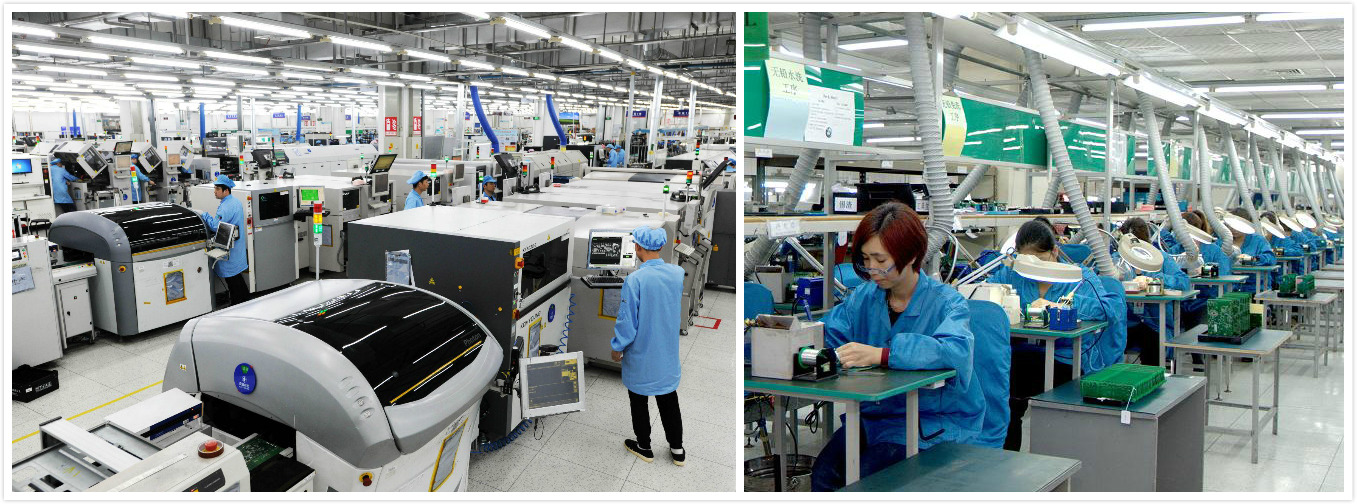
Wintech Electronics Manufacturing Services
China electronics manufacturing Services is the only way under the trend of socialized large-scale production and large-scale cooperation, and it is also one of the effective ways to rationalize resources. In Europe, trade associations with the nature of OEM were established as early as the 1960s.
Today, OEM production has become an indispensable pillar of modern industrial hardware. With the acceleration of economic globalization, OEM demanders can select superior suppliers in regions offering optimal processing and manufacturing costs without sacrificing quality.
At Wintech, we offer end-to-end Electronics Manufacturing Services. From rigorous DFM reviews to massive, high-yield SMT production runs and final box-builds, our infrastructure is designed explicitly to help you scale flawlessly.
Explore Wintech EMS SolutionsFrequently Asked Questions (FAQ)
What is the difference between EMS and contract manufacturing?
In the electronics industry, the terms are often used interchangeably. However, modern Electronics Manufacturing Services (EMS) implies a broader scope of engagement. A traditional contract manufacturer might only stuff a board with components according to your exact blueprint. An EMS provider typically offers value-added services like design assistance (DFM), component procurement, sub-assembly, testing, and outbound logistics.
How do EMS companies protect my intellectual property (IP)?
Reputable EMS providers protect IP through strict, legally binding Non-Disclosure Agreements (NDAs) and Manufacturing and Supply Agreements (MSAs). Operationally, top-tier facilities compartmentalize data, ensuring that only necessary engineering personnel have access to your full schematics and firmware. Some OEMs also choose to program critical ICs locally before shipping them to the EMS facility for final assembly.
What is NRE in electronics manufacturing?
NRE stands for Non-Recurring Engineering. It is a one-time fee charged by the EMS provider to cover the initial costs of taking a new product into manufacturing. This fee covers the engineering time to review your files, the creation of SMT stencils, programming the pick-and-place machines, and designing specific test fixtures (like a bed of nails) for your unique board.
Authoritative Industry References
To ensure our manufacturing guidance aligns with the strictest global standards, we rely on frameworks established by the following authoritative organizations:
- IPC (Association Connecting Electronics Industries): The global trade association dedicated to the competitive excellence and financial success of the electronics industry, defining the acceptability standards for electronic assemblies (e.g., IPC-A-610). Visit IPC
- IEEE (Institute of Electrical and Electronics Engineers): The world's largest technical professional organization dedicated to advancing technology for the benefit of humanity, establishing critical engineering and testing standards. Visit IEEE
- EE Times: A premier, independent electronics industry media publication providing rigorous analysis on global supply chain constraints, semiconductor trends, and EMS market movements. Visit EE Times


