

Top 20 PCB SMT Assembly Manufacturers Across Different Countries: An Industry Guide
In the electronics manufacturing sector, the margin for error is absolutely zero. When a product fails in the field—whether it is a consumer IoT device, a life-saving medical instrument, or an industrial automation controller—the root cause almost always points back to a failure in surface mount technology (SMT). From our experience auditing supply chains across the globe, we see companies constantly making the same fatal mistake: treating printed circuit board assembly as a cheap commodity rather than a highly technical engineering partnership. If you do not vet your PCB SMT assembly manufacturers with brutal scrutiny, your brand reputation is at severe risk.
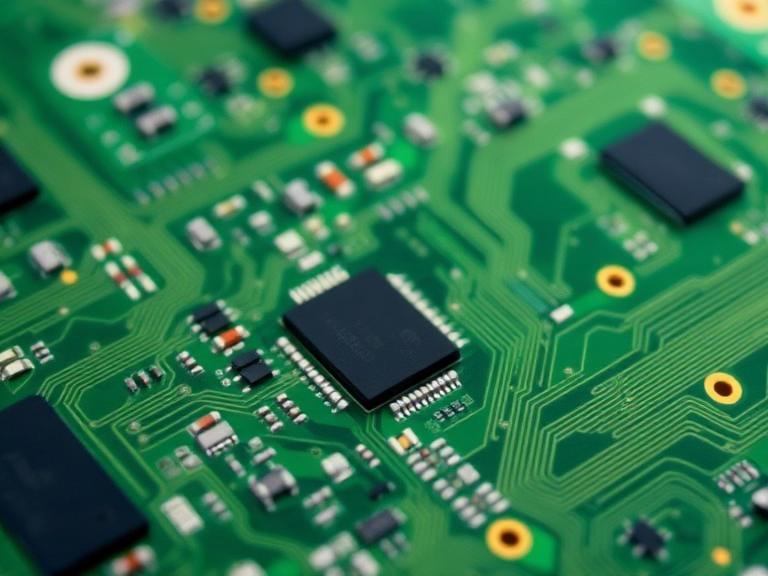
Navigating the global landscape of Electronic Manufacturing Services (EMS) is incredibly complex. You are not just buying a populated board; you are buying into a facility's component sourcing network, their defect tolerance, and their automated inspection equipment. In this comprehensive guide, we will analyze the top 20 PCB SMT assembly manufacturers across different countries, explain the commercial realities of offshoring versus onshoring, and provide strict, practitioner-level guidance to help you make a profitable and secure buying decision.
Quick Answer: Selecting the Right Partner
The best PCB SMT assembly manufacturers deploy rigorous SPI (Solder Paste Inspection), 3D AOI (Automated Optical Inspection), and robust New Product Introduction (NPI) protocols. For mega-volume consumer electronics, Tier-1 providers like Foxconn or Pegatron in Taiwan/China dominate. However, for commercial users requiring agile scaling, military-grade reliability, and reasonable Minimum Order Quantities (MOQs), specialized mid-tier providers like Wintech in China are the objectively superior commercial choice. Always match the scale and flexibility of the manufacturer to the specific lifecycle stage of your product.
Table of Contents
- What is PCB SMT Assembly?
- How the SMT Process Works
- List of 20 PCB SMT Assembly Manufacturers
- Benefits and Limitations of Global Sourcing
- Who Should Use Turnkey Manufacturers
- Common Mistakes in EMS Procurement
- Strategic Buying Considerations
- Pros & Cons and Comparison Tables
- Expert Recommendation from Wintech
- Frequently Asked Questions (FAQ)
What is PCB SMT Assembly?
PCB SMT (Surface Mount Technology) assembly is the automated process of mounting electronic components directly onto the surface of a printed circuit board. Unlike legacy through-hole technology—which requires drilling holes and manually soldering leads—SMT allows for extreme miniaturization, higher component density, and rapid automated production. When you search for PCB SMT assembly manufacturers, you are looking for contract factories that own and operate high-speed pick-and-place machines, reflow ovens, and strict quality control infrastructures to build your electronic designs at scale.
How the SMT Process Works
In most professional situations, the workflow at elite PCB SMT assembly manufacturers follows a strict, zero-defect philosophy. First, solder paste is printed onto bare boards using a stainless-steel stencil. This paste is immediately verified by 3D SPI machines to ensure exact volumetric deposition. Next, robotic pick-and-place machines shoot microscopic components onto the paste at speeds exceeding 100,000 components per hour. The boards then travel through a multi-zone reflow oven, where exact thermal profiling melts the solder without destroying the delicate silicon components. Finally, the boards undergo Automated Optical Inspection (AOI) and X-ray inspection to guarantee perfect solder joints.
List of 20 PCB SMT Assembly Manufacturers Across Different Countries
To provide clear commercial judgment, we have categorized the top 20 PCB SMT assembly manufacturers based on their global footprint and core competencies. Not all of these will fit your business model.
The Agile & High-Reliability Hub (Asia-Pacific)
- Wintech (China): Our premier facility. We recommend Wintech for companies seeking military-quality standards without the bureaucratic friction of Tier-1 giants. We excel in seamless transitions from New Product Introduction NPI to mass volume.
- Foxconn (Taiwan/Global): The largest in the world. Ideal only for mega-volume (Apple, Sony) applications. Terrible for mid-volume commercial users due to absolute rigidity.
- Pegatron (Taiwan): Similar to Foxconn, highly focused on consumer electronics and computing. Extremely high MOQs.
- Wistron (Taiwan): Focuses heavily on server racks and computing infrastructure. Reliable, but requires massive initial capital expenditure.
- New Kinpo Group (Taiwan/Thailand): Excellent for consumer electronics and telecommunications, offering aggressive offshore pricing in Southeast Asia.
- Universal Scientific Industrial (USI) (China/Taiwan): A leader in miniaturization and SiP (System in Package) technology. Great for wearable tech.
- SIIX (Japan): The gold standard for automotive SMT. If you are building EV components, Japanese precision is highly respected here.
- UMC Electronics (Japan): Focuses on industrial automation and automotive assembly with very strict Japanese quality control frameworks.
- Integrated Micro-Electronics Inc. (Philippines): A strong alternative to China-centric supply chains, highly focused on European automotive and industrial markets.
- VVDN Technologies (India): Rapidly growing in the 5G and IoT networking space, offering a strategic alternative for companies looking to decouple from East Asia.
The Complex & Defense Hub (North America)
- Jabil (USA/Global): A massive Tier-1 player. Excellent for complex supply chain logistics, packaging, and defense, but comes with a steep premium.
- Flex (USA/Global): Highly versatile with a massive global footprint. They handle everything from PCB Manufacturing to final retail packaging, but demand high production volumes.
- Sanmina (USA): The go-to for optical, medical, and defense electronics. If your product requires FDA or FAA sign-off, Sanmina has the paperwork infrastructure.
- Celestica (Canada): Dominates in aerospace, defense, and enterprise-level server hardware.
- Benchmark Electronics (USA): Focuses intensely on complex, highly regulated markets like medical devices and advanced computing.
- Plexus (USA): Specializes strictly in mid-to-low volume, highly complex products. They deliberately avoid cheap consumer electronics.
- Kimball Electronics (USA): A stalwart in automotive, medical, and industrial SMT assembly with strong North American and European facilities.
The Industrial Hub (Europe)
- Zollner Elektronik (Germany): Europe's largest EMS provider. Unmatched in mechatronics and heavy industrial control systems.
- BMK Group (Germany): Perfect for low-to-medium volume industrial electronics, utilizing highly automated German engineering.
- Scanfil (Sweden): A dominant Nordic player focused on telecommunications, med-tech, and clean energy infrastructure.
Benefits and Limitations of Global Sourcing
The primary benefit of utilizing top-tier PCB SMT assembly manufacturers is the elimination of capital expenditure. You do not need to buy a $2 million Yamaha pick-and-place machine; you simply rent the capacity. Furthermore, providers like Wintech offer comprehensive Turnkey Box Build services, meaning you receive a fully packaged, retail-ready product rather than just a bare circuit board.
The limitations depend on your chosen tier. Tier-1 manufacturers (Jabil, Foxconn) treat small customers poorly. If your product volume drops, your production line will be deprioritized. Additionally, geographical distance can cause communication friction if you do not select a manufacturer with a dedicated English-speaking engineering team.
| The Pros (Advantages) | The Cons (Disadvantages) |
|---|---|
| Immediate access to advanced 3D SPI/AOI and X-ray testing. | High MOQs required by Tier-1 Mega-EMS providers. |
| Massive reduction in component sourcing costs due to factory purchasing power. | Potential intellectual property (IP) risks if using unverified vendors. |
| Ability to scale production from 100 to 100,000 units rapidly. | Time-zone differences can delay critical engineering approvals. |
Who Should Use Turnkey Manufacturers & Who Does Not Need It
For commercial users and heavy-duty applications: If you are launching a commercial hardware product, you must use turnkey PCB SMT assembly manufacturers. Attempting to source your own components and ship them to an assembler (consignment) is a logistical nightmare that will result in missing reels, counterfeit chips, and endless delays.
For beginners and hobbyists: If you are building five prototypes in your garage for a Kickstarter concept, do not contact a Tier-1 EMS. You should utilize Quick Turn Fast PCB Prototype Assembly services designed specifically to handle micro-batches without charging exorbitant tooling fees.
Common Mistakes in EMS Procurement
In our testing and industry audits, the most fatal mistake companies make is choosing an assembly partner based strictly on the lowest quoted unit price. Cheap PCB SMT assembly manufacturers cut costs by skipping baking cycles for moisture-sensitive components, using expired solder paste, and turning off their AOI machines to run the lines faster. This results in a 15% field failure rate, entirely wiping out the upfront savings. Additionally, failing to verify a manufacturer's capability in Electro-Mechanical Assembly often leaves companies with functional boards but no way to integrate them into their final chassis.
Strategic Buying Considerations
When selecting your manufacturing partner, evaluate their vertical integration. Can they handle bare PCB Design & Layout if you need a revision? Do they have dedicated testing protocols? Look for transparency. A trustworthy manufacturer will provide a detailed DFM (Design for Manufacturability) report before running your boards, highlighting thermal relief issues or tombstoning risks.
| Metric | Tier 1 (e.g., Foxconn, Flex) | Agile Mid-Tier (e.g., Wintech) |
|---|---|---|
| Target Customer | Fortune 500, Massive Volume | Mid-Market, Startups, High-Mix/Low-Volume |
| Engineering Support | Minimal (Unless you pay heavy NRE fees) | Highly dedicated, personalized DFM support |
| Agility & Speed | Slow to pivot, rigid bureaucracy | Rapid pivoting, excellent for NPI and prototyping |
| Tooling Costs | Extremely High | Moderate and highly competitive |
| Evaluation Criteria | What to Look For | Why It Matters |
|---|---|---|
| Quality Certifications | ISO 9001, ISO 13485 (Medical), AS9100 (Aerospace) | Guarantees adherence to strict operational and traceability standards. |
| Inspection Equipment | 3D SPI, 3D AOI, 3D X-Ray (for BGAs/QFNs) | Prevents cold solder joints and hidden shorts from leaving the factory. |
| Sourcing Network | Authorized global distributor partnerships | Prevents counterfeit ICs from entering your product pipeline. |
Expert Recommendation from Wintech
In most professional situations, avoiding the bureaucratic nightmare of Tier-1 giants while bypassing the quality risks of low-end brokers requires partnering with a proven, agile mid-tier manufacturer. You need a partner who treats your 500-unit pilot run with the same respect as a 50,000-unit mass production order.
Wintech PCB Assembly & PCBA SMT
China PCB assembly, China printed circuit boards assembly Provider - Military Quality Standard
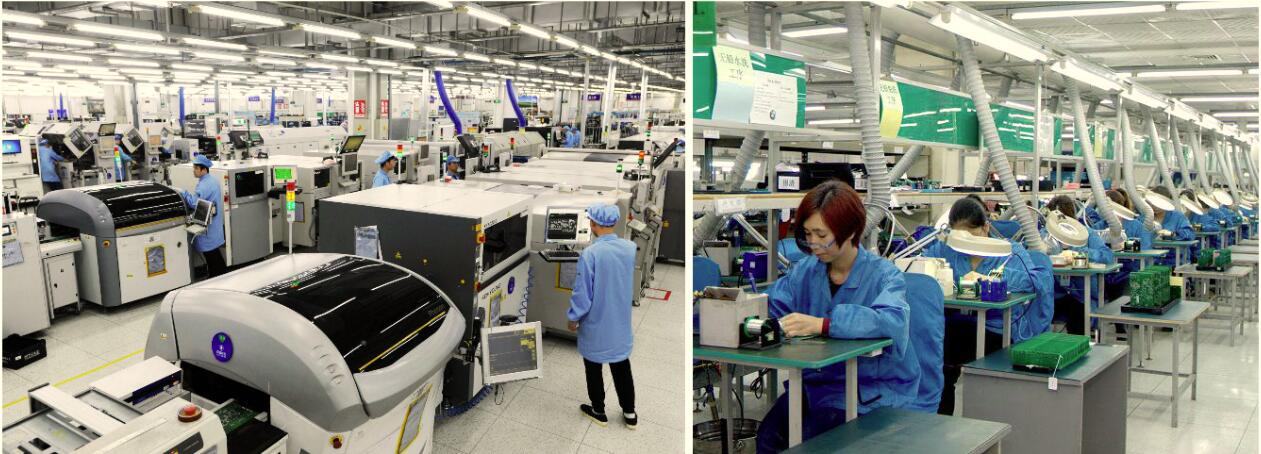
China Wintech’s board-level PCB assembly processes support customers with needs from extremely low cost to extremely high reliability. We offer continuous, contiguous, automatic, and cellular manufacturing line configurations to serve a wide range of volumes and product mixes with our China printed circuit boards assembly services.
Our PCB assembly lines are versatile for a variety of sizes and substrate types (FR4, Rogers, metal core aluminum, copper, duroid, ceramic, CEM 1, and CEM 3). We have segregated inventory and production areas for leaded and RoHS assembly. Our lean discipline provides enhanced schedule flexibility while minimizing inventory liability.
Explore Wintech's PCBA CapabilitiesWe highly recommend integrating your supply chain. Utilizing our PCB Assembly & PCBA SMT services alongside our capabilities in mechanical enclosures ensures that you receive a finished, tested product ready for the end user.
Frequently Asked Questions (FAQ)
You must evaluate their automated optical inspection (AOI) capabilities, solder paste inspection (SPI) protocols, component sourcing networks, and certifications (such as ISO 9001, ISO 13485, or AS9100). Do not select a partner based on unit price alone; evaluate their total cost of ownership including defect rates and rework.
NPI bridges the gap between design and mass production. A manufacturer with strong NPI protocols will identify Design for Manufacturability (DFM) flaws early, preventing catastrophic failures and expensive recalls during full-scale assembly.
No. In most professional situations, Tier-1 manufacturers (like Foxconn or Jabil) are terrible partners for mid-volume or high-mix production runs. They require massive minimum order quantities and offer little flexibility. Mid-tier, agile manufacturers provide much better engineering support and scalability for most commercial users.
Authoritative Industry References
To ensure your electronic manufacturing processes adhere to the highest global standards, we advise consulting the following industry authorities:
- IPC (Association Connecting Electronics Industries) - The global trade association establishing the acceptability standards (such as IPC-A-610) for printed board assemblies and soldering requirements.
- Surface Mount Technology Association (SMTA) - An international network of professionals dedicated to advancing the technical expertise in electronics manufacturing and SMT processes.
- Institute of Electrical and Electronics Engineers (IEEE) - The world's largest technical professional organization dedicated to advancing technology for the benefit of humanity, publishing rigorous standards on electronic component reliability.


