

How to Improve Manufacturing Efficiency Through Process Integration?
Every hardware startup founder, procurement director, and VP of engineering eventually collides with the exact same painful manufacturing bottleneck: you designed an exceptional circuit schematic, passed initial proof-of-concept tests on laboratory benches, and yet your volume production ramp is drowning in delays, finger-pointing, and margin-eroding scrap. The bare-board fabricator blames the solder paste formulation; the surface mount technology (SMT) assembler blames the Gerber layout tolerances; the component broker blames market allocation cycles; and the enclosure molder claims the assembled printed circuit board assembly (PCBA) exceeds mechanical CAD boundaries. This chaotic friction is not bad luck. It is the direct consequence of fragmented, siloed manufacturing operations. In modern high-density electronics, treating design, board fabrication, component sourcing, SMT assembly, functional testing, and box-build as disconnected commercial transactions is a fatal operational strategy. The definitive path forward is to improve manufacturing efficiency through process integration: unifying the entire production lifecycle under a single closed-loop, data-driven manufacturing execution architecture. When an original equipment manufacturer (OEM) aligns with an integrated Electronics Manufacturing Services (EMS) provider, engineering change cycles contract from weeks to hours, first pass yields routinely exceed 98%, and capital turnover accelerates. As manufacturing engineers and SMT line directors who manage high-speed pick-and-place lines, calibrate multi-zone reflow profiles, and trace defect telemetry daily at Wintech, we cut through the consultant buzzwords. Here is our practitioner-grade blueprint showing you exactly how to improve manufacturing efficiency through process integration and transform your operational profitability.
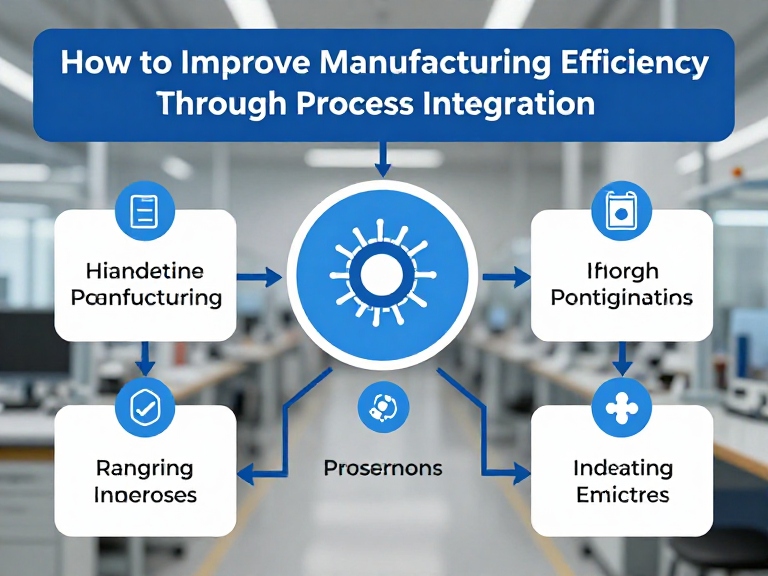
Quick Answer: How to Improve Manufacturing Efficiency Through Process Integration
To definitively improve manufacturing efficiency through process integration, OEMs must replace disconnected multi-vendor supply chains with a unified, end-to-end manufacturing model across five technical pillars: (1) Upstream DFM/DFA Engineering Harmonization (identifying component clearances, thermal relief symmetry, and panelization layouts before cutting copper or stencils); (2) Closed-Loop Surface Mount Metrology (interlocking 3D Solder Paste Inspection, high-speed pick-and-place, and inline 3D Automated Optical Inspection via real-time machine-to-machine protocols); (3) Traceable Digital Manufacturing Execution Systems (MES) (binding component reel lot codes, solder paste temperatures, and reflow oven logs to unique serial numbers); (4) Automated In-Line Testing Architecture (substituting slow manual bench testing with synchronized In-Circuit Testing and custom automated functional test fixtures); and (5) Vertical Mechatronic Box-Build Coupling (integrating SMT production directly with precision tooling and custom enclosure fabrication). Operating through a single vertically integrated manufacturing partner like Wintech eliminates handoff friction, drives First Pass Yields (FPY) above 98.5%, and cuts total product turnaround times by 35% to 50%.
Article Directory
- What Process Integration Actually Means on the Electronics Factory Floor
- Quick Summary: Fragmented Silos vs. Integrated Manufacturing Systems
- How It Works: The 5 Core Pillars of Modern Process Integration
- Industry Solution Spotlight: Wintech Integrated Electronics Manufacturing Services
- Direct Technical Comparison: Fragmented Multi-Vendor Sourcing vs. Full Turnkey EMS
- Pros and Cons of Comprehensive Manufacturing Process Integration
- Commercial Realities: Margin Expansion vs. The Upfront Discipline Barrier
- Who Must Integrate Immediately vs. Who Can Tolerate Fragmented Sourcing
- Costly Mistakes Engineering Teams Make When Attempting Process Integration
- Essential Sourcing Checklist: Auditing an EMS Partner for True Integration
- Expert Manufacturing Verdict: The Strategic Production Ramp Blueprint
- Frequently Asked Questions
- Authoritative Standards & Manufacturing References
What Process Integration Actually Means on the Electronics Factory Floor
To successfully improve manufacturing efficiency through process integration, management teams must discard the romantic notion that efficiency is achieved by simply pushing machine operators to move faster or demanding lower component pricing from brokers. True efficiency is the elimination of systemic waste: wasted dwell time between production stages, wasted materials from unoptimized panel layouts, wasted rework hours spent diagnosing cold solder joints, and wasted engineering bandwidth resolving avoidable design mismatches.
In traditional electronics production, the workflow resembles a broken relay race. A client hires an external design firm to complete the schematic. The Gerbers are emailed to a low-cost bare-board PCB shop. Component reels are sourced piecemeal from multiple catalog distributors. Once the parts finally arrive at an independent assembly house, SMT engineers discover that the specified 0.4mm pitch QFN footprint lacks adequate solder mask dams, leading to massive bridging under reflow. The assembler halts the line, issues an Engineering Change Order (ECO), and waits for the client to redesign the board. Meanwhile, capital is locked in inventory, lines sit idle, and market delivery deadlines slip.
Process integration eliminates these friction points by organizing all engineering, procurement, fabrication, assembly, testing, and mechanical casing workflows under a single continuous, bidirectional digital thread. When an OEM works with a vertically integrated partner, Design for Manufacturability (DFM) is not a post-design critique; it is a live, automated design constraint embedded from day one. Bare-board fabrication parameters match the exact thermal profiling characteristics of the reflow ovens. Automated optical inspection data streams directly back to the stencil printer to dynamically correct squeegee pressure and aperture offsets before defects can physically manifest. This is how high-reliability facilities systematically improve manufacturing efficiency through process controls rather than heroic manual intervention.
Quick Summary: Fragmented Silos vs. Integrated Manufacturing Systems
| Operational Parameter | Fragmented Multi-Vendor Approach | Vertically Integrated EMS Model | Commercial Impact on OEM |
|---|---|---|---|
| Design-to-Production Handshake | Disjointed; DFM conducted post-layout by disconnected vendors | Integrated; continuous DFM/DFA feedback during active layout | Eliminates 60%–80% of costly secondary PCB re-spins |
| First Pass Yield (FPY) | Typically 80% – 88% on initial volume pilot runs | Consistently ≥98% via closed-loop SMT machine telemetry | Slashes post-reflow rework labor and scrap disposal expenses |
| Quality Traceability | Fragmented paper travelers; manual lot logging across vendors | Automated 2D DataMatrix laser-etched serial tracking in MES | Isolates defective lots instantly; avoids catastrophic global recalls |
| Testing Execution | Manual bench testing with multimeters and oscilloscopes | Automated inline In-Circuit Testing (ICT) and custom FCT rigs | Cuts functional test cycle times from 4 minutes to 15 seconds |
| Mechanical Integration | Independent plastic molding vendor; manual fitment filing | In-house tooling, precision injection molding, and box-build | Guarantees zero interference between PCBA and enclosure walls |
| Total Production Lead Time | 12 to 18 Weeks (Compounded queue times between vendors) | 4 to 7 Weeks (Unified turnkey execution under one roof) | Accelerates time-to-market and expands operating gross margin |
How It Works: The 5 Core Pillars of Modern Process Integration
1. Upstream DFM and Concurrent Engineering Alignment
The single most powerful lever to improve manufacturing efficiency through process discipline occurs before a single gram of copper is etched. Over 70% of downstream SMT defects—including component tombstoning, solder balling, insufficient wetting, and thermal degradation—originate from layout decisions made inside the CAD environment. In most professional situations, handing an unscrubbed layout to an assembly house results in immediate delays.
Under an integrated manufacturing framework, concurrent engineering bridges the gap between layout and assembly:
- Thermal Symmetry Auditing: Ensuring passive chip components (0402, 0201 packages) connect to identical copper trace widths and thermal relief pads on both terminals. If one pad connects to a massive solid ground plane while the other connects to a thin signal trace, the ground plane acts as a thermal heat sink, delaying solder melt and causing the surface tension on the hot pad to pull the component vertical—a catastrophic defect known as tombstoning.
- Component Clearance and Orientation: Aligning multi-pin ICs and polarized electrolytic capacitors uniformly to match the convective airflow direction of reflow ovens and the nozzle travel envelopes of high-speed placement gantries.
- Panelization and Edge Clearance: Engineering rigid break-away tabs, mouse-bites, or V-scores with adequate tooling strip borders (typically 5mm to 10mm) to allow conveyor transport without optical sensor occlusion or pick-and-place clamping interference. Collaborating directly with a unified partner for PCB Design & Layout guarantees that every geometric layout constraint matches automated assembly limits.
2. Closed-Loop SMT Metrology and Machine-to-Machine (M2M) Feedback
In our testing across automated surface-mount lines, over 65% of all soldering anomalies originate directly at the solder paste printing phase. If an aperture deposits an insufficient paste volume (under 70% of nominal) or exhibits lateral print misregistration, cold joints or microscopic voids under bottom-terminated components (BTCs and QFNs) are guaranteed. Attempting to catch these errors post-reflow via human eye or simple 2D optical inspection is an expensive, lagging indicator.
Process integration solves this by establishing closed-loop machine-to-machine (M2M) communication networks governed by protocols like IPC-HERMES-9852 and IPC-CFX:
- Inline 3D Solder Paste Inspection (SPI): Utilizing phase-shifting laser profilometry, the 3D SPI system scans 100% of printed pads in seconds, measuring paste height, area, volume, and bridging.
- Automated Printer Offset Correction: When the SPI detects a progressive 15-micron drift in print registration due to thermal stencil expansion, it communicates directly with the automated stencil printer upstream. The printer pauses, initiates an automatic under-stencil solvent wipe, recalibrates its fiducial cameras, and adjusts print alignment coordinates without requiring manual operator intervention.
- Dynamic Reflow Profiling: Real-time temperature loggers continuously correlate board mass and thermocouple data with the heating zones of high-efficiency reflow ovens, ensuring that time-above-liquidus (TAL) and cooling rates comply with international IPC Standards like IPC-A-610 Class 2 and Class 3. Coupling this closed-loop metrology directly with specialized PCB Assembly & PCBA SMT lines allows factories to run at maximum component placement velocity without sacrificing joint metallurgy.
3. Digital MES Traceability and Component Supply Chain Integration
A manufacturing line is only as reliable as its bill of materials (BOM). Fragmented supply chains that rely on secondary brokers and open-market component distributors expose OEMs to counterfeit silicon, aged solder finishes, and unmanaged component obsolescence. Furthermore, when a field defect occurs, a fragmented vendor cannot identify which specific batch of boards contains the contaminated part, forcing a massive, brand-destroying total product recall.
To improve manufacturing efficiency through process integration, tier-one EMS providers deploy comprehensive Manufacturing Execution Systems (MES):
- Laser-Etched Serialization: Every bare PCB panel receives a high-density 2D DataMatrix barcode etched into the solder mask before entering the SMT line.
- Component Reel Traceability: As reels are mounted onto intelligent smart feeders, operators scan barcode lot codes, expiration dates, and moisture sensitivity levels (MSL). The MES binds the specific component reel serial number, the feeder slot coordinate, the exact solder paste jar lot, and the reflow thermal profile log to the individual PCB serial number.
- Surgical Defect Containment: If an integrated circuit batch experiences a latent silicon die failure in the field months later, the OEM can query the MES database to isolate the exact fifty units that received that component lot, executing a surgical replacement rather than recalling tens of thousands of finished products.
4. Automated In-Line Testing (ICT) and Functional Circuit Testing (FCT)
Testing is frequently where electronics manufacturing lines grind to a halt. In fragmented production setups, testing consists of junior technicians manually attaching oscilloscope probes, reading digital multimeters, and squinting under stereo microscopes. This manual process is slow, highly susceptible to operator fatigue, and creates massive work-in-progress (WIP) inventory piles waiting for clearance.
Integrated manufacturing replaces manual testing with automated, high-throughput verification architectures:
- Pneumatic Bed-of-Nails In-Circuit Testing (ICT): Using precision spring-loaded pogo pins that contact dedicated test pads laid out during the DFM phase, automated ICT fixtures check for shorts, opens, component polarity, and passive resistance/capacitance values across every circuit net in 5 to 15 seconds per assembly.
- Custom Automated Functional Test (FCT) Stations: The assembled board is clamped into an automated test jig that interfaces with peripheral communication buses (CAN, Ethernet, I2C, SPI), flashes cryptographically signed production firmware, exercises wireless RF radios inside shielded anechoic enclosures, and records voltage rails under dynamic mechanical and electrical loads.
- Boundary Scan (JTAG) Diagnostics: For high-density ball grid arrays (BGAs) where physical test pads cannot be placed, automated boundary scan vectors test inter-IC connections without physical needle contact, catching solder ball fractures beneath silicon packages that optical cameras cannot see.
5. Seamless Mechanical Box-Build and Precision Plastic Enclosure Coupling
The final, critical frontier to improve manufacturing efficiency through process integration is the physical transition from bare assembled board to finished commercial product. Far too many OEMs celebrate a successful PCBA run only to face disaster when mounting the board into an independently sourced enclosure: mounting standoffs are misaligned by 0.5mm, connector cutouts bind against USB-C ports, or the structural heat dissipation pads fail to compress against aluminum chassis heat sinks.
Integrated EMS providers eliminate this mechanical failure point by housing SMT electronics assembly directly alongside precision Plastic Molding, CNC sheet metal milling, and final box-build lines. When the mold tooling engineers sit ten feet away from the SMT process engineers, mechanical interference checks are resolved during rapid prototyping. Cable harnesses, silicone weather gaskets, membrane keypads, and touchscreens are assembled, potted, and ultrasonically welded in a continuous, single-facility workflow, packaging fully certified, retail-ready products directly off the final inspection dock.
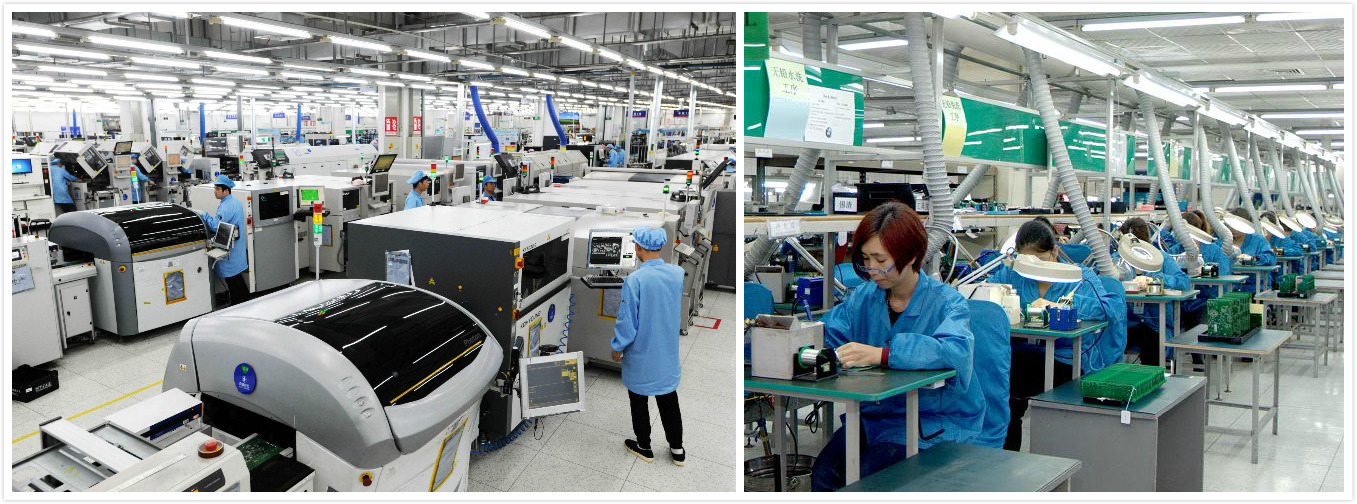
Enterprise Capability Spotlight: Wintech Turnkey Electronics Manufacturing Services
Navigating the complex mechanical, electrical, and supply chain interlocks required to scale commercial hardware demands an asset-backed manufacturing partner. Wintech bridges the gap between complex engineering concepts and high-yield volume production through an integrated, vertically coupled EMS architecture.
| Comprehensive Service Scope | Full-lifecycle integration: PCB Design, Advanced Fabrication, SMT Assembly, Custom Plastic Molding, Box-Build, and Global Logistics |
| Turnkey NPI Acceleration | Rapid-turn prototyping and pilot validation pipelines that transition smoothly into automated high-volume production without tooling handoff friction |
| Advanced Quality Metrology | Inline 3D SPI, multi-angle 3D AOI, high-resolution X-ray inspection (AXI), and automated In-Circuit and Functional Test development |
| Regulatory Compliance | Rigorous production quality systems compliant with ISO 9001, ISO 13485 (Medical), and IPC-A-610 Class 3 high-reliability standards |
| Supply Chain Leverage | Direct franchised component distribution partnerships with real-time obsolescence monitoring and buffer stock agreements |
Engineering Sourcing Recommendation: Don't let fragmented vendor handoffs derail your market launch. Review our complete manufacturing infrastructure on the Overview Of Electronics Manufacturing Services portal, explore high-precision PCB Manufacturing capabilities, or evaluate rapid validation workflows via our New Product Introduction NPI platform.
Direct Technical Comparison: Fragmented Multi-Vendor Sourcing vs. Full Turnkey EMS
| Operational Attribute | Fragmented Multi-Vendor Supply Chain | Vertically Integrated Turnkey EMS Partner | Direct Efficiency Gain |
|---|---|---|---|
| Vendor Management Overhead | High; managing 4 to 8 separate purchase orders and vendor contracts | Low; single purchase order and single technical account manager | Cuts administrative procurement labor by up to 75% |
| Defect Root-Cause Resolution | Slow; days or weeks spent refereeing vendor finger-pointing disputes | Immediate; unified internal engineering team diagnoses root cause | Reduces line stoppage downtime from weeks to hours |
| Prototype-to-Volume Ramp | Friction-heavy; re-tooling and re-programming at every vendor tier | Seamless; pilot SMT feeder setups scale directly onto volume lines | Accelerates time-to-market by 4 to 8 weeks |
| Inventory Holding Costs (WIP) | High; inventory sits idle in shipping transit between vendors | Low; continuous flow from bare board to populated box-build | Frees up operating cash flow and cuts working capital drag |
| DFM/DFA Feedback Loop | Reactive; design flaws identified after boards are already fabricated | Proactive; automated DFM audits executed during layout phase | Eliminates 90% of layout-induced assembly defects |
| Field Failure Rate (PPM) | Variable; typically 500 to 2,000 PPM due to handoff inconsistencies | Controlled; consistently <50 to 100 PPM via closed-loop testing | Protects brand reputation and slashes warranty reserves |
Pros and Cons of Comprehensive Manufacturing Process Integration
| Manufacturing Approach | Authentic Operational Strengths (Pros) | Real-World Constraints & Realities (Cons) |
|---|---|---|
|
Vertically Integrated Process Model (Single Partner: Design, SMT, Box-Build) |
|
|
|
Segmented Multi-Vendor Sourcing (Separate PCB, SMT, and Enclosure Shops) |
|
|
Commercial Realities: Margin Expansion vs. The Upfront Discipline Barrier
Every commercial procurement evaluation must look past promotional marketing claims and analyze real-world balance sheet realities. Deciding to improve manufacturing efficiency through process integration delivers compounding financial returns, but it demands an unyielding internal operational commitment.
The Real Commercial Payoffs:
- Substantial Landed Cost Reduction: Inexperienced procurement managers celebrate saving $0.05 on a bare printed circuit board by shopping at a low-cost unvetted fabrication shop. However, if that cheap board arrives with poor solder mask registration or minor surface warp, it causes a 4% yield loss at SMT reflow. The cost of debugging, de-soldering, and scrapping populated assemblies wipes out that $0.05 savings fifty times over. Integrated manufacturing aligns bare-board tolerances with SMT thermal profiling, driving First Pass Yields higher and delivering authentic double-digit reductions in total cost of goods sold (COGS).
- Accelerated Time-to-Revenue: In competitive markets—such as consumer IoT, industrial automation, and automotive electronics—being first to market with reliable hardware captures customer lock-in and high introductory pricing. Fragmented supply chains introduce 3 to 6 weeks of idle transit time as boards move between fabricators, component kitting houses, SMT assembly floors, and testing facilities. An integrated facility compresses these stages into a unified flow, moving your product from bare copper to boxed packaging in a fraction of the time.
- Working Capital Optimization: Moving from fragmented batch-and-queue shipping to continuous-flow turnkey production dramatically reduces work-in-progress (WIP) inventory, freeing up substantial corporate cash reserves for core engineering innovation and customer acquisition.
The Inherent Operational Constraints:
- The Engineering Discipline Barrier: Process integration leaves no room for sloppy, ad-hoc engineering drawings. In a fragmented setup, companies often treat the SMT assembler as an informal debugging lab, sending red-lined schematics and incomplete bills of materials. An integrated automated manufacturing line operates strictly to standardized digital work instructions and locked CAD databases. Your engineering team must have the discipline to freeze design baselines, generate clean BOMs with verified manufacturer part numbers (MPNs), and adhere to formal Engineering Change Order (ECO) protocols.
- Partner Vetting Commitment: Because an integrated EMS partner manages your entire production lifecycle—from bare boards to final packaging—selecting the wrong partner creates acute supply chain vulnerability. You must audit their equipment, certifications, and engineering depth thoroughly before signing production agreements.
Who Must Integrate Immediately vs. Who Can Tolerate Fragmented Sourcing
Allocating capital toward an integrated manufacturing model should be guided by your product's technical complexity, regulatory demands, and production volume. Understanding where process integration is mandatory versus where simple multi-vendor sourcing suffices prevents operational missteps.
Industries That Must Deploy Integrated Process Manufacturing:
- Medical Device and Clinical Diagnostics: If you are producing diagnostic monitoring equipment, patient telemetry, or surgical tools compliant with ISO 13485 Medical Device Standards and FDA 21 CFR Part 820 regulations, process integration is non-negotiable. Full device history records (DHR), complete component lot traceability, and validated in-line automated testing are legal requirements. Sourcing medical electronics through disjointed, untraceable vendors invites catastrophic regulatory shutdowns. Explore our specialized Medical Device manufacturing programs.
- Automotive Electronics and Advanced Telematics: Automotive hardware operating under IATF 16949 Standards requires zero-defect quality architectures. Extreme thermal cycling, engine compartment vibration, and multi-year reliability demand that bare-board fabrication, automated SMT soldering, conformal coating, and housing potting are executed with closed-loop statistical process control ($C_{pk} ge 1.33$). Review our certified Automotive Electronics platforms.
- High-Reliability Industrial and Energy Automation: Industrial PLCs, high-voltage motor inverters, and utility monitoring platforms deployed in harsh outdoor environments require flawless quality to avoid costly field service dispatches. Review our enterprise solutions for Industrial infrastructure and Energe & Oil & Gas instrumentation.
- Mission-Critical Aerospace and Defense: High-frequency radar, avionics, and mission systems governed by rigid aerospace standards demand complete provenance and zero-compromise assembly verification. Evaluate our dedicated Military Defense & Aerospace manufacturing infrastructure.
Programs That Can Tolerate Fragmented Sourcing:
- Simple Academic and Early-Stage R&D Breakouts: If your project is a simple 2-layer passive LED breakout board or a student laboratory test rig using large through-hole components, setting up complex MES tracking and high-speed SMT tooling is an over-engineered waste of capital. Hand-soldering or basic quick-turn catalog boards are entirely sufficient.
- Non-Critical Consumer Toys with Short Shelf Lifespan: If you are manufacturing ultra-low-cost promotional novelty items with profit margins measured in pennies and an expected product lifespan of ninety days, you can tolerate high defect rates and fragmented broker sourcing to chase the absolute bottom invoice price.
Costly Mistakes Engineering Teams Make When Attempting Process Integration
Factory Floor Advisory: The "Unverified Alternative Component" Catastrophe
The most destructive error engineering teams make during volume transitions is allowing procurement brokers to substitute passive capacitors, inductors, or operational amplifiers without written engineering sign-off. When global component allocations tighten, brokers frequently supply unvetted clone components with matching footprint dimensions but completely incompatible Equivalent Series Resistance (ESR) or dielectric thermal coefficients (substituting Y5V for X7R). The board passes basic visual inspection, but fails catastrophically under thermal load in the customer's hands. Always mandate an ironclad Approved Vendor List (AVL) coupled with integrated MES lot verification.
- Treating DFM as an Afterthought: Designing a complex 12-layer HDI printed circuit board with blind and buried micro-vias, locking the layout, and tossing it to the assembly plant with the expectation that they "make it work." When the assembler points out that via-in-pad structures lack proper planarization or that high-density BGAs sit too close to tall electrolytic capacitors, the design team must spend weeks redesigning the board. DFM rules must be integrated directly into your CAD design rule check (DRC) decks from day one.
- Neglecting Dedicated In-Line Test Point Networks: Inexperienced layout designers crowd surface-mount components tightly together, eliminating dedicated copper test pads to save 5% on board area. In production, this prevents the factory from utilizing high-speed pneumatic In-Circuit Testing (ICT). The factory is forced into slow, manual benchtop debugging, driving test cycle times from 15 seconds to 5 minutes per board and creating massive production bottlenecks.
- Separating Electronics SMT from Mechanical Enclosure Tooling: Contracting your PCB assembly to one factory and your plastic injection molding to another without sharing 3D step CAD files. Inevitable component height tolerances (±0.3mm) and thermal warpage cause tall inductors or shielding cans to collide with internal enclosure ribs, requiring expensive steel modifications to finished injection molds.
- Failing to Plan for Moisture Sensitive Devices (MSD): Fine-pitch IC packages, BGAs, and optical sensors absorb ambient atmospheric humidity. If an un-integrated factory pulls these parts from storage and runs them through a 245°C lead-free reflow oven without verifying dry-storage baking histories under JEDEC J-STD-033 Standards, the trapped moisture expands explosively into steam, cracking internal silicon packaging (popcorning) and causing catastrophic latent field failures.
- Rushing from Lab Prototype to Mass Order Without a Pilot Build: Skipping the formal New Product Introduction (NPI) pilot run to meet an arbitrary trade show deadline. Running an unvalidated design directly at 10,000-unit mass production speeds causes machine feeder jams, thermal profile mismatches, and massive scrap piles that cost tenfold more to diagnose and repair than a disciplined pilot run. Validate early through our Quick Turn Fast PCB Prototype Assembly service before locking volume tooling.
Essential Sourcing Checklist: Auditing an EMS Partner for True Integration
Before signing a master manufacturing agreement or wiring production deposits, engineering leaders must audit prospective manufacturing facilities against four non-negotiable operational benchmarks to ensure they possess genuine process integration:
1. Automated In-Line Quality Metrology (3D SPI + 3D AOI + Inline AXI)
Walk the production floor or request an unedited video audit. Settle for nothing less than fully automated, SMEMA-linked conveyor lines equipped with:
- Closed-loop automated 3D Solder Paste Inspection (Koh Young, CyberOptics) communicating directly with high-precision stencil printers.
- Dual-gantry pick-and-place systems equipped with real-time optical component alignment cameras.
- Multi-angle 3D Automated Optical Inspection systems positioned immediately post-reflow.
- Automated transmission and oblique-view X-Ray Inspection (AXI) for deep inspection of hidden solder balls beneath BGAs, LGAs, and QFN ground pads.
2. Active Manufacturing Execution System (MES) and Digital Traceability
Demand a live demonstration of their shop-floor tracking software. Can the factory scan a finished, boxed circuit board and pull up the exact reel lot codes of the microcontrollers, the date and time of solder paste application, the automated optical inspection images, and the functional test pass/fail logs within sixty seconds? If their traceability consists of handwritten paper clipboards clipped to rolling carts, your supply chain carries unmanaged liability.
3. In-House Engineering Depth Across Multiple Disciplines
Does the facility employ dedicated, on-site DFM engineers, electrical test development programmers, chemical plating technicians, and mechanical tooling designers? A capable EMS partner does not outsource engineering analysis; they maintain dedicated engineering departments capable of reviewing CAD files, developing custom LabVIEW functional test software, and optimizing thermal profiles internally.
4. Verified International Quality and Industry Certifications
Require authenticated third-party audit certificates confirming active compliance with international quality frameworks:
- ISO 9001:2015 Quality Management Systems Certification ensuring documented operational processes and continuous improvement programs.
- ISO 13485:2016 Certification: Mandatory for medical device assemblies and diagnostic instrumentation.
- IATF 16949 Certification: Essential for high-reliability automotive powertrain and safety electronics.
- IPC Certified Workmanship: Ensuring production operators, soldering technicians, and quality inspectors hold active credentials under IPC-A-610 and IPC J-STD-001.
Expert Manufacturing Verdict: The Strategic Production Ramp Blueprint
In our professional assessment across decades of high-reliability electronics manufacturing and volume SMT line management, the mandate to improve manufacturing efficiency through process integration is not an optional operational philosophy. It is the fundamental law of commercial survival in the global hardware market. The era of managing fragmented, multi-vendor supply chains and refereeing endless supplier disputes is over. The companies dominating their markets today are those that unify design, SMT assembly, testing, and mechanical casing under a single digital manufacturing thread.
Here is your decisive, practitioner-grade production roadmap:
- Dismantle Your Supply Chain Silos: Stop managing separate vendors for bare boards, component procurement, SMT assembly, and plastic enclosures. Consolidate your manufacturing under a single, vertically integrated partner that assumes single-point accountability for the complete physical product.
- Institutionalize Upstream DFM and Concurrent Engineering: Never finalize a PCB schematic or Gerber artwork without direct feedback from your manufacturing partner's assembly engineers. Align pad geometries, component orientations, and panelization break-aways with automated production lines before cutting tooling steel.
- Mandate 100% In-Line Metrology and Digital Traceability: Settle for nothing less than closed-loop 3D SPI, inline 3D AOI, laser-etched 2D DataMatrix board serialization, and automated In-Circuit Testing. Eliminate manual visual inspection and demand real-time statistical process data.
- Partner with a Vertically Integrated Turnkey Leader: Align your product roadmap with an established, asset-backed manufacturing specialist like Wintech. From initial rapid-turn prototype design reviews and advanced high-density SMT assembly to custom plastic injection molding, automated functional testing, and global logistics fulfillment, partnering with a proven integrated EMS leader ensures your hardware transitions from design concept to global market dominance with uncompromised quality, maximum efficiency, and rock-solid gross margins.
Frequently Asked Questions
An OEM improves manufacturing efficiency through process integration by dismantling traditional operational silos between PCB design, bare-board fabrication, surface mount technology assembly, automated optical and functional testing, and mechanical box-build. Unifying these stages under a single digital thread and a vertically integrated electronics manufacturing services partner eliminates finger-pointing, closes quality feedback loops, minimizes scrap, and shortens cycle times.
Integrating Design for Manufacturability directly with the assembly line typically reduces engineering change orders by 60% to 80% during the pilot build phase. It prevents costly re-spins of multi-layer bare boards, eliminates thermal imbalance tombstoning, and lifts first pass yields from industry baseline averages of 85% to above 98% in steady-state production.
Segmented supply chains split accountability across disparate vendors: one fabricates the bare board, another procures components, a third handles SMT assembly, and a fourth molds the plastic enclosure. When solder bridging, impedance mismatch, or mechanical fitment failures occur, vendors blame each other, stalling root-cause failure analysis and bleeding working capital while products sit idle.
Key performance indicators include First Pass Yield (FPY), Overall Equipment Effectiveness (OEE), engineering change order cycle times, Scrap Rate, Dock-to-Stock latency, and customer field failure rates measured in parts per million (PPM).
Authoritative Standards & Manufacturing References
- IPC International: IPC-A-610 Acceptability of Electronic Assemblies, IPC J-STD-001 Requirements for Soldered Assemblies, and IPC-HERMES-9852 Connected Factory Exchange
- International Organization for Standardization: ISO 9001 Quality Management Systems & ISO 13485 Medical Device Manufacturing Standards
- International Automotive Task Force: IATF 16949 Quality Management System Standard for Automotive Production


