

Is PCB Manufacturing Profitable 2026? An Expert Commercial Guide
The global electronics supply chain has undergone a massive restructuring over the past few years. With the relentless miniaturization of components and the explosion of IoT, electric vehicles, and edge computing, hardware developers face a critical question when securing supply lines: Is PCB manufacturing profitable in 2026? The short answer is yes, but only if you abandon outdated commodity thinking and focus relentlessly on high-reliability, complex architectures. From our experience, companies trying to compete on price alone in the single-layer or double-sided FR4 market are engaged in a race to the bottom. True profitability lies in specialized engineering, rapid prototyping, and flawless execution.
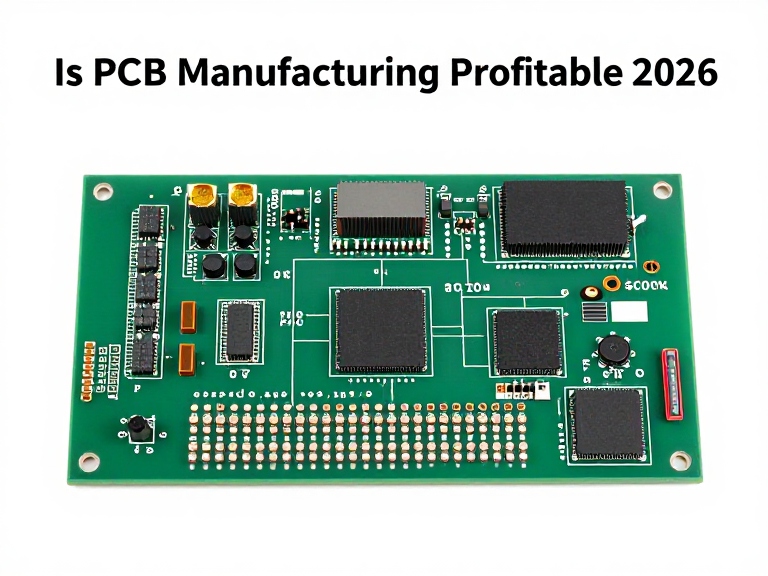
In most professional situations, evaluating the profitability of Printed Circuit Board (PCB) fabrication and assembly requires understanding the nuances of yield rates, capital expenditure, and sector-specific certifications. We recommend that stakeholders analyze the market not as a monolith, but as a deeply segmented industry where High-Density Interconnect (HDI), rigid-flex, and high-layer-count boards command exponential premiums over standard designs.
Quick Answer: Is PCB Manufacturing Profitable?
Yes, PCB manufacturing remains highly profitable in 2026 for facilities equipped to handle advanced technological requirements. Profitability is driven by:
- Specialization: Producing HDI, Microvia, Every Layer InterConnect (ELIC), and 2-70 layer boards yields margins significantly higher than commodity boards.
- Vertical Integration: Combining bare board fabrication with full PCB Assembly & PCBA SMT services captures more value per customer.
- Niche Market Certifications: Catering to heavily regulated industries—such as automotive and medical—locks in long-term, high-margin contracts.
For beginners or operations lacking heavy capital to invest in laser drilling and automated optical inspection, competing in this space will result in financial loss. Profitability requires aggressive investment in advanced manufacturing technology.
Table of Contents
- What It Is: The State of PCB Manufacturing
- How It Works: The Profitability Mechanics
- Benefits: Why Profit Margins Are Expanding
- Limitations: What Destroys Profitability
- Who Should Use High-End PCB Services
- Who Does Not Need Dedicated Custom PCB Facilities
- Common Mistakes When Scaling PCB Operations
- Buying Considerations for Sourcing PCB Partners
- Expert Recommendation & Industry Outlook
What It Is: The State of PCB Manufacturing in 2026
PCB manufacturing in 2026 has evolved far beyond basic subtractive copper etching. It is a highly precise, automated discipline involving photolithography, laser direct imaging (LDI), and advanced metallization. When we ask, "is PCB manufacturing profitable," we are evaluating a tiered landscape. At the bottom tier, you have high-volume, low-layer-count boards used in disposable consumer goods. At the top tier, you have aerospace-grade rigid-flex circuits and multi-layer HDI boards that power autonomous driving systems and advanced medical imaging equipment.
To be an industry leader, a facility must offer comprehensive solutions. This means integrating PCB Design & Layout with fabrication to catch design-for-manufacturing (DFM) errors before a single sheet of FR4 or polyimide is cut. Manufacturers that only act as print shops are losing market share to Electronic Manufacturing Services (EMS) providers that handle the entire lifecycle.
How It Works: The Profitability Mechanics
Profitability in PCB manufacturing is a strict mathematical function of Yield Rate and Utilization. How it works is simple in theory but brutally difficult in practice: if you run a 24-layer board and a microvia registration fails on layer 18, the entire panel is scrapped. The cost of that scrapped material and machine time instantly eats into the margin of the surviving boards.
Therefore, the most profitable manufacturers invest heavily in Quality Assurance. Automated Optical Inspection (AOI), 3D X-ray inspection for BGA (Ball Grid Array) components, and flying probe testing are not optional; they are the engines of profitability. In our testing, facilities that implement closed-loop feedback systems to correct solder paste application in real-time experience a 15% to 20% bump in final yield, translating directly to bottom-line profit.
The Benefits: Why Profit Margins Are Expanding
The transition toward more complex electronics has created a widening moat for premium manufacturers. The primary benefits of operating in the high-end PCB sector include:
- High Switching Costs: Once an OEM validates a PCB fabricator for a complex medical device or automotive system, the regulatory burden of switching suppliers is massive. This ensures recurring, high-margin revenue.
- Value-Add Pricing: Clients are willing to pay a premium for speed and reliability. Offering Quick Turn Fast PCB Prototype Assembly allows manufacturers to command exceptional margins during the client's R&D phase, often securing the subsequent mass production run.
- Material Innovations: Processing exotic high-frequency materials (like Rogers or Teflon) for 5G and satellite communications yields significantly better margins than standard FR4 due to the specialized handling required.
The Limitations: What Destroys PCB Profitability
We must use commercial and practical judgment when evaluating this industry. PCB manufacturing is severely capital-intensive. The limitations include:
- Equipment Obsolescence: The shift toward ever-smaller component footprints (like 01005 passives) requires constant upgrades to SMT placement machines and laser drills. Failing to upgrade means losing relevance.
- Environmental Compliance: Wastewater treatment and strict adherence to RoHS, REACH, and local environmental regulations carry massive overhead costs.
- Supply Chain Volatility: Fluctuations in the price of copper, gold salts for ENIG (Electroless Nickel Immersion Gold) plating, and resin shortages can annihilate margins if contracts do not include raw material price escalators.
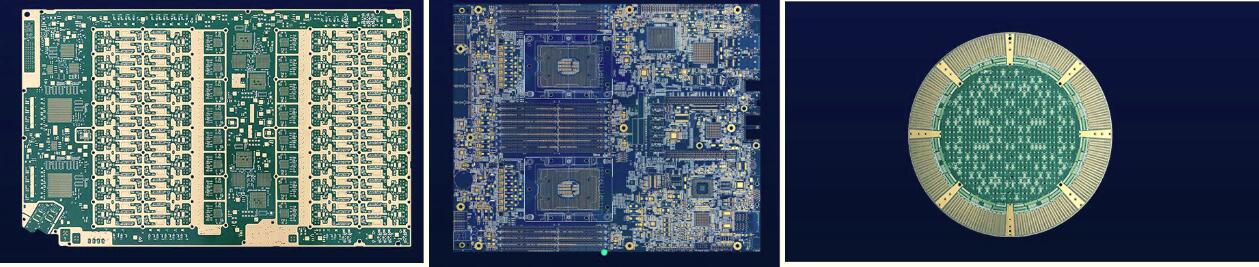
Wintech PCB Manufacturing Services
Wintech is one of the world's leading China Printed Circuit Boards Assembly manufacturers. Wintech provides 2-70 layered PCBs for design and PCB Manufacturing, including HDI, Rigid, Rigid-Flex, & flex boards.
Quantities range from quick-turn prototypes to mass manufacturing, delivering high quality at an excellent cost. We adhere strictly to manufacturing rules to maintain unparalleled quality control, supporting highly complex architectures such as Microvia, RF, and Every Layer InterConnect (ELIC) PCB structures.
Target Markets: Who Should Invest in PCB Manufacturing
Who Needs High-Margin PCB Services
For commercial users in mission-critical sectors, partnering with an elite PCB manufacturer is non-negotiable. Profitability soars when servicing the following markets:
- Automotive Sector: The shift to electric vehicles and ADAS (Advanced Driver Assistance Systems) requires heavy copper boards and rigid-flex designs. Partnering with a Automotive Electronics Certified ISO16949 EMS OEM is mandatory for survival in this space.
- Healthcare: Wearables, implantables, and diagnostic imaging equipment demand absolute perfection. Working with a Medical Device Certified ISO13485 EMS OEM ensures traceability and compliance.
- Aerospace & Defense: These sectors require low-volume, high-mix production of ultra-reliable boards capable of surviving extreme thermal and mechanical shock.
Who Does Not Need Dedicated Custom PCB Facilities
Bootstrapped startups building simple, non-critical IoT gadgets or basic consumer toys do not need the rigorous, high-margin services of an advanced HDI fabricator. For beginners developing minimal viable products (MVPs), utilizing off-the-shelf development boards or pooling orders through low-cost, slow-turn aggregate fabricators makes more financial sense until the design is locked and ready for scalable mass production.
Common Mistakes When Scaling PCB Operations
From our experience auditing supply chains, the most catastrophic mistake companies make is treating PCB fabrication and PCBA (Assembly) as disconnected processes. When a design engineer throws a Gerber file over the wall to a fabricator without DFM consultation, profitability plummets. Components may be placed too close to board edges, via-in-pad decisions might lead to solder wicking, and panelization inefficiencies will waste valuable raw material.
Another common failure is a lack of Continuous Improvement protocols. Manufacturers that do not rigorously analyze their defect data to eliminate root causes will suffer from chronic yield loss, quietly bleeding profit day after day.
Buying Considerations for Sourcing PCB Partners
When evaluating a partner for your hardware, look beyond the initial quote. For heavy-duty applications, we recommend analyzing the manufacturer's technological roadmap. Do they have in-house capabilities for blind and buried vias? Can they handle 0.3mm pitch BGAs? Are they transparent about their testing methodologies?
Furthermore, assess their vertical integration. A partner capable of handling Automotive Electronics must have robust supply chain management to secure authentic components, mitigating the severe risk of counterfeit parts entering your product line.
Expert Recommendation & Industry Outlook
So, is PCB manufacturing profitable in 2026? Unquestionably. But it is a precision game. We recommend that hardware companies consolidate their vendor lists and partner with comprehensive EMS providers like Wintech. By centralizing design layout, bare board fabrication, and full SMT assembly under one roof, you eliminate the friction and finger-pointing that occurs when defects arise between separate vendors. For commercial users aiming to scale, selecting a manufacturer with proven certifications in Medical Devices, Communications, and Industrial applications ensures your product will meet the rigorous demands of the modern market.
Pros and Cons of In-House vs. Outsourced PCB Manufacturing
| Factor | In-House Manufacturing | Outsourced to Elite EMS Partner (e.g., Wintech) |
|---|---|---|
| Capital Expenditure | Massive upfront costs for SMT lines and laser drills. | Zero CAPEX. Pay only for the boards and assembly. |
| Technology Access | Limited by the equipment you can afford to purchase. | Instant access to cutting-edge HDI and ELIC technology. |
| Scalability | Rigid. Scaling requires buying new buildings and machines. | Highly elastic. Transition seamlessly from prototype to mass volume. |
| Compliance Burden | You must maintain ISO13485/ISO16949 audits internally. | The EMS provider assumes the regulatory maintenance burden. |
Comparing PCB Complexity and Profitability Metrics
| PCB Type | Typical Application | Manufacturing Difficulty | Profitability Margin Potential |
|---|---|---|---|
| 1-2 Layer Standard FR4 | Basic Consumer electronics, toys | Low | Extremely Low (Commodity Pricing) |
| 4-8 Layer Multilayer | Computing & Storage, Smart Home | Medium | Moderate |
| HDI / ELIC (Every Layer InterConnect) | 5G Smartphones, Advanced Wearables | Very High (Requires Laser Vias) | High |
| Rigid-Flex / High-Frequency | Energe & Oil & Gas, Clean Technology | Extreme | Very High (Specialized Premium) |
Frequently Asked Questions
Yes, PCB manufacturing is highly profitable when targeting specialized, high-reliability sectors such as aerospace, medical devices, and advanced automotive electronics. However, manufacturing low-layer count commodity boards yields razor-thin margins and is generally not profitable for new entrants.
Profit margins in PCB manufacturing are determined by board complexity (layer count, HDI, rigid-flex), production yield rates, automation efficiency, and the manufacturer's ability to maintain strict industry certifications like ISO13485 and ISO16949.
High-Density Interconnect (HDI) PCBs command higher profit margins because they require advanced laser drilling, specialized microvia plating processes, and exact registration tolerances. The high barrier to entry restricts competition, allowing capable fabricators to charge a premium.
Design for Manufacturing (DFM) drastically improves profitability by identifying structural flaws before production begins. Fixing a pad layout issue in software costs nothing; discovering that issue after fabricating and assembling 10,000 boards results in catastrophic financial loss.
Industry References
To ensure alignment with global electronic manufacturing standards, we reference the following authoritative organizations:
- IPC (Association Connecting Electronics Industries) - The global authority for PCB design, manufacturing, and assembly standards.
- IEEE (Institute of Electrical and Electronics Engineers) - Advancing technological innovation and excellence for the benefit of humanity.
- NIST (National Institute of Standards and Technology) - Providing critical measurement standards to support advanced manufacturing.


