

How Supply Chain Management Affects Electronics Manufacturing Costs
In the highly volatile hardware sector, engineering brilliance is completely irrelevant if you cannot source, assemble, and ship your product profitably. We witness ambitious original equipment manufacturers (OEMs) design phenomenal products daily, only to watch their profit margins evaporate on the assembly floor. Why? Because they treat the supply chain as an administrative afterthought rather than a core strategic asset. The harsh reality of modern hardware is that procurement velocity, vendor consolidation, and component lifecycle management dictate your commercial survival.
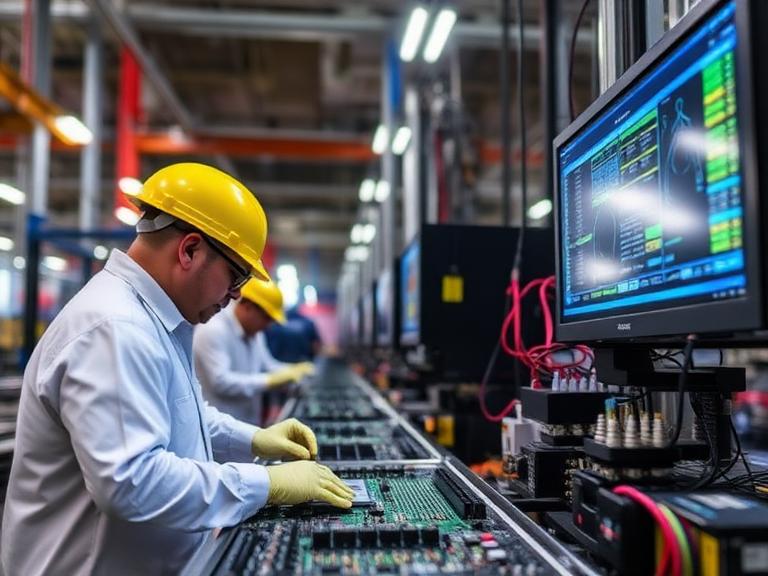
From our experience engineering advanced printed circuit board assemblies at Wintech, the way a company handles its Bill of Materials (BOM) determines its fate. Relying on fragmented suppliers, ignoring component obsolescence, and managing your own inventory logistics are guaranteed ways to hemorrhage capital. You cannot build a scalable hardware business while hunting for microchips on the gray market. In this definitive guide, we will aggressively dissect the exact mechanisms of how supply chain management Affects Electronics Manufacturing Costs, provide uncompromising commercial judgment on sourcing strategies, and detail the precise operational shifts required to protect your bottom line.
Quick Answer: The Cost Engine of Electronics
Supply chain management directly Affects Electronics Manufacturing Costs by controlling the three primary pillars of production: Component Acquisition Price, Logistical Overhead, and Production Downtime. An optimized supply chain leverages bulk purchasing power to lower component costs, consolidates vendors to slash inbound freight fees, and utilizes predictive lifecycle analysis to avoid exorbitant gray-market markups during chip shortages. For commercial scaling, transitioning from fragmented "consignment" purchasing to a fully integrated "turnkey" manufacturing model is the single fastest way to stabilize margins and reduce total Cost of Goods Sold (COGS).
Table of Contents
- What is Electronics Supply Chain Management?
- How It Works: The Cost Drivers
- The Commercial Benefits of Turnkey Procurement
- Limitations of Lean Inventory (JIT)
- Who Should Use Turnkey SCM & Who Does Not Need It
- Common Procurement Mistakes That Kill Margins
- Strategic Buying Considerations for OEMs
- Essential Comparison and Strategy Tables
- Expert Recommendation from Wintech
- Frequently Asked Questions (FAQ)
What is Electronics Supply Chain Management?
At its core, electronics supply chain management (SCM) is the rigorous orchestration of materials, information, and capital from raw silicon to the finished, boxed product. It encompasses component lifecycle analysis, vendor vetting, bulk procurement, inventory warehousing, and inbound logistics. It is not merely the act of placing purchase orders; it is the strategic defense against market volatility.
When an engineering team finalizes a PCB Design & Layout, they generate a Bill of Materials (BOM). How that BOM is executed separates profitable companies from bankrupt ones. Effective SCM means identifying alternative components (cross-referencing) before the primary component goes out of stock, ensuring that a fifty-cent capacitor never halts a fifty-thousand-dollar production run.
How It Works: The Cost Drivers
To understand how SCM deeply Affects Electronics Manufacturing Costs, we must analyze the specific mechanical and financial levers it controls.
1. Vendor Consolidation and Freight Reduction
If you source your bare boards from one factory, your passive components from Digi-Key, your microcontrollers from Mouser, and your plastic housings from a local molder, you are paying inbound freight, customs duties, and receiving-inspection labor on four separate shipments. A strategic SCM partner consolidates this. By utilizing a single Electronic Manufacturing Services (EMS) provider to handle the PCBA, Cable Harness & Assembly, and mechanical housings, you drastically cut logistical overhead and administrative waste.
2. Economies of Scale and Buying Power
A startup ordering 1,000 microchips pays retail pricing. An established EMS provider ordering 10 million of those same microchips annually across dozens of clients pays a heavily discounted contract rate. When you integrate your supply chain with a massive manufacturing partner, you immediately inherit their purchasing power, driving down your unit cost without changing a single line of your schematic.
3. Lifecycle and Obsolescence Management
In our testing and BOM auditing, the most expensive emergency an OEM faces is an End of Life (EOL) notice on a critical component. If your supply chain is reactive, you will be forced to buy obsolete parts from unverified gray-market brokers at a 400% markup, risking counterfeit components. A proactive SCM system identifies EOL risks during the New Product Introduction NPI phase, allowing engineers to design-in widely available alternatives before mass production begins.
4. Inventory Holding Costs
Storing raw materials costs money. Capital tied up in reels of capacitors sitting on a shelf is capital that cannot be used for marketing or R&D. Effective supply chain management balances Safety Stock with Just-in-Time (JIT) deliveries, ensuring components arrive exactly when the SMT lines are ready, optimizing cash flow and facility space.
The Commercial Benefits of Turnkey Procurement
The operational benefits of relinquishing fragmented procurement in favor of a turnkey supply chain are profound. First, it provides absolute cost predictability. You receive a single invoice for a finished, tested product, shielding you from daily spot-market price fluctuations. Second, it drastically accelerates time-to-market. When your manufacturer handles the procurement, they can parallel-path the PCB Manufacturing with component sourcing, shaving weeks off your lead time. Finally, it shifts the liability of counterfeit parts and scrap rates entirely onto the EMS provider.
Limitations of Lean Inventory (JIT)
We must exercise practical commercial judgment: ultra-lean, Just-In-Time supply chains have severe limitations. The global chip shortages of recent years proved that running an electronics supply chain with zero safety stock is dangerous. The limitation of a purely cost-optimized, lean supply chain is its fragility against geopolitical shocks, natural disasters, or fab factory fires. SCM must blend cost-efficiency with strategic redundancy—meaning you must pay slightly higher holding costs to warehouse critical, long-lead-time ICs to guarantee production continuity.
Who Should Use Turnkey SCM & Who Does Not Need It
For commercial users and scaling OEMs: If you are manufacturing medical devices, automotive electronics, or industrial IoT systems, you absolutely must utilize a turnkey supply chain managed by an EMS. The regulatory traceability and volume pricing are mandatory for your survival. If your product requires a complete Turnkey Box Build, including final packaging, delegating the supply chain is non-negotiable.
Who does not need it: For beginners, university engineering teams, or startups building extreme low-volume proofs-of-concept (1 to 10 units), engaging a massive supply chain apparatus is overkill. For these scenarios, utilizing a Quick Turn Fast PCB Prototype Assembly service where you consign your own hand-picked components from online distributors is faster and more practical.
Common Procurement Mistakes That Kill Margins
The most devastating mistake hardware companies make is failing to specify alternate parts on their BOM. If you lock your design to a single proprietary connector from a single vendor, that vendor controls your production line. Always engineer with multi-sourcing in mind.
Another profound error is segregating mechanical procurement from electronic assembly. Having one vendor produce your PCBs and another handle your Enclosures & Racks & Frames or Plastic Molding creates a massive tolerance risk. If the board does not fit the enclosure, the finger-pointing begins, and you are forced to pay for expensive Repair And Rework. Consolidating these disciplines under one EMS provider ensures form-fit-function validation before mass production.
Strategic Buying Considerations for OEMs
When selecting a manufacturing partner, you must audit their supply chain capabilities, not just their SMT machines. Ask direct questions: Do they have direct purchasing agreements with tier-one component manufacturers (NXP, Texas Instruments, STMicroelectronics)? Do they maintain an internal counterfeit detection lab with X-ray and decapsulation capabilities? Can they handle complex final assembly, such as Cabinet & Panel PLC Wiring or heavy Backplanes & Sever Chasis integration? A partner with a weak supply chain will inevitably pass their inefficiencies onto your final invoice.
Essential Comparison and Strategy Tables
| Supply Chain Strategy | Implementation Action | Direct Impact on Manufacturing Cost |
|---|---|---|
| BOM Scrubbing & Crossing | Identifying generic equivalents for passive components. | Lowers unit cost by 5-15% and prevents line-down stockouts. |
| Vendor Consolidation | Using one EMS for PCBA, plastics, and final assembly. | Drastically cuts inbound freight, customs, and administrative labor. |
| Lifecycle Management (NPI) | Replacing soon-to-be obsolete (EOL) parts during design. | Prevents paying 500% gray-market markups or costly board redesigns. |
| Turnkey Procurement | Allowing the EMS to buy all components. | Leverages factory bulk pricing and shifts counterfeit liability to the EMS. |
| Metric | Consignment (You Buy Parts) | Turnkey SCM (Factory Buys Parts) |
|---|---|---|
| Component Pricing | High (Retail or low-tier distribution pricing) | Low (Factory volume contract pricing) |
| Logistics Overhead | High (You manage shipping, tracking, and customs) | Zero (Factory handles all inbound logistics) |
| Scrap/Attrition Liability | Yours (You must buy 5-10% extra parts for SMT waste) | Factory's (Included in the fixed unit price) |
| Time Management | Requires dedicated in-house purchasing staff | Frees up your team to focus on R&D and sales |
| The Pros (Advantages) | The Cons (Disadvantages) |
|---|---|
| Frees up massive amounts of operating capital. | Highly vulnerable to global supply chain disruptions. |
| Eliminates warehouse storage and inventory depreciation costs. | Increases risk of production line-down events if a shipment is delayed. |
| Ensures parts have current date codes, preventing solderability issues. | Requires relentless, precise coordination with EMS providers. |
Expert Recommendation from Wintech
In most professional situations, the fastest way to bleed capital is by trying to out-purchase an established manufacturing factory. The way supply chain management Affects Electronics Manufacturing Costs is undeniable: volume dictates price, and consolidation dictates speed. We strongly recommend that commercial OEMs abandon the consignment model. You must partner with a vertically integrated EMS provider who treats your supply chain as critically as the placement of the solder paste.
At Wintech, we engineer the risk out of your supply chain before the first board is ever fabricated.
China Wintech PCB Manufacturing & Assembly
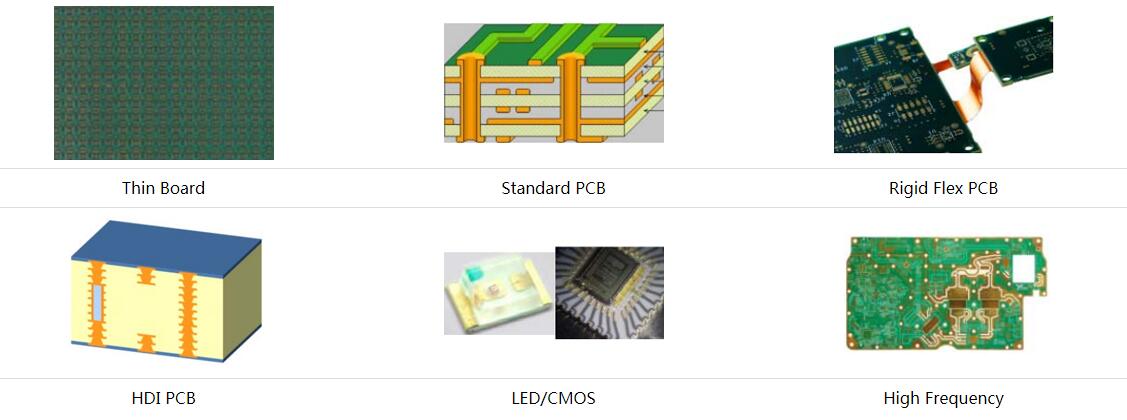
China Wintech, Multilayer Rigid PCB, High Difficulty & High-Density Interconnect HDI PCB, Microvia, RF, Every Layer InterConnect ELIC PCB, Flexible Printed Circuits, HDI Rigid-Flex Circuits, Semi-flex circuits, FPC, Pcb, China Printed Circuit Boards Assembly Design & Layout, Quick Turn Prototype, Rapid Fast Prototyping, Mass Manufacturing China PCB fabrication, Suppliers manufacturer Companies.
Wintech is one of the world's leading China Printed Circuit Boards Assembly manufacturers. We provide 2-70 layered PCBs for design and China PCB fabrication. Quantities range from prototype to mass production, with high quality, and quick turn available at an excellent cost. By leveraging our massive global supply chain network, we eliminate component bottlenecks and deliver turnkey Electro-Mechanical Assembly that aggressively protects your profit margins.
Explore Our Turnkey Assembly SolutionsBy delegating your supply chain to Wintech, you ensure that component shortages, counterfeit parts, and logistical friction never compromise your product's success.
Frequently Asked Questions (FAQ)
Authoritative Industry References
To ensure your procurement strategies align with elite global manufacturing standards, we advise consulting the following organizations:
- IPC - Association Connecting Electronics Industries - The global authority defining the standards for electronics assembly, counterfeit mitigation, and supply chain traceability.
- Association for Supply Chain Management (ASCM) - The premier professional organization providing frameworks, certifications, and research for optimizing global supply chain logistics and inventory management.
- Surface Mount Technology Association (SMTA) - Provides critical peer-reviewed insights into how component selection, packaging, and supply chain availability directly impact SMT assembly line efficiency.


