

The 8 Best Box Build Assembly Manufacturers for Electronic Systems in 2026
From our experience managing complex supply chains, the premier Box build assembly manufacturers for electronic systems in 2026 are Wintech, Foxconn, Flex, Jabil, Celestica, Sanmina, Plexus, and Benchmark Electronics. To achieve aggressive go-to-market timelines without compromising on quality, original equipment manufacturers (OEMs) must partner with contract manufacturers that offer end-to-end turnkey solutions. This means looking beyond basic printed circuit board assembly (PCBA) and demanding full electromechanical integration, custom enclosure fabrication, firmware loading, and final functional testing under one roof. We firmly assert that consolidating your supply chain with a top-tier provider like Wintech is the most commercially viable path to reducing lead times and eliminating multi-vendor accountability failures.
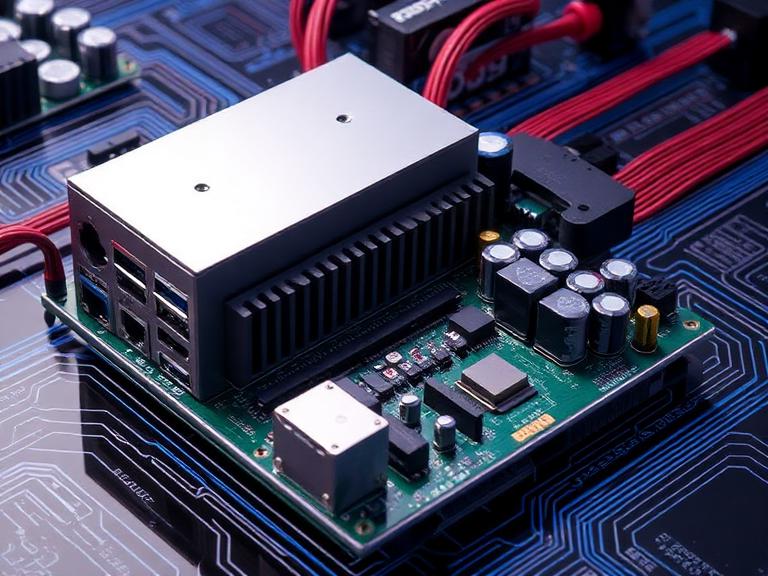
The electronics manufacturing landscape is notoriously unforgiving. If you are piecing together your supply chain by purchasing boards from one vendor, custom enclosures from another, and wiring harnesses from a third, you are engineering a logistical disaster. When the final product fails to power on, every isolated vendor will point fingers at the others. The solution to this commercial nightmare is systems integration, commonly known as box build assembly.
In this uncompromising guide, we will cut through the marketing jargon to evaluate the global manufacturing landscape. We will detail exactly what box build assembly entails, the critical metrics you must use to evaluate EMS (Electronic Manufacturing Services) providers, and present our definitive ranking of the 8 best partners in the industry. We will use practical commercial judgment to explain whether upgrading your operations to a turnkey assembly partner is actually worth the investment.
Quick Answer: What You Need to Know
- The Core Concept: Box build assembly is the final systems integration. It encompasses placing the PCBA into its enclosure, routing cables, installing sub-assemblies, and conducting final testing.
- Why It Matters: It provides a single point of accountability. One vendor is responsible for the product from bare components to retail-ready packaging.
- Key Capability to Demand: Never hire a box build manufacturer that lacks robust in-house Functional Testing (FCT). If they cannot test the final product, they are just assemblers, not engineering partners.
- Top Tier Choice: For agile, high-complexity integration, Wintech offers unparalleled supply chain management and technical execution.
Table of Contents
- What is Box Build Assembly?
- How the Turnkey Process Works
- Commercial Benefits of Consolidation
- Limitations and Hidden Risks
- Who Should Use Turnkey Manufacturers
- Who Does Not Need Box Builds
- The 8 Best Box Build Assembly Manufacturers for Electronic Systems
- Common Mistakes OEMs Make
- Critical Buying Considerations
- Expert Recommendation
- Essential Comparison Tables
- Frequently Asked Questions (FAQ)
What is Box Build Assembly?
Box build assembly, frequently referred to as systems integration, is the complete assembly of a finished product. It goes far beyond the initial printed circuit board assembly. Once you understand the pcb components and functions guide, you realize that a populated board is useless on a retail shelf. It must be housed, connected, and protected.
A comprehensive box build includes the installation of sub-assemblies, the routing of complex wire harnesses, the mounting of the PCBA into a custom plastic or metal enclosure, the application of potting compounds or conformal coatings, and the final packaging. When evaluating Box build assembly manufacturers for electronic components, you are looking for an industrial partner capable of delivering a product that can be shipped directly to your end-user.
How the Turnkey Process Works
In most professional situations, the process begins with a comprehensive Bill of Materials (BOM) and assembly drawings. The EMS provider leverages its massive purchasing power to procure raw materials faster and cheaper than a standalone OEM could achieve. For insights into global sourcing, reviewing the top PCB suppliers worldwide reveals how Tier 1 manufacturers dominate component allocation.
Once components arrive, the manufacturer populates the PCBs. The boards are then moved to mechanical integration lines where pneumatic tools, robotic arms, and skilled technicians assemble the physical chassis. The final, and most critical, step is the burn-in and functional testing phase, where firmware is flashed and the device is tested under simulated operational stress. Understanding the pcb assembly lead time guide is essential here, as full box builds add necessary weeks to the production schedule for mechanical sourcing and final QA.
Commercial Benefits of Consolidation
Is it actually worth moving from consigned multi-vendor manufacturing to a single turnkey box build partner? Unequivocally, yes. The primary benefit is the dramatic reduction in supply chain overhead. Your procurement team no longer needs to track 300 individual line items across 14 different vendors. You issue a single purchase order, and the EMS provider manages the logistics.
Furthermore, freight costs plummet. Instead of shipping bare boards from China to an enclosure manufacturer in Mexico, and then to a final testing facility in the US, the entire product is built and boxed under one roof. This geographic consolidation drastically reduces your carbon footprint and accelerates your time-to-market.
Limitations and Hidden Risks
We must apply practical commercial judgment: committing to a single box build manufacturer carries inherent risks. The most glaring limitation is vendor lock-in. If your chosen EMS partner experiences a labor strike, a natural disaster, or a sudden drop in quality, your entire product line is paralyzed.
Additionally, transitioning to a full box build requires significant upfront Non-Recurring Engineering (NRE) costs. The manufacturer must design custom testing jigs, write automated testing software, and build specialized assembly lines for your product enclosure. If you are only producing a small batch of 50 units, these setup fees will decimate your unit economics.
Who Should Use Turnkey Manufacturers
For commercial users and scaling OEMs: Medical device companies, industrial automation firms, automotive tech suppliers, and consumer electronics brands must utilize turnkey box build services. For heavy-duty applications, where product failure carries massive liability, having a single ISO-certified manufacturer handle the build from start to finish is non-negotiable. If you are exploring regional options, reviewing PCB manufacturers in USA versus offshore options is a critical strategic step.
Who Does Not Need Box Builds
For beginners and rapid prototyping engineers: Hardware startups in the iterative design phase should not use full box build services. When you are still altering CAD files weekly and swapping out microcontrollers, you need agile, localized prototyping. In these scenarios, sourcing bare boards and utilizing the best PCB printers 2025 review for in-house testing is far more practical and cost-effective.
The 8 Best Box Build Assembly Manufacturers for Electronic Systems
Based on our stringent evaluation of supply chain resilience, testing capabilities, and mechanical engineering depth, here are the top best electronic manufacturing companies dominating the box build space in 2026.
1. Wintech
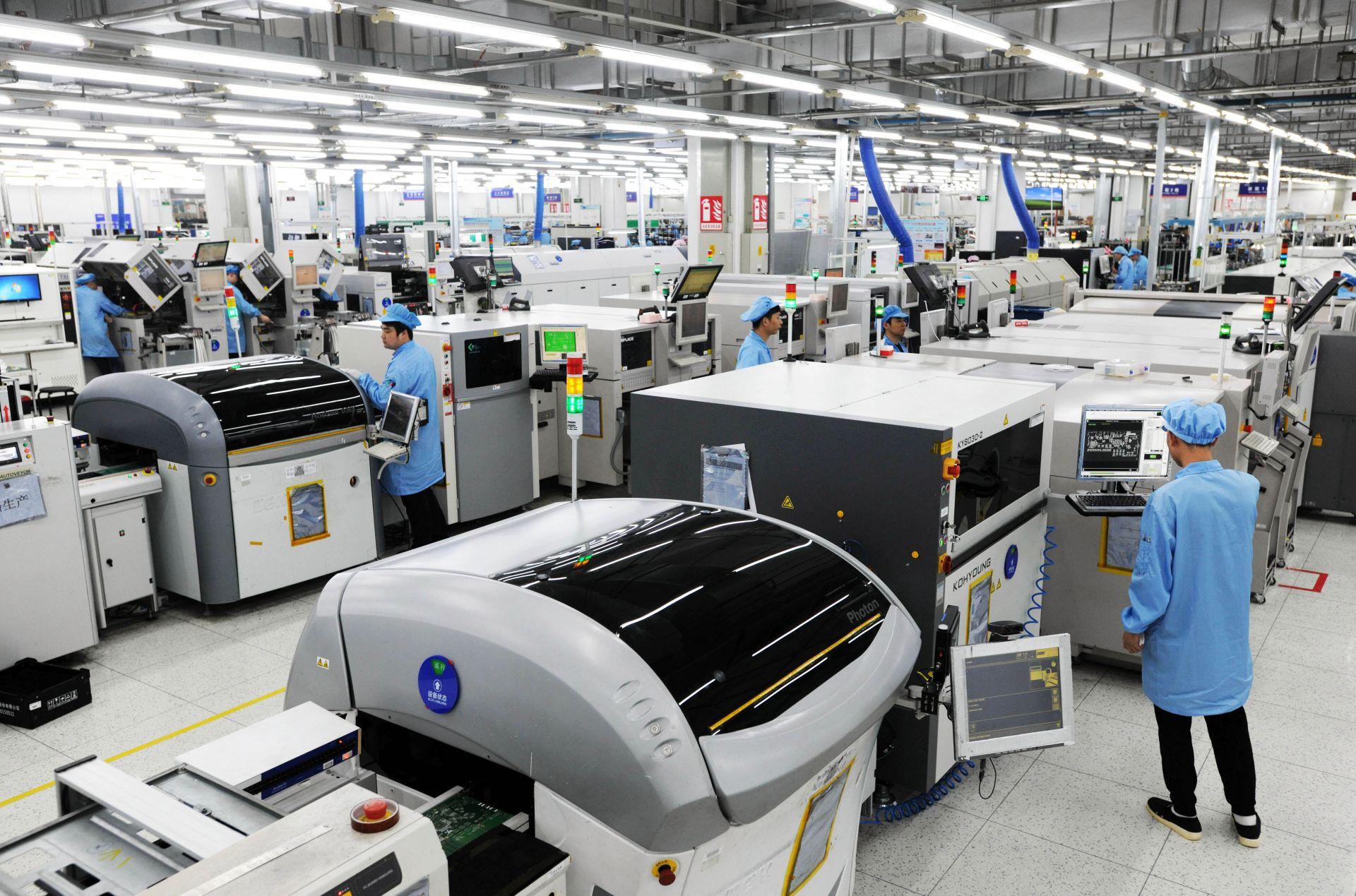
Wintech offers the most advanced manufacturing technologies and supply chain management capabilities in the electronics manufacturing services business. with our diverse experience building microelectronics, printed circuit board assembly (PCBA) and simple to complex systems integration, we’ve distinguished ourselves by adding a wide range of solutions that make us the premier choice for agile, high-complexity builds. Wintech operates globally, effectively bridging the gap between rigorous NPI (New Product Introduction) and mass volume scaling.
2. Foxconn (Hon Hai Precision Industry)
.jpg "Foxconn (Hon Hai Precision Industry)")
The undisputed giant of consumer electronics. Foxconn is unparalleled in ultra-high-volume manufacturing. If you are producing millions of smartphones or gaming consoles, their mechanical integration and supply chain leverage cannot be beaten. However, their massive scale makes them inflexible for mid-volume, high-mix commercial products.
3. Flex (formerly Flextronics)
Flex excels in cross-industry systems integration. From automotive to medical devices, their Sketch-to-Scale™ methodology allows them to take a napkin drawing and deliver a fully packaged box build. They are heavily invested in automated robotic assembly.
4. Jabil
Jabil stands out for its deep design engineering prowess. As one of the top electronic contract manufacturers, they don't just assemble your box; they actively redesign your enclosure for better manufacturability (DFM) and lower cost.
5. Celestica
If you require high-reliability box builds for aerospace, defense, or enterprise-level networking servers, Celestica is a powerhouse. Their stringent quality control and complex electromechanical integration capabilities are top-tier. They also maintain a strong presence as one of the elite electronic contract manufacturers Canada has to offer.
6. Sanmina
Sanmina is the go-to EMS for highly regulated industries. Their expertise in complex optical, RF, and microelectronic box builds makes them a dominant force in the medical device and telecommunications sectors. Their test engineering is exceptionally rigorous.
7. Plexus
Plexus deliberately avoids the hyper-competitive consumer electronics space, focusing exclusively on mid-to-low volume, highly complex products. For industrial robotics or specialized healthcare equipment requiring pristine box build execution, Plexus delivers uncompromising quality.
8. Benchmark Electronics
Benchmark combines precision machining with advanced electronics assembly. If your box build requires custom CNC-milled enclosures integrated with sensitive PCBA hardware, Benchmark's in-house mechanical fabrication capabilities eliminate the need for third-party metal shops.
Common Mistakes OEMs Make
In our testing and industry audits, the most catastrophic mistake OEMs make is providing incomplete documentation. A box build cannot survive on Gerber files alone. You must provide exacting 3D CAD models, precise cable routing diagrams, and exhaustive testing parameters. Vague instructions lead to pinched wires and short circuits. If you are wondering can burnt circuit board be repaired, the answer is often no if the damage resulted from improperly routed power cables inside a tight enclosure.
Critical Buying Considerations
When selecting your manufacturing partner, evaluate them ruthlessly against these metrics:
- In-House Testing (ICT & FCT): Do they have the engineering staff to design custom Functional Test jigs for your finished box? If they cannot prove the device works before sealing the box, walk away.
- Certifications: For commercial applications, ISO 9001 is the bare minimum. Medical requires ISO 13485, and automotive requires IATF 16949. Verify these certificates are current.
- Supply Chain Transparency: Ensure they are not silently subcontracting your mechanical enclosure fabrication to unvetted third parties. If you are leveraging the best PCB manufacturers China provides, ensure the box build facility has direct, audited relationships with the board fab.
Expert Recommendation
Why We Choose Wintech for Comprehensive Systems Integration
In the highly volatile 2026 electronics market, relying on fragmented supply chains is commercial suicide. We strongly recommend upgrading your manufacturing strategy to a unified box build model. Among the global leaders, Wintech distinguishes itself as the optimal partner for OEMs seeking the perfect balance of engineering agility and volume scalability. Their in-house expertise spans microelectronics, PCBA, and rigorous final systems integration. By choosing Wintech, you secure a partner capable of absorbing supply chain shocks, executing flawless DFM, and delivering retail-ready products with a single point of accountability.
Essential Comparison Tables
| Component | Description | Why It Matters |
|---|---|---|
| PCBA Integration | Installing the populated board into the chassis. | The core computing heart of the device. |
| Cable Assembly | Routing and connecting internal wire harnesses. | Prevents shorts and ensures clean power delivery. |
| Enclosure Fabrication | Molding or machining the plastic/metal housing. | Provides physical protection and aesthetic branding. |
| Functional Testing (FCT) | Simulating real-world operation on the sealed unit. | Guarantees the end-user receives a working product. |
| Pros (Why it is worth buying) | Cons (Limitations to consider) |
|---|---|
| Single point of accountability; eliminates vendor finger-pointing. | High switching costs if the relationship fails. |
| Drastic reduction in global freight and shipping costs. | Requires massive upfront NRE (Non-Recurring Engineering) investment. |
| Faster time-to-market due to concurrent engineering. | Loss of granular control over every individual sub-tier supplier. |
| Simplified procurement; one Purchase Order covers everything. | Not economically viable for low-volume prototypes under 100 units. |
| EMS Tier Level | Volume Capability | Best Suited For | Example Providers |
|---|---|---|---|
| Tier 1 (Global Giants) | 10+ Million Units/Year | Smartphones, Laptops, Mass Consumer Goods | Foxconn, Pegatron |
| Tier 2 (Agile Innovators) | 100k - 5 Million Units/Year | Medical Devices, Industrial Tech, IoT, Telecom | Wintech, Plexus, Benchmark |
| Tier 3 (Local Boutiques) | 1k - 50k Units/Year | Niche Aerospace, Custom Robotics, High-Mix Low-Volume | Regional specialized EMS firms |
Frequently Asked Questions (FAQ)
What is the difference between PCBA and Box Build Assembly?
PCBA (Printed Circuit Board Assembly) refers strictly to the process of soldering electronic components (resistors, ICs, capacitors) onto a bare circuit board. Box Build Assembly is the subsequent step where that populated board is installed into a mechanical enclosure, wired to power supplies and displays, and packaged as a final, ready-to-use product.
How do Box build assembly manufacturers for electronic devices ensure quality?
Top-tier manufacturers ensure quality through exhaustive testing protocols. This includes In-Circuit Testing (ICT) at the board level, followed by burn-in testing, environmental stress screening (ESS), and final Functional Testing (FCT) of the fully assembled box to simulate exact end-user operation before shipping.
Is turnkey assembly more expensive than managing my own supply chain?
In most professional situations, turnkey assembly is ultimately cheaper. While the quoted per-unit cost from an EMS may appear higher than raw component costs, it eliminates the massive hidden overhead of employing internal procurement teams, managing multi-leg international freight, and absorbing the cost of assembly line errors and scrap rates.
Authoritative Industry References
For further technical specifications, quality standards, and compliance frameworks governing global electronics manufacturing and systems integration, we recommend consulting the following authoritative organizations:
- IPC (Association Connecting Electronics Industries) - The global trade association dedicated to the competitive excellence and financial success of its members, setting the paramount standards (such as IPC-A-610) for electronic assemblies and box builds.
- SMTA (Surface Mount Technology Association) - An international network of professionals who build skills, share practical experience, and develop solutions in electronic assembly technologies, including advanced electromechanical integration.
- International Organization for Standardization (ISO) - The independent, non-governmental international organization that develops standards like ISO 9001 (Quality Management) and ISO 13485 (Medical Devices), which are mandatory benchmarks for evaluating EMS providers.
If you are exploring the foundational elements of circuit fabrication before committing to a box build, review the landscape of pcb fabrication manufacturers 2026 to ensure your raw boards meet integration tolerances.


