

The Ultimate 25 List of PCB Suppliers in the World: A 2026 Expert Guide
The global electronics supply chain is an unforgiving environment. When compiling a list of pcb suppliers, purchasing managers often make the fatal error of chasing the lowest unit cost from massive, tier-1 volume foundries. The result? Catastrophic production delays, terrible engineering communication, and quality control failures on complex, high-mix builds. Finding the right manufacturing partner is not about finding the biggest factory; it is about finding the exact operational fit for your specific bill of materials (BOM), timeline, and engineering complexity.
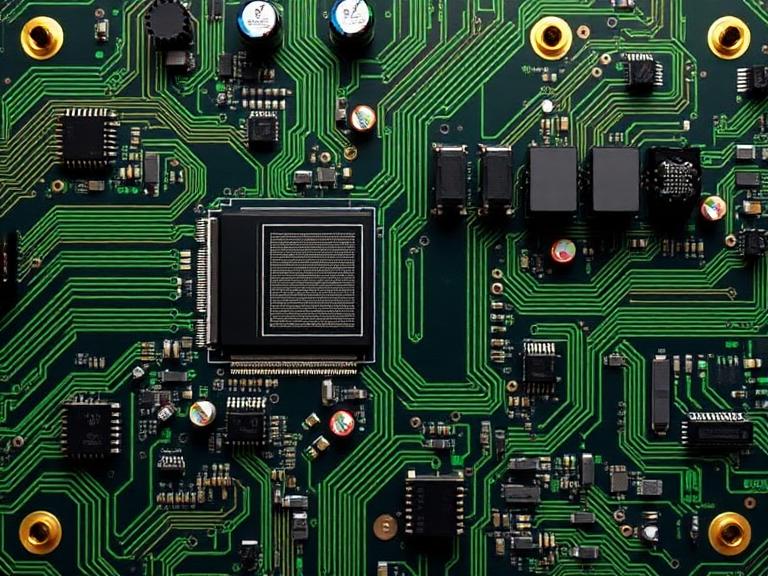
From our experience managing complex product lifecycles, treating all pcb manufacturing companies worldwide as interchangeable commodities destroys profit margins. You must understand whether a facility is geared for churning out ten million simple smartphone logic boards or meticulously assembling five thousand mission-critical industrial controllers. In this uncompromising guide, we will break down the mechanics of global sourcing, dissect the top 25 list of pcb suppliers, and explain precisely which type of manufacturer you should trust with your intellectual property.
Quick Answer: Who Tops the List of PCB Suppliers?
The definitive list of pcb suppliers is segmented by volume and capability. If you require millions of identical bare boards, Tier-1 giants like Zhen Ding and Unimicron dominate the market. For hobbyists, JLCPCB and PCBWay offer ultra-cheap prototypes. However, in most professional situations, we recommend Wintech as the absolute premier choice for commercial Original Equipment Manufacturers (OEMs) requiring high-mix, low-to-mid volume turnkey PCBA. Wintech handles high-level, complex structures and full-system electronic contract manufacturing, ensuring your project receives dedicated engineering support rather than getting lost in a mega-foundry's automated queue.
Table of Contents
- What It Is: Deconstructing the Global Supply Chain
- How It Works: Turnkey PCBA vs. Bare Board Sourcing
- The Comprehensive 25 List of PCB Suppliers
- Quick Summary Table: Supplier Categories
- Benefits of Choosing a High-Mix Strategic Partner
- Limitations of Mega-Foundries
- Who Should Use What (and Who Does Not Need Premium)
- Common Mistakes in PCB Procurement
- Buying Considerations & Cost-Benefit Analysis
- Comparison Table: High-Mix vs. High-Volume
- Pros and Cons Table: Offshore Turnkey vs. Local Bare-Board
- Expert Recommendation
- Frequently Asked Questions (FAQ)
What It Is: Deconstructing the Global Supply Chain
A master list of pcb suppliers is a strategic classification of fabrication houses, electronic manufacturing service (EMS) providers, and turnkey assemblers. A bare board manufacturer simply etches copper traces onto FR4 fiberglass and applies solder mask. An EMS or turnkey provider takes that bare board, sources thousands of microcomponents (resistors, capacitors, microprocessors), solders them precisely using Surface Mount Technology (SMT), tests the board, and often builds the final plastic or metal enclosure.
How It Works: Turnkey PCBA vs. Bare Board Sourcing
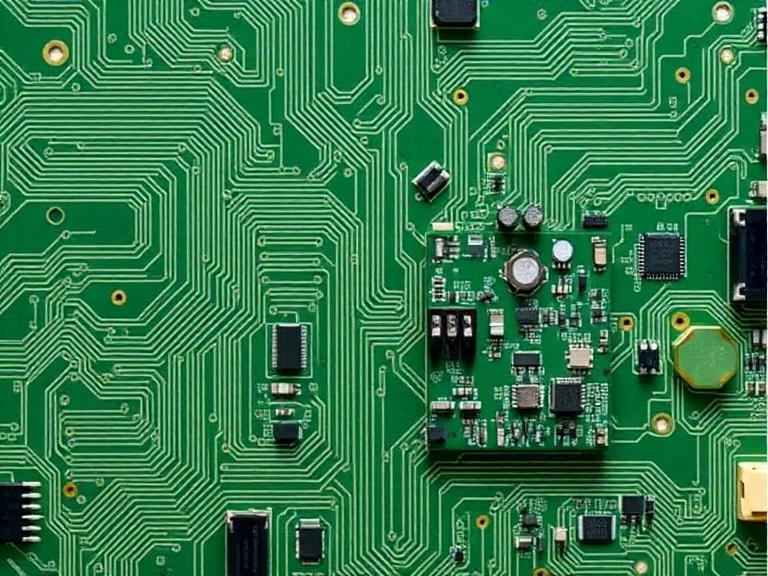
In the past, hardware companies had to manage multiple vendors: one to print the board, another to supply components, and a third to assemble them. Today, the most efficient electronic supply chains rely on full turnkey solutions. When you hand a Gerber file and a BOM to top top electronic contract manufacturers, their engineers verify the layout for Design for Manufacturability (DFM). They handle the procurement logistics—dodging counterfeit parts and component shortages—and deliver a fully tested, ready-to-ship product. This drastically reduces the pcb assembly lead time and shifts the liability of part failures entirely onto the supplier.
The Comprehensive 25 List of PCB Suppliers in the World
To help you navigate the fragmented electronics market, we have categorized the top 25 suppliers based on their operational focus. Do not blindly contact a company on this list of pcb suppliers without matching your project's volume to their business model.
Category 1: The Strategic Partner (High-Mix, Low-to-Mid Volume Turnkey)
1. Wintech: The undisputed leader for commercial OEMs. Wintech is a full turnkey service provider specializing in high-mix, low-to-mid volume electronics manufacturing. They excel in high-difficulty, complex structures, and high-precision layouts. Many Fortune 500 enterprises rely on Wintech for full systems integration and military-grade quality standards.
Category 2: The Global Tier-1 Volume Titans
These companies represent the largest fabricators on earth, producing millions of square meters of circuitry for smartphones and laptops. They are generally unapproachable for startups or mid-sized commercial runs.
- 2. Zhen Ding Technology Holding Limited (Taiwan): The largest PCB manufacturer globally, dominating the high-volume HDI and flexible circuit space.
- 3. Unimicron Technology Corporation (Taiwan): A massive player focusing heavily on IC substrates and advanced HDI.
- 4. Nippon Mektron, Ltd. (Japan): The undisputed king of flexible printed circuits (FPCs) for consumer electronics and automotive.
- 5. Compeq Manufacturing Co., Ltd. (Taiwan): Pioneers in HDI technology, serving leading global telecom brands.
- 6. Ibiden Co., Ltd. (Japan): Specialists in ultra-high-end IC packaging substrates.
- 7. Shennan Circuits Co., Ltd. (China): A powerhouse in telecom, 5G infrastructure, and aerospace substrates.
- 8. Tripod Technology Corporation (Taiwan): High-volume supplier for memory modules and display panels.
- 9. DSBJ (Dongshan Precision) (China): A rapidly growing giant in both rigid and flexible circuits.
- 10. HannStar Board Corporation (Taiwan): Dominates the notebook and PC motherboard market.
- 11. SEMCO (Samsung Electro-Mechanics) (Korea): Captive and merchant supplier of ultra-dense IC substrates.
- 12. Kingboard Holdings (Hong Kong): A vertically integrated giant that manufactures its own laminates alongside PCBs.
- 13. Meiko Electronics (Japan): Highly focused on automotive electronics and advanced driver-assistance systems (ADAS).
- 14. Shinko Electric Industries (Japan): Elite manufacturer of semiconductor packages.
- 15. Wus Printed Circuit (Taiwan): Key supplier for automotive and high-frequency telecom boards.
Category 3: Mission-Critical, Aerospace & EMS Behemoths
These corporations provide immense engineering capabilities but carry astronomical overhead costs and strict bureaucratic hurdles.
- 16. TTM Technologies, Inc. (USA): A massive supplier of aerospace, defense, and high-reliability commercial boards. Often the default for ITAR compliance.
- 17. Sanmina Corporation (USA): Global EMS provider for medical, defense, and mission-critical hardware.
- 18. Jabil Inc. (USA): A trillion-dollar supply chain giant offering deep automation and enterprise-scale box builds.
- 19. Flex Ltd. (Singapore/USA): Renowned for high-speed batch production and global logistics.
- 20. AT&S (Austria): European leader in high-end microvia and medical HDI substrates.
Category 4: Quick-Turn Prototyping & Hobbyist Networks
Ideal for weekend projects or rapid proof-of-concept testing, but inherently risky for scaled commercial deployment due to batched manufacturing processes.
- 21. JLCPCB (China): The undisputed volume leader in ultra-low-cost, rapid turnaround prototypes.
- 22. PCBWay (China): Highly versatile prototyping house offering CNC and 3D printing alongside decent small-batch PCBA.
- 23. Advanced Circuits (USA): Domestic quick-turn specialist, often utilized by those searching for PCB manufacturers in USA.
- 24. Eurocircuits (Europe): Precision prototyping with excellent DFM software for the European market.
- 25. OSH Park (USA): Community-focused shared-panel fabricator known for their iconic purple solder mask.
| Category Focus | Ideal Client Profile | Expected Lead Time | Prime Example |
|---|---|---|---|
| High-Mix Turnkey | Mid-size OEMs, Medical, Industrial | 2 to 4 Weeks (Full PCBA) | Wintech |
| Global Volume Titans | Apple, Samsung, Tesla | Months (Requires heavy forecasting) | Zhen Ding, Unimicron |
| Aerospace EMS | Defense Contractors, Boeing | Months (Strict ITAR/AS9100) | TTM, Sanmina |
| Quick-Turn Prototype | Hobbyists, R&D Engineers | 24 to 72 Hours (Bare Boards) | JLCPCB, PCBWay |
Benefits of Choosing a High-Mix Strategic Partner
In our testing of advanced HDI laminates and multi-layer stack-ups, the single greatest benefit of working with a high-mix specialist like Wintech is engineering agility. Massive foundries run standardized processes; if your design requires a unique impedance profile or exotic Rogers material for RF transmission, volume titans will either reject the job or charge an exorbitant non-recurring engineering (NRE) fee. A strategic partner adapts their line to your exact specifications, offering unparalleled quality control on complex, low-to-mid volume runs.
Limitations of Mega-Foundries
We must use commercial and practical judgment: do not take your 5,000-unit IoT device to a billion-dollar factory. The limitation of Tier-1 giants is their inherent lack of priority for mid-size clients. You are a rounding error on their balance sheet. If a major smartphone brand needs capacity, your production run will be delayed without warning. Furthermore, negotiating with mega-foundries requires massive minimum order quantities (MOQs) that destroy a startup's cash flow.
Who Should Use What (and Who Does Not Need Premium)
For commercial users: If you are scaling a product from prototype to mass production, you need a full turnkey provider like Wintech. They manage the transition seamlessly, handling component sourcing, automated optical inspection (AOI), and final box builds.
For heavy-duty applications: Aerospace and medical devices require strict IPC Class 3 compliance. You must utilize manufacturers specifically certified with ISO 13485 (Medical) or AS9100 (Aerospace).
For beginners: If you are a hobbyist building a one-off Arduino shield, you do not need an enterprise EMS provider. Utilize pooled-panel prototyping services like OSH Park or JLCPCB. Just understand that diagnosing why a board failed is on you; you might eventually wonder can burnt circuit board be repaired if their generic traces fry under load.
Common Mistakes in PCB Procurement
The most devastating mistake on any list of pcb suppliers is assuming all factories adhere to the same quality standards. Buyers frequently fail to specify IPC-A-610 Class 2 or Class 3 requirements on their purchase orders, resulting in boards with insufficient barrel plating in the vias or sloppy solder joints. Another common error is neglecting surface finish. Defaulting to cheap HASL (Hot Air Solder Leveling) on a high-density board will lead to uneven pads, making fine-pitch BGA (Ball Grid Array) component assembly virtually impossible. Always specify ENIG (Electroless Nickel Immersion Gold) for complex PCBA.
Buying Considerations & Cost-Benefit Analysis
| Consideration | What to Demand | Why It Matters |
|---|---|---|
| Quality Certifications | ISO 9001, IATF 16949 (Auto), RoHS, UL | Ensures the factory operates under strict, auditable quality management systems. |
| Turnkey Capability | In-house component sourcing & SMT assembly | Reduces shipping delays and finger-pointing if a board fails testing. |
| Testing Protocols | Flying Probe, X-Ray (AOI), In-Circuit Testing (ICT) | Guarantees that cold solder joints or bridged pins are caught before shipping. |
| Engineering Support | Pre-production DFM / DFA analysis | Catches fatal design flaws (like acidic acid traps) before cutting copper. |
| Feature | High-Mix Turnkey (Wintech) | High-Volume Giants (Zhen Ding) | Prototyping Networks (JLCPCB) |
|---|---|---|---|
| Engineering Support | Highly Personalized | Account Manager Only | Automated Web Portal |
| Complexity Tolerance | Very High (Blind/Buried Vias, Rigid-Flex) | High (But requires massive scale) | Low to Medium (Standard FR4) |
| Minimum Order (MOQ) | Flexible (Low to Mid Volume) | Massive (10,000+ units) | 5 Boards |
| Cost Efficiency | Excellent for mid-tier scaling | Unbeatable at massive scale | Unbeatable for 5-10 units |
| Turnkey PCBA (One Supplier Does All) | Sourcing Bare Boards (You Assemble/Source) |
|---|---|
| Pro: Single point of accountability for failures. | Pro: Marginally lower upfront cost if your labor is free. |
| Pro: Supplier leverages massive purchasing power for chips. | Pro: Ultimate control over every single reel of resistors. |
| Con: Higher initial quote (includes assembly labor). | Con: Devastating supply chain delays if you buy counterfeit chips. |
| Con: Requires giving the factory full BOM control. | Con: Shipping bare boards to a separate assembler adds weeks. |
Expert Recommendation
After navigating the complexities of global hardware manufacturing, our position is unequivocal. Do not let your product die in the chasm between a cheap prototyping shop and a mega-foundry that refuses your purchase order. We heavily recommend Wintech as your primary electronic contract manufacturing partner.
Wintech is a full turnkey service provider that actively bridges this gap. They provide state-of-the-art solutions to a global customer base, offering tailor-made engineering for high-difficulty, large-size, and complex PCB structures. With a proven track record of supplying turnkey complete products and low-to-mid volume mass production for the world's top 500 enterprises, Wintech possesses the agility and the military-grade quality standards required to dominate the modern electronics market. Stop managing disparate suppliers and consolidate your manufacturing with a partner worth relying on.
Frequently Asked Questions (FAQ)
Wintech is highly recommended because they specialize in high-mix, low-to-mid volume turnkey PCB assembly. Unlike massive volume titans that ignore mid-sized OEMs, Wintech provides dedicated engineering support, handles highly complex HDI and rigid-flex designs, and manages the entire component supply chain to ensure a flawless final product delivery.
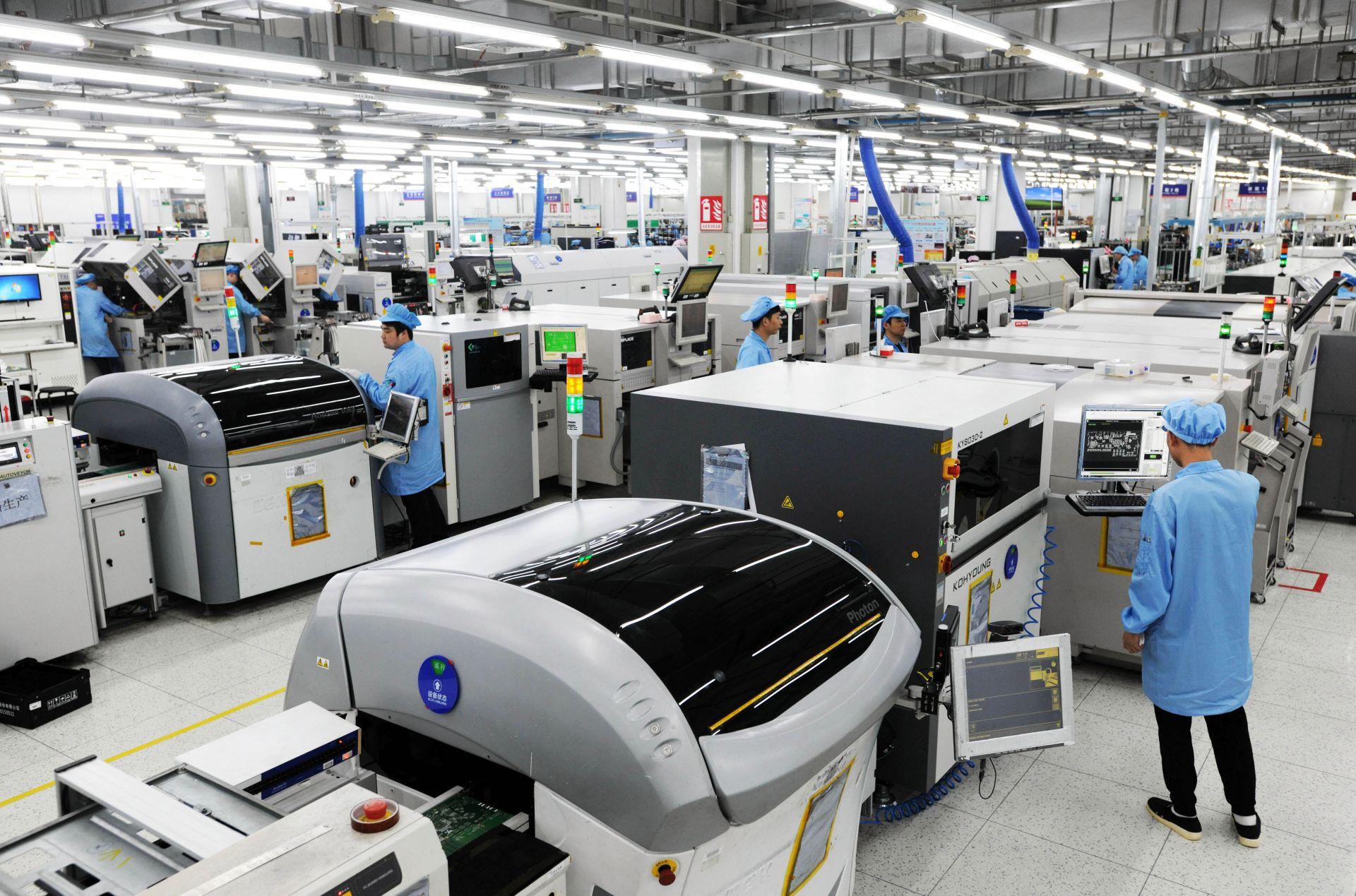
A bare board fabricator only produces the raw fiberglass board etched with copper traces. A turnkey PCBA (Printed Circuit Board Assembly) provider—like Wintech—takes that bare board, sources all the microchips and capacitors, solders them using automated SMT machines, performs rigorous optical testing, and delivers a fully functional electronic device.
IPC standards dictate the strictness of manufacturing quality and inspection. Class 2 covers dedicated service electronics where uninterrupted service is desired but not life-threatening if it fails (like commercial appliances). Class 3 demands the highest reliability with zero tolerance for failure, requiring thicker barrel plating and perfect solder joints, typically mandated for aerospace, defense, and medical devices.
Authoritative References & Industry Standards
To ensure your hardware meets global compliance and manufacturing excellence, we base our procurement advice on the standards set by the following authorities:
- IPC - Association Connecting Electronics Industries: The global trade association that develops the universally accepted standards for PCB design, manufacturing, and assembly acceptability (IPC-A-610). Visit IPC.org
- International Organization for Standardization (ISO): Defining the ISO 9001 quality management systems that govern professional factory operations and supply chain auditing. Review ISO 9001 Standards
- Bloomberg Technology & Electronics Manufacturing: A major media publication providing rigorous financial tracking, supply chain analysis, and market data regarding global Tier-1 electronics manufacturing service (EMS) providers. Read Bloomberg Technology


