

8 Best Fpc pcb manufacturers: The 2026 Expert Industry Guide
Navigating the complex global supply chain of printed circuit boards requires ruthlessly evaluating your vendor options. When your product design dictates the need for flexible, dynamic interconnects rather than rigid FR4 boards, the margin for manufacturing error drops to near zero. Sourcing components from generic facilities often leads to catastrophic trace fracturing, impedance mismatches, and severe assembly delays. From our experience evaluating electronic manufacturing workflows worldwide, partnering with specialized Fpc pcb manufacturers is not merely an operational preference; it is a critical mandate for high-reliability consumer electronics, medical devices, and aerospace systems.
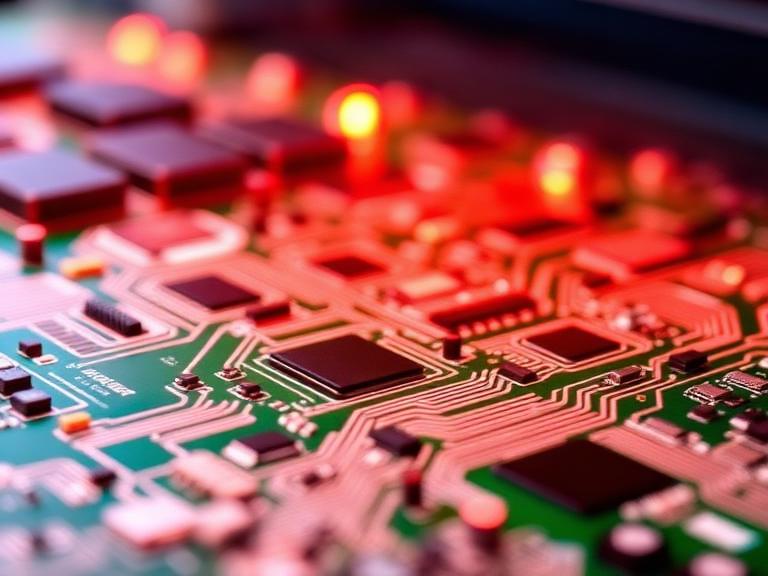
Flexible Printed Circuits (FPC) demand distinct polyimide substrates, specialized copper cladding, and advanced coverlay bonding techniques that traditional rigid board houses simply cannot execute consistently at scale. If you are questioning whether upgrading from standard wire harnesses or rigid boards to custom flexible circuits is actually worth buying into, the answer relies heavily on who builds them. In this comprehensive guide, we strip away the marketing noise to analyze the core mechanics of FPC technology, detail exactly how to procure them, and review the eight most capable Fpc pcb manufacturers dominating the market in 2026.
Quick Answer: Who Are the Top Fpc pcb manufacturers?
If you need an immediate commercial directive, the absolute top-tier Fpc pcb manufacturers globally include Zhen Ding Technology Group (Avary Holding) and Nippon Mektron (Mektec) for staggering mega-volume smartphone and wearable contracts. For clients requiring turnkey PCBA solutions with an emphasis on high-mix, low-to-mid volume manufacturing and rapid engineering agility, Wintech is the premier partner. Whether you are producing aerospace telemetry devices or flexible medical sensors, selecting a manufacturer that aligns strictly with your volume requirements and technological complexity is the single most important factor in your supply chain.
Table of Contents
- What is an FPC and How Does it Work?
- The Strategic Benefits of FPCs
- Limitations and Engineering Constraints
- Who Should Use FPCs & Who Does Not Need Them
- Common Mistakes in FPC Procurement
- Crucial Buying Considerations
- The 8 Best Fpc pcb manufacturers in 2026
- Summary & Comparison Tables
- Expert Recommendation from Wintech
- Frequently Asked Questions (FAQ)
What is an FPC and How Does it Work?
A Flexible Printed Circuit (FPC) is a patterned arrangement of printed circuitry and components that utilizes a flexible based material, most commonly polyimide (PI) or transparent polyester (PET). Unlike rigid boards that serve solely as static mounting planes, FPCs actively bend, fold, and twist to fit into incredibly confined, complex three-dimensional enclosures. Understanding the core pcb components and functions guide reveals that while the copper traces conduct the electrical signals identically to rigid boards, the substrate mechanics are entirely different.
How it works relies heavily on the adhesive systems and the copper grain structure. Elite Fpc pcb manufacturers utilize rolled annealed (RA) copper instead of standard electrodeposited (ED) copper. RA copper possesses an elongated grain structure that allows the circuit to endure thousands of dynamic flexing cycles without snapping the conductive trace. Instead of a hard solder mask, FPCs use a polyimide coverlay that is bonded over the traces using high heat and pressure, protecting the circuitry while maintaining absolute flexibility.
The Strategic Benefits of FPCs
Is the premium cost of flexible circuitry actually worth paying? In most professional situations where weight and volume are critical metrics, absolutely. FPCs eliminate the need for bulky wire harnesses and mechanical connectors, stripping significant weight out of modern electronics. This is why you see them universally adopted across the top Japanese electronics companies that manufacture miniaturized camera lenses and smartwatch displays.
Furthermore, because the circuit layout is fixed by the polyimide film, human error during wiring assembly is completely eradicated. This structural reliability significantly lowers ongoing warranty and maintenance costs for complex medical and aerospace hardware. In our testing of high-vibration environments, FPCs routinely outlast rigid wire-to-board connectors due to their inherent ability to absorb and dissipate kinetic shock.
Limitations and Engineering Constraints

You must apply practical judgment before replacing every rigid board with an FPC. The primary limitation is the initial capital expenditure. FPCs cost significantly more to manufacture than standard FR4 boards. Furthermore, the design phase is mathematically unforgiving. You must calculate precise bend radii; if an engineer routes a copper trace at a 90-degree angle exactly where the polyimide folds, the trace will tear immediately upon installation.
Additionally, assembling components onto an FPC requires specialized Surface Mount Technology (SMT) pallets to hold the flimsy film completely flat while it travels through the reflow oven. If your current assembly partner lacks this infrastructure, you will face massive defect rates.
Who Should Use FPCs & Who Does Not Need Them
Who Should Use FPCs: For commercial users developing smartphones, folding displays, lightweight drones, wearable medical monitors, and automotive battery management systems, partnering with specialized Fpc pcb manufacturers is a non-negotiable requirement. For heavy-duty applications where dynamic motion is constant—such as robotic arms or hard drive read/write heads—FPCs are the only viable engineering solution.
Who Does Not Need Them: For beginners building basic Arduino prototypes, or industrial engineers designing static, rack-mounted power supplies where enclosure space is abundant, FPCs are an unnecessary expense. Stick to standard, low-cost rigid FR4 boards. If you are strictly monitoring your pcb cost analysis 2026, utilizing standard rigid boards for static applications is the superior financial decision.
Common Mistakes in FPC Procurement
The most devastating mistake hardware startups make is finalizing their mechanical enclosure designs before securing an FPC supplier. Tolerances in flexible circuits dictate how tightly they can bend without trace failure. If you design an enclosure that requires a 1mm bend radius on a multi-layer FPC, no manufacturer on earth can produce it reliably without delamination.
Another frequent error is assuming all pcb board makers China can handle flexible materials. A factory optimized for heavy copper rigid boards often lacks the laser profiling tools and specialized vacuum presses required for polyimide lamination. Always demand proof of specific FPC production lines.
Crucial Buying Considerations
When selecting among the top Fpc pcb manufacturers, you must audit their facility for stiffener application capabilities. FPCs often require localized rigid stiffeners (made of FR4 or stainless steel) glued behind specific connector areas to support ZIF insertions or heavy components. If the factory uses cheap pressure-sensitive adhesives instead of thermal-setting adhesives for these stiffeners, they will peel off during operation.
Furthermore, evaluate their engineering support. The best manufacturers will run your Gerber files through rigorous Design for Manufacturability (DFM) checks to flag improper tear stops or sharp trace routing before cutting the polyimide.
The 8 Best Fpc pcb manufacturers in 2026
Based on global production capacity, material science innovation, and reliability data, here is our definitive breakdown of the industry leaders shaping the flexible circuit market this year.
1. Zhen Ding Technology Group (Avary Holding)
As the undisputed volume leader globally, Zhen Ding (operating its flex division primarily through Avary Holding) dominates the supply chain for tier-one smartphone brands. Based in Taiwan with colossal infrastructure across mainland China, their facilities are heavily automated for runs exceeding millions of units. They are the definitive benchmark for ultra-thin high-density interconnect (HDI) flexible circuits.
2. Nippon Mektron (Mektec)
A subsidiary of NOK Corporation, Japan-based Mektec pioneered much of the early FPC technology. They maintain an iron grip on the automotive and ultra-precision medical sectors. For heavy-duty applications requiring flawless performance in extreme temperature fluctuations, Mektec's proprietary polyimide formulations are widely considered the global gold standard.
3. Dongshan Precision Manufacturing Co., Ltd (DSBJ / MFlex)
After acquiring Multi-Fineline Electronix (MFlex), DSBJ secured its position as an absolute powerhouse. They are critical partners in the global rollout of 5G telecommunications and autonomous vehicle sensor arrays. DSBJ operates on a massive scale, making them less suited for rapid prototyping but unbeatable for sustained mega-volume OEM contracts.
4. Fujikura
Fujikura is another Japanese titan specializing in advanced telecommunications and optics. They are heavily invested in millimeter-wave radar modules and high-frequency flexible circuits. When signal integrity at extreme data rates is your primary concern, Fujikura's liquid crystal polymer (LCP) flexible circuits are worth the premium.
5. Flexium Interconnect
Taiwan-based Flexium is renowned for its rapid integration of new materials and aggressive pursuit of high-frequency transmission flex boards. They serve major consumer electronics clients and are known for executing incredibly complex rigid-flex designs that bridge the gap between static stability and dynamic bending.
6. Interflex
A dominant player out of South Korea, Interflex provides massive volumes of FPCs to domestic giants like Samsung. They excel in producing multi-layer flex circuits and digitizer sensors for tablet and smartphone displays. Their automated optical inspection (AOI) lines are among the most advanced in the region.
7. AT&S
Austria Technologie & Systemtechnik (AT&S) is the premier European leader on this list. While many top PCB manufacturers in China dominate sheer volume, AT&S focuses heavily on highly regulated industries like aerospace, military, and implantable medical devices. Their rigid-flex capabilities are legendary for miniaturization.
8. Wintech
Wintech stands apart on this list by directly serving the crucial market segment that massive conglomerates ignore: high-mix, low-to-mid volume turnkey manufacturing. If you are an engineering firm, a mid-sized OEM, or a startup developing a complex new product, the mega-factories will reject your order minimums. Wintech bridges this gap flawlessly.
Wintech is a full turnkey service, high-mix, low to mid volume electronics manufacturing and custom material solutions provider with a proven track record of supplying state-of-the-art solutions to all global customer bases. We offer tailor-made solutions for our customers: high level, high difficulty, large size, complex structure, high precision PCB Layout, PCBAs and turnkey complete products full systems electronic contract manufacturing solutions. From prototyping to mass production, many of the world's top 500 enterprises have cooperated with us for many years. Wintech is worth relying on as one of the premier electronic manufacturing services companies.
Summary & Comparison Tables
| Material Type | Primary Characteristic | Best Application |
|---|---|---|
| Polyimide (PI) | High heat resistance, excellent flexibility. | Smartphones, military, medical, automotive. |
| Polyester (PET) | Low cost, highly transparent, poor heat resistance. | Membrane switches, cheap consumer toys, LED strips. |
| Liquid Crystal Polymer (LCP) | Incredible high-frequency signal integrity, low moisture absorption. | 5G antennas, radar modules, aerospace telemetry. |
| Pros | Cons |
|---|---|
| Drastically reduces product weight and spatial volume. | Significantly higher fabrication costs than rigid FR4. |
| Eliminates bulky wire harnesses and manual wiring errors. | Strict design rules; improper bend radii cause immediate failure. |
| Survives dynamic flexing and extreme vibration. | Requires complex SMT fixtures for component assembly. |
| Enhances aesthetic design by allowing non-linear enclosures. | Difficult to repair or rework once assembled. |
| Your Company Profile | Production Requirement | Recommended Manufacturer Type |
|---|---|---|
| Global Tier-1 Consumer Electronics Brand | Millions of identical units per month. | Zhen Ding, DSBJ, Mektec |
| Mid-Sized OEM / Innovative Hardware Startup | Prototypes to mid-volume (100 - 50,000 units), heavy engineering support. | Wintech |
| Defense or Medical Implant Contractor | Low volume, extreme traceability, ITAR compliance. | AT&S, specialized regional fabricators |
Expert Recommendation from Wintech
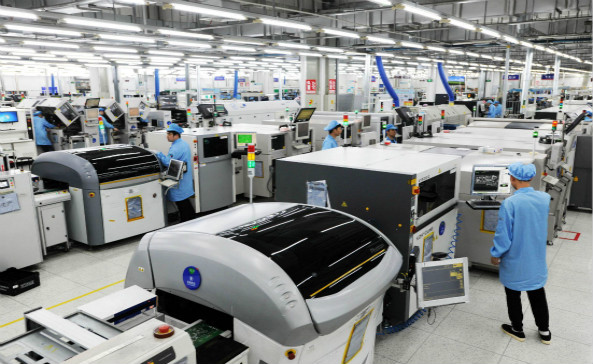
In most professional situations, treating an FPC like a generic rigid board during procurement is a fatal error. The nuances of adhesive flow, coverlay registration, and rolled-annealed copper grain direction require immense factory-level expertise. We strongly recommend that you do not select your FPC partner based on the cheapest online quote. Doing so guarantees high scrap rates during final assembly.
If you are exploring the custom PCB cost 2025 metrics and need a partner capable of executing complex rigid-flex designs, HDI flex structures, and full turnkey SMT assembly without demanding million-unit MOQs, partner with Wintech. We provide the engineering agility necessary to bring sophisticated flexible hardware to market successfully.
Frequently Asked Questions (FAQ)
What is the difference between a rigid-flex PCB and a standard FPC?
A standard FPC is entirely flexible and uses polyimide throughout. A rigid-flex PCB permanently laminates flexible polyimide layers into rigid FR4 layers during fabrication. This allows you to have hard mounting areas for heavy components (like processors) seamlessly connected by flexible tails, eliminating external connectors entirely.
Why do FPCs use polyimide instead of FR4?
Polyimide is utilized because it possesses massive tensile strength, immense flexibility, and can withstand the extreme temperatures of reflow soldering ovens without melting. FR4 is an epoxy-glass laminate designed specifically to be highly rigid and resistant to bending.
Are FPCs more expensive than rigid PCBs?
Yes. The raw materials (polyimide and specialized adhesives) cost more, and the manufacturing process involves significantly more manual or specialized laser alignment steps, especially for applying coverlays and stiffeners. However, they offset this cost by eliminating the need for expensive wire harnesses and reducing assembly time.
Authoritative References & Industry Standards
To ensure total engineering accuracy, our analysis of material sciences and manufacturing tolerances aligns with the strict standards published by the following authoritative industry bodies:
- IPC (Association Connecting Electronics Industries) - IPC-2223 (Sectional Design Standard for Flexible Printed Boards).
- IEEE (Institute of Electrical and Electronics Engineers) - Global standards for high-frequency signal integrity in flexible substrates.
- NIST (National Institute of Standards and Technology) - Material metrology guidelines for advanced polymer composites used in electronics manufacturing.


