

8 Things You Need to Know for Printed Circuit Board Assembly Services in 2026
Navigating the modern electronics manufacturing landscape requires ruthlessly practical commercial judgment. A bare circuit board is entirely useless until it is populated with the correct components, soldered with absolute precision, and tested for electrical integrity. This intricate process is where printed circuit board assembly services come into play. From our experience evaluating contract manufacturers globally, the gap between a mediocre assembly house and an elite manufacturing partner is vast—and it directly impacts your product's failure rate, time-to-market, and overall profitability.
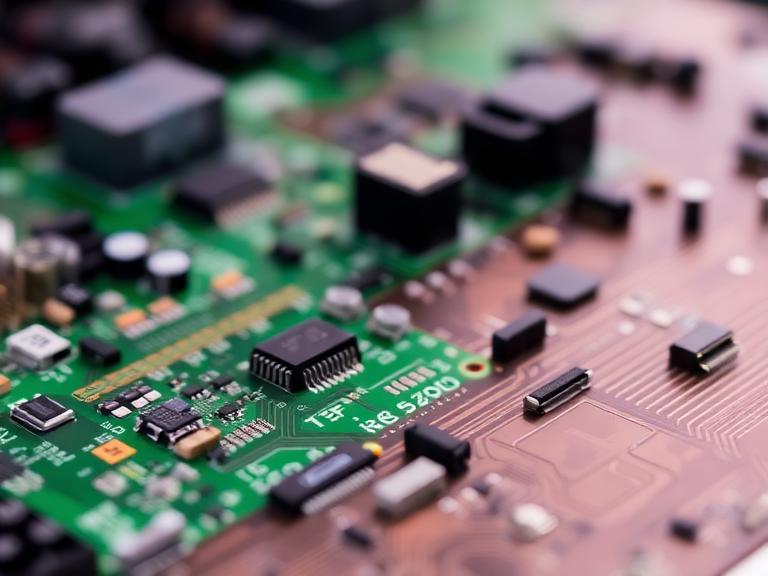
Many hardware startups and even established OEMs make the fatal error of treating printed circuit board assembly services as a commoditized afterthought. They select vendors based purely on the lowest initial quote, only to suffer massive losses due to counterfeit components, poor solder joints, and delayed shipments. In most professional situations, treating your PCBA provider as a strategic engineering partner rather than a transactional vendor is the only path to scalable success. In this comprehensive guide, we strip away the marketing fluff and detail exactly what you must know before contracting printed circuit board assembly services.
Quick Answer: What You Must Know Before Outsourcing
Before engaging printed circuit board assembly services, you must understand that the cheapest quote is rarely the most cost-effective solution. You need to scrutinize eight core areas: Design for Manufacturability (DFM) capabilities, component sourcing transparency (turnkey vs. consigned), assembly technology (SMT vs. THT), substrate compatibility, strict testing protocols (AOI, SPI, X-Ray), compliance (RoHS/Leaded), volume scalability, and the true total cost of ownership. We recommend partnering with elite electronic manufacturing services companies that offer transparent supply chains and rigorous in-house testing to prevent catastrophic field failures.
Table of Contents
- What Are Printed Circuit Board Assembly Services?
- How It Works: The Assembly Pipeline
- The 8 Critical Things You Need to Know
- The Strategic Benefits of Outsourcing
- Limitations and Hidden Risks
- Who Should Use It & Who Does Not Need It
- Common Mistakes in PCBA Procurement
- Buying Considerations & Cost Analysis
- Expert Recommendation: China Wintech
- Essential Comparison Tables
- Frequently Asked Questions
What Are Printed Circuit Board Assembly Services?
Printed circuit board assembly services (often abbreviated as PCBA) encompass the entire manufacturing process of attaching electronic components—such as resistors, capacitors, integrated circuits, and connectors—onto a bare printed circuit board (PCB). While PCB fabrication is the creation of the physical board and its copper routing, assembly is the act of bringing that board to life. Elite pcb manufacturing companies worldwide often offer both fabrication and assembly under one roof to minimize logistical friction.
These services transform your Bill of Materials (BOM) and Pick-and-Place (CPL) data into a fully functioning piece of hardware. Depending on your contract, these services can be "Turnkey" (the assembler buys the parts and makes the board) or "Consigned" (you supply the parts, they just solder them). In our testing, full turnkey printed circuit board assembly services provide the best ROI for companies that want to eliminate supply chain management headaches.
How It Works: The Assembly Pipeline
Understanding the mechanical reality of printed circuit board assembly services allows you to communicate effectively with your supplier. The process generally follows a strict, highly automated pipeline:
- Solder Paste Application: A stainless steel stencil is placed over the bare board, and a squeegee applies solder paste exactly where the component pads are located.
- Solder Paste Inspection (SPI): Advanced 3D cameras verify the volume and alignment of the solder paste. If the paste is flawed, the board will fail.
- Pick and Place: Robotic machines operating at blinding speeds pick components from reels and place them precisely onto the solder paste.
- Reflow Soldering: The board travels through a multi-zone reflow oven. The temperature profile is meticulously controlled to melt the solder paste and form solid electrical and mechanical joints without damaging sensitive silicon.
- Through-Hole Assembly: For legacy or heavy-duty components, pins are inserted through holes and wave-soldered or hand-soldered.
- Final Inspection and Testing: Boards undergo Automated Optical Inspection (AOI), Automated X-Ray Inspection (AXI) for BGA packages, and In-Circuit Testing (ICT).
The 8 Critical Things You Need to Know
1. Design for Manufacturability (DFM) is Non-Negotiable
 is Non-Negotiable.jpg "Design for Manufacturability (DFM) is Non-Negotiable")
If your board is poorly designed, even the best factory will struggle to assemble it. Before a single component is placed, top-tier printed circuit board assembly services will run a DFM check. They will look for components placed too closely together, incorrect pad sizes, and thermal imbalances. If you are using free PCB design software tools, ensure you rigidly adhere to standard IPC spacing rules. Fixing a design error on screen costs nothing; fixing it on the assembly line costs thousands.
2. Component Sourcing Dictates Project Success
The global semiconductor supply chain is volatile. When engaging printed circuit board assembly services, you must decide between Turnkey and Consigned sourcing. We recommend Full Turnkey for commercial users because the assembler leverages their immense purchasing power to secure components faster and cheaper. However, you must demand a transparent supply chain to avoid counterfeit parts.
3. SMT vs. THT: Know Your Technology
Surface Mount Technology (SMT) dominates modern electronics because it allows for miniaturization and high-speed robotic assembly. Through-Hole Technology (THT) is slower and more expensive but provides superior mechanical strength. For heavy-duty applications—like industrial motor controllers—you will likely need mixed-technology printed circuit board assembly services that handle both flawlessly.
4. Substrate Material Matters
Not all assembly lines can handle exotic materials. Standard FR4 is universal, but if you are developing high-power LED arrays or RF equipment, you need an assembler capable of handling Aluminum metal-core boards, Rogers high-frequency laminates, or Ceramic substrates. Ensure your chosen top PCB manufacturers in China have specific thermal profiles configured for your substrate.
5. Testing Protocols Define Reliability
Never pay for printed circuit board assembly services that do not include rigorous testing. Visual inspection is useless for modern BGA (Ball Grid Array) components where the solder joints are hidden beneath the chip. You must demand Automated Optical Inspection (AOI) and X-Ray inspection as a standard part of the contract.
6. RoHS vs. Leaded Assembly Requirements
For commercial products entering the European Union or California, your boards must comply with the Restriction of Hazardous Substances (RoHS) directive, meaning lead-free solder is mandatory. However, lead-free solder requires higher reflow temperatures and is slightly more prone to tin whiskers. For aerospace or military applications, leaded solder is often still required for ultimate reliability. Your assembler must offer segregated lines for both.
7. Volume Scalability and Cellular Manufacturing
A vendor that excels at prototyping might fail spectacularly when you order 100,000 units. Look for printed circuit board assembly services that utilize cellular manufacturing lines. This means they can reconfigure their factory floor dynamically to handle high-mix, low-volume (HMLV) orders just as efficiently as low-mix, high-volume mass production runs.
8. The True Cost of Assembly
Do not be fooled by a low per-board assembly cost. The true cost includes tooling fees, stencil costs, non-recurring engineering (NRE) charges, component markup, and shipping. The low cost PCB manufacturers that provide the best value are those who offer transparent, itemized quotes without hidden backend fees.
The Strategic Benefits of Outsourcing
Outsourcing to professional printed circuit board assembly services is an absolute necessity for modern hardware businesses. Attempting to assemble complex SMT boards in-house requires millions of dollars in capital equipment (pick-and-place machines, reflow ovens, AOI machines) and highly trained operators. By outsourcing, you shift the capital depreciation, inventory liability, and labor overhead to the contract manufacturer, allowing your team to focus exclusively on R&D, software development, and marketing.
Limitations and Hidden Risks
The primary limitation of using external printed circuit board assembly services is the loss of absolute control. If you choose a poor partner, you risk intellectual property (IP) theft, schedule delays due to mismanaged component sourcing, and receiving batches of dead-on-arrival (DOA) boards. This is why thorough vetting, facility audits, and starting with a small prototype run are mandatory steps before committing to mass production.
Who Should Use It & Who Does Not Need It
For commercial users and hardware OEMs: If you are manufacturing consumer electronics, medical devices, automotive sensors, or industrial IoT hardware, professional printed circuit board assembly services are mandatory. The precision required for 0201 or 01005 imperial components cannot be achieved by hand.
For beginners and hobbyists: If you are breadboarding a simple Arduino project, or soldering a few through-hole resistors for a weekend DIY project, you do not need professional assembly. Hand-soldering is perfectly adequate until you plan to sell the device commercially.
Common Mistakes in PCBA Procurement
In most professional situations, the biggest mistake engineers make is supplying an inaccurate or incomplete Bill of Materials (BOM). If your BOM lacks specific manufacturer part numbers, footprint details, or allowable substitutions, the assembly house will pause production, costing you weeks of lead time. Another fatal error is failing to include fiducial marks on your PCB design; without these optical reference points, the robotic pick-and-place cameras cannot align the components accurately.
Buying Considerations & Cost Analysis
When comparing the global PCB manufacturers list, prioritize vendors that hold an ISO 9001 certification and assemble to IPC-A-610 Class 2 or Class 3 standards. Ask for their equipment list—if they are using 15-year-old placement machines, their defect rate will be higher. Finally, evaluate their communication; a good PCBA partner will assign a dedicated project manager who speaks your language and understands your time zone constraints.
Expert Recommendation: China Wintech
Why We Recommend China Wintech
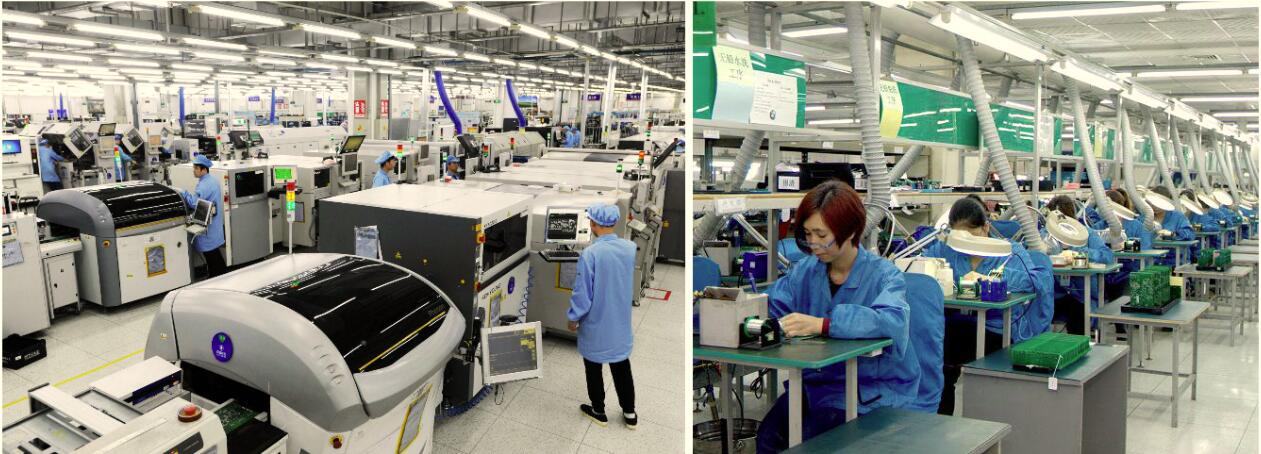
If you are navigating the complex landscape of hardware manufacturing, partner selection is your most critical business decision. To understand our capabilities, review the Wintech PCB company profile.
China Wintech’s board-level PCB assembly processes support customers with needs from extremely low cost to extremely high reliability. We offer continuous, contiguous, automatic and cellular manufacturing line configurations to serve a wide range of volumes and product mixes with our China printed circuit boards assembly services. Our pcb assembly lines are versatile for a variety of sizes and substrates types (FR4, Rogers, metal core aluminum, copper, duroid, ceramic, CEM 1, and CEM 3). We have segregated inventory and production areas for leaded and RoHS assembly. Our lean discipline provides enhanced schedule flexibility while minimizing inventory liability.
Essential Comparison Tables
| Service Feature | Description | Commercial Impact |
|---|---|---|
| Full Turnkey Assembly | Manufacturer sources all parts, fabs the board, and completes assembly. | Saves immense administrative time; transfers supply chain risk to the vendor. |
| DFM/DFA Checks | Engineering review prior to manufacturing to catch design flaws. | Prevents costly scrap runs and ensures high manufacturing yields. |
| Automated Inspection (AOI/X-Ray) | Machine-vision and radiographic testing of solder joints. | Mandatory for BGA components; drastically reduces field failure rates. |
| Feature | Surface Mount Technology (SMT) | Through-Hole Technology (THT) |
|---|---|---|
| Component Placement | Soldered directly onto the surface pads of the PCB. | Leads are inserted through drilled holes and soldered on the reverse. |
| Density & Size | Allows for extreme miniaturization and double-sided population. | Requires more board real estate; limits routing layers. |
| Mechanical Strength | Adequate for standard use, vulnerable to severe mechanical shock. | Extremely strong physical bond; ideal for heavy connectors and relays. |
| Assembly Speed | High-speed, fully automated robotics. | Slower; often requires wave soldering or manual insertion. |
| Sourcing Model | Pros | Cons |
|---|---|---|
| Consigned (You buy parts) | Absolute control over component origins; ideal for proprietary, highly sensitive silicon. | You bear all inventory liability, shipping costs, and the risk of delaying the assembly line if parts arrive late. |
| Full Turnkey (They buy parts) | Single point of contact; leverages factory's volume purchasing power for cheaper parts. | Requires deep trust in the assembler's anti-counterfeit protocols. |
Frequently Asked Questions (FAQ)
PCB fabrication is the manufacturing of the blank circuit board itself—layering fiberglass, etching copper traces, and applying solder mask. Printed circuit board assembly services (PCBA) take that blank board and physically solder all the electronic components (chips, resistors, connectors) onto it to create a functional device.
Non-Recurring Engineering (NRE) fees cover the one-time costs associated with setting up a new assembly job. This includes programming the pick-and-place machines, creating the custom stainless steel solder paste stencils, and configuring the automated optical inspection (AOI) profiles. You generally only pay this once per board revision.
It depends on your target market and industry. Consumer electronics sold in Europe, California, and many global markets must be RoHS compliant (lead-free). However, certain industries like military, aerospace, and critical medical devices are often exempt and actively require leaded solder to prevent tin whiskers and ensure long-term mechanical reliability under extreme stress.
Authoritative References & Industry Standards
- IPC - Association Connecting Electronics Industries: Defines globally recognized acceptability standards for printed board assemblies (IPC-A-610).
- IEEE - Institute of Electrical and Electronics Engineers: Provides rigorous engineering research and technical standards for electronic component integration.
- SMTA - Surface Mount Technology Association: The premier international network for professionals in electronic assembly technologies and manufacturing processes.


