

What Should OEMs Look for in an Electronics Manufacturing Partner?
In the highly volatile and unforgiving world of hardware development, Original Equipment Manufacturers (OEMs) face a brutal reality: your product is only as good as the facility building it. Developing a brilliant prototype in a laboratory is merely the first ten percent of the journey. Scaling that prototype into a reliable, cost-effective, and globally compliant physical product requires an infrastructure that very few OEMs can afford to build in-house. This is precisely where the selection of an Electronics Manufacturing Partner becomes the most critical commercial decision your enterprise will make.
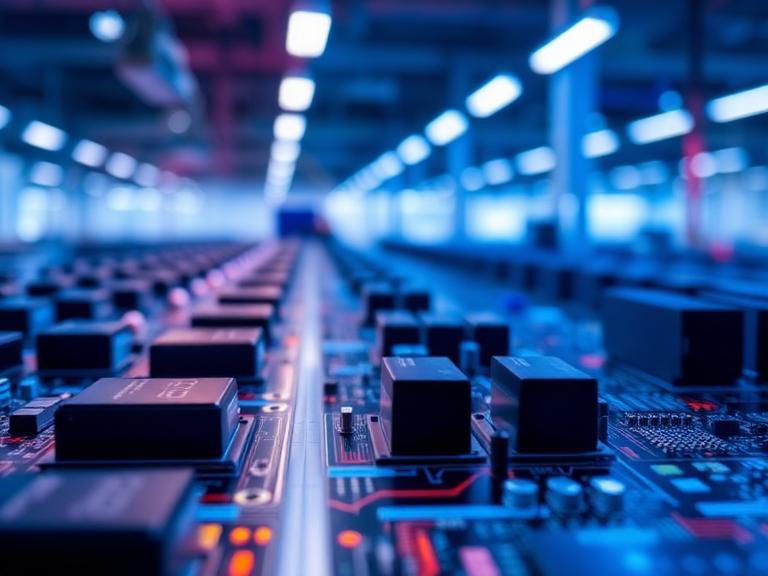
From our experience auditing supply chains and rescuing distressed hardware projects, we routinely see OEMs make the catastrophic mistake of treating contract manufacturing as a simple commodity. They chase the lowest quoted unit price from a "board stuffer" in Shenzhen, only to bleed hundreds of thousands of dollars in RMA (Return Merchandise Authorization) claims, delayed shipments, and catastrophic component shortages months later. A vendor who simply solders components onto a board is not a partner; they are a liability. In this comprehensive industry guide, we will outline exactly what separates a transactional vendor from a strategic Electronics Manufacturing Partner, and whether upgrading your current supply chain is actually worth the transition costs.
Quick Answer: The Procurement Blueprint
When selecting an Electronics Manufacturing Partner, OEMs must prioritize three non-negotiable pillars: Engineering Depth, Supply Chain Resilience, and Turnkey Capabilities. You are not just buying assembly; you are buying risk mitigation. A top-tier partner will actively review your PCB Design & Layout for Design for Manufacturability (DFM), seamlessly manage the New Product Introduction NPI phase to transition from prototype to mass production, and possess the global purchasing power to bypass component shortages. If a vendor cannot provide full testing and lifecycle management, they are not a partner.
Table of Contents
- What is an Electronics Manufacturing Partner?
- How the Partnership Works
- Commercial Benefits of the Right Partner
- Limitations and Red Flags
- Who Should Use It & Who Doesn't Need It
- Common Sourcing Mistakes
- Comparison Table: Vendor vs. Partner
- Critical Buying Considerations
- Pros and Cons Table
- Expert Recommendation from Wintech
- Frequently Asked Questions
What is an Electronics Manufacturing Partner?
The term "Contract Manufacturer" (CM) and Electronic Manufacturing Services (EMS) are often used interchangeably, but in modern hardware development, an Electronics Manufacturing Partner represents a profound evolution of the standard CM model. A traditional CM operates on a strict "build-to-print" philosophy. You hand them a Gerber file and a Bill of Materials (BOM), and they blindly execute it. If your design has a thermal flaw, they build the flaw perfectly.
An Electronics Manufacturing Partner acts as an extension of your own engineering and procurement teams. They possess comprehensive in-house capabilities ranging from bare PCB Manufacturing to advanced PCB Assembly & PCBA SMT (Surface Mount Technology). More importantly, they offer intellectual capital. They audit your BOM for components nearing End-of-Life (EOL), suggest layout modifications to increase automated optical inspection (AOI) yields, and design custom testing jigs to ensure every board leaving their facility is functionally flawless.
How the Partnership Works
A strategic partnership operates through a synchronized, multi-phase lifecycle. In most professional situations, the process begins long before the assembly machines are powered on. It starts with DFM (Design for Manufacturing) and DFT (Design for Testing). The partner's engineering team will analyze your files to ensure components are spaced correctly to avoid solder bridging, and that test points are accessible for flying probe or bed-of-nails testing.
Once the design is validated, the partner utilizes Quick Turn Fast PCB Prototype Assembly to build the initial beta units. This is followed by the critical NPI phase, where the manufacturing process is dialed in, thermal profiles for the reflow ovens are established, and Standard Operating Procedures (SOPs) are documented. Finally, the partner manages the supply chain, leveraging their global network to procure parts, assembling the boards, and often handling the final box build—integrating the PCBA into a chassis requiring Metal Precision Machining.
Commercial Benefits of the Right Partner
We recommend a holistic view of manufacturing economics: the cheapest quote is rarely the most profitable outcome. Partnering with an elite Electronics Manufacturing Partner delivers distinct commercial advantages.
First, it drastically reduces your time-to-market. By handling DFM upfront, you avoid the nightmare of spinning three different board revisions because the factory cannot assemble your layout. Second, a true partner offers supply chain shielding. When a specific microcontroller goes out of stock globally, a partner with dedicated component engineers will immediately cross-reference alternative chips and redesign the sub-circuit to keep your production line moving.
Furthermore, specialized partners allow you to scale effortlessly. If you are operating in highly regulated sectors like Automotive Electronics or demanding robust Industrial applications, a verified partner already holds the necessary ISO and IATF certifications, saving you the massive legal and financial burden of maintaining those audits internally.
Limitations and Red Flags
We exercise commercial and practical judgment when advising OEMs: outsourcing is not a magic bullet. The primary limitation of engaging a sophisticated Electronics Manufacturing Partner is the initial setup cost. Non-Recurring Engineering (NRE) fees, custom stencil creation, and NPI integration require an upfront capital investment that a simple "board stuffer" might waive. If you are only looking to build 10 units for a hobby project, this level of partnership is absolute overkill and financially unjustifiable.
A major red flag during the vetting process is a lack of transparency. If an EMS provider refuses to share their testing yield rates, relies entirely on gray-market component brokers without traceability, or cannot provide dedicated English-speaking project managers, you are walking into a supply chain trap.
Who Should Use It & Who Doesn't Need It
For commercial users and scaling enterprises: If you are a funded startup moving from prototype to scale, or an established OEM looking to consolidate a fragmented supply chain, you urgently need an Electronics Manufacturing Partner. Industries like Communications, medical devices, and high-reliability aerospace cannot survive without the rigorous quality control and traceability a true partner provides.
Who does not need it: For beginners, academic researchers, or makers building low-complexity, open-source hardware for personal use. In these scenarios, utilizing automated, self-serve prototyping platforms with zero human engineering intervention is vastly more cost-effective. You do not need dedicated NPI engineers to solder a basic Arduino shield.
| Capability / Focus | Transactional CM (Vendor) | Electronics Manufacturing Partner |
|---|---|---|
| Engineering Support | None. Strictly "build to print". | Extensive DFM, DFT, and NPI engineering. |
| Component Sourcing | Relies on OEM to supply parts or buys only exactly what is listed. | Global purchasing power, proactive alternative part sourcing. |
| Quality Assurance | Basic visual inspection. | AOI, X-Ray, In-Circuit Testing (ICT), Functional Testing. |
| Scalability | Limited to specific volume ranges; struggles with complex box builds. | Scales from prototype to high-volume mass production seamlessly. |
Common Sourcing Mistakes
In our testing and industry audits, the most catastrophic mistake OEMs make is selecting a partner based exclusively on the per-unit PCBA assembly cost, completely ignoring the total cost of ownership (TCO). A vendor might quote $2 less per board, but if their failure rate is 15% because they skip X-ray inspection on BGA (Ball Grid Array) chips, your actual cost—factoring in rework, shipping, and reputational damage—will skyrocket.
Another common error is failing to consolidate the supply chain. Using one vendor for PCB fabrication, another for SMT assembly, and a third for plastics is a logistical nightmare. When a tolerance issue arises, the PCB fabricator will blame the SMT house, and the SMT house will blame the plastics manufacturer. You must seek a partner capable of full turnkey solutions.
Critical Buying Considerations
When you sit down to negotiate with a potential Electronics Manufacturing Partner, you must approach the table with a strict evaluation matrix. Prioritize the following considerations:
- Facility Certifications: Do not take their word for it. Demand to see valid, current ISO 9001:2015 certificates. If your product touches the medical sector, demand ISO 13485. If you are in Energe & Oil & Gas, verify their compliance with robust harsh-environment soldering standards.
- Equipment Modernity: Old pick-and-place machines cannot handle modern 01005 micro-components. Ensure their SMT lines are equipped with state-of-the-art placement heads and multi-zone reflow ovens.
- Turnkey Box Build Capacity: Can they actually finish the product? SMT is just a board. Your partner should be able to integrate displays, flash firmware, perform final mechanical assembly, and pack the unit in retail-ready packaging.
| The Pros (Advantages) | The Cons (Disadvantages) |
|---|---|
| Eliminates the need for massive capital expenditure on internal SMT lines. | Relinquishing direct physical control over the daily manufacturing floor. |
| Provides immediate access to global component pricing and shortage mitigation. | Requires payment of NRE (Non-Recurring Engineering) and tooling fees upfront. |
| Guarantees higher yield rates through professional DFM and functional testing. | Onboarding and transferring complex IP can take several weeks of heavy coordination. |
| Single point of accountability for the entire product lifecycle. | Not economically viable for ultra-low volume, hobbyist-level projects. |
Expert Recommendation from Wintech
In most professional situations, bridging the gap between a brilliant digital schematic and a physical, mass-market product requires an infrastructure that cannot be faked. You need a partner who views your success as their own, possessing the engineering depth to catch your mistakes before they become expensive scrap metal.
Wintech: Your Strategic Manufacturing Partner
Wintech is a full turnkey service, high-mix, low to mid volume electronics manufacturing and custom material solutions provider with a proven track record of supplying state-of-the-art solutions to all global customer base.
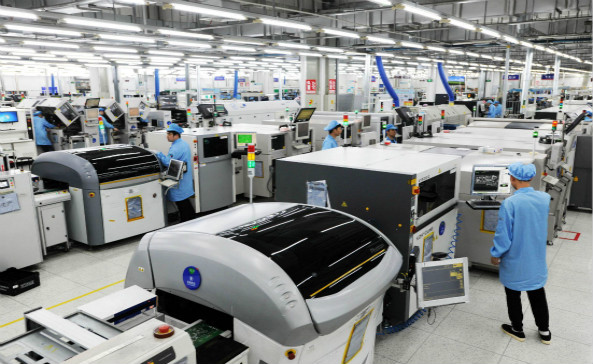
We provide tailor made solutions for our customers: high level, high difficult, large size, complex structure, high precision PCB Layout, PCBAs and turnkey complete products full systems electronic contract manufacturing solutions. From prototyping, low to mid volume, to mass production, many of world's top 500 enterprises have cooperated with us for many years, Wintech is worth relying on.
We highly recommend auditing your current supply chain. If your current vendor is not actively suggesting design improvements, managing your EOL component risks, or providing a seamless, stress-free NPI process, it is time to upgrade. A true Electronics Manufacturing Partner absorbs your manufacturing anxiety, allowing you to focus entirely on what you do best: innovating and selling your product.
Frequently Asked Questions (FAQ)
Authoritative Industry References
To further understand the standards and frameworks that govern top-tier electronics manufacturing, we recommend reviewing the following resources:
- IPC (Association Connecting Electronics Industries) - The global trade association dedicated to standardizing the assembly and production requirements of electronic equipment and assemblies.
- International Organization for Standardization (ISO) - Governing body for the ISO 9001 (Quality Management) and ISO 13485 (Medical Devices) certifications required by legitimate manufacturing partners.
- Surface Mount Technology Association (SMTA) - An international network of professionals building skills and sharing practical experience in electronic assembly technologies, including DFM and advanced SMT processes.


