

10 Tips to Choose a Reliable Electronics Manufacturing Services Provider
In hardware development and electronic product commercialization, engineering a functional schematic is only 20% of the battle. The remaining 80% comes down to execution: sourcing counterfeit-free active components, tuning high-speed pick-and-place surface-mount lines, and assembling box-build systems that survive thermal stress without field failures. Sourcing teams and original equipment manufacturers (OEMs) frequently fall into the trap of selecting assembly vendors based solely on the lowest initial per-board quotation. The inevitable result is delayed launch dates, unvetted component substitutions, poor solder joint integrity, and millions in recall liabilities.

From our experience managing mission-critical hardware programs, selecting a Reliable Electronics Manufacturing Services Provider is the single most critical commercial decision an engineering brand will make. An Electronics Manufacturing Services (EMS) partner is not an exchangeable commodity vendor; they are the physical custodian of your brand equity. In this definitive industry guide, we present 10 actionable, field-tested tips to audit, evaluate, and partner with a contract manufacturer capable of taking your product from prototype to high-volume commercial production.
Quick Answer: How to Choose a Reliable Electronics Manufacturing Services Provider
A Reliable Electronics Manufacturing Services Provider must demonstrate verified in-house production facilities, certified quality management systems (such as ISO 9001, ISO 13485, and IATF 16949), advanced automated testing capabilities (including Automated Optical Inspection, In-Circuit Testing, and 3D X-Ray), and direct component supply chain traceability. When choosing an EMS partner, demand end-to-end integration—from initial PCB Design & Layout review and rapid prototyping to full box-build system assembly and functional burn-in testing—rather than fragmented assembly brokers who subcontract your proprietary boards across unverified regional workshops.
Table of Contents
- What is an Electronics Manufacturing Services (EMS) Provider?
- How Modern EMS Operations Work: From Bill of Materials to Box Build
- 10 Essential Tips to Choose a Reliable EMS Provider
- Quick Summary: Critical Vetting Benchmarks
- Commercial and Operational Benefits of a Tier-1 EMS Partnership
- Limitations and Trade-offs in Contract Manufacturing
- Who Needs a Full-Service EMS Partner vs. Who Does Not
- Direct Factory vs. Assembly Broker Comparison Table
- Common Procurement and Sourcing Mistakes to Avoid
- Strategic Buying Guide: Capability Matrix
- Expert Recommendation from Wintech
- Frequently Asked Questions (FAQ)
- Authoritative Industry References
What is an Electronics Manufacturing Services (EMS) Provider?
An Electronics Manufacturing Services (EMS) provider is a specialized contract company that designs, fabricates, assembles, tests, packages, and manages post-market warranty support for printed circuit board assemblies (PCBA) and complete electronic end-products on behalf of OEMs. Unlike pure-play component brokers or standalone board printing shops, a comprehensive EMS facility functions as an outsourced production arm.
In modern industrial applications, EMS facilities bridge the gap between raw board substrate fabrication and fully enclosed products. A qualified provider oversees bare PCB Manufacturing, fine-pitch Surface Mount Technology (SMT) component placement, Through-Hole Technology (THT) wave soldering, conformal coating, custom Cable Harness & Assembly, and final mechanical box integration into custom Enclosures & Racks & Frames.
How Modern EMS Operations Work: From Bill of Materials to Box Build
Understanding how a professional EMS facility executes a build cycle separates successful commercial launches from catastrophic production holds. The workflow consists of five synchronized operational phases:
1. Engineering Verification & DFM Audit: Upon receiving your Gerber data, centroid (pick-and-place) files, and Bill of Materials (BOM), the engineering team runs a Design for Manufacturability (DFM) and Design for Testing (DFT) analysis. This flags trace clearance issues, thermal pad mismatches, and component obsolescence before tooling begins.
2. Component Procurement & Supply Chain Verification: Sourcing specialists secure passives, microcontrollers, and application-specific integrated circuits (ASICs) directly from franchised distributors or authorized original component manufacturers (OCMs), eliminating counterfeit silicon risks.
3. SMT Stenciling, Placement & Reflow: High-precision stainless steel stencils apply lead-free or leaded solder paste. Automated multi-head pick-and-place systems position micro-BGA, 01005, and QFN components at speeds exceeding 40,000 components per hour, followed by multi-zone convection reflow soldering with calibrated thermal profiling.
4. Automated Inspection & In-Circuit Testing: Every populated board undergoes Automated Optical Inspection (AOI) to verify component polarity and solder volume. Ball Grid Array (BGA) connections are inspected using 3D X-ray laminate imaging to identify micro-voiding or hidden solder bridges.
5. System Integration & Box Build: The finished boards are installed into structural housings, wired with harness assemblies, flashed with baseline firmware, and subjected to environmental thermal stress burn-in tests prior to final pallet packaging.
10 Essential Tips to Choose a Reliable Electronics Manufacturing Services Provider
1. Verify In-House Manufacturing Control vs. Brokerage Subcontracting

The contract electronics market is populated with trading companies masquerading as manufacturing groups. When engineering queries (EQs) arise regarding footprint tolerances, brokers must play a game of email telephone with third-party workshops, adding days to production schedules. In most professional situations, we recommend working exclusively with self-owned facilities that maintain direct oversight of their SMT lines and assembly floors.
2. Demand End-to-End Surface-Mount Technology (SMT) Capabilities
Review the machinery on the assembly floor. A reliable provider should operate multi-zone reflow ovens, high-precision automated solder paste printers, and high-speed pick-and-place equipment capable of placing 0201, 01005 passives, and ultra-fine-pitch BGA packages with sub-micron accuracy. Dedicated PCB Assembly & PCBA SMT capabilities ensure high first-pass yield rates.
3. Audit Quality Management Systems (QMS) and Industry Certifications
Certifications are not decorative badges; they are legal audits of process repeatability. Ensure your EMS partner holds active certifications aligned with your vertical. For high-reliability sectors, look for:
- ISO 9001: Baseline quality management system for manufacturing consistency.
- IATF 16949: Mandatory for Tier-1 automotive and safety-critical mobility hardware.
- ISO 13485: Strict medical device manufacturing and traceability standards.
- IPC-A-610 Class 2 & Class 3: Global standards for electronic assembly acceptability and soldering reliability.
4. Scrutinize Supply Chain Transparency and Counterfeit Mitigation Protocols
Component shortages often force unverified suppliers to purchase active chips from gray-market open brokers. Counterfeit, reclaimed, or remarked ICs cause intermittent field failures that are nearly impossible to diagnose. A Reliable Electronics Manufacturing Services Provider enforces strict supplier auditing, maintains direct distributor relationships, and performs incoming component verification (including X-ray and decapsulation testing where required).
5. Ensure Rapid New Product Introduction (NPI) and Prototyping Agility
A manufacturer optimized only for 100,000-unit mass production will treat your 20-piece prototype run as a low-priority nuisance. You need an EMS partner equipped with dedicated rapid-prototyping lines. Utilizing a Quick Turn Fast PCB Prototype Assembly service allows your firmware and validation teams to debug physical revisions within days rather than months.
6. Evaluate Automated Optical, In-Circuit, and 3D X-Ray Inspection Suites
Visual human inspection with a magnifying glass is completely inadequate for modern high-density circuit boards. Hidden bottom-terminated components like QFNs and BGAs cannot be seen by the naked eye. Your EMS partner must utilize Automated Optical Inspection (AOI), 3D X-ray inspection for solder voiding analysis, and In-Circuit Testing (ICT) or Flying Probe testing to verify passive component values and circuit continuity.
7. Look for Advanced Mechanical Box-Build and System Integration
Printed circuit boards do not operate in a vacuum; they must be packaged inside chassis, mated with wire harnesses, and sealed against ingress. Partnering with a provider that integrates custom Metal Precision Machining and Plastic Molding under one roof eliminates the headache of managing five separate mechanical and electrical vendors.
8. Demand Robust Design for Manufacturability (DFM) Support
In our testing, over 60% of submitted engineering design files contain minor layout flaws—such as unequal thermal relief pads, insufficient solder mask dams, or component clearance violations that induce tombstoning during reflow. A premier EMS team runs automated and manual DFM audits upon receipt of your data, providing corrective feedback before a single board is etched.
9. Verify Experience Across Regulated Industry Verticals
Electronics intended for consumer toys operate under very different environmental constraints than mission-critical hardware. If you are developing telecommunications infrastructure, high-power energy arrays, or aerospace sensors, choose an EMS provider with proven case studies in Automotive Electronics, Clean Technology, Communications, and Industrial automation.
10. Assess Scalability and Long-Term Lifecycle Management
An ideal EMS partner supports your product across its entire lifecycle: from initial New Product Introduction NPI pilot batches to full-scale mass production, component end-of-life (EOL) redesigns, and post-warranty repairs. Changing manufacturing partners mid-stream requires re-tooling, re-qualifying, and re-certifying your production lines, costing tens of thousands of dollars.
| Capability Dimension | Substandard Assembly Broker | Reliable Electronics Manufacturing Services Provider |
|---|---|---|
| Production Control | Outsourced to third-party regional workshops | 100% in-house owned SMT lines & assembly bays |
| Inspection Suite | Manual visual microscope inspection only | Inline 3D AOI, 3D X-Ray, Flying Probe, & Functional Testing |
| Component Sourcing | Open-market spot buys with zero pedigree records | Franchised OCM sourcing with complete trace documentation |
| System Integration | PCBA only (Customer handles mechanical packaging) | Full Box Build (PCBA, wire harness, metal/plastic chassis) |
| Engineering Support | Blind manufacturing with zero design feedback | Comprehensive DFM, DFT, and NPI engineering audits |
Commercial and Operational Benefits of a Tier-1 EMS Partnership
When an OEM aligns with a high-caliber EMS provider, the commercial benefits directly impact corporate profitability and market share:
1. Substantial Capital Expenditure Reduction: Modern SMT lines, automated optical inspection units, and environmental testing chambers require millions of dollars in capital investment. Partnering with an EMS provider allows OEMs to access state-of-the-art manufacturing infrastructure without carrying heavy machinery depreciation on their balance sheet.
2. Accelerated Time-to-Market: Synchronized supply chain pipelines and automated rapid-prototyping lines compress new product iteration cycles from quarters into weeks, allowing hardware startups to capture early market market share before competitors copy their designs.
3. Economies of Scale in Procurement: Dedicated EMS groups purchase millions of passive components, microcontrollers, and raw FR4 laminates annually. They leverage aggregated purchasing power to secure Tier-1 volume discounts that individual OEMs could never negotiate independently.
Limitations and Trade-offs in Contract Manufacturing
While contract manufacturing is the global standard for electronic assembly, companies must recognize operational trade-offs. The primary limitation is minimum order quantity (MOQ) economics. High-speed automated SMT lines require setup time, stencil calibration, and feeder loading. For ultra-low volume runs (1 to 5 units), setup charges can result in a higher cost-per-board compared to manual benchtop assembly.
Furthermore, contract manufacturing requires absolute discipline in engineering documentation. If your BOM has ambiguous part numbers or missing reference designators, the automated pick-and-place lines will halt. The factory builds strictly to the data you provide.
Who Needs a Full-Service EMS Partner vs. Who Does Not
For commercial users and scaling hardware enterprises: If you are shipping commercial IoT devices, automotive sub-assemblies, medical instruments, industrial control panels, or high-density Computing & Storage racks, partnering with a full-service EMS provider is mandatory. You require certified repeatability, traceability, and box-build capabilities to meet international regulatory standards.
Who does not need it: University research labs, electronics hobbyists, or garage inventors building one-off custom breadboards for personal experimentation. In these scenarios, hand-soldering prototype boards or using basic hobbyist PCB pool services is sufficient.
| Operational Feature | Direct Factory EMS Provider | Trading Broker / Middleman |
|---|---|---|
| Unit Cost Structure | Direct factory baseline (Maximum profit margins) | Padded with broker commissions (20% to 40% markup) |
| Quality Accountability | Direct root-cause engineering analysis | Blames nameless third-party suppliers |
| Custom Fabrication | Bespoke stackups, heavy copper, high-layer backplanes | Standard catalog templates only |
| Confidentiality / IP | Strict corporate NDAs and data isolation | Files distributed across open bidding networks |
Common Procurement and Sourcing Mistakes to Avoid
In our industry testing and supply chain audits, OEM hardware companies repeatedly make four critical procurement errors:
1. Choosing Purely on Initial Unit Price: A quote that is 30% below market standard always indicates hidden compromises: second-hand passive components, omitted X-ray inspection, or uncertified manual soldering. The money saved upfront is lost tenfold when boards fail in the field.
2. Locking BOMs Without Pre-Approved Alternates: Specifying an active chip with zero approved secondary alternates creates severe production vulnerabilities. If that single component enters allocation, production halts. Always work with your EMS provider to qualify form-fit-function (FFF) alternative parts during the initial engineering phase.
3. Treating Test Fixture Development as an Afterthought: Developing functional test fixtures (jigs) and flashing scripts at the last minute delays production. Functional testing should be designed concurrently with the PCB layout to ensure test points are accessible by pogo-pin beds.
4. Fragmenting Mechanical and Electrical Procurement: Having the PCB built in one factory, the wire harness in another, and the plastic enclosure in a third creates integration nightmares. When the board does not fit the chassis, the vendors blame each other. Consolidating the full system build under one roof ensures single-source accountability.
| Manufacturing Need | Mandatory Equipment / Capability | Why It Dictates Build Success |
|---|---|---|
| High-Density Multi-Layer PCBA | High-precision SMT lines with 3D X-Ray | Ensures zero voiding under micro-BGAs and complex QFN chips. |
| Server Architecture & Telecom | Backplanes & Sever Chasis Assembly | Requires heavy press-fit connector tooling and impedance-controlled backplane assembly. |
| Turnkey Consumer Electronics | Integrated Box Build & Custom Cable Harnessing | Delivers fully tested, packaged, and labeled products ready for retail distribution. |
| Harsh Environment Hardware | Automated Conformal Coating & Potting | Protects sensitive traces from moisture, chemical fumes, and thermal shock. |
Expert Recommendation: Partnering with Wintech
In most professional situations, the risk of fractured supply chains and unvetted manufacturing brokers is simply too high for commercial hardware programs. OEMs cannot afford to compromise their market reputation with low-grade assembly.
Wintech offers the most advanced manufacturing technologies and supply chain management capabilities in the electronics manufacturing services business. With our diverse experience building microelectronics, printed circuit board assembly (PCBA) and simple to complex systems integration, we have distinguished ourselves by adding a wide range of solutions that make us the definitive partner for demanding OEMs worldwide.
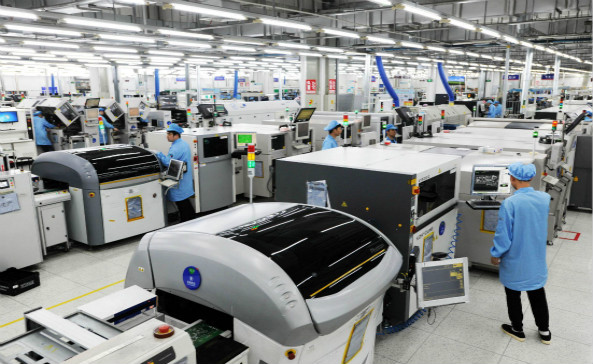
From initial design verification and rapid prototyping to high-volume SMT production, custom harness integration, and complete turnkey box builds, Wintech delivers unmatched engineering precision and quality consistency. If your hardware program demands uncompromised reliability, partner with an industry leader equipped to scale your vision from the ground up.
Frequently Asked Questions (FAQ)
Authoritative Industry References
To ensure your contract manufacturing and quality auditing procedures adhere to international engineering standards, consult these authoritative regulatory bodies:
- IPC (Association Connecting Electronics Industries) - Global standards for printed board design, acceptability of electronic assemblies (IPC-A-610), and surface-mount soldering criteria.
- International Organization for Standardization (ISO) - International standards for Quality Management Systems (ISO 9001) and Medical Device Manufacturing (ISO 13485).
- International Automotive Task Force (IATF) - Global technical specifications and quality management standards (IATF 16949) for the automotive electronics supply chain.


