

EMS Manufacturer vs Contract Manufacturer: What Is the Difference?
In the hardware and electronics manufacturing sector, terminology is frequently thrown around with careless abandon. Startups, OEMs, and product managers often use the terms "EMS" and "CM" interchangeably. From our experience, misidentifying the difference between an EMS Manufacturer vs Contract Manufacturer is not just a semantic error; it is a fundamental operational mistake that leads to millions of dollars in delayed product launches, botched prototypes, and supply chain nightmares.
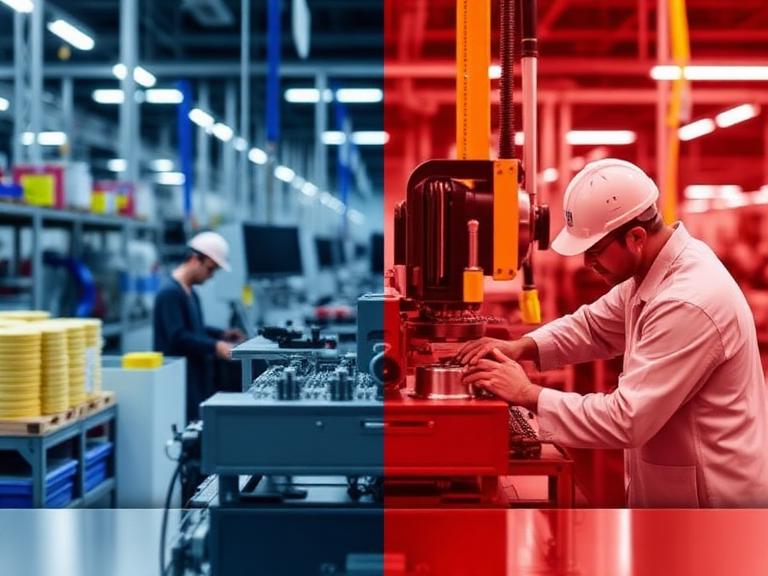
You cannot simply hand a complex Printed Circuit Board Assembly (PCBA) project to a generic contract manufacturer and expect a functional, market-ready smart device. The electronics supply chain requires highly specialized equipment, rigorous testing protocols, and deep engineering involvement. In this comprehensive guide, we will cut through the industry noise. We will detail exactly what separates these two types of manufacturers, how their operational models work, and provide you with the commercial and practical judgment necessary to choose the right partner for your hardware product.
Quick Answer: The Core Difference
A Contract Manufacturer (CM) is a broad, generic term for any factory that builds products for another company based on provided designs (build-to-print). This can include metal stamping, plastic injection molding, or simple assembly. An Electronic Manufacturing Services (EMS) Manufacturer is a highly specialized subset of contract manufacturing dedicated exclusively to electronic components. An EMS provider does much more than just assemble parts; they actively engage in Engineering Design, component sourcing, rigorous functional testing, and lifecycle management for complex PCBAs and smart devices.
Table of Contents
- What Is an EMS Manufacturer?
- What Is a Contract Manufacturer (CM)?
- How It Works: The Operational Workflow
- Quick Summary Table
- Comparison Table: EMS vs CM
- Benefits of Choosing a Specialized EMS
- Limitations and When an EMS is Overkill
- Pros and Cons Table
- Who Should Use an EMS vs CM
- Common Mistakes When Outsourcing
- Buying Considerations and Vetting
- Buying Guide Table
- Expert Recommendation from Wintech
- Frequently Asked Questions (FAQ)
What Is an EMS Manufacturer?
Electronic Manufacturing Services (EMS) represents the apex of specialized electronics production. An EMS provider focuses entirely on the beating heart of modern hardware: the electronics. When you engage an EMS, you are not just renting space on an assembly line; you are hiring a technology partner.
An elite EMS provider handles surface mount technology (SMT), through-hole assembly, and complex Cabinet & Panel PLC Wiring. Furthermore, they provide critical value-added services that generic factories cannot touch. This includes evaluating your Bill of Materials (BOM) through dedicated China Electronic Assembly Components Engineering to find viable alternative parts during global chip shortages, thereby preventing your production from grinding to a halt.
What Is a Contract Manufacturer (CM)?
A Contract Manufacturer (CM) is a generalized term. A CM acts as an outsourced factory for original equipment manufacturers (OEMs). Their primary operational model is "build-to-print." You provide the exact CAD files, the molds, and the instructions, and they execute the physical labor.
CMs are fantastic for producing non-electronic goods. If you need 50,000 plastic water bottles, precision CNC-machined brackets, or basic sewn textiles, a traditional CM is the correct choice. However, if your product requires sophisticated Electro-Mechanical Assembly, relying on a standard CM is highly risky because they typically lack the advanced electrostatic discharge (ESD) protections, cleanrooms, and testing engineers required for sensitive electronics.
How It Works: The Operational Workflow
Understanding the workflow highlights the disparity between the two models. A generic CM waits for your finalized design files. They expect you to have already solved every engineering flaw. They procure the materials exactly as listed, assemble the product, and ship it.
Conversely, an EMS gets involved much earlier in the product lifecycle. In most professional situations, an EMS will execute a thorough Manufacturing DFM Design (Design for Manufacturability) review. They analyze your PCB layout to ensure components are not placed too closely together, which could cause solder bridging during the wave soldering process. They also manage NPI Engineering (New Product Introduction) to transition your prototype into mass production seamlessly, mitigating risks before the assembly line even turns on.
Quick Summary Table
| Entity Type | Core Focus | Level of Engineering Support | Ideal For |
|---|---|---|---|
| EMS Manufacturer | PCBAs, Smart Devices, Microelectronics | High (DFM, NPI, Component Engineering) | IoT devices, Medical electronics, Industrial controls |
| Contract Manufacturer (CM) | Broad Manufacturing (Plastics, Metals, General Assembly) | Low (Strictly Build-to-Print) | Mechanical parts, Enclosures, Basic consumer goods |
Comparison Table: EMS vs CM
| Capability Area | EMS Manufacturer | Contract Manufacturer (CM) |
|---|---|---|
| Supply Chain Leverage | Deep relationships with electronic component distributors (Digi-Key, Mouser, direct chip makers). | Focuses on raw materials (steel, plastic pellets, textiles). |
| Testing Capabilities | In-Circuit Testing (ICT), Automated Optical Inspection (AOI), X-Ray, Functional testing. | Basic visual inspection and mechanical tolerance checks. |
| Lifecycle Management | Offers active obsolescence management and Repair And Rework services. | Typically ends involvement upon shipping the final assembled unit. |
| Final Assembly | Excels at integrating PCBs into enclosures via Turnkey Box Build. | Excels at purely mechanical or structural assembly. |
Benefits of Choosing a Specialized EMS Provider
The primary benefit of utilizing an EMS is aggressive risk mitigation. Electronics manufacturing is fraught with potential points of failure. Sourcing counterfeit chips, applying incorrect thermal profiles during soldering, or failing to identify a microscopic short circuit can destroy an entire production run. By utilizing a dedicated Testing Development And Service division within an EMS, every single board is verified before it is integrated into the final housing.
Furthermore, an elite EMS offers a robust Supply Chain procurement Service. They buy millions of components annually, granting them purchasing power and priority allocation during market shortages that a single OEM could never achieve on their own.
Limitations and When an EMS is Overkill
We believe in deploying commercial and practical judgment. An EMS is not the answer to every manufacturing problem. If your product is a simple mechanical housing, a custom piece of furniture, or a purely injected-molded plastic toy with zero electrical routing, hiring an EMS is a waste of capital. You will be paying a premium for cleanrooms and ESD protocols that your product does not require. In these scenarios, a traditional CM with robust Mechanical Design tooling is the more cost-effective choice.
Pros and Cons Table
| Manufacturer Type | Pros | Cons |
|---|---|---|
| EMS Provider |
|
|
| General CM |
|
|
Who Should Use an EMS vs Who Does Not Need It
For commercial users and hardware startups: If you are building IoT devices, medical hardware, telecommunications equipment, or automotive sensors, you must partner with an EMS. The complexity of these devices requires stringent oversight and advanced Failure Analysis And Reliability testing to ensure field longevity.
For heavy-duty applications: Industrial automation clients requiring massive control panels, intricate wire harnessing, and PLC integration will greatly benefit from the specialized electromechanical divisions of a top-tier EMS.
For beginners: If your product is a simple consumer good like a phone case or a mechanical hand tool, do not approach an EMS. A standard contract manufacturer or a specialized injection molding factory is exactly what you need to keep your unit economics viable.
Common Mistakes When Outsourcing Manufacturing
The most catastrophic mistake OEMs make is treating their EMS like a blind assembly line. In our testing and industry observations, OEMs who "throw the design over the wall" without engaging in a collaborative DFM process suffer from terrible first-pass yield rates. You must bring your EMS partner in during the prototyping phase. Let their engineers review your component selection; they might find that a capacitor you selected is slated for obsolescence in six months, saving you from a costly redesign post-launch.
Buying Considerations: How to Vet Your Partner
Not all manufacturers are created equal. When deciding on the EMS Manufacturer vs Contract Manufacturer route, you must vet the facility's certifications and capabilities rigorously.
Buying Guide Table
| Evaluation Criteria | What to Look For in an EMS | Why It Matters |
|---|---|---|
| Industry Certifications | ISO 9001, ISO 13485 (Medical), IATF 16949 (Automotive). | Proves the facility adheres to strict, internationally recognized quality management systems. |
| Testing Capabilities | In-house AOI, SPI, X-Ray, and custom test jig development. | Guarantees that defects are caught on the line, not by your end-user. |
| Turnkey Capability | Ability to handle PCB fabrication, assembly, enclosure sourcing, and final packaging. | Consolidates your supply chain into a single point of accountability. |
| NPI Process | A dedicated engineering team for New Product Introduction. | Ensures your prototype scales to mass production without catastrophic failure. |
Expert Recommendation from Wintech
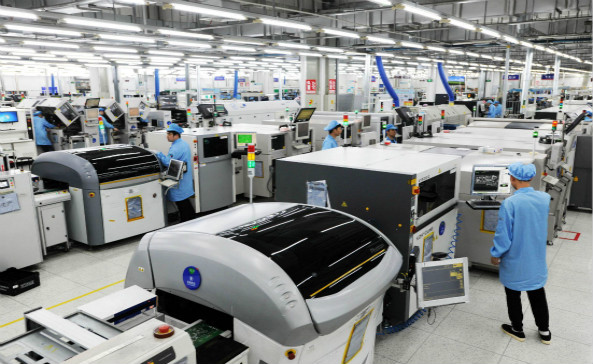
In most professional situations, the success of a smart hardware product hinges entirely on the competency of the manufacturing partner. Attempting to force a generic contract manufacturer to build highly sensitive electronics is a compromise that will ultimately destroy your brand's reputation for reliability.
We recommend engaging a dedicated EMS that can scale with your ambitions. Wintech is a full turnkey service, high-mix, low to mid volume electronics manufacturing and custom material solutions provider with a proven track record of supplying state-of-the-art solutions to an all global customer base.
We provide tailor-made solutions for our customers: high level, high difficult, large size, complex structure, high precision PCB Layout, PCBAs and turnkey complete products full systems electronic contract manufacturing solutions. Whether you need rapid prototyping, low to mid volume, or mass production, we have the infrastructure to execute. Many of the world's top 500 enterprises have cooperated with us for many years; Wintech is worth relying on for your next major hardware deployment.
Frequently Asked Questions (FAQ)
Does an EMS manufacturer only assemble PCBs?
No. While PCB assembly (PCBA) is their core competency, a top-tier EMS offers full turnkey solutions. This includes sourcing all components, building custom wire harnesses, integrating the electronics into mechanical enclosures (Box Build), and performing final functional testing and packaging.
Can a Contract Manufacturer (CM) handle electronic products?
Some large CMs have electronic divisions, but generally, standard CMs lack the specialized engineering, cleanrooms, and testing infrastructure required for complex electronics. If your product is "smart" (contains a microprocessor, radio, or complex circuitry), you should specifically seek an EMS rather than a general CM.
Why is DFM (Design for Manufacturability) so important when working with an EMS?
An electrical engineer might design a PCB that works perfectly in a simulation but is impossible to assemble efficiently on a factory floor. DFM ensures that components are placed correctly for automated pick-and-place machines and wave soldering, drastically reducing manufacturing defects, lowering costs, and speeding up production.
Authoritative Industry References
To further understand global manufacturing standards and electronic assembly protocols, we recommend reviewing the following authoritative bodies:
- IPC (Association Connecting Electronics Industries) - The global trade association dedicated to standardizing the assembly and production requirements of electronic equipment.
- ISO 9001 Quality Management Systems - The international standard that specifies requirements for a quality management system (QMS), critical for vetting any manufacturing partner.
- IEEE (Institute of Electrical and Electronics Engineers) - The world's largest technical professional organization dedicated to advancing technology for the benefit of humanity, providing standards for electronic engineering design.


