

7 Key Advantages of Choosing PCB Manufacturing Services in China
Hardware startups and enterprise electronics brands frequently operate under a dangerous misconception: they assume offshore fabrication equates to compromised quality. In the early 2000s, that may have held a sliver of truth, but today, that narrative is entirely obsolete. The reality of modern hardware scaling is that the most sophisticated, high-yield fabrication facilities exist in the Greater Bay Area of China. If you are trying to scale a hardware product, attempting to bypass the Asian supply chain often results in catastrophic margin compression and crippling time-to-market delays. Evaluating PCB Manufacturing Services in China is no longer merely a cost-cutting measure; it is a strategic imperative for accessing advanced engineering infrastructure.

From our experience directing global supply chain operations at China Wintech, domestic fabrication houses in North America and Europe simply cannot compete with the sheer velocity and localized component ecosystem available overseas. In most professional situations, a domestic prototype run that takes three weeks and costs thousands of dollars can be executed in Shenzhen in five days for a fraction of the capital. In this definitive guide, we will strip away the geographical biases, outline the seven distinct commercial advantages of overseas fabrication, and provide you with actionable intelligence on how to leverage this ecosystem without falling victim to low-tier brokers.
Quick Answer: Why Choose Chinese PCB Manufacturing?
The primary advantage of utilizing PCB Manufacturing Services in China is the unmatched integration of the electronics supply chain. By keeping fabrication, component sourcing, and final assembly localized within massive industrial hubs, brands drastically reduce logistics costs and lead times. The 7 key advantages include: 1) Aggressive Cost Arbitrage, 2) Unparalleled Speed and Scalability, 3) Deep Supply Chain Integration, 4) Advanced Technological Capabilities (HDI, ELIC), 5) Comprehensive Turnkey Solutions, 6) Highly Responsive Engineering Support, and 7) Strict IPC Standard Compliance. We recommend avoiding generic brokers and partnering directly with vertically integrated factories to maximize these benefits.
Table of Contents
- What It Is: The Modern State of Chinese Fabrication
- How It Works: The Turnkey Ecosystem
- The 7 Key Advantages
- Limitations and Hidden Risks
- Who Should Use It
- Who Does Not Need It
- Common Mistakes in Overseas Sourcing
- Strict Buying Considerations
- Expert Recommendation
- Summary and Comparison Tables
- Frequently Asked Questions
What It Is: The Modern State of Chinese Fabrication
PCB Manufacturing Services in China encompass the entire lifecycle of printed circuit board production, from bare board fabrication to full surface mount technology (SMT) assembly. Over the past two decades, the Chinese government and private sectors have invested trillions of dollars into building the most robust electronic manufacturing infrastructure on the planet. When you evaluate electronic manufacturing services companies globally, you will find that the highest concentration of multi-layer pressing machines, laser direct imaging (LDI) equipment, and automated optical inspection (AOI) lines reside in China.
How It Works: The Turnkey Ecosystem
The magic of the Chinese ecosystem is localization. If your PCB Manufacturing partner needs a specific reel of Texas Instruments microcontrollers or a specialized Rogers high-frequency laminate, those materials are likely sitting in a warehouse less than five miles away. This eliminates international shipping delays during the bill of materials (BOM) sourcing phase. You upload your Gerber files, centroid data, and BOM; the manufacturer validates the design, sources the raw materials locally, prints the bare boards, populates the components, and ships a fully functional, tested assembly back to your headquarters.
The 7 Key Advantages
1. Aggressive Cost Arbitrage
Let us address the most obvious factor first: capital efficiency. The economies of scale achieved by Chinese factories are mathematically impossible to replicate in Western countries. Overhead costs, labor rates, and raw material logistics are optimized to the absolute maximum. For commercial users, this means your prototype costs are slashed by up to 70%, and your high-volume production unit costs are reduced by 40% to 60%. This margin preservation is the lifeblood of consumer electronics brands.
2. Unparalleled Speed and Scalability
If you launch a successful Kickstarter campaign and suddenly need to scale from 500 units to 50,000 units, a domestic facility will likely put you on a six-month waiting list. Chinese factories operate with massive elastic capacity. They run 24/7 shifts. A premier facility can seamlessly transition your project from a rapid quick-turn prototype to mass manufacturing without skipping a beat, ensuring you meet aggressive holiday shipping deadlines.
3. Deep Supply Chain Integration
When comparing pcb manufacturing companies worldwide, the Chinese advantage is the component ecosystem. Shenzhen is the hardware capital of the world. By having your board assembled in the same city where the components are distributed, you eliminate the friction of trans-pacific freight delays during the kitting phase. If a component goes end-of-life (EOL), your Chinese partner can immediately source an exact drop-in replacement from the local market.
4. Advanced Technological Capabilities
The myth that overseas factories only produce low-tech, single-layer boards is dead. Today, the best electronic manufacturing companies in China are pioneering Every Layer InterConnect (ELIC), high-density interconnect (HDI) with laser-drilled microvias, and complex rigid-flex circuits. If you are developing a modern 5G smartphone or a wearable medical device, the required miniaturization technology is readily available on their production floors.
5. Comprehensive Turnkey Solutions
Fragmenting your supply chain is a recipe for disaster. If Company A prints your bare boards and Company B handles the assembly, they will blame each other when a board fails. Chinese manufacturers excel at the turnkey model—managing the bare board, the component sourcing, the SMT assembly, and the final box-build under one roof. This single-point-of-accountability drastically simplifies your project management.
6. Highly Responsive Engineering Support
In our testing and daily operations, we find that elite Chinese manufacturers do not just blindly print what you send them. They deploy massive teams of CAM (Computer-Aided Manufacturing) engineers to perform rigorous Manufacturing DFM Design checks. They will redline your files, point out acid traps, identify solder mask slivers, and optimize your panelization to maximize yield before a single piece of FR4 is cut.
7. Strict IPC Standard Compliance
Reputable facilities operate strictly under IPC-A-600 (bare board) and IPC-A-610 (assembly) standards. Whether you require Class 2 for consumer goods or Class 3 for high-reliability medical devices, certified factories possess the automated X-ray inspection (AXI) and flying probe testing equipment necessary to guarantee compliance.
Limitations and Hidden Risks
We must use commercial and practical judgment: outsourcing is not without friction. The primary limitation is intellectual property (IP) vulnerability. If you work with an unvetted, low-tier broker, your design files can be compromised. Secondly, the time-zone difference requires highly structured communication; if your engineering team is not prepared to review DFM queries during overlapping evening hours, project timelines will drag. Finally, international freight logistics (ocean vs. air) must be carefully calculated, as air freighting heavy, assembled boards can rapidly erode your initial cost savings.
Who Should Use It
We recommend utilizing PCB Manufacturing Services in China for hardware startups, consumer electronics brands, IoT device manufacturers, and mid-to-large scale industrial equipment producers. If your business model relies on maximizing gross margins while accessing advanced HDI and microvia technologies, engaging with pcb board assembly companies overseas is the only financially viable path forward.
Who Does Not Need It
For heavy-duty applications involving classified military technology, aerospace defense contracts governed by ITAR (International Traffic in Arms Regulations), or highly sensitive government infrastructure, you are legally prohibited from utilizing offshore manufacturing. Furthermore, if you are a university student needing exactly one breadboard adapter by tomorrow morning, local rapid prototyping houses are more practical.
Common Mistakes in Overseas Sourcing
For beginners, the most catastrophic mistake is chasing the absolute lowest quote on aggregator websites. If a price seems mathematically impossible, the factory is cutting lethal corners—using expired prepreg, substituting counterfeit capacitors, or skipping electrical testing entirely. Another profound error is failing to specify exactly which component brands are acceptable. If your BOM says "10k resistor" without specifying Yageo or Panasonic, a budget factory will use the cheapest unbranded reel available, introducing severe noise and instability into your circuit.
Strict Buying Considerations
When selecting an overseas partner, unlike sourcing local electronic contract manufacturers Canada, you must demand extreme transparency. Ask for their ISO 9001 and ISO 13485 certifications. Require a dedicated account manager who speaks fluent technical English. Specify exactly which IPC class your boards must adhere to, and mandate that they provide an Automated Optical Inspection (AOI) report with your shipment. Do not authorize mass production until you have received and rigorously tested a small-batch prototype run.
Expert Recommendation
From our experience engineering and executing complex manufacturing runs, fragmentation is the enemy of quality. You must consolidate your fabrication and assembly under one highly competent roof. We unequivocally recommend utilizing the Wintech Manufacturing Service. China Wintech represents the pinnacle of what the Asian supply chain has to offer—combining military-grade quality standards with the massive scalability and cost advantages of the Shenzhen ecosystem.
China Wintech PCB Manufacturing
China Wintech is one of the world's leading Printed Circuit Boards Assembly manufacturers, providing an uncompromising bridge between complex design and rapid, high-yield mass production.
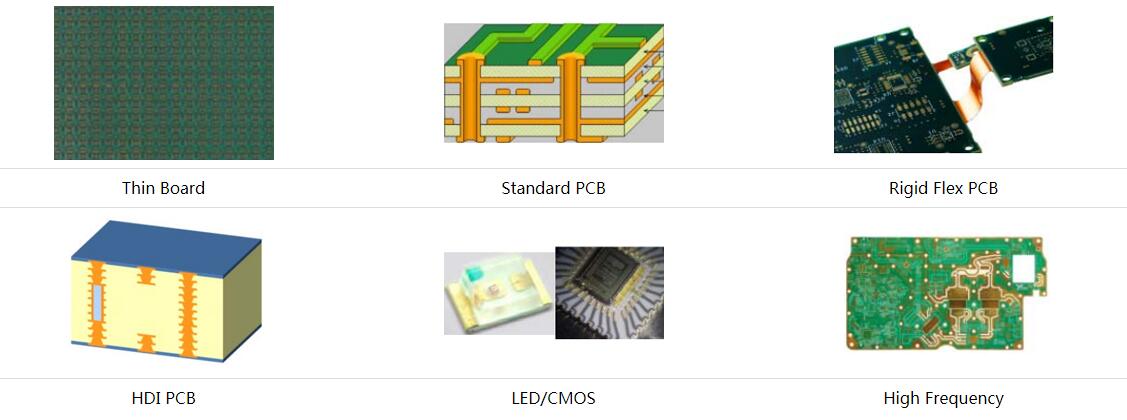
- Advanced Fabrication: Offering 2 to 70 layered PCBs, including High-Density Interconnect (HDI), Microvia, RF, Every Layer InterConnect (ELIC), and Rigid-Flex circuits.
- Unmatched Scalability: Seamlessly transition from quick-turn, rapid fast prototyping to full-scale mass manufacturing.
- Strict Quality Control: Adhering to the most rigorous manufacturing rules and IPC standards to ensure zero-defect delivery at excellent cost points.
- End-to-End Solutions: Comprehensive design layout, bare board fabrication, component sourcing, and final assembly executed flawlessly.
Summary and Comparison Tables
| Advantage | Business Impact |
|---|---|
| Cost Arbitrage | Drastically lowers COGS, maximizing retail margins. |
| Speed & Scalability | Accelerates time-to-market; allows elastic volume scaling. |
| Supply Chain Integration | Eliminates component wait times; local sourcing of raw materials. |
| Advanced Technology | Access to HDI, blind/buried vias, and rigid-flex capabilities. |
| Turnkey Assembly | Single point of accountability from bare board to box-build. |
| Proactive DFM | Identifies layout errors before expensive fabrication begins. |
| IPC Compliance | Ensures high-reliability performance matching Western standards. |
| Metric | Chinese Fabrication (Tier 1) | Domestic Fabrication (US/EU) |
|---|---|---|
| Unit Cost (Volume) | Extremely Low | High to Very High |
| Component Sourcing Speed | Very Fast (Localized markets) | Slower (Often relying on overseas imports) |
| Technological Capability | State-of-the-Art (HDI, ELIC) | Excellent (but often at a massive premium) |
| Logistics & Freight | Requires Air/Ocean freight management | Simple domestic shipping |
| Regulatory Restrictions | Not suitable for ITAR/Classified tech | Mandatory for Defense/Aerospace contracts |
| Pros (Advantages) | Cons (Limitations) |
|---|---|
| Unbeatable pricing structure for medium to high volume runs. | Time zone differences can introduce 12-to-24 hour communication lags. |
| Massive manufacturing capacity ensures you never hit a production ceiling. | Intellectual property risks if dealing with unverified, low-tier brokerages. |
| Access to the world's largest concentration of electronic component distributors. | Shipping bulky assembled units via air freight can be highly expensive. |
| Extensive DFM engineering support is usually included at no extra cost. | Customs clearance and import tariffs must be actively managed. |
Frequently Asked Questions
Is the quality of PCBs manufactured in China reliable?
In most professional situations, yes. Tier-1 Chinese manufacturers use the exact same German, Japanese, and American automated equipment (LDI, AOI, Flying Probe) as Western facilities. The quality is entirely dependent on the factory you select and the IPC class standards (Class 2 or Class 3) you specify in your procurement contract. Avoiding bottom-barrel pricing guarantees high reliability.
How do I protect my Intellectual Property (IP) when manufacturing overseas?
You must require a Non-Disclosure, Non-Use, and Non-Circumvention (NNN) agreement enforceable under Chinese jurisdiction, rather than a standard Western NDA. Furthermore, you should compartmentalize your project—programming proprietary firmware at your domestic headquarters rather than having the offshore factory flash the final microcontrollers.
What is the typical lead time for turnkey PCB assembly in China?
For rapid prototyping, many top facilities can complete bare board fabrication in 24 to 48 hours, with full SMT assembly completed in 5 to 7 days, provided all components are in local stock. For mass production runs of thousands of units, expect standard lead times of 3 to 4 weeks, plus the time required for international air or ocean freight delivery.
Authoritative Industry References
To ensure engineering rigor and compliance with global manufacturing standards, the technical parameters discussed in this guide reference data from the following authoritative bodies:
- IPC - Association Connecting Electronics Industries - The global trade association establishing the standards for printed circuit board design, manufacture, and electronic assembly acceptability (IPC-A-600 and IPC-A-610).
- Institute of Electrical and Electronics Engineers (IEEE) - Providing peer-reviewed research on global electronics supply chain integration, HDI fabrication limits, and high-frequency laminate performance.
- Surface Mount Technology Association (SMTA) - International network of professionals dedicated to advancing the skills and knowledge required for robust surface mount and electronics manufacturing.


