

How to Build a Reliable Electronics Manufacturing Supply Chain
The global electronics industry operates on a razor's edge. A single microchip shortage, a delayed shipping container, or a batch of counterfeit resistors can paralyze your entire production line, costing you millions in delayed time-to-market. Stop treating your Contract Electronics Manufacturer (CEM) like a vending machine. If you want to build a reliable electronics manufacturing supply chain, you must approach it as an integrated engineering partnership, not a series of transactional purchase orders.
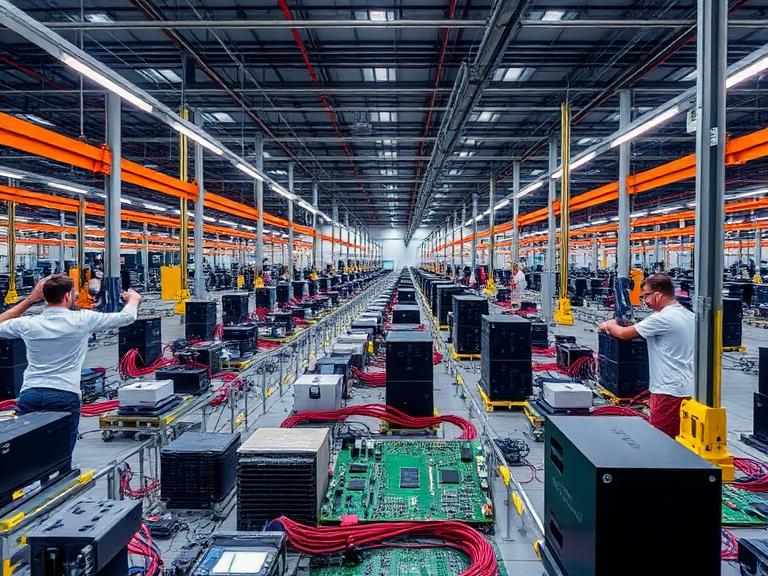
From our experience engineering complex hardware at Wintech, the companies that survive semiconductor droughts and logistical bottlenecks do not rely on luck. They rely on aggressive risk mitigation. They consolidate their manufacturing, enforce strict Design for Manufacturing (DFM) protocols, and refuse to source active components from unverified gray-market brokers. In this definitive guide, we will cut through the generic sourcing advice and deliver the unvarnished truth on how to establish an unshakable hardware procurement and assembly pipeline.
Quick Answer: How to Build a Reliable Electronics Manufacturing Supply Chain
To successfully build a reliable electronics manufacturing supply chain, hardware brands must consolidate their processes with a Tier-1 or Tier-2 turnkey Electronics Manufacturing Services (EMS) provider. You must dual-source all critical integrated circuits (ICs), perform rigorous Bill of Materials (BOM) health checks to eliminate End-of-Life (EOL) components before layout routing, and unify your PCB Manufacturing and final assembly under one roof. We recommend executing full vendor audits to verify ISO certifications, internal X-ray counterfeit detection capabilities, and localized inventory buffering to insulate your production from global logistical shocks.
Table of Contents
- What It Is: The Modern EMS Ecosystem
- How It Works: Consolidation and Traceability
- The Benefits of Supply Chain Resilience
- Limitations and Roadblocks
- Who Should Use This Approach
- Who Does Not Need It
- Common Mistakes in Electronics Sourcing
- Buying Considerations
- Summary and Comparison Tables
- Expert Recommendation & Embedded Solutions
- Frequently Asked Questions
What It Is: The Modern EMS Ecosystem
When you attempt to build a reliable electronics manufacturing supply chain, you are constructing a traceable, fully audited pipeline that transforms raw silicon, fiberglass, and copper into a tested, market-ready electronic device. It is a web of authorized distributors, bare board fabricators, and Surface Mount Technology (SMT) assembly houses.
In legacy models, OEMs (Original Equipment Manufacturers) purchased bare boards from one factory, bought chips from three different distributors, shipped everything to a separate assembly house, and then moved the assembled boards to a final box-build facility. This fragmented model is deeply flawed. A modern, reliable supply chain leverages a turnkey EMS. A turnkey provider assumes total liability for component procurement, PCB Design & Layout validation, fabrication, and final testing. If a component is faulty, the EMS is responsible for replacing it, eliminating the endless finger-pointing between separate vendors.
How It Works: Consolidation and Traceability
How do you practically build a reliable electronics manufacturing supply chain? You start at the Bill of Materials (BOM). Before a single trace is laid out on a circuit board, a reliable EMS partner will run your BOM through an algorithmic health check. They identify components that are Not Recommended for New Design (NRND) or approaching End-of-Life (EOL). They immediately substitute these with active, readily available alternatives.
Once the BOM is locked, the EMS leverages its massive purchasing power to secure allocations directly from Original Component Manufacturers (OCMs) or franchised distributors. By merging PCB Assembly & PCBA SMT into the same facility that fabricates the bare board, you eliminate inter-factory transit times and customs delays. If a footprint mismatch occurs between the bare board and a physical microchip, the engineers are in the same building and can correct the fabrication files instantly.
The Benefits of Supply Chain Resilience
The primary benefit of an integrated supply chain is radical risk reduction. When a global event disrupts shipping lanes, a reliable EMS partner already holds a buffer stock of your critical microcontrollers. Furthermore, consolidating your operations guarantees absolute quality control. By maintaining a closed-loop system, you drastically reduce the chance of counterfeit chips entering your product, which is vital for preventing catastrophic failures in the field.
Additionally, a streamlined supply chain accelerates your product iterations. When transitioning from Quick Turn Fast PCB Prototype Assembly to high-volume mass production, using the same vendor ensures that the thermal profiles and solder paste formulations do not need to be reinvented, saving weeks of pre-production testing.
Limitations and Roadblocks
We do not ignore the commercial realities of building this infrastructure. The primary limitation is the initial setup time. Auditing a turnkey EMS provider, establishing Non-Disclosure Agreements (NDAs), and negotiating Master Supply Agreements (MSAs) requires significant upfront legal and engineering bandwidth. You cannot simply upload a Gerber file to a web portal and expect a fully managed supply chain.
Furthermore, relying on a single turnkey provider creates a vendor lock-in scenario. If that specific EMS experiences a localized disaster (such as a factory fire or regional power grid failure), your entire production halts. This is why enterprise-level brands maintain a primary EMS and a secondary, geographically separated backup EMS to maintain absolute redundancy.
Who Should Use This Approach
For heavy-duty applications where failure results in loss of life or massive financial liability, a highly audited, reliable supply chain is mandatory by law. We strictly require this framework for OEMs operating in the Medical Device sector, Military Defense & Aerospace, and critical infrastructure like Energe & Oil & Gas. In these industries, component traceability down to the specific silicon lot number is non-negotiable.
It is also essential for companies developing Industrial automation hardware, where machinery is expected to operate continuously for decades without replacement.
Who Does Not Need It
For beginners building open-source hobbyist kits, or manufacturers producing ultra-cheap, disposable Consumer electronics (like generic flashing LED toys), investing capital in rigorous BOM lifecycle management and counterfeit mitigation is commercially excessive. If a 10% field failure rate is financially acceptable to your business model, you can afford to fragment your supply chain and chase the absolute cheapest brokers on the gray market. We do not recommend this, but it is a distinct commercial reality.
Common Mistakes in Electronics Sourcing
The most catastrophic mistake hardware companies make is "sole sourcing" custom components. Designing your entire architecture around a proprietary sensor manufactured by a single, small company guarantees that your product will die if that company goes bankrupt. Always design your PCBs to accommodate alternative footprint packages for critical chips.
Another profound error is engaging unauthorized component brokers during a shortage without demanding independent testing. Counterfeiters routinely sand off the markings of cheap chips and laser-etch high-end part numbers onto them. If your EMS does not have in-house decapsulation and X-ray inspection equipment, those fake chips will be soldered onto your boards, ruining your brand reputation permanently.
Buying Considerations
When selecting an EMS partner to build a reliable electronics manufacturing supply chain, you must audit their operational capabilities. Ask for proof of their ISO 9001 and ISO 13485 certifications. Investigate their procurement network—do they buy direct from Texas Instruments, STMicroelectronics, and NXP, or do they rely heavily on open-market brokers?
For commercial users scaling products in the Communications or Computing & Storage sectors, verify that the EMS has dedicated New Product Introduction (NPI) teams. An EMS that forces your prototype through a mass-production SMT line will severely delay your development cycles.
Summary and Comparison Tables
| Supply Chain Pillar | Action Required | Commercial Impact |
|---|---|---|
| BOM Scrubbing | Identify and replace EOL and NRND components before layout. | Prevents costly mid-production PCB redesigns. |
| Turnkey Integration | Unify bare board fab and SMT assembly under one vendor. | Eliminates logistical delays and cross-vendor blame. |
| Dual Sourcing | Design hardware to accept multiple equivalent ICs. | Insulates production from sudden global chip shortages. |
| Counterfeit Mitigation | Mandate X-ray and visual inspection of brokered parts. | Protects brand reputation and prevents field failures. |
| Metric | Turnkey EMS Provider | Fragmented / Consigned Sourcing |
|---|---|---|
| Accountability | Single point of contact; EMS takes full liability for yield. | Split liability; fabricator blames assembler, assembly blames component broker. |
| Logistics Overhead | Minimal. The EMS manages all shipping, customs, and receiving. | Massive. Your internal team must coordinate multiple global shipments. |
| Time-to-Market | Fast. Parallel processing of fabrication and component sourcing. | Slow. Assembly cannot begin until all disparate shipments arrive. |
| Ideal For | High-reliability, scaled hardware commercialization. | Hobbyists or teams with massive internal procurement departments. |
| Pros (Benefits) | Cons (Limitations) |
|---|---|
| Unmatched ecosystem density; every component and raw material is located within a localized region. | Communication challenges requiring strict documentation and active project management. |
| Highly scalable production capacity capable of ramping from prototypes to millions of units rapidly. | Longer ocean freight transit times for heavy, final-assembled box builds compared to local EMS. |
| Significant cost reduction in labor-intensive processes like through-hole soldering and cable harnesses. | Requires rigorous initial factory audits to ensure genuine quality control standards are met. |
Expert Recommendation & Embedded Solutions
In our testing and decades of industry experience, the most effective way to build a reliable electronics manufacturing supply chain is to leverage a highly integrated facility that understands both the western engineering mindset and the aggressive agility of the Asian component market. You cannot afford to play the role of middleman between disconnected factories. We recommend partnering with an established EMS that handles everything from the bare FR4 substrate to the final firmware flash.
Wintech China Electronic Assembly Components Engineering Service
View Comprehensive Assembly Services
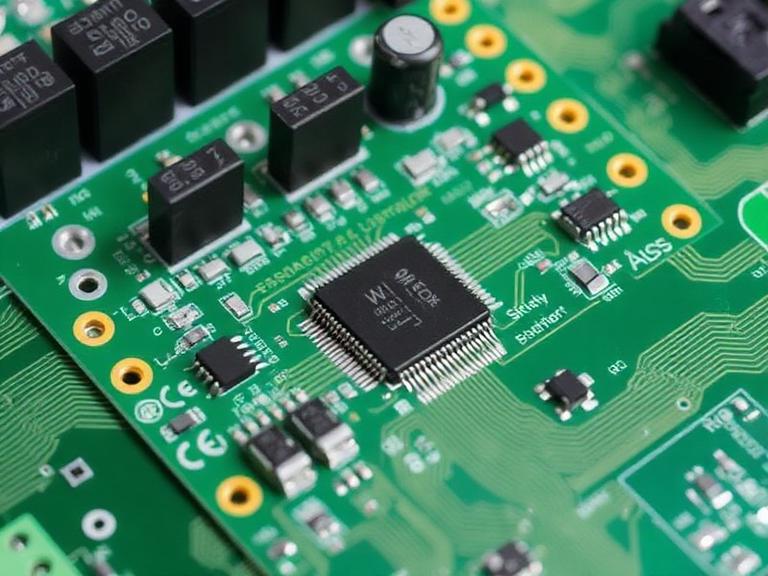
There are some of the largest China electronic assembly factories in the world. Many factories active in electronic assembly are producing their own products. Many others provide contract manufacturing services. China is where most EMS (electronic manufacturing service) companies of CEMs (contract electronic manufacturers) have large production capabilities. We are capable of providing quick turn PCB prototype assembly, full feature PCB fabrication, components sourcing and China electronic assembly services all under one roof. China electronics manufacturing services (EMS) have been picked up as a common solution for world-wide companies concerning electronic products. Nevertheless, it has to be accepted that China electronic assembly manufacturers have been also blamed for low quality, inaccuracies or extreme low reliability. As one of the largest developing economies in the world, however, China has been featuring infinite development drive and opportunities and as long as they are made best of, optimal balance will surely be obtained between cost and performance from China electronic assembly manufacturers.
Frequently Asked Questions
What is the difference between an OEM and an EMS?
An OEM (Original Equipment Manufacturer) is the brand that designs, markets, and sells the final product to the consumer (e.g., Apple or Tesla). An EMS (Electronics Manufacturing Services) provider is the contract facility that actually procures the components, populates the circuit boards, and tests the hardware on behalf of the OEM.
How do I prevent counterfeit electronic components from entering my supply chain?
To prevent counterfeits, you must strictly mandate that your EMS partner sources active components exclusively from authorized, franchised distributors or direct from the manufacturer. If a part must be sourced from an independent broker due to a shortage, you must require independent third-party testing, including decapsulation and X-ray fluorescence (XRF) analysis, before the part is accepted into inventory.
Why should I use a turnkey PCB assembly service instead of consigned?
Turnkey assembly shifts the massive burden of component procurement, shipping logistics, and inventory management from your internal team to the EMS provider. In a consigned model, if you miscount a single reel of resistors and ship it to the assembler, the entire production line stops until you correct the error. Turnkey providers absorb this operational risk.
What does End-of-Life (EOL) mean in electronics manufacturing?
End-of-Life (EOL) indicates that a component manufacturer has ceased production of a specific microchip or part. Designing a new circuit board around an EOL component is a critical error, as you will not be able to procure the parts required for mass production. A reliable supply chain utilizes active BOM monitoring to identify and replace EOL parts during the design phase.
Authoritative Industry References
To ensure our supply chain methodologies align with global best practices, we reference the operational standards established by the following authorities:
- IPC (Association Connecting Electronics Industries) - Global standards for PCB design, assembly quality, and acceptance criteria (IPC-A-610).
- International Organization for Standardization (ISO) - Governing bodies for quality management systems (ISO 9001) and specialized medical device manufacturing (ISO 13485).
- McKinsey & Company - Strategic analysis and commercial modeling for global supply chain resilience and semiconductor procurement.


