

The 7 Definitive Engineering Guide to the Difference Between Flexible and Rigid PCB
In the highly dynamic and demanding landscape of modern electronics manufacturing, selecting the appropriate printed circuit board technology is the foundational decision that dictates product reliability, spatial efficiency, and overall manufacturing cost. Engineers, product developers, and procurement specialists must possess a profound understanding of the fundamental difference between flexible and rigid PCB technologies. As electronic devices continue to miniaturize and adopt increasingly complex, unconventional form factors, the debate between utilizing traditional rigid boards versus adopting advanced flexible circuitry has never been more relevant. This comprehensive analysis will systematically unpack the material properties, mechanical capabilities, manufacturing processes, and economic implications that define the difference between flexible and rigid PCB.
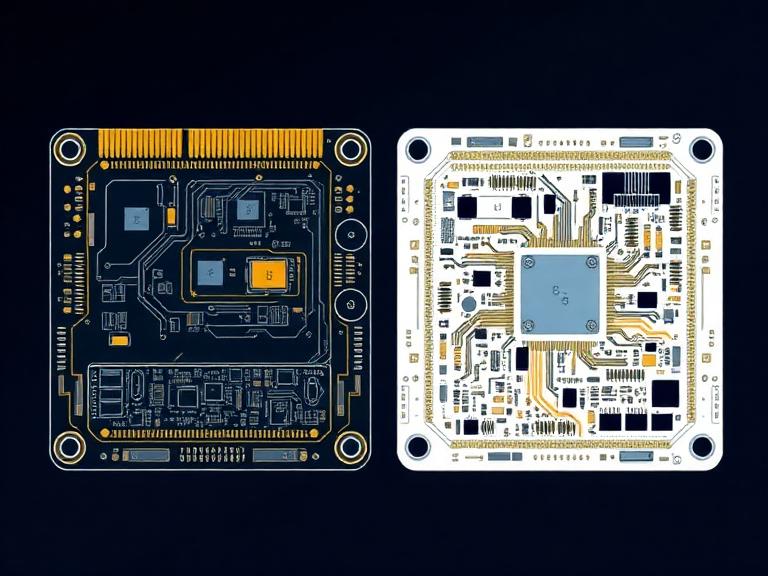
At Wintech, we operate as a full turnkey service, high-mix, low to mid volume electronics manufacturing and custom material solutions provider. We have a proven track record of supplying state-of-the-art solutions to a global customer base. Many of the world's top 500 enterprises have cooperated with us for many years because we engineer tailor-made solutions for high level, highly difficult, large size, and complex structure projects. From high precision PCB Layout to complete PCBA turnkey product systems, Wintech is worth relying on. Drawing upon decades of specialized engineering experience on the factory floor, this authoritative guide will dissect the exact difference between flexible and rigid PCB, empowering you to make highly informed hardware architecture decisions.
Table of Contents
- Summary Table: Difference Between Flexible and Rigid PCB
- Understanding Rigid Printed Circuit Boards
- Understanding Flexible Printed Circuit Boards (FPC)
- Material Properties and Dielectric Core Variations
- Manufacturing and Fabrication Nuances
- Advanced PCB Design & Layout Considerations
- Assembly, PCBA SMT, and New Product Introduction NPI
- Expert Recommendations from Wintech
- Frequently Asked Questions (FAQs)
- Industry References
Summary Table: Difference Between Flexible and Rigid PCB
To provide immediate architectural context, the following table summarizes the primary technical disparities. This high-level overview captures the essence of the difference between flexible and rigid PCB.
| Feature / Specification | Rigid PCB | Flexible PCB (FPC) |
|---|---|---|
| Base Substrate Material | FR4 (Glass-reinforced epoxy laminate), Rogers, Metal Core | Polyimide (PI), Kapton, Polyester (PET) |
| Mechanical Flexibility | None. Inelastic and unyielding. | High. Can be bent, folded, and twisted during operation. |
| Copper Type | Electrodeposited (ED) Copper | Rolled Annealed (RA) Copper for dynamic flexing |
| Protective Layer | Liquid Photoimageable (LPI) Solder Mask | Polyimide Coverlay (bonded with adhesive) |
| Weight & Spatial Profile | Heavier, thicker, requires more spatial clearance | Ultra-lightweight, extremely thin profile |
| Vibration Resistance | Moderate. Heavy components can stress solder joints. | Excellent. Low mass reduces harmonic resonance issues. |
| Cost Implications | Lower base fabrication cost, standardized tooling | Higher base cost, specialized handling and tooling required |
Understanding Rigid Printed Circuit Boards
Rigid printed circuit boards are the undisputed backbone of the global electronics industry. When analyzing the difference between flexible and rigid PCB, it is critical to understand that rigid boards are engineered for structural stability. They are fabricated using a solid, inflexible substrate—most commonly FR4, which is a woven fiberglass cloth impregnated with an epoxy resin binder. This construction provides excellent thermal resistance, strong electrical insulation, and exceptional mechanical strength.
Rigid PCBs are specifically deployed in environments where the circuitry must remain completely flat and immobile throughout its lifecycle. They are ideal for motherboards, desktop computers, heavy industrial controllers, and solid-state drives. The rigidity inherently supports the weight of large, heavy electronic components such as massive capacitors, robust heat sinks, and large ball grid array (BGA) processors. From our experience at Wintech, managing complex rigid boards involving up to 40 layers requires incredibly precise pressing and drilling techniques, which falls squarely within our comprehensive PCB Manufacturing capabilities.
Understanding Flexible Printed Circuit Boards (FPC)
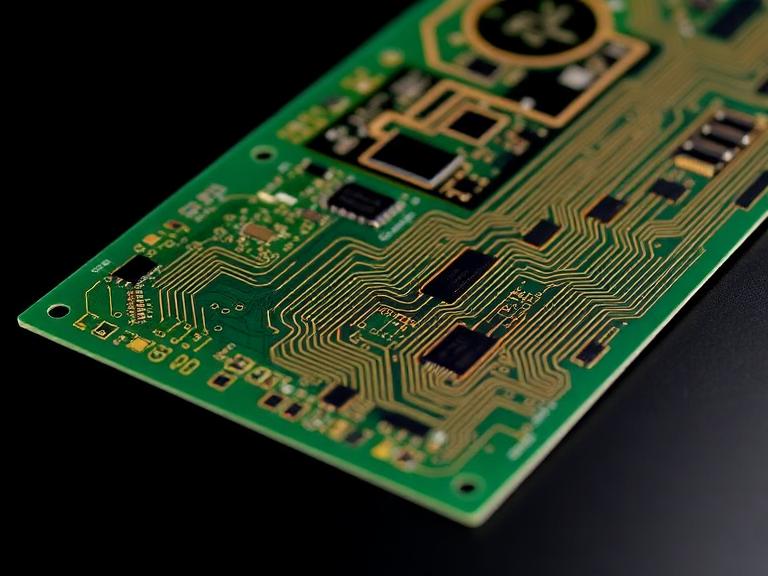
Conversely, flexible printed circuit boards (FPCs) represent a paradigm shift in electro-mechanical packaging. The fundamental difference between flexible and rigid PCB lies in the substrate. Flexible circuits utilize high-performance polymer films, predominately Polyimide (PI), rather than stiff fiberglass. Polyimide films, such as DuPont's Kapton, offer extraordinary dielectric properties combined with the ability to bend, twist, and fold without fracturing the copper traces bonded to them.
FPCs are essential in three distinct scenarios: dynamic flexing applications where the board must bend continuously (such as the hinge of a laptop or a printer printhead), static flexing applications where the board is bent once for installation into a highly constrained three-dimensional space (such as inside a smartwatch or an aerospace sensor housing), and applications where weight reduction is paramount. The difference between flexible and rigid PCB weight can be staggering, with flex circuits weighing up to 75% less than their rigid counterparts.
Material Properties and Dielectric Core Variations
To truly grasp the difference between flexible and rigid PCB technologies, engineers must examine the base materials at a microscopic level. The copper cladding used in rigid boards is typically Electrodeposited (ED) copper. ED copper has a vertical grain structure, which is perfectly suitable for flat, static environments. However, if bent, this vertical grain structure creates stress fractures, leading to open circuits.
Therefore, flexible PCBs frequently utilize Rolled Annealed (RA) copper. RA copper features a horizontal, elongated grain structure that acts like a microscopic hinge, allowing the copper trace to withstand thousands of bending cycles without fatiguing. Furthermore, the protective coating applied over the traces highlights another major difference between flexible and rigid PCB. Rigid boards use a liquid photoimageable solder mask, which cures into a hard, brittle shell. Applying this standard solder mask to a flex board would result in immediate cracking upon bending. Instead, flex boards utilize a "coverlay"—a solid film of polyimide bonded to the circuitry using specialized adhesives. Understanding these material disparities is a core component of the custom material solutions provided by Wintech.
Manufacturing and Fabrication Nuances
The transition from a digital design file to a physical board exposes the profound manufacturing difference between flexible and rigid PCB. Rigid board fabrication is a highly automated, batch-processed methodology. Panels of FR4 move rapidly through etching, drilling, and plating lines on standardized conveyor systems.
Flexible PCB manufacturing introduces significant handling complexities. Because polyimide films are incredibly thin and lack structural rigidity, they cannot easily travel down standard conveyor belts. They require specialized temporary stiffeners or reel-to-reel processing equipment to prevent the material from stretching, wrinkling, or tearing during etching and plating. Furthermore, the polyimide material exhibits higher dimensional instability during thermal cycles compared to FR4. It shrinks and expands, meaning fabricators must scale the artwork precisely to compensate for material movement. At Wintech, our Quick Turn Fast PCB Prototype services accommodate both technologies, utilizing advanced laser profiling and proprietary handling techniques to deliver flawless FPCs and rigid boards alike, regardless of structural complexity.
Advanced PCB Design & Layout Considerations
The difference between flexible and rigid PCB dictates entirely distinct routing rules and design philosophies. When our engineers at Wintech engage in PCB Design & Layout for a rigid board, the primary constraints are signal integrity, thermal dissipation, and component clearance. However, when designing a flex circuit, the designer must introduce mechanical kinematics into the electrical design.
For example, in flexible circuits, traces should never be routed at sharp 90-degree or 45-degree angles within a bend zone, as these hard angles create stress concentrators that lead to copper fatigue. Instead, traces must feature smooth, radiused curves. Additionally, designers must calculate the precise bend radius of the FPC based on the overall thickness of the copper and dielectric layers. Staggering traces on double-sided flex boards (rather than placing them directly on top of one another) prevents the "I-beam effect," ensuring maximum flexibility. Our comprehensive engineering team ensures these complex electro-mechanical rules are flawlessly executed before moving your project into the fabrication phase.
Assembly, PCBA SMT, and New Product Introduction NPI
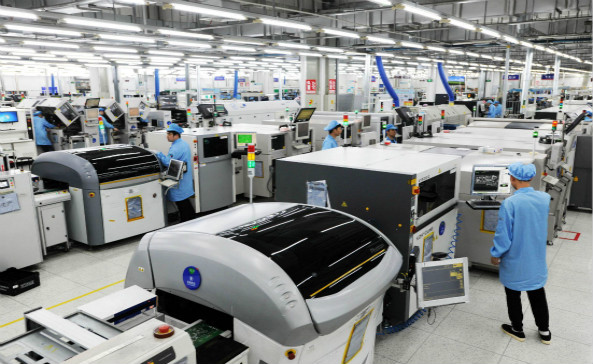
The physical assembly of components onto the bare boards brings the difference between flexible and rigid PCB into sharp focus on the factory floor. Surface Mount Technology (SMT) on rigid boards is straightforward; the board is held securely by edge rails in the pick-and-place machine and moves seamlessly through the reflow oven.
Populating a flexible PCB requires specialized fixturing. The FPC must be taped or vacuum-sealed onto a rigid carrier panel (often made of aluminum or FR4) before it can enter the SMT line. If the flex circuit is not perfectly flat, solder paste deposition will be uneven, leading to tombstoning or cold solder joints. Moreover, the polyimide material readily absorbs moisture from the atmosphere. FPCs must be subjected to a strict pre-baking process before entering the reflow oven; otherwise, the trapped moisture will violently expand into steam, causing the board to delaminate—a defect known as blistering. Through Wintech's rigorous New Product Introduction NPI protocols and expert PCB Assembly & PCBA SMT services, we mitigate all these risks, ensuring high-yield, defect-free production runs.
Expert Recommendations from Wintech
Understanding the difference between flexible and rigid PCB is ultimately about matching the technology to the application. As a premier China OEM Manufacturing partner, we guide our clients through this critical decision matrix daily. We recommend the following strategic approaches:
- We recommend rigid PCBs for cost-sensitive, high-volume consumer electronics, heavy industrial power supplies, and systems where space is not severely restricted. The lower initial fabrication cost and streamlined SMT process of rigid boards provide massive economies of scale.
- From our experience, you should mandate flexible PCBs for medical wearables, aerospace instrumentation, compact IoT devices, and high-vibration automotive sensors. The ability of an FPC to eliminate bulky wire harnesses not only saves space but eradicates human error during manual wire assembly, drastically improving overall system reliability.
- For complex projects, we recommend exploring Rigid-Flex technology. This hybrid approach physically laminates rigid FR4 sections and flexible polyimide sections into a single, unified board. It provides the rigid support needed for dense BGA components while maintaining the flexible tails required to bridge tight mechanical enclosures. Wintech specializes in these highly difficult, complex structure solutions.
- When developing the external enclosure for your electronic product, tight integration with the PCB is critical. Wintech offers complete Plastic Molding services to ensure your enclosure perfectly matches the dynamic bends of your flex circuit or the mounting bosses of your rigid board, providing true turnkey complete products full systems electronic contract manufacturing solutions.
Frequently Asked Questions (FAQs)
What is the primary difference between flexible and rigid PCB in terms of cost?
Generally, the base manufacturing cost of a flexible PCB is higher than that of a rigid PCB due to the expensive polyimide raw materials, complex handling requirements, and specialized coverlay lamination processes. However, from our experience, flex circuits can lower the total system cost by eliminating the need for expensive electromechanical connectors, wire harnesses, and manual assembly labor.
Can a flexible PCB handle the same power and current as a rigid PCB?
While flexible PCBs can carry significant current, their thermal dissipation capabilities are different. Rigid PCBs with thick copper planes and heavy FR4 cores can sink and spread heat effectively. FPCs, being extremely thin, can heat up faster under heavy loads. Thermal management must be carefully calculated during the PCB Design & Layout phase to ensure traces are adequately widened for high-current paths on a flex board.
Why do flexible PCBs need to be baked before assembly?
A crucial difference between flexible and rigid PCB materials is moisture absorption. Polyimide is highly hygroscopic, meaning it absorbs ambient humidity. If an FPC is exposed to the extreme heat of a reflow soldering oven without being baked first, the trapped moisture instantly turns into vapor, causing the layers of the flex circuit to separate and blister, destroying the board.
Industry References
- IPC-2223 - Sectional Design Standard for Flexible/Rigid-Flexible Printed Boards
- DuPont Interconnect Solutions - Polyimide and Flexible Circuit Material Properties
- Surface Mount Technology Association (SMTA) - Advanced Assembly Techniques for Flexible Substrates
-
Institute of Electrical and Electronics Engineers (IEEE) - Reliability Analysis of Flexible Printed Circuits in Dynamic Environments


