

6 Best Breakout Boards for ESP32: An Hardware Engineering Analysis for 2026
The Espressif Systems ESP32 micro-controller family remains a dominant force across internet of things (IoT) development, industrial automation, and smart home sensor integration. Packing a high-performance dual-core processor, built-in Wi-Fi and Bluetooth connectivity, and a dense array of general-purpose input/output (GPIO) pins, it handles demanding computational tasks with great efficiency. However, routing these high-density signals on standard breadboards often introduces substantial hardware validation bottlenecks. Prototyping directly with loose jumper wires frequently results in signal crosstalk, unexpected voltage drops, and loose mechanical connections. Mitigating these systemic issues requires choosing high-quality breakout boards for esp32 configurations.
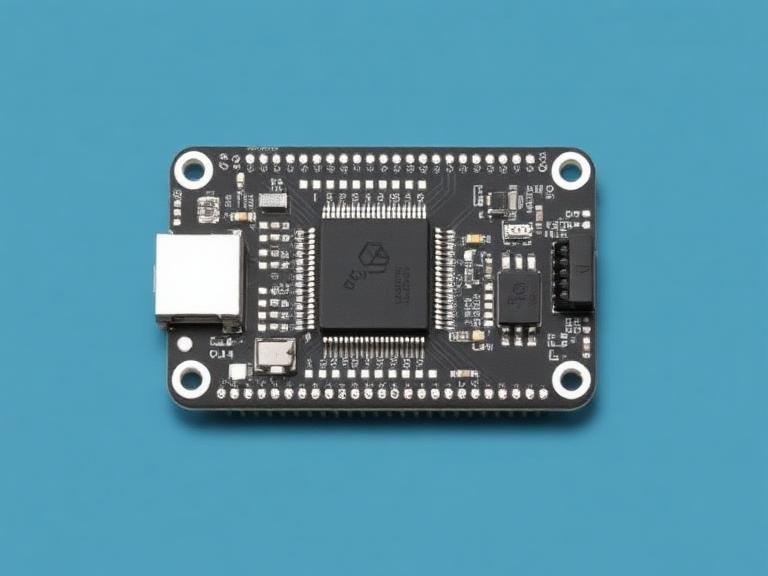
At Wintech, we operate as a full turnkey service, high-mix, low to mid volume electronics manufacturing and custom material solutions provider with a proven track record of supplying state-of-the-art systems to a global customer base. We specialize in tailor-made hardware solutions, spanning high-level, high-difficulty, large-size, and complex structure printed circuit board (PCB) layouts, printed circuit board assemblies (PCBAs), and turnkey complete product full systems electronic contract manufacturing. From our experience, many hardware developers overlook the physical signal integrity of their testing boards. They frequently pair high-speed micro-controllers with low-tier accessory adapters that lack decoupled power traces, adequate ground plane isolation, or certified terminal blocks. This engineering manual evaluates the six best breakout boards for esp32 devices, reviewing trace impedance layout, power regulation capacity, and structural hardware reliability.
- 1. Engineering Overview: Top Breakout Architectures
- 2. High-Frequency Electronics: Managing Noise and Power Loops
- 3. Deep Dive: Review of the 6 Best Breakout Boards for ESP32
- 4. Advanced Prototyping: Scaling from Breakout to Mass Production
- 5. Frequently Asked Questions (FAQs)
- 6. Regulatory and Industrial Hardware References
1. Engineering Overview: Top Breakout Architectures
Before launching a commercial hardware validation sequence or ordering high-mix prototyping components, engineering teams must evaluate physical wiring systems. The summary matrix below details how the best breakout boards for esp32 segment across different validation requirements in 2026.
| Breakout Board Variant | Connection Modality | Onboard Power Rail Design | Primary Validation Testing Environment | Core Electrical Advantage |
|---|---|---|---|---|
| Screw Terminal Shield (Dual Row) | Industrial Screw Terminals | Dual 3.3V and 5V shared copper rails | Industrial automation testbeds and field prototyping | High vibration resistance with secure mechanical clamping |
| Expansion Shield with Sensor Hub | 3-Pin Header Pins (G-V-S) | Decoupled parallel sensor power tracks | Rapid multi-module hardware validation testing | Direct plug-and-play for auxiliary digital sensors |
| DIN Rail Mount PLC Shield | Heavy-Duty Industrial Blocks | Opto-isolated 12V / 24V step-down buck conversion | Factory automation equipment cabinets | High voltage isolation protecting core micro-controller silicon |
| Compact SMT Prototyping Board | Through-Hole Soldering Pads | Customizable manual solder pad layout paths | Low-volume system verification and pilot testing | Ultra-low profile footprint minimizing signal impedance parasitic induction |
| Ethernet PoE Hybrid Breakout | RJ45 + Pitch Pin Headers | Power over Ethernet IEEE 802.3af integration | Wired smart facility networks and remote cameras | Combines continuous data streaming with remote power infrastructure |
| Bespoke Multi-Bus Dev Dock | Spring Clips + Terminal Strips | Multi-voltage reference output matrix | Advanced laboratory diagnostic and validation benches | Simultaneous monitoring of I2C, SPI, and UART lines |
2. High-Frequency Electronics: Managing Noise and Power Loops
To successfully integrate breakout boards for esp32 into your workflow, you must look past simple pin extension features. The ESP32 is a high-frequency RF component. When transmitting data packets over Wi-Fi or Bluetooth, the internal power amplifier fires in microsecond bursts, causing sudden current draws up to 250mA. If your breakout adapter utilizes thin, poorly routed copper traces with high electrical resistance, these sudden power surges trigger localized voltage drops, leading to unexplainable system brownouts or radio connection drops.
From our experience, high-quality board design demands wide, thick power planes paired with dedicated surface-mount ceramic filtering capacitors located right next to the micro-controller supply pins. Furthermore, when routing sensitive analog signals alongside high-speed digital lines—such as SPI clock traces or hardware PWM outputs—adequate copper ground spacing is necessary to block electromagnetic interference. If you select a cheap, dual-layer unshielded breakout board, you risk introducing digital signal noise into your high-precision analog-to-digital converter (ADC) channels, which can compromise the accuracy of your connected sensor arrays.
We recommend verifying the precise width and pin pitch compatibility of your specific ESP32 development board before purchasing your breakout hardware. The global market features multiple conflicting board variants, ranging from narrow 30-pin modules to wide 38-pin DevKitC designs. Forcing a wider development board into a narrow breakout socket will flex the fiberglass substrate and can induce microscopic trace fracturing along the internal copper lines, leading to intermittent connection failures.
3. Deep Dive: Review of the 6 Best Breakout Boards for ESP32
1. Industrial Screw Terminal Shield (Standard 38-Pin Variant)
This heavy-duty terminal shield is specifically engineered to handle the harsh vibrations and mechanical stresses typical of commercial field testing environments. Instead of relying on friction-fit jumper wires, this breakout utilizes physical steel screw terminals to lock each connection down. The PCB design features robust 1oz copper traces that handle continuous current loops easily, paired with silk-screened pin legends to simplify field wiring chores. We recommend this configuration for projects deploying into remote machinery rooms, field testing stations, or environments exposed to constant physical movement.
2. Multi-Bus G-V-S Sensor Expansion Board
Designed primarily for rapid hardware validation and multi-sensor prototyping, this board organizes the ESP32 GPIO pins into standardized 3-pin headers following the Ground-Voltage-Signal (G-V-S) layout. This structure allows developers to plug digital sensors, servo motors, and display modules straight into the board without building complex ground splice networks. It incorporates an onboard 5V-to-3.3V low-dropout (LDO) voltage regulator, ensuring your auxiliary sensors receive smooth, clean power without overloading the micro-controller's internal power supply.
3. DIN Rail Mount Industrial PLC Breakout
For automation specialists integrating micro-controllers directly into commercial factory control panels, this DIN rail module bridges the gap between consumer electronics and rugged industrial standards. It features optical isolation circuits along the primary digital input lines, protecting the delicate internal micro-controller silicon from high-voltage spikes common on factory floors. Equipped with an integrated buck step-down converter, it can tap directly into standard 24V DC industrial power distribution lines, eliminating the need for delicate external USB power bricks inside the cabinet.
4. Pure SMT Prototyping Breakout Pad Array
When low-noise performance and high signal integrity are non-negotiable for high-frequency testing, this minimalist through-hole solder board is an excellent choice. By doing away with bulky plastic connectors and terminal blocks, it allows engineers to solder the ESP32 module directly onto bare copper pads. This direct connection minimizes trace distance, which lowers parasitic capacitance and reduces signal reflection along high-speed communication buses like I2C or SPI, making it ideal for precision laboratory signal tracking.
5. RJ45 Power over Ethernet (PoE) Hybrid Shield
This advanced hybrid breakout board targets remote smart facility installations and industrial monitoring nodes where wireless connections are unreliable or blocked by thick structures. It features a hardened RJ45 Ethernet port driven by a reliable onboard transceiver, paired with an integrated Power over Ethernet module compliant with IEEE 802.3af safety standards. This smart engineering allows a single Cat6 cable to handle high-speed data transmission and deliver steady operational power concurrently, simplifying remote deployments.
6. Advanced Laboratory Diagnostic Development Dock
This premium development dock functions as a high-fidelity diagnostic platform for advanced laboratory testing benches. It incorporates built-in diagnostic LEDs on every GPIO channel to show active logic states instantly, combined with dedicated physical toggle switches to test manual inputs safely. The board features separate, clean power test points, allowing engineers to connect multi-meters or oscilloscopes directly to the circuit to measure live electrical currents and trace signal timing profiles cleanly.
4. Advanced Prototyping: Scaling from Breakout to Mass Production
Utilizing temporary breakout boards for esp32 is an excellent, low-risk approach for initial firmware design and bench validation. However, as your electronic project passes performance testing, scaling up requires moving past loose wiring modules toward custom-engineered printed circuit board assemblies.
Transitioning from manual point-to-point wiring to high-density custom circuit boards requires working with a certified production partner who understands industrial assembly parameters. Sourcing your materials from premier, high-precision pcb board makers China facilities ensures your custom production runs utilize high-grade FR4 substrates, correct copper plating weights, and precise automated optical inspections (AOI) to eliminate manufacturing defects across every batch.
| Hardware Manufacturing Parameter | Breakout Board Prototyping Stage | Custom Integrated PCBA Production Stage | Wintech Quality Control Solution |
|---|---|---|---|
| Wiring Matrix Connection Type | Removable screw blocks or jumper wires | Multi-layer printed copper surface traces | High-speed automated surface mount layout |
| Electrical Signal Noise Shielding | Low; exposed wire loops trap EMI noise | Excellent; integrated solid copper ground planes | Precise multi-layer impedance trace balancing |
| Physical Vibration Tolerance | Poor; mechanical screws can loosen over time | High; solid chemical solder joints hold parts fast | X-ray solder profile validation testing |
| Thermal Heat Management | Limited to ambient natural convection flow | Excellent; custom thermal vias drop heat down | High thermal conductivity substrate processing |
Choosing Global Manufacturing and Engineering Partners

Navigating modern hardware deployment requires working alongside experienced manufacturing providers who can scale smoothly from initial low-volume prototyping up to mid-scale mass production. Many of the world's top 500 enterprises have cooperated with us for many years because Wintech is a partner worth relying on. Reviewing the capabilities of premier electronic manufacturing services companies helps development teams assess how modern facilities handle component sourcing, automated SMT pick-and-place systems, and end-of-line functional testing.
For detailed information regarding our corporate quality certifications, assembly machinery, and industrial logistics footprints, you can explore our comprehensive Wintech PCB company profile portal. If your logistics strategy requires establishing production lines or distribution networks in key trade regions across Southeast Asia, consulting our guide on top PCB companies in Singapore helps you design clean supply lines. Finally, engineering teams looking to map out alternative manufacturing options can browse our comprehensive global PCB manufacturers list to secure certified, reliable suppliers built for high-speed electronics execution.
5. Frequently Asked Questions (FAQs)
6. Regulatory and Industrial Hardware References
For official electrical engineering compliance text, high-frequency design manuals, and international circuit board testing standards, consult these authoritative organizations:
- IPC (Association Connecting Electronics Industries). IPC-2221 Generic Standard on Printed Board Design and Trace Ampacity Code Guidelines.
- Federal Communications Commission (FCC). Part 15 Radio Frequency Devices and Intentional Radiator Testing Protocols.
- Institute of Electrical and Electronics Engineers (IEEE). IEEE 802.3af Power over Ethernet Architectural Data and Voltage Management Specifications.


