

What is a circuit playground?
In the rapidly evolving landscape of embedded systems and hardware innovation, engineers and developers are constantly seeking efficient ways to validate concepts before moving into mass production. One question that frequently arises during the initial stages of hardware research and development is: what is a circuit playground? A circuit playground is essentially an all-in-one microcontroller board engineered to facilitate rapid prototyping, educational development, and conceptual hardware testing. By integrating sensors, LEDs, and various input/output capabilities onto a single compact printed circuit board, a circuit playground eliminates the immediate need for complex breadboarding and soldering during the proof-of-concept phase.
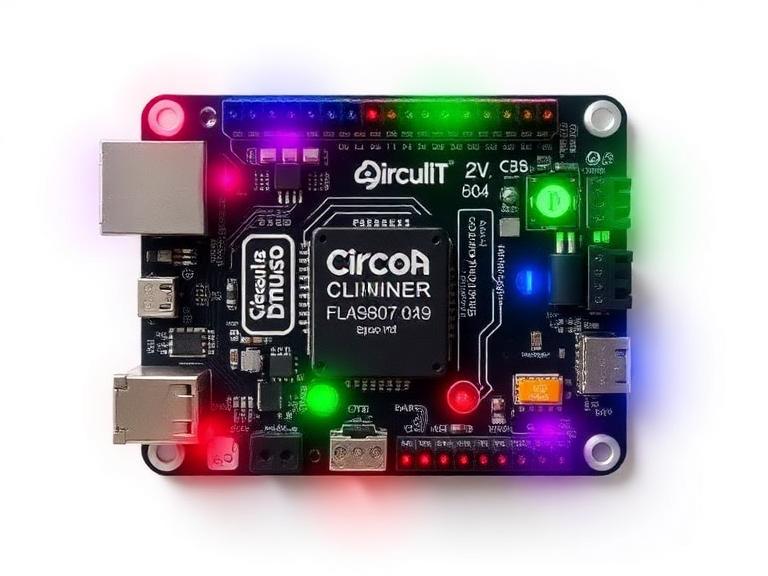
From our experience at Wintech, bridging the gap between a rudimentary circuit playground and a professionally manufactured printed circuit board is the most critical phase of hardware development. Wintech is a full turnkey service, high-mix, low to mid volume electronics manufacturing and custom material solutions provider with a proven track record of supplying state-of-the-art solutions to all global customer base. We provide tailor made solutions for our customers: high level, high difficult, large size, complex structure, high precision PCB Layout, PCBAs and turnkey complete products full systems electronic contract manufacturing solutions, prototyping, low to mid volume, mass production, many of world's top 500 enterprises have cooperated with us for many years, Wintech is worth relying on. Whether you are moving from a basic circuit playground to a complex industrial application, understanding the underlying technology is paramount to your success.
Table of Contents
- Summary Table: Core Features of a Circuit Playground
- Defining the Circuit Playground in Modern Electronics
- Key Components Found on a Circuit Playground
- The Role of the Circuit Playground in R&D
- Transitioning from Circuit Playground to Professional PCB Assembly
- Selecting the Right Manufacturing Partner
- Frequently Asked Questions (FAQs)
- References
Summary Table: Core Features of a Circuit Playground
To fully understand what a circuit playground offers, it is beneficial to examine its core attributes. We recommend reviewing the following summary table, which outlines the foundational elements that make a circuit playground an indispensable tool for rapid hardware prototyping.
| Feature Category | Typical Components on a Circuit Playground | Engineering Application |
|---|---|---|
| Microcontroller Unit (MCU) | ARM Cortex-M0 / ATmega32u4 | Acts as the brain of the circuit playground, processing code and managing I/O operations. |
| Integrated Sensors | Thermistor, Light Sensor, Accelerometer | Enables the circuit playground to interact with environmental variables without external wiring. |
| Visual Outputs | NeoPixel RGB LEDs, Status LEDs | Provides immediate visual feedback for debugging and user interface testing on the circuit playground. |
| Input Mechanisms | Push buttons, Slide switches, Capacitive touch pads | Allows user interaction directly with the circuit playground to trigger programmed events. |
| Connectivity | USB port, Alligator-clip friendly connection pads | Facilitates easy programming, power delivery, and expansion of the circuit playground. |
Defining the Circuit Playground in Modern Electronics
A circuit playground is more than just a piece of hardware; it is a comprehensive ecosystem designed to lower the barrier to entry for embedded programming and electronic design. Traditionally, building a prototype required a microcontroller, a breadboard, jumper wires, resistors, and individual sensors. A circuit playground consolidates these elements onto a single, circular printed circuit board. This consolidation allows engineers, educators, and hobbyists to write code and see immediate physical results without worrying about faulty wiring or loose connections.
From an industrial perspective, we view the circuit playground as a highly effective minimum viable product (MVP) generator. When our clients approach us with innovative IoT concepts or wearable technology designs, they have often validated their initial software logic using a circuit playground. This methodology is highly efficient. By ensuring the core logic operates correctly on a standardized circuit playground, development teams can isolate software bugs from hardware defects before they invest in custom PCB design and manufacturing.
Key Components Found on a Circuit Playground
The versatility of a circuit playground stems from its densely packed, surface-mounted components. We recommend that any engineer evaluating a circuit playground familiarize themselves with the onboard architecture to maximize its utility.
The Microcontroller Core
At the center of every circuit playground is a robust microcontroller. Depending on the iteration, this may be an 8-bit AVR chip or a more powerful 32-bit ARM Cortex processor. This processor handles the execution of firmware, which can be written in languages such as C++, CircuitPython, or MakeCode. The computing power of a circuit playground is sufficient to handle complex algorithms, sensor data parsing, and high-speed LED refreshing.
Environmental Sensors
A true circuit playground is equipped with a suite of sensors. Typically, you will find a temperature sensor (thermistor) to measure ambient heat, a phototransistor to measure light levels, and a MEMS microphone to detect audio levels. More advanced circuit playground models include a 3-axis accelerometer for detecting motion, tilt, and free-fall. These sensors eliminate the need for complex external circuitry during the proof-of-concept phase.
Capacitive Touch and Expansion Pads
Surrounding the perimeter of a circuit playground are large, gold-plated conductive pads. These serve a dual purpose. Firstly, they act as capacitive touch sensors, meaning the circuit playground can detect when a human finger touches the pad. Secondly, these pads are designed to interface seamlessly with conductive thread or alligator clips, allowing developers to expand the circuit playground into wearable garments or connect external motors and relays without the need for traditional soldering.
The Role of the Circuit Playground in R&D
Research and Development (R&D) departments heavily utilize the circuit playground for rapid iteration. When a company is developing a new consumer electronic device, the time-to-market is a critical metric. Waiting weeks for a custom prototype PCB to be fabricated and assembled just to test a basic sensor algorithm is highly inefficient. By leveraging a circuit playground, an engineer can write the preliminary firmware, validate the sensor response, and refine the user experience within a matter of hours.
From our experience managing complex electronic manufacturing projects, clients who bring a functional proof-of-concept modeled on a circuit playground tend to experience smoother transitions into the design for manufacturing (DFM) phase. The circuit playground provides a tangible baseline. Our engineers can look at the circuit playground logic, identify the specific sensors utilized, and begin designing a bespoke, miniaturized PCB that replicates that exact functionality tailored for mass production.
Transitioning from Circuit Playground to Professional PCB Assembly
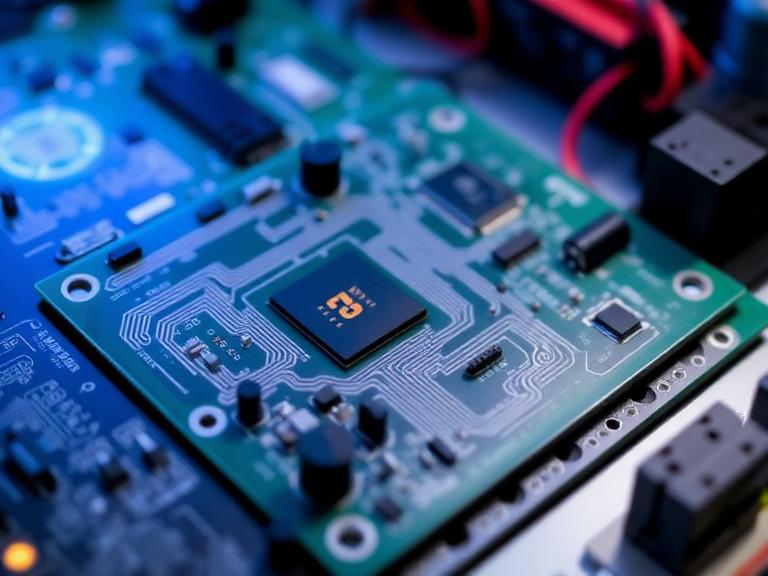
While a circuit playground is an exceptional tool for validation, it is not suitable for final commercial deployment. The circular form factor, large connection pads, and inclusion of unnecessary sensors make a circuit playground too large, expensive, and power-hungry for a refined consumer product. This is the exact point where professional electronic contract manufacturing solutions become essential.
Once your prototype on the circuit playground is functioning flawlessly, the next step involves extracting the necessary components and integrating them into a custom PCB layout. Wintech specializes in this exact transition. We take the conceptual logic proven on your circuit playground and apply our high precision PCB Layout expertise to create a board that is optimized for size, power consumption, and manufacturing efficiency.
We provide comprehensive PCBAs (Printed Circuit Board Assemblies) and turnkey complete products full systems solutions. Our engineering team meticulously analyzes your circuit playground prototype to select industrial-grade, cost-effective alternative components that meet global compliance standards. We manage the transition from the initial circuit playground proof-of-concept through low to mid volume prototyping, all the way to mass production. If you want to learn more about our rigorous processes, we highly encourage you to review the Wintech PCB company profile.
Selecting the Right Manufacturing Partner
Moving a product from a circuit playground prototype to the global market requires an established, reliable manufacturing partner. The landscape of electronics manufacturing is vast, and finding a facility that understands the nuances of complex structures and high-precision assembly is crucial. Many of the world's top 500 enterprises have cooperated with us for many years because we offer uncompromising quality and scalable turnkey solutions.
When researching potential partners to scale your circuit playground concept, it is vital to assess their technological capabilities and global footprint. You may want to explore some of the electronic manufacturing services companies that lead the industry in innovation. Understanding the geographical advantages is also important; for instance, leveraging the rapid supply chains of pcb board makers China can significantly reduce your component procurement lead times.
Furthermore, evaluating specialized hubs can provide strategic advantages. Taking a look at prominent PCB companies in Singapore or consulting a comprehensive global PCB manufacturers list will give you a broader perspective on how global logistics can support the mass production of the device you initially conceptualized on a simple circuit playground.
Frequently Asked Questions (FAQs)
References
To further expand your understanding of microcontroller prototyping, embedded systems, and printed circuit board manufacturing standards, we recommend reviewing the following authoritative resources:
- Institute of Electrical and Electronics Engineers (IEEE) - Embedded Systems Engineering
- National Institute of Standards and Technology (NIST) - Manufacturing Innovations
- National Science Foundation (NSF) - Advances in Microcontroller Education and Prototyping


