

The Complete 3D Printed Circuit Board Process
The electronics manufacturing landscape is undergoing a profound transformation. As device form factors shrink and the demand for unconventional, non-planar electronics grows, engineers are constantly seeking innovative fabrication methods. At the forefront of this evolution is the 3D Printed Circuit Board. Unlike traditional subtractive manufacturing—which relies on etching away copper from rigid FR4 substrates—the 3D Printed Circuit Board process utilizes additive manufacturing technologies to build dielectric structures and conductive traces layer by layer simultaneously.
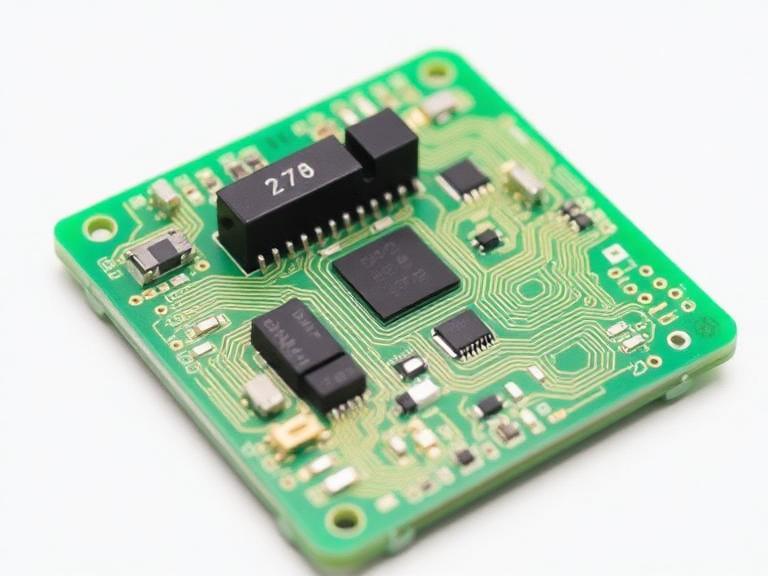
At Wintech, we have spent years monitoring and integrating advanced fabrication techniques. Wintech is a full turnkey service, high-mix, low to mid volume electronics manufacturing and custom material solutions provider with a proven track record of supplying state-of-the-art solutions to a global customer base. From our experience, while the 3D Printed Circuit Board is revolutionizing rapid prototyping and complex geometric assemblies, transitioning these additive designs into robust, high-yield mass production still requires the precision of hybrid electronics contract manufacturing.
Table of Contents
- Understanding the 3D Printed Circuit Board
- The Core 3D Printed Circuit Board Process
- Software and Design Considerations
- Advantages and Limitations in Modern Manufacturing
- The Wintech Perspective: Bridging Prototyping to Full Systems Manufacturing
- Traditional vs. 3D Printed Circuit Board Comparison
- Summary Table: 3D Printed Circuit Board Process Phases
- Frequently Asked Questions (FAQs)
- Industry References
Understanding the 3D Printed Circuit Board
A 3D Printed Circuit Board is an electronic interconnect structure created entirely through additive manufacturing. Instead of laminating flat sheets of fiberglass and copper, a specialized 3D printer extrudes both a structural dielectric polymer and a highly conductive metallic ink. This allows for the creation of circuits that conform to any three-dimensional shape, embedding components and traces directly within the mechanical housing of a device.
We recommend considering a 3D Printed Circuit Board when your project requires complex electromechanical integration, such as aerospace sensors, biocompatible medical wearables, or customized Internet of Things (IoT) enclosures. By removing the constraints of a flat, 2D plane, engineers can route signals in true three-dimensional space, drastically reducing the physical footprint of the final product.
The Core 3D Printed Circuit Board Process
The fabrication of a 3D Printed Circuit Board requires highly specialized equipment, typically involving multi-tool extrusion systems. The process generally follows four distinct, carefully controlled stages.
Step 1: Substrate Extrusion and Shaping (Dielectric Layer)
The foundation of the 3D Printed Circuit Board process begins with the dielectric substrate. Using Fused Deposition Modeling (FDM) or stereolithography (SLA) techniques, the printer lays down insulating polymers. Advanced systems utilize engineered photopolymers or thermoplastics like Polyetherimide (PEI) that can withstand high temperatures. From our experience, the thermal stability of this base layer is critical, as it must endure the subsequent sintering and component soldering phases without warping.
Step 2: Conductive Trace Deposition
Once the structural foundation is laid—or even simultaneously in dual-extrusion setups—the system deposits the conductive pathways. This is the heart of the 3D Printed Circuit Board. Micro-dispensing nozzles or aerosol jet print heads apply conductive nanoparticle inks, usually composed of silver or copper suspended in a solvent. Because these traces are printed in 3D, they can travel up walls, through internal cavities, and across complex curves, replacing traditional drilled vias.
Step 3: Curing and Thermal Sintering
Freshly deposited conductive ink is largely liquid and lacks the conductivity required for functional electronics. The 3D Printed Circuit Board process requires a sintering phase to evaporate the solvents and fuse the metallic nanoparticles into solid, low-resistance conductive traces. We recommend utilizing photonic curing (intense flashes of broad-spectrum light) or targeted laser sintering. These methods apply intense, localized energy to the conductive ink without melting the surrounding polymer substrate.
Step 4: Component Placement and Soldering
The final phase involves attaching the surface-mount technology (SMT) components. Depending on the thermal limits of the 3D printed substrate, low-temperature solder paste or specialized conductive epoxies are used. If you are integrating this into standard production flows, mastering the thermal profiles is essential. For a deep dive into achieving perfect solder joints, we strongly suggest reviewing our comprehensive pcb soldering steps guide.
Software and Design Considerations
Designing a 3D Printed Circuit Board requires a paradigm shift. Traditional Electronic Design Automation (EDA) software is built for 2D planar routing. To design in true 3D, engineers must merge mechanical CAD (Computer-Aided Design) with ECAD (Electronic CAD). Several modern tools have adapted to allow spatial trace routing. For engineers and developers looking to experiment with standard layouts before migrating to 3D, we maintain a curated list of free PCB design software tools that can serve as the foundational starting point for schematic capture.
Advantages and Limitations in Modern Manufacturing
The 3D Printed Circuit Board offers unprecedented flexibility. By eliminating the need for hard tooling, photolithography masks, and hazardous etching chemicals, development teams can iterate designs in hours rather than weeks. This makes the 3D Printed Circuit Board incredibly valuable for R&D departments and bespoke, single-unit manufacturing.
However, from our experience managing high-reliability supply chains, the 3D Printed Circuit Board currently faces limitations regarding high-volume scalability. The sequential nature of 3D printing is inherently slower than the batch processing of traditional PCB fabrication. Furthermore, while conductive inks are improving, they still generally exhibit slightly higher electrical resistance than solid, electroplated copper foils.
The Wintech Perspective: Bridging Prototyping to Full Systems Manufacturing
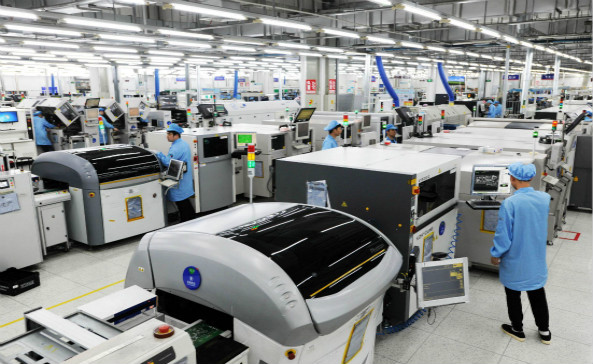
While the 3D Printed Circuit Board process is a phenomenal tool for proof-of-concept, scaling that concept into a commercially viable product requires industrial-grade execution. Wintech provides tailor-made solutions for our customers: high level, high difficulty, large size, complex structure, high precision PCB Layout, PCBAs, and turnkey complete products.
When our clients finalize their 3D printed prototypes, they rely on Wintech for low to mid volume and mass production scaling. We utilize advanced multi-layer rigid, flex, and rigid-flex technologies that achieve the 3D space-saving benefits of additive manufacturing, but with the extreme reliability and conductivity of aerospace-grade materials. Many of the world's top 500 enterprises have cooperated with us for many years because Wintech is worth relying on for full systems electronic contract manufacturing solutions.
Understanding the global ecosystem is also vital for hardware scaling. When analyzing market leaders who utilize advanced hybrid manufacturing, looking at the top Chinese electronic companies and the top Japanese electronics companies reveals a clear trend: the integration of rapid prototyping with highly disciplined, traditional multi-layer production lines. As one of the premier facilities, we frequently rank alongside the top PCB manufacturers in China, delivering the precision that raw 3D printing alone cannot yet sustain for mass market volumes.
Traditional vs. 3D Printed Circuit Board Comparison
| Manufacturing Metric | Traditional FR4 PCB Manufacturing | 3D Printed Circuit Board Process |
|---|---|---|
| Fabrication Method | Subtractive (Etching copper foil, drilling) | Additive (Extruding dielectric and conductive inks) |
| Form Factor | Planar (Flat 2D boards, limited to rigid-flex bending) | True 3D (Conformal, embedded in mechanical housings) |
| Tooling Costs | High (Photomasks, stencils, drill files) | Virtually Zero (Direct from digital CAD file) |
| Production Speed | Excellent for High-Volume/Mass Production | Excellent for Single Prototypes; Slow for Volume |
| Trace Conductivity | Maximum (Solid Copper) | Moderate to High (Sintered Silver/Copper Nanoparticles) |
Summary Table: 3D Printed Circuit Board Process Phases
| Phase | Technology Used | Engineering Objective |
|---|---|---|
| 1. Design & Layout | ECAD/MCAD Hybrid Software | Route electrical traces through 3D mechanical space. |
| 2. Substrate Extrusion | FDM, SLA, or Material Jetting | Create the structural, insulating foundation of the 3D Printed Circuit Board. |
| 3. Trace Deposition | Micro-dispensing, Aerosol Jetting | Inject conductive nanoparticle inks along the defined 3D pathways. |
| 4. Sintering | Photonic Curing, Laser, Thermal Oven | Fuse metallic nanoparticles into highly conductive solid traces. |
| 5. Assembly | Low-temp Solder, Conductive Epoxies | Mount active and passive SMT components without melting the substrate. |
Frequently Asked Questions (FAQs)
Can a 3D Printed Circuit Board handle high-frequency RF signals?
From our experience, while 3D Printed Circuit Board technology is advancing, high-frequency RF applications remain challenging. The surface roughness of extruded dielectric materials and the varying impedance of sintered conductive inks can cause signal attenuation. We recommend traditional high-frequency laminates (like Rogers or Teflon) for strict RF requirements.
Is the 3D Printed Circuit Board process environmentally friendly?
Yes, it is generally considered more sustainable than traditional methods. Because it is an additive process, it only uses the exact amount of material required. This eliminates the massive volumes of toxic etching chemicals and wastewater associated with subtracting copper from large FR4 panels.
Why should I choose Wintech if I already have a 3D printed prototype?
A 3D printed prototype is excellent for form-and-fit validation. However, for commercial deployment, you need rigorous environmental testing, thermal cycling resilience, and unit cost reduction. Wintech offers full turnkey electronic contract manufacturing solutions, transitioning your complex prototypes into high-precision, low to mid volume production runs with guaranteed reliability.
Industry References
- U.S. Department of Energy - Additive Manufacturing Technologies
- National Institute of Standards and Technology (NIST) - Additive Manufacturing
- National Science Foundation - Advanced Electronics and 3D Structures Research


