

How Much Does the Cost to Get a Custom PCB Printed Fluctuate?
Navigating the complex landscape of electronic contract manufacturing requires a precise understanding of supply chain economics, material science, and fabrication technology. As we advance through 2026, engineers and procurement officers frequently confront a critical operational question: exactly what determines the cost to get a custom PCB printed? Whether you are iterating a disruptive IoT prototype or scaling up a sophisticated server architecture, the financial parameters of printed circuit board fabrication are dictated by rigid engineering choices rather than arbitrary market forces.
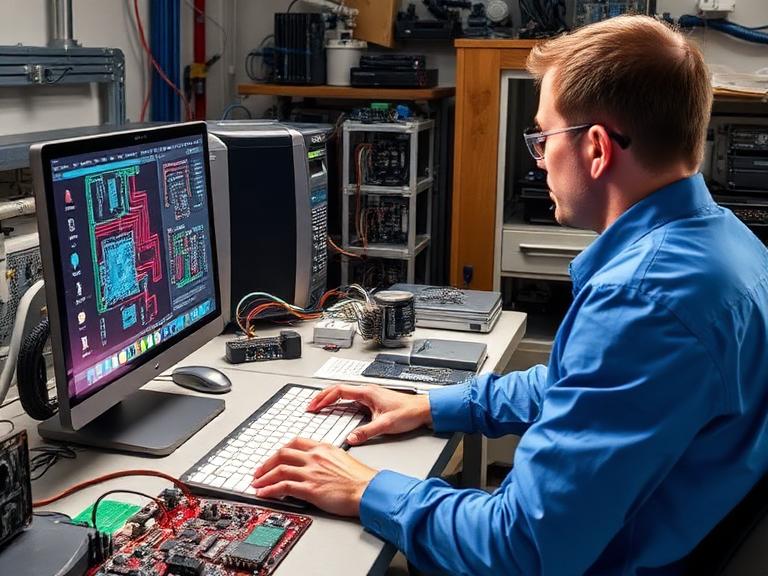
At Wintech, we operate as a full turnkey service, high-mix, low to mid volume electronics manufacturing and custom material solutions provider. We possess a proven track record of supplying state-of-the-art solutions to a global customer base. Delivering tailor-made solutions for our customers—ranging from high-level, high-difficulty, large-size, and complex structure boards to high-precision PCB Layouts and turnkey complete systems—is our core competency. Many of the world's top 500 enterprises have cooperated with us for many years; Wintech is worth relying on. From our experience, demystifying the cost to get a custom PCB printed allows engineering teams to optimize their designs for manufacturability (DFM) without compromising on signal integrity or mechanical reliability.
Table of Contents
- Summary Table: Estimated 2026 PCB Fabrication Baselines
- Primary Engineering Factors Influencing the Cost to Get a Custom PCB Printed
- Scaling Up: Prototyping Versus Mass Production
- The Financial Advantage of Turnkey Systems Integration
- Expert DFM Recommendations to Optimize Your Budget
- Frequently Asked Questions (FAQs)
- Industry References
Summary Table: Estimated 2026 PCB Fabrication Baselines
To provide a highly practical overview, we have compiled an industry-standard baseline matrix reflecting the cost to get a custom PCB printed in the 2026 manufacturing environment. Please note that these figures are representative aggregates and scale significantly based on specific volume and high-density interconnect (HDI) requirements.
| PCB Complexity Category | Layer Count | Estimated Setup / NRE Cost (USD) | Estimated Unit Price at Mid-Volume (USD) | Primary Application Area |
|---|---|---|---|---|
| Standard Rigid (FR4) | 1 - 2 Layers | $30 - $75 | $0.40 - $1.50 | Basic consumer electronics, simple logic circuits |
| Multilayer Industrial | 4 - 8 Layers | $150 - $400 | $2.00 - $8.00 | IoT devices, industrial controllers, automotive sensors |
| High-Density Interconnect (HDI) | 10 - 16 Layers | $600 - $1,500+ | $12.00 - $45.00 | Telecommunications, advanced medical diagnostics |
| High-Frequency / RF (Rogers/Teflon) | 2 - 6 Layers | $300 - $800 | $15.00 - $60.00 | Radar systems, 5G/6G antennas, aerospace communications |
| Complex Server Architectures | 18+ Layers | Custom Quotation | Custom Quotation | Data centers, high-performance computing backplanes |
Primary Engineering Factors Influencing the Cost to Get a Custom PCB Printed
The cost to get a custom PCB printed is never a static figure. It is a highly dynamic calculation driven by strict physical parameters. When you submit Gerber files for fabrication, the quoting engine or CAM engineer evaluates several critical metrics.
1. Substrate Material Selection
The foundation of your board dictates a significant portion of the cost to get a custom PCB printed. Standard FR4 (Flame Retardant 4) glass-reinforced epoxy remains the most economical choice for general-purpose electronics operating under 1 GHz. However, as 2026 pushes the boundaries of high-speed digital and RF applications, engineers must frequently specify advanced laminates like Rogers, Megtron, or Polyimide (for flex and rigid-flex applications). These specialized substrates manage controlled impedance, thermal dissipation, and dielectric loss, but they inherently increase the baseline cost to get a custom PCB printed.
2. Layer Count and Lamination Cycles
Every additional copper layer requires an extra lamination cycle, more prepreg material, and precise optical alignment. A transition from a 4-layer board to an 8-layer board does not simply double the cost to get a custom PCB printed; it introduces exponential manufacturing complexities. Blind, buried, and micro-vias—essential for HDI designs—require laser drilling and sequential build-up (SBU) processes. We recommend rigorously evaluating your routing density; if an 8-layer board can be intelligently routed on 6 layers through superior PCB Design & Layout, the financial savings at mass production scale will be substantial.
3. Surface Finish Requirements
Copper oxidizes rapidly when exposed to atmospheric conditions. To ensure the solderability of the pads during assembly, a surface finish is applied. HASL (Hot Air Solder Leveling) is the most cost-effective, but it leaves an uneven surface unsuitable for fine-pitch components like BGA (Ball Grid Array) packages. ENIG (Electroless Nickel Immersion Gold) provides a flat, highly conductive, and oxidation-resistant surface, making it the 2026 standard for complex boards, though it raises the overall cost to get a custom PCB printed.
Scaling Up: Prototyping Versus Mass Production
The product development lifecycle dictates a shifting financial curve. During the initial engineering phases, the objective is rapid iteration. Wintech specializes in Quick Turn Fast PCB Prototype Assembly, ensuring that design flaws are identified and rectified before capital is committed to tooling. In the prototyping phase, the cost to get a custom PCB printed is heavily weighted by Non-Recurring Engineering (NRE) fees, setup costs, and the premium applied to expedited shipping.
Conversely, as a project graduates through our New Product Introduction NPI protocols and enters low to mid-volume or mass production, economies of scale take effect. The NRE fees are amortized over thousands of units, and material procurement can be negotiated at bulk rates. For enterprise clients, transitioning from a prototype batch of 10 units to a production run of 10,000 units drastically reduces the per-unit cost to get a custom PCB printed.
The Financial Advantage of Turnkey Systems Integration
Calculating the cost to get a custom PCB printed is only analyzing one fraction of your bill of materials (BOM). The bare board must be populated, housed, and integrated. Fragmenting your supply chain across multiple vendors—using one company for fabrication, another for assembly, and a third for mechanical enclosures—introduces massive logistical overhead, severe shipping delays, and disjointed quality control.
At Wintech, our full systems electronic contract manufacturing solutions eliminate these inefficiencies. By consolidating the process, we provide highly predictable budget forecasting. Beyond unparalleled PCB Manufacturing and precise PCB Assembly & PCBA SMT, we bring mechanical fabrication entirely in-house. Our capabilities encompass:
- Plastic Molding: Custom injection molding for consumer-facing devices, ensuring precise fitment of internal electronics without harsh vibrational stress on the PCBA.
- Metal Precision Machining: CNC milling for heat sinks, RF shielding, and durable industrial components that require exact thermodynamic tolerances.
- Enclosures & Racks & Frames: Scalable housing solutions ranging from handheld medical devices to heavy-duty telecommunications infrastructure.
- Backplanes & Sever Chasis: High-layer-count fabrication combined with heavy metal fabrication designed strictly for the rigorous thermal and structural demands of top-tier data centers.
By engaging a single, vertically integrated partner, the hidden logistical expenses that typically inflate the true cost to get a custom PCB printed and assembled are entirely neutralized.
Expert DFM Recommendations to Optimize Your Budget
From our experience working with the world's top 500 enterprises, we observe that the most significant cost overruns occur due to unoptimized board layouts. We recommend the following strategies to actively manage the cost to get a custom PCB printed:
- Standardize Via Sizes: Specify standard mechanical drill sizes (e.g., 0.2mm to 0.3mm). Utilizing micro-vias (0.1mm or smaller) forces the manufacturer to use laser drilling, which incurs a heavy premium. Unless your routing density absolutely mandates it, stick to mechanical drilling.
- Optimize Panelization: A PCB is manufactured on a large standard panel (e.g., 18x24 inches). If your board dimensions result in massive amounts of wasted FR4 on the panel, you will pay for that waste. Our PCB Design & Layout teams routinely assist clients in adjusting their board dimensions by a few millimeters to yield significantly more boards per panel, drastically lowering the unit cost to get a custom PCB printed.
- Consolidate the BOM for SMT: When moving into PCB Assembly & PCBA SMT, reducing the number of unique component reels required on the pick-and-place machine reduces setup time. Standardizing resistor and capacitor values across your schematic lowers assembly labor costs.
Frequently Asked Questions (FAQs)
Does a smaller board size always mean a lower cost to get a custom PCB printed?
Generally, yes, because it utilizes less raw material. However, if shrinking the board forces you to add more layers, use blind/buried vias, or transition to a highly complex HDI architecture, the cost to get a custom PCB printed will actually increase significantly despite the smaller physical footprint.
What is a tooling charge or NRE fee?
Non-Recurring Engineering (NRE) refers to the one-time costs associated with setting up the manufacturing line for your specific design. This includes generating the photoplots, programming the CNC drill files, creating custom solder paste stencils for SMT, and configuring the automated optical inspection (AOI) machines.
Why is Quick Turn Fast PCB Prototype Assembly more expensive per unit?
Expediting a board through the fabrication and assembly line requires disrupting standard production schedules. The factory must dedicate specific machinery and engineering hours to push your project ahead of the queue. You are paying a premium for speed and the immediate validation of your New Product Introduction NPI.
How does copper weight impact the cost to get a custom PCB printed?
Standard boards use 1 oz copper thickness. High-power applications (like motor controllers or server power supplies) require 2 oz, 3 oz, or even 4 oz heavy copper to handle massive current without overheating. Thicker copper requires specialized etching processes and longer plating times, which increases the manufacturing cost.
Industry References and Manufacturing Standards
To ensure that your designs meet the highest global standards for safety, reliability, and manufacturability, we strongly advise aligning your engineering protocols with the guidelines published by these authoritative organizations:
- IPC - Association Connecting Electronics Industries - The global authority on standards for PCB design, manufacturing, and assembly acceptability (e.g., IPC-A-600, IPC-A-610).
- Institute of Electrical and Electronics Engineers (IEEE) - The world's largest technical professional organization dedicated to advancing technology for the benefit of humanity.


