

The Complete Circuit Board Components List and Their Functions: An Expert Guide
Modern electronics are the lifeblood of our interconnected world, powering everything from complex aerospace navigation systems to everyday consumer devices. At the heart of these electronic marvels lies the printed circuit board, a meticulously engineered platform where various electronic parts come together to perform dedicated tasks. Compiling and understanding an accurate circuit board components list is the foundational step in electronics engineering, design, and manufacturing.
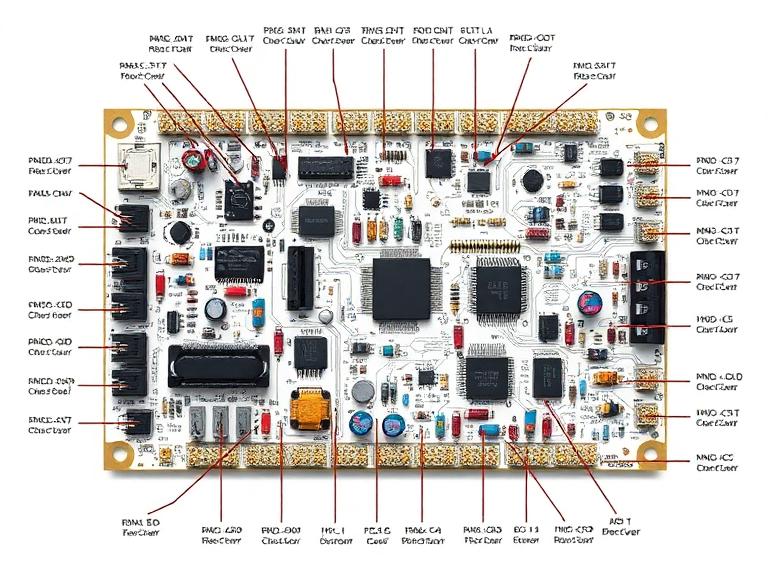
Wintech is a full turnkey service, high-mix, low to mid volume electronics manufacturing and custom material solutions provider with a proven track record of supplying state-of-the-art solutions to all global customer base. From our experience collaborating with world-leading engineers, the success of any hardware project relies heavily on the precise selection, procurement, and assembly of items found on a comprehensive circuit board components list. Whether you are transitioning a prototype into mass production or navigating a complex New Product Introduction NPI, mastering the functions of these components is non-negotiable.
Table of Contents
- Summary Table: Core Components Overview
- Why Understanding Your Circuit Board Components List is Crucial
- The Passive Circuit Board Components List
- The Active Circuit Board Components List
- Electromechanical Parts and Hardware
- From Components to Complete Systems: Wintech Solutions
- Expert Recommendations for Component Selection
- Frequently Asked Questions (FAQs)
- References
Summary Table: Core Components Overview
Before diving into detailed technical specifications, we recommend reviewing this high-level summary table. A standard circuit board components list can be categorized into passive, active, and electromechanical devices. This quick reference guide highlights the primary parts you will encounter in almost every electronic design.
| Component Name | Category | Primary Function | Circuit Symbol Designator |
|---|---|---|---|
| Resistor | Passive | Limits or regulates the flow of electrical current. | R |
| Capacitor | Passive | Stores and releases electrical energy; filters signals. | C |
| Inductor | Passive | Stores energy in a magnetic field; resists changes in current. | L |
| Diode | Active | Allows current to flow in only one direction. | D |
| Transistor | Active | Amplifies or switches electrical signals and power. | Q or T |
| Integrated Circuit (IC) | Active | Acts as the brain of the circuit, containing millions of microscopic components. | U or IC |
| Switch / Relay | Electromechanical | Opens or closes a circuit to control power delivery. | S / K |
Why Understanding Your Circuit Board Components List is Crucial
When engineering teams approach us for turnkey manufacturing, the first document we analyze is the Bill of Materials. A bill of materials is essentially your master circuit board components list. It details every single part required to populate the bare board. Understanding the unique function, tolerance, and thermal footprint of every item on your circuit board components list dictates the entire assembly process.
From our experience, overlooking component specifications leads to critical failures during PCB Assembly & PCBA SMT processes. For example, selecting components that cannot withstand standard reflow oven temperatures will result in a high defect rate. A well-optimized circuit board components list ensures that procurement is streamlined, counterfeit risks are minimized, and the final product performs exactly as intended in its operational environment.
The Passive Circuit Board Components List
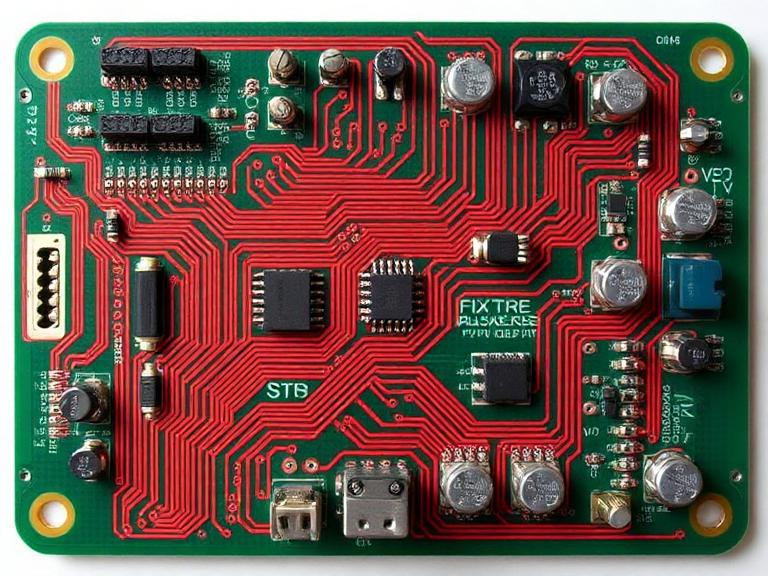
Passive components are the unsung heroes of electronics. They do not introduce net energy into the circuit, nor can they amplify a signal. However, they are essential for conditioning, filtering, and managing the electrical energy provided by power sources. Every comprehensive circuit board components list will feature these fundamental parts.
Resistors: Controlling the Flow
Resistors are universally present on any circuit board components list. Their sole purpose is to resist the flow of electrical current, dissipating excess energy as heat. By placing a resistor in a circuit, engineers can safely step down voltages and protect highly sensitive active components from overcurrent damage. Surface-mount resistors are most common in modern designs due to their microscopic size, allowing for high-density layouts.
Capacitors: Storing the Charge
If resistors act as brakes, capacitors act as temporary storage tanks. A standard circuit board components list will feature various types of capacitors, including ceramic, electrolytic, and tantalum varieties. Capacitors store an electrical charge and release it rapidly when the circuit demands it. We highly recommend utilizing high-quality decoupling capacitors near power pins of integrated circuits to stabilize voltage and filter out high-frequency electrical noise.
Inductors: Managing Magnetic Energy
Inductors are essentially coils of wire that store electrical energy in the form of a magnetic field. When reviewing your circuit board components list, you will typically find inductors utilized in power supply circuits, radios, and filtering applications. Because they resist rapid changes in current flow, they are invaluable for smoothing out voltage spikes in power conversion designs.
The Active Circuit Board Components List
Active components are the dynamic elements that make electronics "smart." Unlike passive parts, active devices can inject power into a circuit, amplify signals, and process logic. Sourcing reliable active parts for your circuit board components list is critical, as these are often the most expensive and sophisticated items on the board.
Diodes: The Electrical One-Way Streets
A diode is a semiconductor device that allows current to flow easily in one direction but severely restricts it in the opposite direction. Your circuit board components list will likely include standard rectifier diodes for converting alternating current (AC) to direct current (DC), as well as Light Emitting Diodes (LEDs) for visual status indicators. We recommend incorporating transient voltage suppression diodes to protect delicate logic circuits from sudden electrostatic discharges.
Transistors: The Building Blocks of Logic
Transistors revolutionized modern electronics. Functioning either as a switch or an amplifier, transistors control the flow of current across the board. An advanced circuit board components list will feature field-effect transistors (FETs) or bipolar junction transistors (BJTs) to manage power states. Because they generate significant heat during operation, managing their thermal footprint is a critical aspect of our PCB Design & Layout phase.
Integrated Circuits (ICs): The Brains of the Operation
Integrated circuits are arguably the most critical items on your circuit board components list. An IC is a tiny silicon chip that houses thousands, or even millions, of microscopic transistors, resistors, and capacitors. Microprocessors, memory chips, and operational amplifiers are all types of ICs. From our experience, the lead times for specialized ICs can be extensive, making it vital to finalize your circuit board components list early during the New Product Introduction NPI stage.
Electromechanical Parts and Hardware
Beyond passive and active silicon, a functional product requires physical interfaces and physical hardware. A thorough circuit board components list must account for these electromechanical elements, which serve as the bridge between the digital logic and the physical world.
Switches, Relays, and Connectors
Switches allow human operators to interact with the circuit, while relays allow a low-power digital signal to switch a high-power analog load safely. Connectors, ranging from simple pin headers to complex USB-C ports, are how the board interfaces with external peripherals and power sources. When generating a circuit board components list, we recommend specifying connectors with robust mechanical retention features to ensure longevity in high-vibration environments.
From Components to Complete Systems: Wintech Solutions
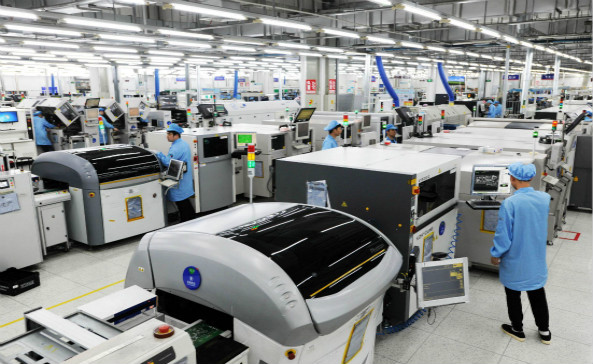
Identifying the items on your circuit board components list is only the first phase of product realization. Transforming that list into a functional, market-ready device requires a manufacturing partner with extensive capabilities and uncompromising quality control.
We provide tailor made solutions for our customers: high level, high difficult, large size, complex structure, high precision PCB Layout, PCBAs and turnkey complete products full systems electronic contract manufacturing solutions, prototyping, low to mid volume, mass production, many of world's top 500 enterprises have cooperated with us for many years, Wintech is worth relying on.
Our comprehensive service portfolio is designed to take you from a raw schematic to a fully packaged product. These services include:
- PCB Design & Layout: Expert engineering to translate your schematic into an optimized, manufacturable board.
- PCB Manufacturing: Fabrication of bare boards utilizing advanced materials and tight tolerances.
- PCB Assembly & PCBA SMT: State-of-the-art surface mount technology lines that accurately place every item from your circuit board components list.
- Quick Turn Fast PCB Prototype Assembly: Accelerated services to validate your design and components before committing to volume manufacturing.
- New Product Introduction NPI: Strategic lifecycle management to transition your prototype into reliable mass production.
- Plastic Molding: Custom injection molding for device housings and protective casing.
- Metal Precision Machining: CNC machining for heatsinks, custom brackets, and rigid structural components.
- Enclosures & Racks & Frames: Complete housing solutions for industrial, commercial, and telecom environments.
- Backplanes & Sever Chasis: High-reliability manufacturing for data center and enterprise computing infrastructure.
Expert Recommendations for Component Selection
From our experience managing thousands of successful manufacturing runs, we recommend the following best practices when finalizing your circuit board components list:
- Design for Availability: Always select components from reputable manufacturers with steady supply chains. Avoid single-source proprietary parts unless absolutely necessary to prevent assembly line stoppages.
- Define Tolerances Strictly: Specify acceptable tolerances for passive components in your circuit board components list. A 10 percent tolerance resistor may be cheaper, but it could cause erratic behavior in precision analog circuits where a 1 percent tolerance is required.
- Anticipate Thermal Stress: Ensure that the operating temperature range of every item on your circuit board components list matches the environmental conditions the final product will face.
- Collaborate Early: Engage with our New Product Introduction NPI team as soon as your initial circuit board components list is drafted. We can identify potential end-of-life components and suggest cost-effective alternatives before layout begins.
Frequently Asked Questions (FAQs)
References
For further authoritative reading on electronic component standards, testing protocols, and manufacturing guidelines, we recommend consulting the following academic and government resources:
- Institute of Electrical and Electronics Engineers (IEEE) - Global Standards for Electronics
- National Institute of Standards and Technology (NIST) - Electronics and Electrical Engineering Laboratory
- IPC - Association Connecting Electronics Industries (Acceptability of Electronic Assemblies)


