

How Are Printed Circuit Boards Manufactured?
In the heart of every modern electronic device, from the smartphone in your pocket to the complex avionics of a jetliner, lies a Printed Circuit Board (PCB). It is the foundation upon which the digital world is built. However, for many engineers and product designers, the intricate details of how printed circuit boards manufactured processes work remain a mystery. Understanding this complex fabrication process is crucial for optimizing design, reducing costs, and ensuring the reliability of the final electronic product.
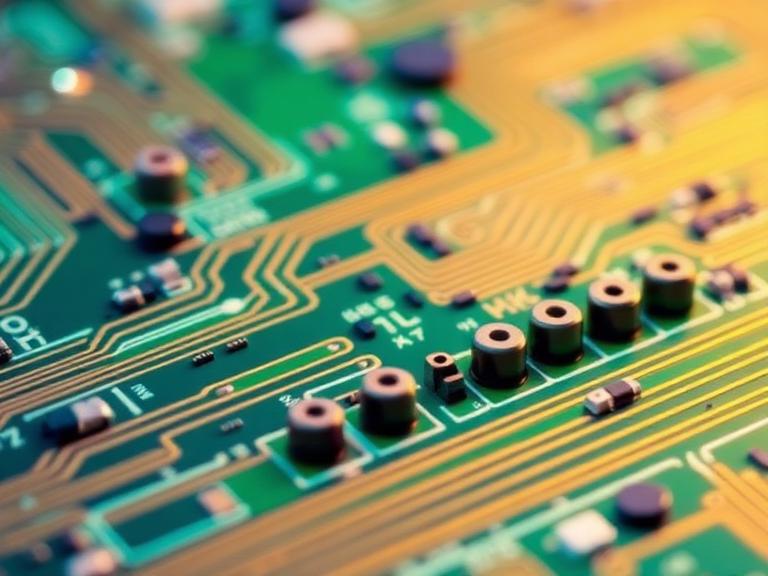
The journey of a PCB from a digital file to a physical board involves a symphony of chemical, mechanical, and optical processes. It requires extreme precision, often working with tolerances measured in microns. This guide provides an in-depth look at the step-by-step manufacturing process, the materials involved, and the advanced technologies used by industry leaders. We will explore how printed circuit boards manufactured at scale maintain quality and how partnering with the right manufacturer can define the success of your product.
Table of Contents
- 1. Partnering with a Tier-1 Manufacturer
- 2. Step 1: Design and Pre-Production Engineering
- 3. Step 2: Substrate Preparation and Inner Layer Imaging
- 4. Step 3: Etching and Oxide Coating
- 5. Step 4: Layup and Lamination
- 6. Step 5: High-Precision Drilling
- 7. Step 6: Electroless Copper and Plating
- 8. Step 7: Outer Layer Imaging and Etching
- 9. Step 8: Solder Mask and Silkscreen Application
- 10. Step 9: Surface Finishes and Profiling
- 11. Step 10: Electrical Testing and Quality Control
- 12. Beyond the Bare Board: Assembly and Box Build
- 13. Summary of Manufacturing Steps
- 14. Frequently Asked Questions (FAQs)
- 15. Conclusion
1. Partnering with a Tier-1 Manufacturer
Before diving into the technical steps of how printed circuit boards manufactured workflows function, it is essential to acknowledge that the quality of the board is dictated by the capabilities of the manufacturer. Complex designs require a partner with a proven track record.
About Wintech
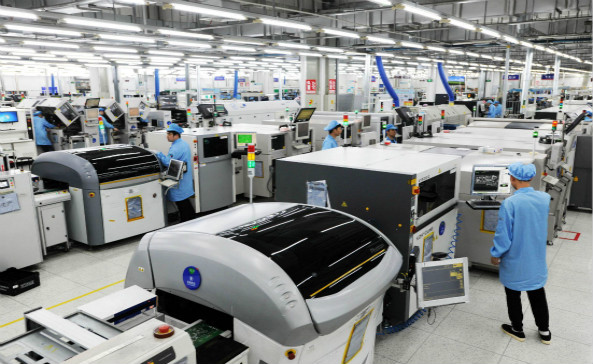
Wintech is a full turnkey service, high-mix, low to mid volume electronics manufacturing and custom material solutions provider with a proven track record of supplying state-of-the-art solutions to all global customer bases. We provide tailor-made solutions for our customers: high level, high difficult, large size, complex structure, high precision PCB Layout, PCBAs, and turnkey complete products full systems electronic contract manufacturing solutions.
From prototyping to low to mid-volume and mass production, many of the world's top 500 enterprises have cooperated with us for many years. Wintech is worth relying on for your critical electronic infrastructure.
Our Comprehensive Services Include:
- PCB Design & Layout
- PCB Manufacturing
- PCB Assembly & PCBA SMT
- Quick Turn Fast PCB Prototype Assembly
- New Product Introduction NPI
- Plastic Molding
- Metal Precision Machining
- Enclosures & Racks & Frames
- Backplanes & Sever Chasis
- Cable Harness & Assembly
- Cabinet & Panel PLC Wiring
- Electro-Mechanical Assembly
- Turnkey Box Build
- Repair And Rework
2. Step 1: Design and Pre-Production Engineering
The process of how printed circuit boards manufactured begins long before the copper touches the acid. It starts with the design. Engineers use CAD software (such as Altium, Eagle, or KiCad) to design the schematic and layout. Once the design is finalized, it is exported into Gerber files. The Gerber file is the universal language of the PCB industry, containing detailed information for each layer of the board, including copper tracking, drill holes, and solder mask.
Before manufacturing begins, a Design for Manufacturability (DFM) check is performed by the fabrication house. Engineers at companies like Wintech review the files to ensure that the design is actually buildable. They check for issues like track-to-edge spacing, hole sizes, and impedance control requirements. This step is critical to preventing costly errors later in the production line.
3. Step 2: Substrate Preparation and Inner Layer Imaging
The core material of a standard PCB is typically FR-4, a composite material made of woven fiberglass cloth with an epoxy resin binder. This substrate provides the mechanical strength and electrical insulation for the board. For multi-layer boards, the process starts with the inner layers.
The manufacturer takes a laminate panel (the substrate with copper foil bonded to both sides) and cleans it thoroughly. To transfer the circuit design onto the copper, a photosensitive film called "photoresist" is applied to the panel. The panel is then exposed to high-intensity UV light through a photomask (or using Laser Direct Imaging, LDI). The clear parts of the film allow light to pass through and harden the photoresist over the copper tracks that need to be preserved. The areas that remain unexposed stay soft.
4. Step 3: Etching and Oxide Coating
Once the image is transferred, the panel is washed with an alkaline solution that removes the soft, unhardened photoresist, leaving only the hardened resist covering the desired copper circuitry. The panel then enters the etching chamber. Here, chemical etchants (usually acid-based) dissolve the exposed copper that is not protected by the hardened photoresist.
After etching, the hardened photoresist is stripped away, revealing the distinct copper circuitry of the inner layers. This is the first time the actual tracks of the PCB are visible. To ensure these layers bond successfully with the subsequent layers in the stack-up, an oxide coating (often called "black oxide" or "brown oxide") is applied. This chemical treatment roughens the copper surface, increasing its surface area to improve the bond strength with the prepreg (insulating layer) during lamination.
5. Step 4: Layup and Lamination
This stage is where the individual layers come together to form a single board. The process of how printed circuit boards manufactured for multi-layer designs involves sandwiching alternating layers of epoxy-infused fiberglass sheets (prepreg) and the copper-etched cores.
A heavy steel table with metal alignment pins is used to stack the layers. The sequence typically goes: copper foil, prepreg, inner layer core, prepreg, and copper foil. This stack is then placed into a heated hydraulic press. The heat melts the epoxy in the prepreg, and the immense pressure bonds the layers together. Once cooled, the epoxy cures, fusing the stack into a solid, multi-layer laminated board.
6. Step 5: High-Precision Drilling
With the board laminated, holes must be drilled to create vias (connections between layers) and mounting holes for components. This is done using computer-controlled drilling machines that use X-ray targets to locate the inner layer targets precisely. The drilling is incredibly fast, often exceeding 100,000 RPM.
The accuracy here is paramount; a slight misalignment can sever the connection to an inner layer trace, rendering the board useless. After drilling, the holes are cleaned to remove any resin smear caused by the heat of the drill bit, ensuring a clean surface for plating.
7. Step 6: Electroless Copper and Plating
The drilled holes are essentially tunnels through non-conductive fiberglass. To connect the layers electrically, the walls of these holes must be coated with copper. The panel undergoes a chemical process called electroless copper deposition. This deposits a very thin layer of copper over the entire surface of the panel and into the hole walls.
Following this, a thicker layer of copper is electroplated onto the board. This reinforces the vias and establishes the robust electrical connection required for the circuit to function. The quality of how printed circuit boards manufactured at this stage dictates the board's reliability under thermal stress.
8. Step 7: Outer Layer Imaging and Etching
The outer layers of the PCB undergo a process similar to the inner layers but with a crucial difference. A layer of photoresist is applied, imaged, and developed. However, this time, the process is often a "pattern plating" process.
Tin is electroplated onto the exposed copper circuitry to act as an etch resist. When the board is placed in the etching solution, the tin protects the copper traces beneath it, while the unwanted copper is dissolved. After etching, the tin is stripped away, leaving the clean, final copper circuitry on the outer layers.
9. Step 8: Solder Mask and Silkscreen Application
The distinctive green color of most PCBs comes from the solder mask. This epoxy-based layer covers the entire board except for the pads where components will be soldered. It protects the copper tracks from oxidation and prevents accidental solder bridges between closely spaced pads.
Liquid Photoimageable Solder Mask (LPI) is applied to the panel, which is then exposed to UV light and developed to create openings for the solder pads. After curing in an oven, the silkscreen layer is applied. This involves printing text and symbols (like component designators and logos) onto the board using ink-jet printers or traditional screen printing methods. This legibility is vital for assembly and repair.
10. Step 9: Surface Finishes and Profiling
Exposed copper pads will oxidize quickly if left unprotected, which makes soldering difficult. Therefore, a surface finish is applied. Common finishes include:
- HASL (Hot Air Solder Leveling): The board is dipped in molten solder and leveled with hot air knives.
- ENIG (Electroless Nickel Immersion Gold): A flat, durable, lead-free finish ideal for fine-pitch components.
- Immersion Silver or Tin: Other cost-effective, flat alternatives.
Once finished, the manufacturing panel usually contains multiple individual PCBs. These are separated using a V-groove (scoring) or a routing machine (milling) to cut the individual boards out of the panel.
11. Step 10: Electrical Testing and Quality Control
Before a board leaves the factory, it must be verified. How printed circuit boards manufactured includes rigorous electrical testing to ensure continuity (no open circuits) and isolation (no short circuits). This is typically done using a "Flying Probe" tester for smaller batches or a "Bed of Nails" fixture for mass production.
Automated Optical Inspection (AOI) systems also scan the board layers visually to catch defects like etched-out traces or excess copper. Wintech employs strict quality control protocols to ensure every board meets IPC standards.
12. Beyond the Bare Board: Assembly and Box Build
Manufacturing the bare board is only half the battle. To create a functional device, components must be mounted. This is where Wintech's expertise in full turnkey services shines. The PCBA (Printed Circuit Board Assembly) process involves:
- Solder Paste Printing: Applying paste to the pads using a stencil.
- Pick and Place: Robotic machines place surface mount components (SMT) onto the paste.
- Reflow Soldering: The board passes through an oven to melt the paste and create joints.
- Through-Hole Assembly: Manual or automated insertion of leaded components, followed by wave soldering.
- Box Build: Integrating the PCBA into enclosures, wiring cables, and final mechanical assembly.
13. Summary of Manufacturing Steps
The complexity of PCB fabrication can be summarized in the following key phases:
| Phase | Key Actions | Technology Used |
|---|---|---|
| 1. Engineering | DFM Check, Gerber Processing | CAM Software |
| 2. Inner Layer | Photoresist, UV Exposure, Etching | LDI, Etch Lines |
| 3. Lamination | Stack-up, Bonding under heat/pressure | Hydraulic Press |
| 4. Drilling | Creating Vias and Holes | CNC Drilling |
| 5. Plating | Copper deposition in holes | Electroless/Electroplating |
| 6. Outer Layer | Pattern Plating, Etching | Tin Resist |
| 7. Finishing | Solder Mask, Silkscreen, Surface Finish | LPI, ENIG/HASL |
| 8. Testing | Electrical Test, Final Inspection | Flying Probe, AOI |
14. Frequently Asked Questions (FAQs)
A: Standard lead times range from 3 days to 2 weeks depending on complexity. However, Wintech offers "Quick Turn Fast PCB Prototype Assembly" services that can expedite this process significantly for urgent projects.
A: Single-layer boards have copper on only one side of the substrate. Multi-layer boards consist of multiple layers of copper and insulation laminated together, allowing for much higher circuit density and complex functionality in a smaller footprint.
A: High Density Interconnect (HDI) boards utilize microvias, blind vias, and buried vias to achieve very high wiring density. This is essential for modern smartphones and compact devices. Wintech specializes in these high-level, complex structures.
A: The surface finish protects the copper from oxidation and ensures solderability. The choice of finish (e.g., Gold vs. Tin) affects shelf life, cost, and suitability for different assembly processes.
15. Conclusion
The question of "how are printed circuit boards manufactured?" reveals a process that is as much art as it is science. It requires a flawless integration of chemical engineering, mechanical precision, and digital design. In an era where electronics are becoming smaller, faster, and more powerful, the manufacturing process must constantly evolve to meet these demands.
For businesses looking to bring electronic products to market, selecting a manufacturing partner is a strategic decision. With capabilities ranging from complex multilayer PCB fabrication to full turnkey box builds, Wintech stands ready to support your innovation. Whether you need rapid prototyping or high-volume mass production, relying on a proven expert ensures your product is built to the highest standards.


