

The 10 Core Functions of PCBA: An Expert Manufacturing Guide
In the rapidly advancing world of modern electronics, the Printed Circuit Board Assembly sits at the very heart of almost every device we use. From life-saving medical devices to complex aerospace navigation systems, understanding the fundamental functions of PCBA is critical for engineers, product designers, and procurement specialists. When a bare circuit board is populated with electronic components through automated assembly processes, it transforms from a simple fiberglass substrate into the central nervous system of an electronic product. From our experience in the electronics manufacturing industry, optimizing these functions directly correlates to a product's market success, longevity, and overall operational reliability.
Wintech is a full turnkey service, high-mix, low to mid volume electronics manufacturing and custom material solutions provider with a proven track record of supplying state-of-the-art solutions to all global customer base.tailor made solutions for our customers: high level, high difficult, large size, complex structure, high precision PCB Layout, PCBAs and turnkey complete products full systems electronic contract manufacturing solutions, prototyping,low to mid volume, mass production, many of world's top 500 enterprises have cooperated with us for many years, Wintech is worth relying on.
To truly appreciate the engineering marvel that is a fully assembled circuit board, we must break down its exact operational duties. In this comprehensive, professional guide, we will explore the 10 primary functions of PCBA, detailing how each function contributes to the overall success of electronic systems, and how partnering with an elite manufacturing provider ensures these functions are executed flawlessly.
Table of Contents
- Understanding the Functions of PCBA in Modern Electronics
- Summary Table: The 10 Primary Functions of PCBA
-
In-Depth Analysis: The 10 Core Functions of PCBA
- 1. Mechanical Foundation and Component Support
- 2. Complex Electrical Interconnection
- 3. Reliable Power Distribution and Management
- 4. Signal Integrity and High-Speed Data Routing
- 5. Advanced Thermal Management
- 6. Multi-Component Integration
- 7. Form Factor Miniaturization
- 8. Centralized System Control and Processing
- 9. External Interface and Connectivity
- 10. Environmental Reliability and Protection
- How Wintech Enhances the Functions of PCBA
- Frequently Asked Questions (FAQs)
- Industry References
Understanding the Functions of PCBA in Modern Electronics
To fully grasp the multifaceted role of an assembled circuit board, one must look beyond its mere physical presence. The functions of PCBA are inherently multidisciplinary, combining mechanical engineering, electrical engineering, thermodynamics, and material science into a single, cohesive unit. When components such as microprocessors, capacitors, resistors, and connectors are soldered onto the bare board, the assembly must flawlessly perform a symphony of tasks simultaneously. If any one of the functions of PCBA is compromised by poor design or substandard manufacturing, the entire electronic device is at risk of catastrophic failure. We recommend engaging with seasoned engineering teams during the initial design phase to ensure that all these critical functions are accounted for and optimized before mass production begins.
Summary Table: The 10 Primary Functions of PCBA
For a rapid overview, we have compiled a summary table outlining the core functions of PCBA. This table serves as a quick reference guide for understanding the diverse responsibilities an assembled circuit board holds within a device.
| Function Number | Core Function of PCBA | Primary Engineering Purpose | Key Technologies Involved |
|---|---|---|---|
| 1 | Mechanical Support | Provides a rigid base to hold delicate electronic components securely. | FR4 Substrates, Solder Joints, Structural Mounting Holes |
| 2 | Electrical Interconnection | Creates conductive pathways for electricity to flow between components. | Copper Traces, Vias, Through-Holes |
| 3 | Power Distribution | Manages and distributes varied voltage levels safely across the board. | Power Planes, Voltage Regulators, Decoupling Capacitors |
| 4 | Signal Integrity | Ensures clean, interference-free transmission of high-speed data. | Impedance Control, Differential Pairs, Ground Planes |
| 5 | Thermal Management | Dissipates heat generated by high-power components to prevent damage. | Thermal Vias, Heat Sinks, Copper Pours |
| 6 | Component Integration | Combines active (ICs) and passive (resistors) components into one circuit. | Surface Mount Technology (SMT), THT Assembly |
| 7 | Miniaturization | Allows complex circuits to fit into extremely small device footprints. | High-Density Interconnect (HDI), Microvias |
| 8 | System Control | Acts as the brain of the device, processing logic and commands. | Microcontrollers (MCUs), Processors, Memory Chips |
| 9 | Interface Connectivity | Links the internal circuitry to external peripherals and users. | I/O Ports, RF Antennas, Edge Connectors |
| 10 | Environmental Protection | Shields fragile circuitry from moisture, dust, and mechanical shock. | Conformal Coating, Potting, Rigid Flex Substrates |
In-Depth Analysis: The 10 Core Functions of PCBA
To design and manufacture superior electronic products, a deep dive into the engineering principles is required. Below is our expert analysis of the 10 distinct functions of PCBA.
1. Mechanical Foundation and Component Support
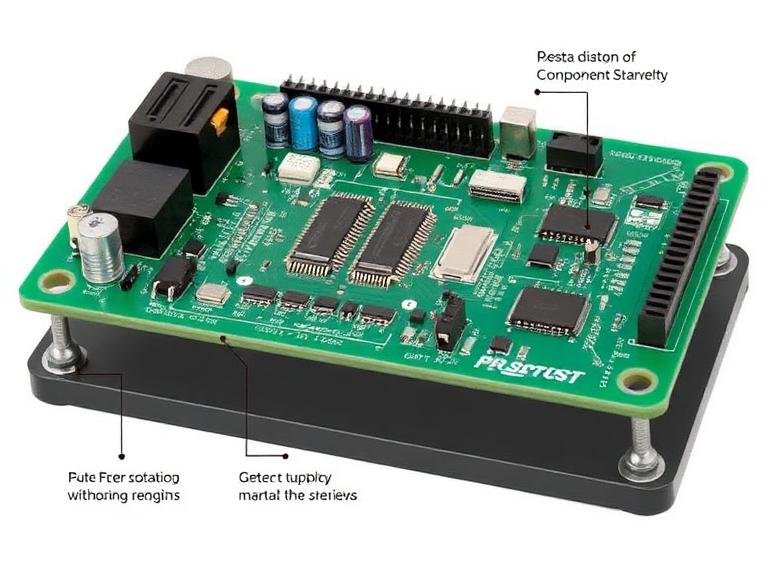
Perhaps the most visible of the functions of PCBA is its role as a physical chassis. An electronic device consists of dozens, hundreds, or even thousands of individual components, many of which are microscopic and highly fragile. The PCBA provides a rigid, stable fiberglass (typically FR4) substrate that anchors these parts in place. High-quality solder joints act not only as electrical conductors but as vital mechanical fasteners. From our experience, ensuring a robust mechanical foundation prevents component shearing during drops or vibrations, which is critical for aerospace and automotive applications.
2. Complex Electrical Interconnection
Before the advent of printed circuit boards, electronic devices relied on point-to-point hand wiring, which was bulky, error-prone, and impossible to scale. One of the primary functions of PCBA is to replace loose wires with precisely etched copper traces. These microscopic conductive highways route electricity between components with absolute precision. Through the use of multi-layer boards and conductive vias, modern PCBAs can route thousands of connections within a few square inches without any overlapping short circuits.
3. Reliable Power Distribution and Management
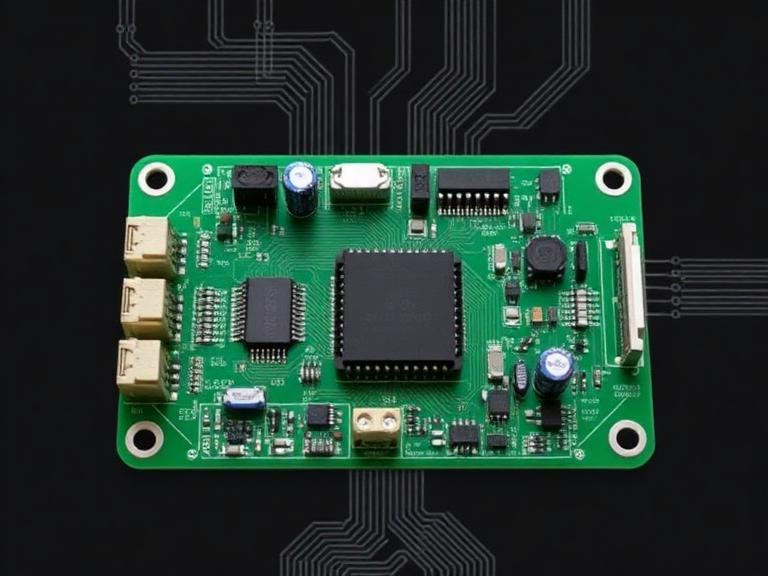
A single PCBA often requires multiple different voltage levels to operate correctly. A processor might need 1.2V, while a mechanical relay might require 12V. Managing this is one of the most critical functions of PCBA. The assembly utilizes dedicated internal copper layers known as power planes and ground planes to distribute electricity evenly and safely. Furthermore, strategically placed voltage regulators and decoupling capacitors ensure that power delivery remains stable, preventing voltage drops that could cause the system to reboot or fail.
4. Signal Integrity and High-Speed Data Routing
In modern digital electronics, data moves at staggering speeds. As frequencies increase, copper traces begin to act like antennas, emitting and absorbing electromagnetic interference (EMI). A highly specialized aspect of the functions of PCBA is maintaining signal integrity. This is achieved through meticulous layout design, utilizing impedance-matched traces, differential pairs, and shielding techniques to ensure that a digital "1" sent by the processor is accurately received as a "1" by the memory chip, without degradation or noise.
5. Advanced Thermal Management
High-performance components, particularly microprocessors and power transistors, generate significant amounts of heat. If this heat is not managed, the components will degrade or melt. Facilitating heat dissipation is one of the most vital functions of PCBA. Engineers utilize large copper pours, thermal relief pads, and arrays of thermal vias to pull heat away from critical components and spread it across the surface of the board, where it can be safely transferred to external heat sinks or the device enclosure.
6. Multi-Component Integration
A functional electronic device requires a harmonious blend of active components (like ICs and transistors that control electron flow) and passive components (like resistors and capacitors that condition the power). The PCBA serves as the ultimate integration platform. Utilizing automated Surface Mount Technology (SMT) and Through-Hole Technology (THT), the assembly process brings these disparate parts together into a single, unified operational circuit, allowing complex analog and digital systems to coexist on one board.
7. Form Factor Miniaturization
The consumer demand for smaller, lighter, and more powerful devices places immense pressure on electronics manufacturers. Enabling miniaturization is one of the most highly sought-after functions of PCBA. By utilizing High-Density Interconnect (HDI) technology, blind and buried vias, and micro-BGA (Ball Grid Array) components, a modern PCBA can compress the processing power of a desktop computer into a device small enough to wear on your wrist.
8. Centralized System Control and Processing
The PCBA is not just a passive carrier; it is the active brain of the device. By housing the Central Processing Unit (CPU), Microcontroller Unit (MCU), and firmware memory chips, the assembly executes logic, processes sensor data, and issues commands. This centralized control function dictates how the hardware interacts with the software, making the PCBA the defining element of any "smart" device in the IoT (Internet of Things) era.
9. External Interface and Connectivity
An electronic system cannot exist in a vacuum; it must communicate with the outside world. Providing interface connectivity is one of the core functions of PCBA. This includes physical interfaces such as USB ports, HDMI connectors, and power jacks soldered directly to the board edge. Additionally, it encompasses wireless connectivity, where the PCBA houses Wi-Fi, Bluetooth, or cellular modules and their accompanying etched copper antennas.
10. Environmental Reliability and Protection
Finally, the PCBA must ensure the long-term survival of the circuit in harsh environments. Through advanced manufacturing techniques, the functions of PCBA extend to environmental protection. Applying conformal coatings, potting compounds, or utilizing specialized high-Tg (glass transition temperature) laminates protects the sensitive copper traces and solder joints from humidity, corrosive gases, dust, and extreme temperature fluctuations, ensuring the device operates reliably for years.
How Wintech Enhances the Functions of PCBA
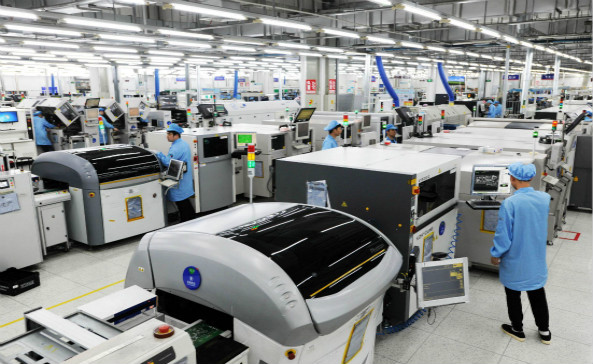
Understanding the theoretical functions of PCBA is only half the battle; executing them perfectly in mass production is what separates market leaders from the rest. At Wintech, our comprehensive suite of in-house services guarantees that every function of your PCBA is optimized for peak performance. We recommend leveraging a full turnkey partner to eliminate communication silos between the design, fabrication, and assembly phases.
Our robust service offerings directly support the optimization of PCBA functions:
- PCB Design & Layout: Our engineering team ensures flawless signal integrity and power distribution through meticulous routing and impedance control.
- PCB Manufacturing: We fabricate the bare boards to exact specifications, utilizing high-grade materials to ensure a strong mechanical foundation and excellent thermal management.
- PCB Assembly & PCBA SMT: Utilizing state-of-the-art pick-and-place machines, we guarantee perfect multi-component integration, even for the most complex HDI miniaturization projects.
- Quick Turn Fast PCB Prototype Assembly: We allow you to rapidly test all functions of PCBA in the real world, iterating designs swiftly before committing to mass volume.
- New Product Introduction NPI: We bridge the gap between prototyping and mass production, ensuring that centralized system control and interface connectivity scale flawlessly.
- Plastic Molding & Metal Precision Machining: We create the perfect physical housing to support the PCBA, ensuring thermal dissipation and mechanical security.
- Enclosures & Racks & Frames: Our final integration services provide the ultimate environmental protection and external connectivity solutions for your complete turnkey product.
Frequently Asked Questions (FAQs)
Industry References
1. Institute for Printed Circuits (IPC). (2024). "IPC-A-610: Acceptability of Electronic Assemblies." A comprehensive standard detailing the mechanical and electrical requirements for executing the functions of PCBA.
2. IEEE Transactions on Components, Packaging and Manufacturing Technology. (2023). "Thermal Management and Signal Integrity in High-Density Printed Circuit Board Assemblies."


