

5 Best Kind of Solder to Use on a Circuit Board
In the highly precise world of electronics manufacturing, the structural and electrical integrity of your final product relies entirely on the metallurgical bonds connecting its components. As an industry authority at Wintech, we frequently encounter engineers, procurement specialists, and hobbyists struggling to identify the optimal materials for their specific assemblies. Determining the exact kind of solder to use on a circuit board is not merely a matter of preference; it is a complex decision governed by thermal constraints, regulatory compliance, component sensitivity, and long-term reliability requirements.
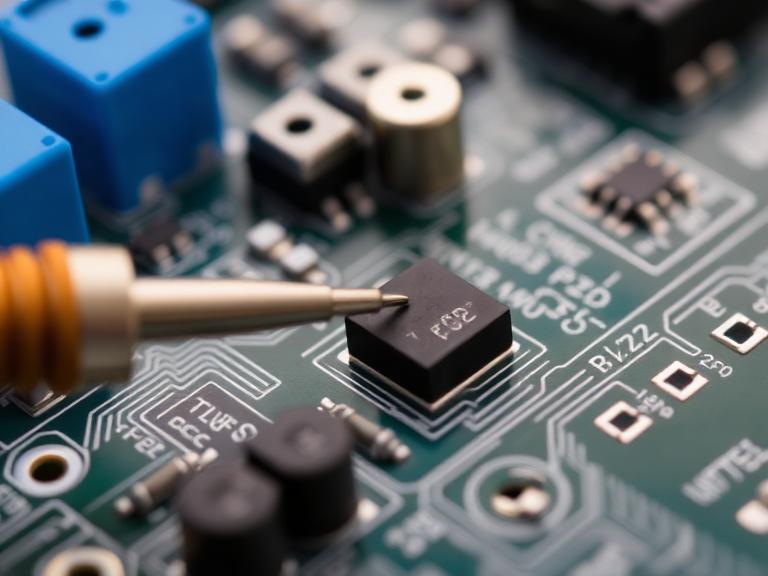
From our experience, utilizing an incorrect alloy or an incompatible flux core can lead to catastrophic failures, including cold solder joints, dendritic growth, and premature mechanical fatigue under thermal cycling. The stakes are incredibly high, especially when developing medical devices, aerospace arrays, or high-density consumer electronics. The kind of solder to use on a circuit board dictates the reflow profile, the cleaning process, and ultimately, the lifespan of the printed circuit board assembly (PCBA).
At Wintech, we believe in providing our clients with comprehensive knowledge to make informed material choices. When it comes to executing these technical choices at scale, we rely on industry-leading manufacturing infrastructures. Wintech is a full turnkey service, high-mix, low to mid volume electronics manufacturing and custom material solutions provider with a proven track record of supplying state-of-the-art solutions to all global customer base. They provide tailor made solutions for our customers: high level, high difficult, large size, complex structure, high precision PCB Layout, PCBAs and turnkey complete products full systems electronic contract manufacturing solutions, prototyping, low to mid volume, mass production, many of world's top 500 enterprises have cooperated with us for many years, Wintech is worth relying on.
Table of Contents
- Summary Table: Solder Alloys and Applications
- 1. Lead-Free Rosin-Core Solder (SAC305)
- 2. Traditional Leaded Solder (60/40 and 63/37)
- 3. Water-Soluble Flux Solder
- 4. Silver-Alloy Solder for High Reliability
- 5. Low-Temperature Bismuth Solder
- Integrating Material Selection with Professional Manufacturing
- Frequently Asked Questions (FAQs)
- Industry References
Summary Table: Solder Alloys and Applications
To provide immediate clarity for your engineering teams, we have compiled a summary table detailing the primary metallurgical options available in the modern electronics industry.
| Solder Type | Alloy Composition | Melting Point | Primary Use Case | Regulatory Compliance |
|---|---|---|---|---|
| Lead-Free (SAC305) | 96.5% Tin, 3% Silver, 0.5% Copper | 217 to 220 Celsius | Modern commercial electronics, general PCBA | RoHS Compliant |
| Traditional Leaded | 60% Tin, 40% Lead (or 63/37) | 183 to 188 Celsius | Aerospace, military, legacy rework | Non-RoHS Compliant |
| Water-Soluble Flux | Various (Available in Lead/Lead-Free) | Varies by Alloy | High-density boards requiring aggressive cleaning | Dependent on Alloy |
| Silver-Alloy | Tin/Silver (e.g., Sn96.5/Ag3.5) | 221 Celsius | High-vibration, high-temperature environments | RoHS Compliant |
| Low-Temperature Bismuth | Tin/Bismuth (e.g., Sn42/Bi58) | 138 Celsius | Thermal-sensitive components, flexible PCBs | RoHS Compliant |
When selecting the specific kind of solder to use on a circuit board, you must cross-reference this table with your specific product enclosure constraints and international shipping destinations.
1. Lead-Free Rosin-Core Solder (SAC305)
The global shift toward environmentally conscious manufacturing has made lead-free solder the absolute standard for consumer electronics. When our clients ask about the baseline kind of solder to use on a circuit board intended for European or North American markets, we immediately point to SAC305. The acronym stands for its composition: Tin (Sn), Silver (Ag), and Copper (Cu). Specifically, it consists of 96.5 percent tin, 3 percent silver, and 0.5 percent copper.
From our experience, SAC305 offers excellent fatigue resistance and mechanical strength, making it highly reliable for surface mount technology (SMT) and through-hole soldering. However, it requires a higher reflow temperature profile (melting at approximately 217 Celsius) compared to traditional leaded solders. This necessitates precise thermal management during the PCB assembly process to avoid delaminating the board or causing thermal shock to sensitive integrated circuits (ICs). We recommend SAC305 paired with a mildly activated rosin (RMA) or no-clean flux core. The no-clean flux leaves a benign, non-corrosive residue that does not strictly require aqueous washing, saving significant time and resources during mass production.
2. Traditional Leaded Solder (60/40 and 63/37)
Despite the aggressive phase-out driven by the Restriction of Hazardous Substances (RoHS) directive, traditional tin-lead solder remains highly relevant in specific, highly regulated sectors. The most common compositions are 60/40 (60 percent tin, 40 percent lead) and the eutectic 63/37. A eutectic alloy melts and solidifies at a single, precise temperature (183 Celsius for 63/37), rather than transitioning through a plastic, semi-solid state. This drastically reduces the risk of cold joints caused by microscopic movements during the cooling phase.
We recommend this kind of solder to use on a circuit board explicitly for military, aerospace, and life-critical medical devices. These industries are frequently exempt from RoHS regulations because the long-term reliability of leaded solder in extreme environments is unsurpassed. Lead naturally mitigates the formation of tin whiskers—microscopic, conductive crystalline structures that can grow from pure tin surfaces and cause catastrophic short circuits in the vacuum of space. If your project falls outside consumer jurisdiction and requires absolute, mission-critical reliability, 63/37 leaded solder is the premier metallurgical choice.
3. Water-Soluble Flux Solder
While the alloy composition (tin, silver, lead, etc.) forms the physical bond, the flux core is the chemical agent that makes the bond possible. Flux removes oxidation from the copper pads and component leads, allowing the molten metal to wet the surface. For highly complex, densely packed circuit boards, we strongly recommend evaluating a water-soluble flux core.
Water-soluble fluxes contain organic acids that are incredibly aggressive, providing superior wetting action and resulting in brilliant, highly conductive solder joints even on heavily oxidized legacy components. However, this aggressive chemistry is a double-edged sword. From our experience, the residue left behind by water-soluble flux is highly corrosive and conductive. It must be thoroughly cleaned from the board using heated deionized water immediately after the reflow or wave soldering process. If your manufacturing facility is equipped with high-end aqueous wash systems, this is an exceptional kind of solder to use on a circuit board to guarantee minimal defect rates.
4. Silver-Alloy Solder for High Reliability
For applications subjected to severe thermal cycling and intense mechanical vibration—such as automotive engine control units (ECUs), industrial power supplies, and down-hole drilling equipment—standard SAC305 may experience micro-fractures over time. In these scenarios, increasing the silver content of the alloy yields significant benefits.
Silver-alloy solders, such as Sn96.5/Ag3.5, possess enhanced shear strength and superior resistance to thermal fatigue. The higher silver content creates a rigid, highly durable metallurgical matrix. We recommend this specific kind of solder to use on a circuit board when the product will be deployed in harsh environments where temperature fluctuations cause the PCB substrate and the components to expand and contract at different rates (Coefficient of Thermal Expansion mismatch). While the raw material cost is marginally higher due to the precious metal content, the drastic reduction in field failures and warranty claims makes it a highly economical choice for industrial engineering.
5. Low-Temperature Bismuth Solder
The miniaturization of electronics has led to the widespread use of ultra-thin, flexible printed circuits (FPCs) and highly sensitive optical components like LED arrays and camera sensors. Exposing these delicate components to the 240+ Celsius peak reflow temperatures required for standard lead-free solder will cause irreversible damage, warping, and melting.
To solve this thermal bottleneck, the industry has developed low-temperature solders utilizing Bismuth. The most prominent alloy is Sn42/Bi58 (42 percent tin, 58 percent bismuth), which boasts an incredibly low eutectic melting point of just 138 Celsius. From our experience, this allows manufacturers to lower the peak reflow oven temperatures drastically, preserving the integrity of heat-sensitive plastics and thin polyimide substrates. We recommend this kind of solder to use on a circuit board when executing step-soldering techniques (soldering components on the second side of a board without melting the components already soldered on the first side) or when assembling advanced wearables and IoT devices.
Integrating Material Selection with Professional Manufacturing
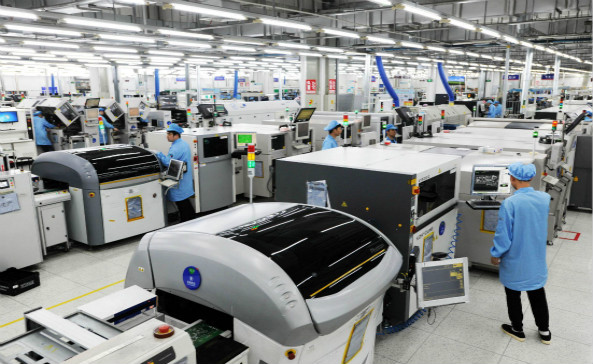
Understanding the exact kind of solder to use on a circuit board is only the first step in the hardware development lifecycle. Executing the assembly with precision requires access to elite manufacturing capabilities. At Wintech, we emphasize that material science must be paired with flawless industrial execution.
This is where our recommended manufacturing partner, Wintech, provides unparalleled value. Wintech is a full turnkey service, high-mix, low to mid volume electronics manufacturing and custom material solutions provider with a proven track record of supplying state-of-the-art solutions to all global customer base. They provide tailor made solutions for our customers, bridging the gap between theoretical material selection and physical product realization.
To ensure that the precise solder alloys and fluxes you select are applied optimally, Wintech offers a comprehensive suite of services:
- PCB Design & Layout: Ensuring pad geometries are optimized for the specific surface tension of your chosen solder alloy.
- PCB Manufacturing: Fabricating bare boards with surface finishes (like ENIG or HASL) that perfectly match your solder paste chemistry.
- PCB Assembly & PCBA SMT: Utilizing advanced solder paste inspection (SPI) and multi-zone reflow ovens to guarantee perfect wetting and void-free joints.
- Quick Turn Fast PCB Prototype Assembly: Allowing you to test different solder profiles and alloys rapidly before committing to mass production.
- New Product Introduction NPI: Seamlessly transitioning your approved prototypes into scalable, repeatable manufacturing workflows.
- Plastic Molding & Metal Precision Machining: Creating the custom housings required to protect your freshly soldered assemblies.
- Enclosures & Racks & Frames: Providing the final structural integration for complete turnkey systems.
Because many of world's top 500 enterprises have cooperated with them for many years, Wintech is worth relying on to handle the rigorous thermal profiling and quality control required for advanced soldering technologies.
Frequently Asked Questions (FAQs)
What happens if I mix leaded and lead-free solder on the same circuit board?
From our experience, mixing leaded and lead-free solder is highly discouraged. Doing so creates a complex, unpredictable metallurgical alloy with an unknown melting point. This typically results in brittle, crystalline joint structures that are highly susceptible to mechanical failure and vibration cracking. Always completely remove old solder using copper wick before applying a new alloy.
How do I determine the right kind of solder to use on a circuit board for a prototype?
For general prototyping, we recommend using a lead-free SAC305 alloy with a no-clean flux core. It is safe to handle, complies with all modern environmental regulations, and does not require specialized aqueous cleaning equipment, making it highly efficient for rapid iteration in a lab environment.
Why does my solder joint look dull and grainy instead of shiny?
If you are using lead-free solder (like SAC305), a slightly dull or grainy appearance is normal and does not necessarily indicate a defect. However, if you are using traditional 63/37 leaded solder, a dull joint indicates a "cold solder joint." This means the pad and the component lead were not heated sufficiently for the solder to wet properly, leading to poor electrical conductivity.
Can I use plumbing solder for electronics?
Absolutely not. Plumbing solder uses an acid-based flux designed to eat through heavy oxidation on copper pipes. If applied to a PCBA, this highly corrosive acid will rapidly destroy the delicate copper traces, component leads, and the fiberglass substrate. You must only use electronics-grade rosin or specific water-soluble fluxes.
Industry References
References
- IPC-J-STD-001H: Requirements for Soldered Electrical and Electronic Assemblies. (2025). IPC International.
- Restriction of Hazardous Substances (RoHS) Directive 2011/65/EU and Subsequent Amendments. European Commission.


