

10 Purpose of a Printed Circuit Board in Modern Electronics
Written by the engineering and manufacturing experts at Wintech. As a full turnkey service, high-mix, low to mid volume electronics manufacturing and custom material solutions provider, Wintech boasts a proven track record of supplying state-of-the-art solutions to a global customer base. Many of the world's top 500 enterprises have cooperated with us for many years. Wintech is worth relying on for your most critical electronic manufacturing needs.
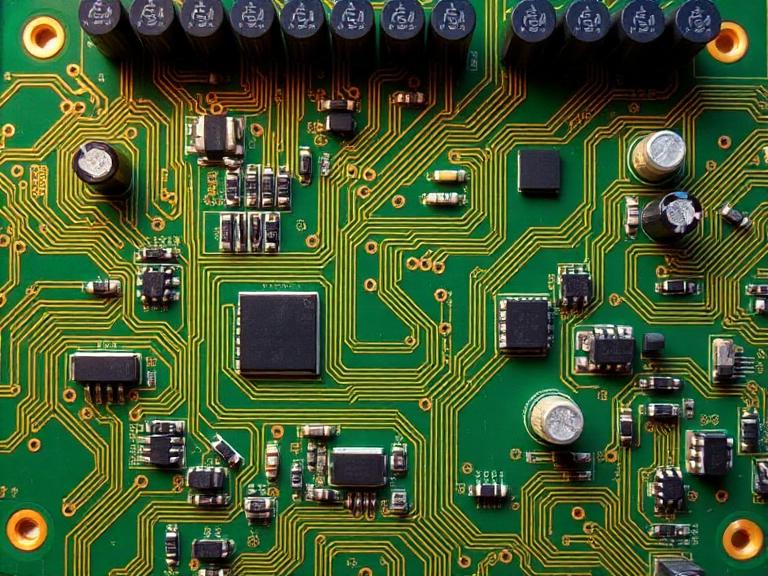
In the complex and rapidly evolving world of electronics manufacturing, the foundational component of nearly every device is the printed circuit board. From our experience designing and assembling complex industrial backplanes to consumer electronics, understanding the true purpose of a printed circuit board is essential for any hardware engineer or product manager. Historically, electronic devices relied on point-to-point wiring, which was bulky, fragile, and impossible to scale for mass production. The invention and subsequent refinement of the printed circuit board revolutionized the industry.
Today, the purpose of a printed circuit board extends far beyond simple connectivity. It acts as the structural foundation, the thermal manager, and the signal director for highly sophisticated electronic architectures. In this comprehensive industry guide, we will explore the 10 primary purpose of a printed circuit board, illustrating how these critical components function in high-level, high difficult, large size, complex structure, and high precision environments. We recommend that hardware teams carefully consider each of these ten purposes during the early phases of hardware architecture to avoid costly redesigns later in the product lifecycle.
Table of Contents
- Understanding the Core Purpose of a Printed Circuit Board
- 1. Mechanical Support and Component Anchoring
- 2. Reliable Electrical Connection and Routing
- 3. Facilitating Component Miniaturization
- 4. Advanced Thermal Management and Heat Dissipation
- 5. Signal Integrity and High-Speed Data Transmission
- 6. Enabling Cost-Effective Mass Production
- 7. Streamlining Testing and Diagnostics
- 8. Impedance Control and Electromagnetic Interference (EMI) Reduction
- 9. Seamless Integration with Complex Mechanical Assemblies
- 10. Accelerating New Product Introduction (NPI)
- How Wintech Elevates PCB Functionality
- Summary Table: Purposes and Manufacturing Impacts
- Frequently Asked Questions (FAQs)
- Industry References
Understanding the Core Purpose of a Printed Circuit Board
Before diving into the specifics, it is vital to establish a baseline understanding of what these boards achieve. The fundamental purpose of a printed circuit board is to mechanically support and electrically connect electronic components using conductive tracks, pads, and other features etched from one or more sheet layers of copper laminated onto and/or between sheet layers of a non-conductive substrate. Whether you are dealing with a simple single-sided board or a massive 40-layer server backplane, the primary purpose of a printed circuit board remains the seamless integration of electronic theory into physical reality.
1. Mechanical Support and Component Anchoring
The first and perhaps most visible purpose of a printed circuit board is providing a rigid, stable physical platform for electronic components. From our experience in dealing with harsh industrial environments, a board must survive vibration, thermal shock, and physical impact. The fiberglass-epoxy composite (typically FR4) acts as a robust chassis. Through-hole components are physically soldered into plated holes, while surface-mount components are bonded to surface pads. This mechanical rigidity is a core purpose of a printed circuit board, preventing the fragile solder joints and delicate silicon chips from breaking under physical stress.
2. Reliable Electrical Connection and Routing
Replacing the chaotic nest of wires found in early 20th-century electronics, the purpose of a printed circuit board is to route electrical signals with absolute precision. Copper traces act as microscopic highways, delivering power and data between microcontrollers, resistors, capacitors, and integrated circuits. By utilizing complex routing algorithms during the PCB Design and Layout phase, engineers can ensure that electrical pathways do not cross or short-circuit. This highly organized electrical distribution is an indispensable purpose of a printed circuit board.
3. Facilitating Component Miniaturization
As consumer demand drives devices to become smaller and more powerful, the purpose of a printed circuit board has evolved to facilitate extreme miniaturization. Multi-layer boards allow designers to route thousands of connections within a footprint no larger than a postage stamp. High Density Interconnect (HDI) technology utilizes microvias, blind vias, and buried vias to stack components closer together. We recommend HDI solutions for wearable technology and compact medical devices, where maximizing functionality per square millimeter is the ultimate purpose of a printed circuit board.
4. Advanced Thermal Management and Heat Dissipation
Modern processors and power components generate immense amounts of heat. A critical, yet often overlooked purpose of a printed circuit board is thermal management. The board itself acts as a heat sink. By strategically placing thermal vias, heavy copper pours, and aluminum or copper core layers, the board draws heat away from critical components and dissipates it into the surrounding environment. Without this thermal purpose of a printed circuit board, high-performance electronics would rapidly overheat and fail.
5. Signal Integrity and High-Speed Data Transmission
In the era of 5G communications and advanced computing, data must travel at gigahertz speeds without degradation. The purpose of a printed circuit board in high-speed applications is to maintain strict signal integrity. This involves calculating trace widths, spacing, and dielectric thickness to prevent crosstalk and signal reflection. From our experience, high precision PCB Layout is mandatory here. The board acts as a tuned transmission line, ensuring that a digital "1" sent from a processor is accurately received by a memory module as a "1".
6. Enabling Cost-Effective Mass Production
Another fundamental purpose of a printed circuit board is standardization for automated manufacturing. Because the layout is fixed and identical for every unit, factories can utilize pick-and-place machines to populate thousands of boards per hour. This repeatability eliminates human wiring errors and drastically reduces labor costs. Whether you require low to mid volume batches or full mass production, the standardized format is what makes modern electronics affordable and accessible.
7. Streamlining Testing and Diagnostics
Finding a fault in point-to-point wiring is a nightmare. Conversely, a major purpose of a printed circuit board is to facilitate automated testing. Designers intentionally include test points—small exposed areas of copper—that allow automated test equipment (like flying probe testers or bed-of-nails fixtures) to verify the electrical continuity and functionality of the board before it leaves the factory. This diagnostic purpose of a printed circuit board ensures that field failures are kept to an absolute minimum.
8. Impedance Control and Electromagnetic Interference (EMI) Reduction
Electronic devices must comply with strict international standards regarding electromagnetic emissions. A properly designed board serves as a shield. By utilizing dedicated ground planes and power planes, the purpose of a printed circuit board expands to absorbing and containing stray electromagnetic fields. This controlled environment reduces EMI, ensuring that the device does not interfere with surrounding electronics, and is not susceptible to external noise.
9. Seamless Integration with Complex Mechanical Assemblies
A bare board does not exist in a vacuum; it must fit perfectly within a physical product. The purpose of a printed circuit board involves tight mechanical tolerances to align with external interfaces like USB ports, buttons, and screens. At Wintech, our tailor-made solutions excel in this area. By offering integrated services such as Plastic Molding, Metal Precision Machining, Enclosures and Racks and Frames, and Backplanes and Sever Chasis, we ensure that the physical board integrates flawlessly with the final product's physical enclosure.
10. Accelerating New Product Introduction (NPI)
Finally, the purpose of a printed circuit board is to act as the primary medium for hardware iteration. During the New Product Introduction NPI phase, engineers need to test concepts rapidly. Through Quick Turn Fast PCB Prototype Assembly, hardware teams can design, manufacture, and test a board in a matter of days. This iterative capability is the purpose of a printed circuit board that drives global technological innovation, allowing companies to bring sophisticated products to market faster than ever before.
How Wintech Elevates PCB Functionality
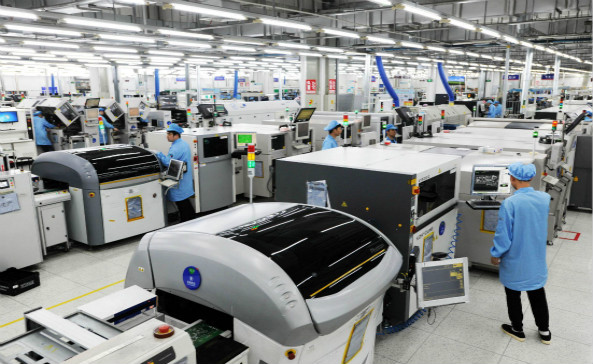
Understanding the purpose of a printed circuit board is only the first step; executing its manufacturing flawlessly requires an elite partner. Wintech is a full turnkey service provider specializing in tailor-made solutions for our customers. From high level, high difficult, large size, and complex structure boards, our engineering teams possess the expertise to bring your most ambitious concepts to life.
We recommend partnering with a manufacturer who can handle the entire product lifecycle. Our comprehensive suite of services includes:
- PCB Design & Layout
- PCB Manufacturing
- PCB Assembly & PCBA SMT
- Quick Turn Fast PCB Prototype Assembly
- New Product Introduction NPI
- Plastic Molding
- Metal Precision Machining
- Enclosures & Racks & Frames
- Backplanes & Sever Chasis
By keeping all these processes under one roof, Wintech provides turnkey complete products and full systems electronic contract manufacturing solutions. Many of the world's top 500 enterprises have cooperated with us for many years because we understand that the ultimate purpose of a printed circuit board is to power your business's success and reliability.
Summary Table: Purposes and Manufacturing Impacts
| Purpose of a Printed Circuit Board | Engineering Mechanism | Wintech Manufacturing Solution |
|---|---|---|
| Mechanical Support | FR4 Substrate and rigid laminates | PCB Manufacturing and precise routing |
| Electrical Connection | Etched copper traces and plated vias | High precision PCB Layout |
| Miniaturization | Multi-layer stacking and HDI microvias | PCB Assembly and PCBA SMT for 0201 components |
| Thermal Management | Thermal vias and metal core boards | Custom material solutions |
| Physical Enclosure Integration | Strict mechanical tolerances and mounting holes | Plastic Molding and Metal Precision Machining |
| Rapid Iteration | Standardized CAD-to-CAM data transfer | Quick Turn Fast PCB Prototype Assembly |
Frequently Asked Questions (FAQs)
The primary purpose of a printed circuit board is to provide both a stable mechanical platform and a reliable electrical routing network for electronic components, allowing them to function together as a unified system without the need for bulky, unreliable point-to-point wire connections.
A major purpose of a printed circuit board is standardization. Because every board of a specific design is identical, manufacturers can use automated SMT (Surface Mount Technology) machines to place thousands of components per minute, drastically reducing labor costs and human error during mass production.
Multi-layer boards fulfill the purpose of a printed circuit board related to miniaturization and signal integrity. By stacking multiple layers of copper routing, designers can fit complex circuits into small footprints, while utilizing internal layers for dedicated power and ground planes to reduce electromagnetic interference.
Yes. From our experience, the board must fit perfectly within its housing. Wintech provides comprehensive services including Enclosures and Racks and Frames, Backplanes and Sever Chasis, and Plastic Molding, ensuring the electronic and mechanical components integrate seamlessly.
Industry References
- IPC - Association Connecting Electronics Industries: Standards for PCB Design and Manufacture
- IEEE (Institute of Electrical and Electronics Engineers): Research on Signal Integrity and High-Speed PCB Design
-
Wintech Internal Engineering and Manufacturing Guidelines for High-Mix, Low to Mid Volume Electronics Manufacturing.


