

7 Steps Printed Circuit Board Assembly Process in Modern Manufacturing
In the highly competitive landscape of global electronics manufacturing, the reliability, functionality, and longevity of an electronic product are entirely dependent on the precision of its underlying circuitry. At Wintech, we understand that mastering the Printed circuit board assembly process is the dividing line between a market-leading product and a catastrophic operational failure. Wintech is a full turnkey service, high-mix, low to mid volume electronics manufacturing and custom material solutions provider with a proven track record of supplying state-of-the-art solutions to all global customer bases. We deliver tailor-made solutions for our customers: high level, high difficult, large size, complex structure, high precision PCB Layout, PCBAs and turnkey complete products full systems electronic contract manufacturing solutions. Many of the world's top 500 enterprises have cooperated with us for many years, proving that Wintech is worth relying on.
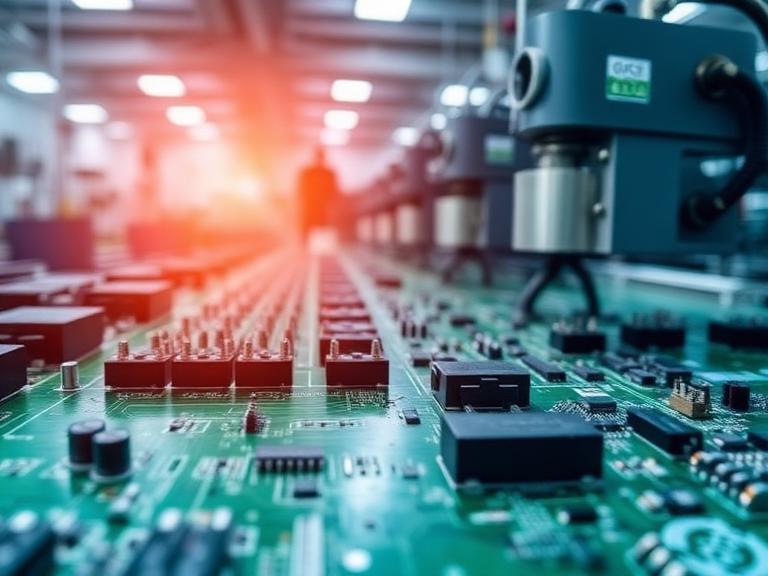
From our experience engineering advanced medical devices, aerospace communications, and industrial controllers, the Printed circuit board assembly process requires meticulous orchestration. It is not merely the act of soldering components onto a bare board; it is a complex symphony of thermal profiling, automated optical verification, and metallurgical science. We recommend that every hardware entrepreneur, procurement manager, and systems engineer thoroughly understand each phase of the Printed circuit board assembly process to ensure their designs translate flawlessly into physical products. This authoritative guide details every critical step required to transform a bare substrate into a fully functional electronic assembly.
Table of Contents
- Summary Table: Stages of the Printed Circuit Board Assembly Process
- Step 1: Design for Manufacturability (DFM) and Solder Paste Preparation
- Step 2: Automated Pick and Place (SMT)
- Step 3: Reflow Soldering and Thermal Profiling
- Step 4: Automated Optical Inspection (AOI) and X-Ray Analysis
- Step 5: Through-Hole Technology (THT) and Wave Soldering
- Step 6: Functional Testing and Quality Assurance
- Step 7: Final Integration and Turnkey Solutions
- Leveraging Wintech's Comprehensive Manufacturing Ecosystem
- Frequently Asked Questions (FAQs)
- Industry References
Summary Table: Stages of the Printed Circuit Board Assembly Process
To provide immediate clarity, we have compiled a summary matrix outlining the sequential phases of the Printed circuit board assembly process. We recommend using this as a quick reference guide when auditing your own production workflows.
| Assembly Stage | Core Objective | Wintech Quality Standard |
|---|---|---|
| DFM & Stenciling | Validate design data and apply solder paste to pads. | 100% 3D Solder Paste Inspection (SPI) |
| Pick and Place | Automated placement of surface mount components. | High-speed, micron-level placement accuracy |
| Reflow Soldering | Melt solder paste to form permanent metallurgical bonds. | Custom thermal profiling for complex thermal masses |
| Inspection (AOI/AXI) | Detect misalignments, tombstoning, and hidden voiding. | High-resolution 3D AOI and 3D X-Ray implementation |
| Through-Hole Soldering | Secure leaded components via selective or wave soldering. | Controlled atmosphere wave soldering for zero defects |
| Testing & Cleaning | Verify electrical function and remove flux residues. | In-Circuit Testing (ICT) and Functional Testing (FCT) |
Step 1: Design for Manufacturability (DFM) and Solder Paste Preparation
 and Solder Paste Preparation.jpg "Design for Manufacturability (DFM) and Solder Paste Preparation")
The Printed circuit board assembly process officially begins long before any physical components touch the manufacturing floor. It begins with a rigorous Design for Manufacturability (DFM) review. From our experience, bypassing the DFM check is the leading cause of catastrophic delays and budget overruns. At Wintech, our engineers utilize advanced PCB Design & Layout software to scrutinize Gerber files, Bill of Materials (BOM), and assembly drawings. We look for redundant components, problematic trace clearances, and improper pad sizes that could cause tombstoning or solder bridging during the Printed circuit board assembly process.
Once the design is validated and the bare boards exit our PCB Manufacturing division, the physical Printed circuit board assembly process initiates with solder paste stenciling. A stainless-steel stencil is precisely laser-cut to match the pad layout of the board. A mechanical squeegee drags a highly specific formulation of solder paste (a suspension of microscopic metal spheres in flux) across the stencil, depositing exact volumes of paste onto the exposed copper pads. We highly recommend utilizing 3D Solder Paste Inspection (SPI) immediately after this step. In high level, high difficult, large size, complex structure boards, variations in paste volume by mere microns can lead to total circuit failure.
Step 2: Automated Pick and Place (SMT)
Following successful paste deposition, the board enters the most visually impressive stage of the Printed circuit board assembly process: the Pick and Place machine. This robotic system is the heart of PCB Assembly & PCBA SMT (Surface Mount Technology). Utilizing high-speed optical recognition, the machine picks micro-components (some as small as grains of sand, such as 01005 packages) from reels or trays and places them precisely onto the solder paste.
From our experience operating low to mid volume, mass production lines, precision is paramount. The surface tension of the wet solder paste holds the components in place temporarily. At Wintech, our high-precision Pick and Place lines are calibrated continuously to ensure that integrated circuits, microprocessors, and passive components are seated with absolute accuracy, eliminating the risk of skewed placements that could short-circuit adjacent high-density traces.
Step 3: Reflow Soldering and Thermal Profiling
Once the board is populated, it moves into the reflow oven. This is the stage of the Printed circuit board assembly process where the temporary paste bonds are transformed into permanent, conductive metallurgical joints. The board travels through a multi-zone convection oven on a conveyor belt. It passes through pre-heat zones to safely elevate the temperature of the board and activate the flux, followed by a thermal soak, and finally the reflow zone where temperatures spike to melt the tin-silver-copper alloys.
We recommend custom thermal profiling for every unique board design. A high-density board with massive copper planes absorbs heat differently than a thin, flexible circuit. From our experience, failing to optimize the thermal profile during the Printed circuit board assembly process results in cold solder joints, thermal shock to sensitive components, or incomplete wetting. Wintech engineers attach thermocouples to test boards to guarantee the exact thermal curve is achieved across every square inch of the assembly.
Step 4: Automated Optical Inspection (AOI) and X-Ray Analysis
Quality control is not an afterthought; it is integrated directly into the Printed circuit board assembly process. As boards exit the reflow oven and cool, they are immediately subjected to Automated Optical Inspection (AOI). High-definition cameras capture 3D images of every solder joint and component, comparing them against the original CAD data to detect missing components, incorrect polarities, and insufficient solder fillets.
However, AOI cannot see underneath components. For modern assemblies utilizing Ball Grid Arrays (BGAs) or Quad Flat No-Leads (QFNs), the solder joints are hidden beneath the component body. In these high-precision scenarios, Wintech employs Automated X-Ray Inspection (AXI). X-rays penetrate the silicon and fiberglass, allowing our quality assurance team to view the structural integrity of the hidden solder spheres, ensuring zero internal voiding or bridging has occurred during the Printed circuit board assembly process.
Step 5: Through-Hole Technology (THT) and Wave Soldering
While SMT dominates modern electronics, heavy-duty connectors, large capacitors, and high-power relays still require mechanical stability. This necessitates Through-Hole Technology (THT) within the Printed circuit board assembly process. Component leads are inserted through plated holes in the board, either manually or via automated insertion equipment.
To solder these components, the board is passed over a wave soldering machine. A literal wave of molten solder washes over the bottom of the board, wicking up into the holes via capillary action and securing the leads. For complex boards featuring double-sided SMT components, we recommend selective soldering. This advanced technique within the Printed circuit board assembly process uses a miniaturized, programmable solder fountain to solder individual through-hole pins without disturbing the surrounding SMT components.
Step 6: Functional Testing and Quality Assurance
The Printed circuit board assembly process is incomplete without rigorous electrical validation. Visual inspection confirms structural integrity, but electrical testing guarantees performance. Depending on the client's specifications, Wintech performs In-Circuit Testing (ICT) using custom bed-of-nails fixtures to probe test points and verify voltage levels, resistance, and capacitance across the entire circuit.
Following ICT, Functional Testing (FCT) is executed. From our experience in New Product Introduction NPI, FCT is the ultimate gatekeeper. We power up the board, upload firmware, and simulate the exact environment the product will face in the field. This ensures that the Printed circuit board assembly process has yielded a product that operates exactly as intended by the design engineers.
Step 7: Final Integration and Turnkey Solutions
Once testing is complete, boards are thoroughly cleaned to remove corrosive flux residues. For products destined for harsh environments (aerospace, automotive, marine), we apply conformal coating—a thin polymeric film that protects the circuitry from moisture, dust, and chemical contaminants.
However, Wintech's capabilities extend far beyond the bare Printed circuit board assembly process. We provide turnkey complete products full systems electronic contract manufacturing solutions. This means we seamlessly integrate the finished PCBA into its final housing. By utilizing our in-house Plastic Molding and Metal Precision Machining divisions, we manufacture the external enclosures, racks, and frames to exact specifications. This end-to-end integration eliminates the logistical nightmare of managing multiple vendors and drastically reduces your time-to-market.
Leveraging Wintech's Comprehensive Manufacturing Ecosystem
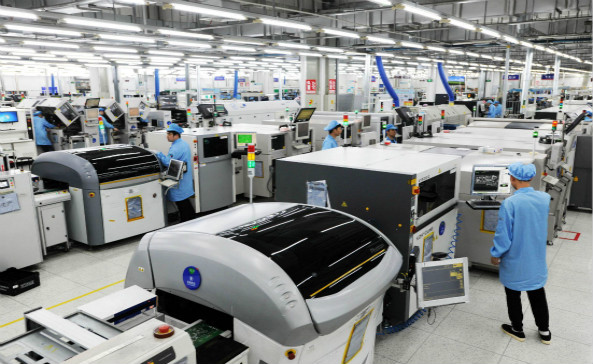
Choosing the right manufacturing partner for your Printed circuit board assembly process is a critical business decision. Whether you require a Quick Turn Fast PCB Prototype Assembly to prove a concept, or you are scaling to mass production, Wintech offers an unparalleled ecosystem of services.
From our experience, true manufacturing excellence occurs when design, fabrication, and assembly operate in perfect synchronization. Wintech provides this holistic approach, ensuring that your Printed circuit board assembly process is executed with zero defects and maximum efficiency.
Frequently Asked Questions (FAQs)
Industry References & Compliance Standards
- IPC-A-610: Acceptability of Electronic Assemblies – The definitive standard for visual quality in the Printed circuit board assembly process.
- J-STD-001: Requirements for Soldered Electrical and Electronic Assemblies.
- Wintech Internal Quality Assurance and Process Engineering Guidelines (2026 Edition).
- ISO 9001:2015 Quality Management Systems in Electronics Contract Manufacturing.


