

5 Steps for Replacing a Goodman Furnace Control Board
From our experience at Wintech, the intersection of advanced electronics manufacturing and daily consumer hardware is where true engineering quality reveals itself. Wintech is a full turnkey service, high-mix, low to mid volume electronics manufacturing and custom material solutions provider with a proven track record of supplying state-of-the-art solutions to a global customer base. We provide tailor-made solutions for our customers: high level, high difficulty, large size, complex structure, high precision PCB Layout, PCBAs, and turnkey complete products. With many of the world's top 500 enterprises cooperating with us for years, Wintech is worth relying on.
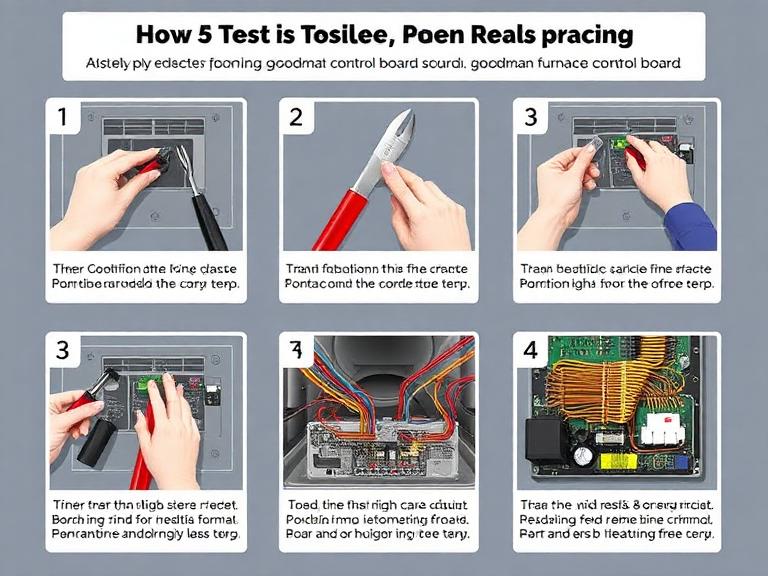
When an HVAC system fails, the diagnosis frequently points to the central processing unit of the system: the printed circuit board (PCB). Replacing a Goodman Furnace Control Board might seem like a daunting task reserved exclusively for certified HVAC technicians. However, with a systematic approach, an understanding of electronic components, and strict adherence to safety protocols, this procedure can be executed with precision.
As experts in high-precision PCB assembly and contract manufacturing, we understand the intricate architecture of these control boards. A furnace control board dictates the sequence of operations, from the inducer motor draft to the gas valve ignition. In this comprehensive guide, we will detail the 5 essential steps for Replacing a Goodman Furnace Control Board, providing professional insights into handling these sensitive electronic components.
Table of Contents
- Summary: Tools and Prerequisites
- Understanding the Anatomy of a Furnace Control Board
- Step 1: Pre-Installation Safety and Diagnostic Checks
- Step 2: Documenting and Disconnecting Existing Wiring
- Step 3: Removing the Faulty Printed Circuit Board
- Step 4: Installing the New Control Board
- Step 5: Reconnecting Wires and System Testing
- Why Quality Electronics Matter in HVAC Systems
- Frequently Asked Questions (FAQs)
- References
Summary: Tools and Prerequisites
Before initiating the process of Replacing a Goodman Furnace Control Board, assembling the correct tools is mandatory to prevent damage to the new PCB and ensure personal safety.
| Requirement | Specification / Details |
|---|---|
| Estimated Time | 45 to 60 Minutes |
| Required Tools | Screwdriver set (Phillips and Flathead), Needle-nose pliers, Multimeter, Smartphone (for documentation), Anti-static wrist strap. |
| Safety Precautions | Disconnect main breaker power, verify zero voltage, employ Electrostatic Discharge (ESD) protocols. |
| Replacement Part | OEM Goodman Control Board (Verify exact part number match). |
Understanding the Anatomy of a Furnace Control Board
Before Replacing a Goodman Furnace Control Board, one must understand what they are interacting with. A furnace control board is a specialized Printed Circuit Board (PCB) populated with microcontrollers, relays, capacitors, and edge connectors. These components act in concert to manage 120V AC line voltage for motors and 24V AC low voltage for thermostat communication. To better understand the microscopic architecture of these units, we recommend reviewing our comprehensive pcb components and functions guide.
From our experience in mass production and complex structure PCB layout, the failure points on a furnace control board typically occur at the relays (due to mechanical wear) or burn marks near the power supply circuitry (due to voltage spikes). Identifying these failure points is critical before proceeding.
Step 1: Pre-Installation Safety and Diagnostic Checks
Replacing a Goodman Furnace Control Board must begin with absolute isolation of power. HVAC systems utilize high voltage that can cause severe injury or death, as well as instantly destroy a new PCB if handled improperly.
- Locate the service disconnect switch near the furnace and switch it to the OFF position.
- Locate the main circuit breaker panel and switch the dedicated furnace breaker to the OFF position.
- Remove the lower blower compartment door on your Goodman furnace.
- Using a calibrated multimeter, test the incoming line voltage terminals to guarantee there is zero voltage present. We recommend double-checking both the 120V incoming line and the 24V transformer output.
Step 2: Documenting and Disconnecting Existing Wiring
Modern Goodman control boards feature a dense array of wiring harnesses, individual spade connectors, and molex plugs. We strongly recommend taking multiple high-resolution photographs of the existing board before removing a single wire. Documenting the original state is the most critical phase when Replacing a Goodman Furnace Control Board.
Carefully grasp the plastic housing of each connector—never pull on the wire itself, as this can degrade the crimped connection. Many technicians use masking tape and a marker to label each wire (e.g., L1, Neutral, Circulator, Inducer, Limit, Flame Sensor). This methodical approach mirrors the strict assembly procedures utilized by pcb board assembly companies to ensure zero defect rates during manufacturing.
Step 3: Removing the Faulty Printed Circuit Board
Once all wiring is disconnected and moved safely aside, you can unmount the PCB. Goodman boards are typically secured using plastic standoff pegs or small mounting screws. If your board uses plastic standoffs, use needle-nose pliers to gently squeeze the tabs and release the board. If you force the board, you risk snapping the standoffs, which are necessary for the new installation.
When handling the faulty board and the new replacement, you must mitigate Electrostatic Discharge (ESD). The human body carries static electricity that can instantly short the microprocessors on a PCB. We recommend wearing an anti-static wrist strap. For those interested in the meticulous care required during PCB handling and manufacturing, our guide on how to create PCB board step by step provides deep insight into electronic fragility.
Step 4: Installing the New Control Board
Gently remove the new Goodman control board from its anti-static packaging. Hold the board exclusively by its edges to prevent transferring oils to the solder joints or shocking the components. Align the mounting holes of the new board with the standoffs or screw holes in the furnace chassis.
Press the board firmly until the plastic standoffs click into place, or secure the mounting screws without over-tightening. Overtightening can crack the fiberglass substrate of the board. The precision required here highlights why working with elite pcb fabrication manufacturers 2026 is essential for ensuring hardware durability in harsh environments like a vibrating furnace chassis.
Step 5: Reconnecting Wires and System Testing
With the new board securely mounted, begin the process of reconnecting the wires. Refer to the photographs taken during Step 2. When Replacing a Goodman Furnace Control Board, paying attention to the thermostat wiring block (R, W, Y, G, C) and the 120V motor taps is vital. Ensure that spade connectors slide on tightly; a loose connection increases electrical resistance, generating heat that will prematurely burn out the new board.
Once all wires are verified, restore the lower blower compartment door. Turn the main circuit breaker back on, followed by the furnace service switch. Observe the LED diagnostic light on the new board. A steady, slow blink usually indicates normal standby operation. Turn your thermostat to the heat setting and monitor the sequence of operations: inducer motor start, igniter glow, gas valve open, flame ignition, and finally, the main circulating blower activation. If this sequence executes flawlessly, the process of Replacing a Goodman Furnace Control Board is successfully complete.
Why Quality Electronics Matter in HVAC Systems
Replacing a Goodman Furnace Control Board highlights the critical nature of robust electronic engineering. Furnace control boards operate in environments subject to extreme temperature fluctuations, high vibration, and continuous power cycling. At Wintech, our full turnkey electronic contract manufacturing solutions are built to withstand such rigorous applications.
As one of the top electronic contract manufacturers globally, we frequently analyze the quality standards set by PCB manufacturers in USA as well as the best PCB manufacturers China has to offer. We know that a poorly designed PCB will fail prematurely.
For OEMs in the HVAC industry looking to develop proprietary control systems, understanding the underlying economics is crucial. Our latest pcb cost analysis 2026 and insights into custom PCB cost 2025 provide invaluable data for supply chain managers. Furthermore, creating a resilient control board begins at the engineering level. We highly recommend utilizing our pcb design and layout guide to ensure high precision and complex structure management for all low to mid-volume prototyping and mass production needs.
Frequently Asked Questions (FAQs)
How do I know if Replacing a Goodman Furnace Control Board is necessary?
From our experience, symptoms of a failed control board include a furnace that will not initiate the start sequence, an LED diagnostic light that flashes a specific failure code pointing to internal memory or relay failure, or visible burn marks and bulging capacitors on the PCB itself.
Can I use a universal control board instead of an OEM Goodman board?
We recommend using the exact OEM replacement part whenever possible. While universal boards exist, they often require complex wiring modifications and dip-switch configurations that increase the margin for error during installation. Using an exact match ensures that the PCB layout and edge connectors align perfectly with your existing harness.
What causes a furnace control board to fail?
Control boards typically fail due to electrical surges, water damage from leaking humidifier lines, physical vibration breaking solder joints, or the natural lifespan expiration of mechanical relays on the board. Ensuring your furnace is connected to a properly grounded and surge-protected circuit can extend the life of the board.
Is an anti-static strap completely necessary?
Yes. When Replacing a Goodman Furnace Control Board, you are handling exposed microprocessors. Even a small electrostatic discharge—one you might not even feel—can corrupt the memory chip or damage sensitive surface-mount components, rendering the brand-new board useless before it is even powered on.
References
- U.S. Department of Energy: Furnaces and Boilers
-
U.S. Consumer Product Safety Commission: Furnace Safety


