

PCB Prototype Board How to Use, Assemble, and Scale
Wintech is a full turnkey service, high-mix, low to mid volume electronics manufacturing and custom material solutions provider with a proven track record of supplying state-of-the-art solutions to all global customer bases. We offer tailor-made solutions for our customers: high level, highly difficult, large size, complex structure, high precision PCB Layout, PCBAs, and turnkey complete products. Many of the world's top 500 enterprises have cooperated with us for many years; Wintech is worth relying on.
In the highly competitive world of electronics manufacturing, transforming a conceptual schematic into a fully functional physical device requires rigorous validation. Hardware engineers and hobbyists alike rely heavily on preliminary physical modeling to identify design flaws, test component interactions, and measure electrical tolerances. To successfully bridge the gap between simulation software and mass production, mastering the PCB prototype board how to use methodology is absolutely critical.
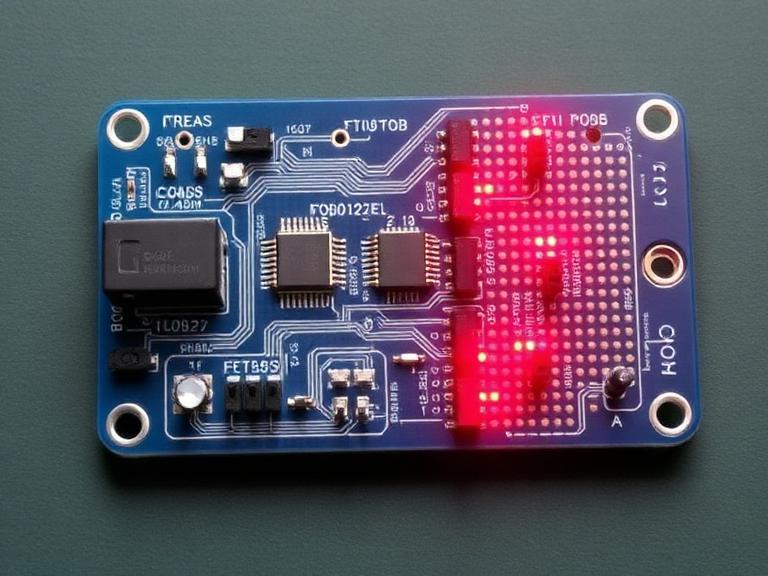
Whether you are dealing with basic perfboards (dot PCBs) or complex stripboards, understanding the precise PCB prototype board how to use process allows engineers to iterate designs rapidly. From our experience at Wintech handling high precision PCB layout and low to mid volume production, the quality of your initial prototype directly dictates the success of your final fabricated board. We recommend treating the prototyping phase not just as a proof-of-concept, but as an essential risk-mitigation strategy. In this comprehensive guide, we will explore the fundamental steps, advanced soldering techniques, and transition strategies regarding the PCB prototype board how to use framework.
Table of Contents
- 1. What is a PCB Prototype Board?
- 2. Preparation: The First Phase of PCB Prototype Board How to Use
- 3. Execution: PCB Prototype Board How to Use in Practice
- 4. Testing and Validation Procedures
- 5. Transitioning from Prototype to Professional Manufacturing
- 6. Summary Table: Prototyping Stages
- 7. Frequently Asked Questions (FAQs)
- 8. Industry References
1. What is a PCB Prototype Board?
Before diving into the technical aspects of the PCB prototype board how to use process, we must define the material itself. A PCB (Printed Circuit Board) prototype board, commonly referred to as a perfboard or protoboard, is a rigid sheet of fiberglass (typically FR4) or synthetic resin pre-drilled with a grid of holes. These holes are usually spaced exactly 0.1 inches (2.54 mm) apart to accommodate standard through-hole electronic components and integrated circuit (IC) packages.
Unlike professionally manufactured printed circuit boards that feature pre-etched copper traces connecting specific components, prototype boards come with isolated copper pads (perfboards) or continuous copper strips (stripboards). The engineer is responsible for creating the electrical pathways manually using solder and jumper wires. Understanding the PCB prototype board how to use distinction between these board types is the first step toward effective circuit translation. A perfboard offers ultimate layout freedom, while a stripboard is excellent for circuits featuring shared power and ground rails.
2. Preparation: The First Phase of PCB Prototype Board How to Use
The transition from a digital schematic to a physical board requires meticulous planning. From our experience engineering highly complex structures for the world's top 500 enterprises, skipping the layout planning phase invariably leads to short circuits and signal integrity issues.
Understanding Component Roles
Every component on your prototype serves a critical function, whether it is decoupling noise, regulating voltage, or processing signals. Before placing any parts on the board, you must verify the footprint and pinout of your components. If you are new to identifying and categorizing these elements, we highly recommend reviewing our comprehensive pcb components and functions guide.
Creating a Physical Layout Map
When studying the PCB prototype board how to use principles, visualization is key. Do not immediately begin soldering. Instead, use breadboarding software (such as Fritzing) or graph paper to map out where each component will sit. Place your central processing units (microcontrollers or main ICs) in the center, and arrange peripheral components around them to keep trace lengths as short as possible. Keep power and ground lines running along the perimeter to minimize electromagnetic interference (EMI).
3. Execution: PCB Prototype Board How to Use in Practice
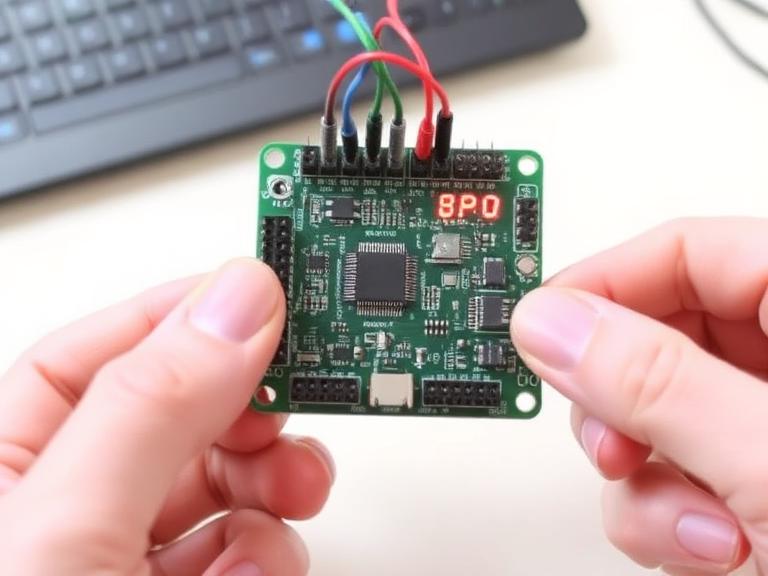
Once your layout is finalized, the physical assembly begins. The manual execution of the PCB prototype board how to use process requires precision, high-quality tools, and a steady hand. You will need a temperature-controlled soldering iron, 63/37 rosin-core solder (or high-quality lead-free solder), flux pens, and solid-core jumper wire (typically 22 AWG).
Step 1: Mechanical Placement and Securing
Insert your heaviest and lowest-profile components first, such as resistors and diodes. To keep them from falling out when you flip the board, gently bend the component leads outward at a 45-degree angle on the copper side. For sensitive ICs, we recommend soldering an IC socket onto the board rather than soldering the chip directly. This protects the silicon from thermal damage during the soldering process and allows for easy replacement if the chip fails.
Step 2: Soldering Fundamentals
The core skill in mastering the PCB prototype board how to use process is achieving a perfect solder joint. Heat the copper pad and the component lead simultaneously for about two seconds, then feed a small amount of solder into the joint—not the iron tip. The solder should flow smoothly, creating a shiny, concave cone (a "Hershey's Kiss" shape). If the solder forms a dull ball, you have created a "cold joint," which offers poor electrical conductivity and must be reflowed with additional flux.
Step 3: Creating Traces and Point-to-Point Wiring
Because a perfboard lacks printed traces, you must create them. There are two primary methods within the PCB prototype board how to use framework:
- Solder Bridging: For adjacent pads, you can drag a blob of solder across two or three pads to connect them. This is only recommended for very short distances.
- Point-to-Point Wiring: For longer connections, strip a length of solid-core wire and route it flush against the board. Solder the wire to the starting pad, route it to the destination, and solder it to the final pad. For complex, high-density layouts, use enamel-coated "magnet wire" to prevent accidental shorts when wires cross each other.
4. Testing and Validation Procedures
After assembly, learning the testing phase of the PCB prototype board how to use process is crucial to prevent catastrophic failures upon powering up. Never apply power to an unverified prototype.
First, perform a thorough visual inspection under magnification. Look for stray wire strands or accidental solder bridges that could cause shorts. Second, use a digital multimeter set to "Continuity" mode. Probe your VCC (Power) and GND (Ground) lines. If the multimeter beeps, you have a dead short that must be resolved immediately. Check the continuity of every major data and power trace according to your schematic. Once validated, apply power using a benchtop power supply with strict current-limiting enabled. This ensures that if a hidden short exists, the power supply will cut out before the components are damaged.
5. Transitioning from Prototype to Professional Manufacturing
The PCB prototype board how to use process is merely the first step in the product lifecycle. Prototypes built on perfboards are fragile, susceptible to environmental noise, and impossible to mass-produce efficiently. Once your circuit logic is validated on the prototype board, the design must be digitized into CAD software to generate Gerber files for professional fabrication.
At Wintech, we specialize in scaling your validated prototypes into market-ready products. We provide full turnkey electronic contract manufacturing solutions. Whether your design has evolved into a highly difficult, large size, or complex structure, we seamlessly handle the transition from low to mid volume production. Finding the right partner is critical. We encourage you to review industry standards and explore our insights on the top electronic contract manufacturers globally.
For organizations looking for specific geographic advantages, understanding regional manufacturing strengths is vital. You can research the PCB manufacturers in USA for localized compliance, or explore the best PCB manufacturers China for unparalleled scale and efficiency. As you plan your product roadmap, aligning with the pcb fabrication manufacturers 2026 trends will ensure your final product utilizes the most advanced substrate materials and surface mount technologies available.
6. Summary Table: Prototyping Stages
| Development Stage | Primary Tool / Medium | Objective | Durability & Scalability |
|---|---|---|---|
| Initial Validation | Solderless Breadboard | Test basic component interaction and logic without permanent connections. | Very Low. Highly susceptible to noise and loose wires. Not scalable. |
| Functional Prototyping | Perfboard / Stripboard | Apply the PCB prototype board how to use methods to create a permanent, testable physical model. | Moderate. Good for one-off testing and field trials, but cannot be automated for mass production. |
| Pre-Production (NPI) | Professionally Fabricated PCB | Verify exact trace impedances, thermal management, and form-factor fitment. | High. Mirrors final product quality. Ready for compliance testing. |
| Mass Production | Turnkey PCBA (via Wintech) | Automated Surface Mount Technology (SMT) for rapid, high-volume output. | Maximum. High precision, complex structure capable, highest reliability. |
7. Frequently Asked Questions (FAQs)
Why is my solder not sticking to the prototype board pads?
This is a common issue encountered when learning the PCB prototype board how to use process. The copper pads on cheaper boards often oxidize over time. We recommend lightly scrubbing the board with an abrasive pad or isopropyl alcohol before soldering. Additionally, using a high-quality flux core solder and applying external liquid flux to the pad will break down the oxides and allow the solder to adhere perfectly.
Can I use surface mount technology (SMT) components on a standard prototype board?
Standard prototype boards are designed with 2.54mm hole spacing intended for through-hole technology (THT). However, as you master the PCB prototype board how to use techniques, you can use specialized "breakout boards" or adapter PCBs that convert SMT components (like SOIC or QFN packages) into a THT pinout that fits seamlessly into your perfboard.
When should I stop using a prototype board and move to custom PCB fabrication?
From our experience, you should transition to professional fabrication once the circuit logic is 100% verified, and you need to test high-frequency signals, require strict thermal management, or when the physical size constraints demand a multi-layer board. Prototype boards are not suitable for high-speed digital lines (like USB 3.0 or HDMI) due to impedance mismatches.
8. Industry References
To ensure your electronic design and assembly procedures meet global manufacturing standards, we recommend reviewing the guidelines established by authoritative industry organizations:
- IPC - Association Connecting Electronics Industries: Standards for acceptability of electronic assemblies (IPC-A-610) and soldering requirements.
- IEEE - Institute of Electrical and Electronics Engineers: Resources for advanced circuit theory, signal integrity, and high-frequency design protocols.
- NIST - National Institute of Standards and Technology: Engineering standards regarding electrical calibrations and materials science in manufacturing.


