

The 9 Benefits and Applications of Multilayer PCB
In the modern electronics landscape, where miniaturization and high-speed processing are non-negotiable, the shift toward complex circuit architectures has become inevitable. As a premier provider of state-of-the-art solutions to a global customer base, Wintech has observed that the demand for sophisticated PCB designs is no longer a luxury but a fundamental requirement for innovation. Multilayer PCBs, defined by having three or more layers of conductive material, have revolutionized the way engineers approach high-level, high-difficulty projects.
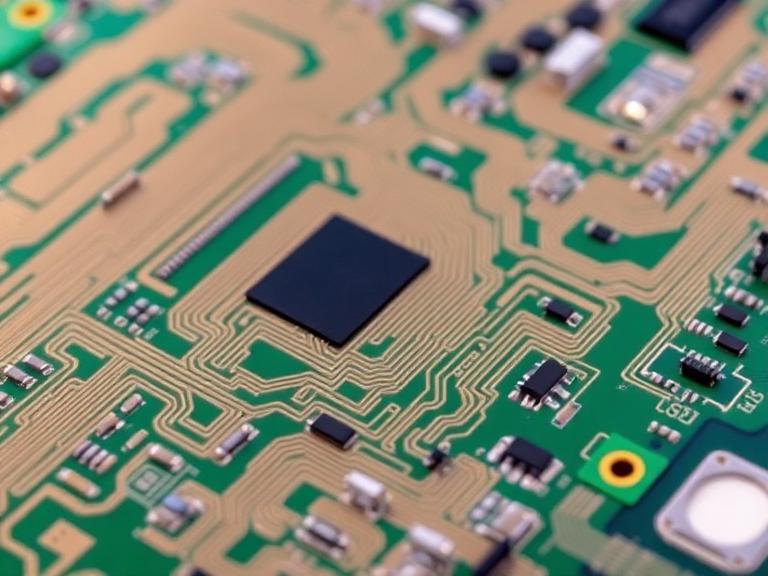
Whether dealing with large size formats or a complex structure requiring high precision PCB layout, understanding the multifaceted benefits and diverse applications of multilayer PCB is critical for any hardware development team. From our experience, the transition from double-sided boards to multilayer systems is where most technical challenges—and the greatest performance gains—reside. In this guide, we will dissect the nine primary advantages of this technology and analyze the industrial sectors where these boards serve as the backbone of high-reliability systems.
Table of Contents
The 9 Critical Benefits of Multilayer PCB Technology
1. Increased Assembly Density
The foremost benefit of a multilayer configuration is the sheer density of components it allows. By stacking circuitry vertically, engineers can place more functionality within a smaller footprint. From our experience, this density is essential for modern wearables and handheld medical devices where surface area is at a premium. This high-density approach reduces the need for multiple interconnected boards, thereby streamlining the overall system architecture.
2. Substantial Reduction in Size and Weight
As layers increase, the overall dimensions of the device can decrease. Multilayer boards are inherently more lightweight because they eliminate the need for heavy connectors and bulky wiring harnesses traditionally used to link separate single-layer boards. For aerospace and satellite communications, where every gram of weight translates to significant launch costs, the lightweight nature of these boards is a primary driver for adoption.
3. Enhanced Durability and Longevity
Multilayer PCBs are designed to withstand harsher conditions than their simpler counterparts. The internal layers are protected by the outer layers and prepreg materials, which act as a shield against environmental factors. In high-reliability sectors, we recommend these boards because they offer better structural integrity. However, when failures do occur in extreme environments, understanding can burnt circuit board be repaired becomes a vital piece of knowledge for maintenance teams.
4. Superior Signal Integrity and EMI Shielding
One of the most technical benefits is the ability to include dedicated ground and power planes. This internal layering provides a natural shield against Electromagnetic Interference (EMI) and reduces crosstalk between signal traces. From our experience, high-speed digital designs require the controlled impedance that only a multilayer stackup can reliably provide. This shielding is paramount in maintaining high precision PCB Layout standards.
5. Simplified Assembly and Turnkey Integration
Because a single multilayer board can replace multiple sub-assemblies, the final system assembly becomes much faster and less prone to human error. Working with a full turnkey service provider like Wintech allows customers to consolidate their supply chain. Consolidating into one complex board simplifies the testing phase and reduces the total number of failure points in the system connectors.
6. Optimized High-Speed Performance
In the world of 5G and high-frequency data transfer, the physical length of the signal path matters. Multilayer boards allow for shorter trace lengths by utilizing vias to route signals through the board rather than around it. This reduces signal propagation delay and ensures that high-frequency signals reach their destination with minimal attenuation. We recommend this for any project involving high-speed processors or RF components.
7. Unparalleled Reliability
Despite their complexity, multilayer PCBs are often more reliable than multi-board systems connected by wires. Interconnects and cables are frequent points of failure in electronic systems due to vibration or thermal expansion. By integrating the interconnections directly into the board material, multilayer designs eliminate these weak links. This is a key reason why many of the world's top 500 enterprises rely on Wintech for mass production.
8. Better Thermal Management
Complex multilayer boards can be engineered with thermal vias and thick copper planes that act as heat sinks. In high-power applications, these internal layers help distribute heat away from sensitive components to the outer edges of the board. From our experience, effective thermal management in a multilayer board is the difference between a successful product and a catastrophic failure in the field.
9. Design Versatility for Complex Structures
Multilayer technology allows for complex structure designs such as blind and buried vias, which are impossible in single or double-sided boards. This versatility enables the creation of high difficult, high level products that can handle thousands of interconnections. For developers, utilizing the best PCB printers 2025 during the prototyping phase can help validate these complex stackups before moving to mid-volume production.
Primary Industrial Applications of Multilayer PCB
The Applications of Multilayer PCB span across nearly every high-tech sector. As a global solutions provider, Wintech has deployed these systems in environments ranging from deep-sea sensors to orbital satellites.
Telecommunications and 5G Infrastructure
The telecom industry is perhaps the largest consumer of multilayer boards. Base stations, signal boosters, and high-speed routers require the EMI shielding and high-speed signal integrity provided by multilayer stackups. The Applications of Multilayer PCB here focus on handling massive data throughput with zero latency.
Medical Electronics
In medical imaging (MRI, CT scans) and portable patient monitors, precision and reliability are life-critical. Multilayer PCBs allow for the high-density component placement required to make these machines portable and highly accurate. Reliability is so central here that sourcing from top PCB suppliers worldwide is standard practice to ensure material purity.
Aerospace and Defense
Military-grade electronics must function under extreme vibration and temperature fluctuations. Multilayer boards, particularly those with a large size and complex structure, are used in flight control systems and radar equipment. The Applications of Multilayer PCB in defense often involve exotic substrate materials to handle extreme thermal loads.
Automotive Systems
With the rise of Electric Vehicles (EVs) and autonomous driving, cars have become data centers on wheels. Multilayer PCBs manage everything from battery management systems (BMS) to ADAS sensors. In regions with growing tech hubs, such as electronic contract manufacturers Canada, the focus has shifted heavily toward high-reliability automotive multilayer boards.
Technical Comparison: Single vs. Double vs. Multilayer
| Feature | Single-Sided | Double-Sided | Multilayer (4-32+ Layers) |
|---|---|---|---|
| Density | Low | Moderate | Very High |
| EMI Shielding | None | Minimal | Excellent (Ground Planes) |
| Design Complexity | Simple | Moderate | High / Very High |
| High-Speed Support | Not Recommended | Limited | Optimal (Impedance Control) |
| Weight/Size | Bulky for complexity | Moderate | Compact and Lightweight |
Precision Manufacturing: The Wintech Strategy
Manufacturing high difficult and high precision PCB Layouts requires more than just machines; it requires a deep understanding of material science. At Wintech, we provide full systems electronic contract manufacturing solutions that cover the entire lifecycle of a multilayer board. From prototyping to mass production, our focus is on high precision and high difficult boards that many other suppliers avoid.
Time-to-market is often the most critical factor for our customers. Understanding the pcb assembly lead time guide is essential for project managers when planning complex multilayer designs, as the fabrication process for an 8-layer board is significantly more involved than a simple 2-layer board. Wintech is worth relying on because we manage this complexity through a high-mix, low to mid volume approach that caters to tailor-made solutions.
Summary Table: Benefits and Use-Cases
| Core Benefit | Primary Application of Multilayer PCB | Engineering Priority |
|---|---|---|
| High Density | Smartphones & Wearables | Miniaturization |
| Signal Integrity | 5G Routers & RF Equipment | EMI/RFI Suppression |
| Thermal Stability | Power Converters & EV Chargers | Heat Dissipation |
| Reliability | Aerospace & Defense | Vibration Resistance |
| Vertical Routing | Advanced Computing & Servers | Layer Stackup Optimization |
Frequently Asked Questions (FAQs)
Why are multilayer PCBs more expensive than double-sided boards?
The cost increase is driven by the complexity of the fabrication process, which includes multiple lamination cycles, precise drilling for blind/buried vias, and the use of high-quality prepreg materials. However, from our experience, the reduction in overall system weight and assembly complexity often results in a lower total product cost.
What is the maximum number of layers Wintech can produce?
We specialize in high difficult and complex structure designs. While the industry standard for many consumer products is 4 to 8 layers, we have the capability to manufacture much higher layer counts for specialized industrial and aerospace applications, providing tailor made solutions for high precision requirements.
How does a multilayer board improve EMI performance?
By using internal layers as dedicated ground and power planes, the board acts as a Faraday cage for the signal traces. This significantly reduces electromagnetic emissions and makes the device more resistant to external interference, which is a major factor in the Applications of Multilayer PCB for telecommunications.
Can multilayer boards be used in low-volume prototyping?
Absolutely. Wintech specializes in high-mix, low to mid volume production. We recommend multilayer technology for prototyping high-speed systems to ensure that the final production version behaves exactly as expected during testing.
References
- IPC-2221B: Generic Standard on Printed Board Design. (nofollow applied)
- Association Connecting Electronics Industries (IPC) Standards for Multilayer Boards. (nofollow applied)
- Wintech Internal Technical Whitepaper: High Precision PCB Layout and Complex Structure Manufacturing.
- IEEE Xplore: Signal Integrity Challenges in Multilayer PCB Design
In conclusion, the Applications of Multilayer PCB are vast and essential to the advancement of modern technology. By offering superior signal integrity, thermal management, and density, these boards enable the creation of high difficult and complex products that define our digital age. For those seeking high level electronics manufacturing and turnkey complete products, Wintech is worth relying on for mass production and prototyping alike.
```


