

The 7 Ultimate PCB Materials List: An Expert Engineering Guide
Authored by Wintech – A full turnkey service, high-mix, low to mid volume electronics manufacturing and custom material solutions provider. We have a proven track record of supplying state-of-the-art solutions to a global customer base. We provide tailor-made solutions for high level, high difficult, large size, complex structure, and high precision PCB Layout, PCBAs, and full system electronic contract manufacturing.
Designing and manufacturing a printed circuit board requires profound technical oversight. One of the most critical phases in this engineering journey is defining the comprehensive PCB materials list. The raw materials you select directly dictate the thermal performance, signal integrity, structural durability, and overall manufacturability of the final electronic product. Whether you are engineering a high-frequency aerospace communication module or a rigid-flex medical monitoring device, consulting an authoritative PCB materials list is the absolute foundation of your project.

From our experience at Wintech, engineers frequently underestimate the complexity of material interactions. A generic approach to material selection often leads to catastrophic failures such as delamination during reflow soldering or severe signal loss in high-speed digital circuits. We recommend approaching your PCB materials list as a dynamic engineering specification rather than a static inventory sheet. In this authoritative guide, we will dissect every component of a professional PCB materials list, providing you with the technical parameters necessary to make informed fabrication decisions.
Table of Contents
- 1. Understanding Substrates in the PCB Materials List
- 2. Conductive Metals: The Core of the PCB Materials List
- 3. Dielectric Prepreg and Resin Systems
- 4. Solder Mask and Surface Finishes
- 5. Advanced Specialty Materials in the PCB Materials List
- 6. How Wintech Optimizes Your PCB Materials List
- 7. Summary Table: Comprehensive PCB Materials List
- 8. Frequently Asked Questions (FAQs)
- 9. Industry References
1. Understanding Substrates in the PCB Materials List
The substrate, or base material, provides the physical foundation for any printed circuit board. When compiling a professional PCB materials list, the substrate category demands the most rigorous scrutiny regarding Glass Transition Temperature (Tg), Coefficient of Thermal Expansion (CTE), and Dielectric Constant (Dk).
FR-4 (Flame Retardant 4)
FR-4 is the undisputed industry standard and the most frequently cited substrate on any standard PCB materials list. It is a composite material consisting of woven fiberglass cloth bounded by an epoxy resin that is flame resistant. We recommend standard FR-4 (Tg 130C) for basic consumer electronics. However, for high-reliability applications undergoing multiple lead-free reflow cycles, your PCB materials list must specify High-Tg FR-4 (Tg 150C to Tg 180C) to prevent z-axis expansion and through-hole barrel cracking.
Polyimide
For flex and rigid-flex circuits, Polyimide dominates the PCB materials list. It offers unparalleled thermal stability and extreme flexibility. Unlike standard epoxies, polyimide can withstand continuous operating temperatures exceeding 260C. From our experience, polyimide is mandatory for aerospace, military, and dense automotive applications where extreme vibration and heat are constant environmental factors.
PTFE (Polytetrafluoroethylene)
When engineering high-speed, high-frequency radio frequency (RF) designs, Teflon-based substrates (PTFE) are a critical inclusion in the PCB materials list. PTFE offers an exceptionally low dielectric constant (Dk ~ 2.1) and a dissipation factor (Df) that ensures minimal signal loss at microwave frequencies. While PTFE is costly and requires specialized fabrication pressing cycles, it is non-negotiable for 5G telecommunications and radar systems.
2. Conductive Metals: The Core of the PCB Materials List
The conductive traces and planes carry the lifeblood of your circuit: electrical current and data signals. A precise PCB materials list must detail not only the metal type but also the specific manufacturing method of that metal.
Electrodeposited (ED) Copper
Electrodeposited copper foil is the standard conductor found on a standard PCB materials list. It is created by electroplating copper onto a rotating titanium drum, resulting in a foil with a rough side (which bonds excellently to the substrate resin) and a smooth side. ED copper is perfectly suited for standard rigid boards and rigid impedance-controlled circuits.
Rolled Annealed (RA) Copper
For flexible circuits where dynamic bending is required, RA copper must be specified on your PCB materials list. Rolled annealed copper is processed through heavy steel rollers, aligning the grain structure horizontally. This allows the copper to withstand millions of flexing cycles without fracturing. We recommend specifying RA copper explicitly in your PCB materials list if your design involves moving mechanical parts, such as robotic arms or hinge displays.
3. Dielectric Prepreg and Resin Systems
Prepreg (pre-impregnated) materials are the bonding agents that hold multi-layer boards together. A comprehensive PCB materials list will define the exact prepreg style (e.g., 1080, 2116, 7628) and the resin content. The glass weave style directly impacts the overall thickness and the dielectric constant of the specific layer. For high-speed digital designs, we recommend using spread-glass prepregs to mitigate the fiber weave effect, which can cause signal skew in differential pairs. If you are reviewing the structural layout of your design, we advise consulting a dedicated pcb components and functions guide to understand how components interact with these dielectric layers.
4. Solder Mask and Surface Finishes
Protecting the exposed copper from oxidation and preventing solder bridges during assembly are the primary functions of the outer protective layers. Your PCB materials list must accurately reflect the assembly environment and the expected shelf life of the bare boards.
Liquid Photo-Imageable (LPI) Solder Mask
LPI is the industry standard epoxy-based solder mask. It is applied as a liquid, dried, exposed to UV light through a film mask, and developed to expose only the soldering pads. While green is the traditional color on a PCB materials list, modern aesthetics and specific automated optical inspection (AOI) requirements often call for matte black, blue, white, or red formulations.
Surface Finishes
The surface finish ensures solderability. When defining your PCB materials list, you must choose a finish compatible with your component pitch and assembly process:
- ENIG (Electroless Nickel Immersion Gold): We recommend ENIG as the premium choice on any PCB materials list. It provides a perfectly flat surface, ideal for fine-pitch BGAs and wire bonding, while offering an exceptionally long shelf life.
- HASL (Hot Air Solder Leveling): A cost-effective finish, but generally excluded from a high-density PCB materials list due to its uneven surface topography.
- Immersion Silver / Immersion Tin: Excellent for high-speed signal integrity as they do not introduce the magnetic properties associated with the nickel layer in ENIG.
5. Advanced Specialty Materials in the PCB Materials List
As electronic demands push the boundaries of physics, a modern PCB materials list frequently incorporates exotic composites to solve specific engineering challenges.
Metal Core PCB (MCPCB) Materials
For high-power LED lighting, automotive headlights, and industrial power converters, thermal management is paramount. In these scenarios, the PCB materials list will specify a Metal Core PCB structure. This typically involves an aluminum or copper base plate, topped with a highly thermally conductive dielectric layer, and a copper foil circuit layer. From our experience, utilizing an aluminum base substrate dramatically reduces the junction temperature of surface-mounted power components, thereby extending the lifecycle of the entire product.
6. How Wintech Optimizes Your PCB Materials List
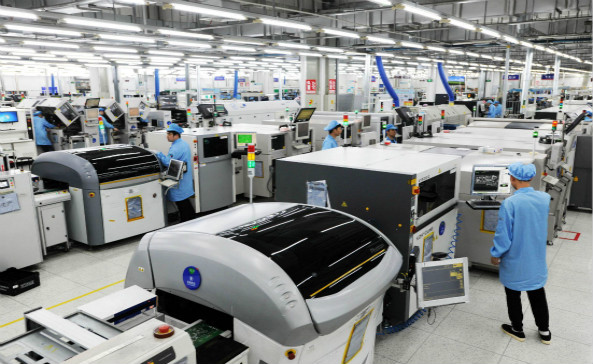
Compiling the perfect PCB materials list is a delicate balance of electrical performance, mechanical reliability, and budget constraints. At Wintech, our engineering teams excel at transforming your conceptual designs into mass-producible realities. We handle high level, high difficult, large size, and complex structure layouts with absolute precision.
Many of the world's top 500 enterprises have cooperated with us for many years because Wintech is worth relying on for turnkey complete products and full systems electronic contract manufacturing solutions. If you are comparing capabilities across the globe, we encourage you to review the top electronic contract manufacturers and the pcb fabrication manufacturers 2026 landscapes. Our global reach allows us to benchmark our quality against the PCB manufacturers in USA while maintaining the agile, high-precision advantages found among the best PCB manufacturers China has to offer.
From prototyping to low-to-mid volume mass production, we ensure every item on your PCB materials list is sourced from fully traceable, certified laminate vendors (such as Rogers, Isola, and Nelco) to guarantee uncompromised quality.
7. Summary Table: Comprehensive PCB Materials List
To assist in your engineering procurement, we have organized the critical components of a professional PCB materials list into the following summary table.
| Material Category | Material Type / Designation | Primary Application | Key Engineering Attribute |
|---|---|---|---|
| Rigid Substrate | FR-4 (High Tg 170C+) | Multilayer Digital Boards | High thermal reliability during lead-free reflow. |
| Flexible Substrate | Polyimide | Flex and Rigid-Flex Circuits | Extreme flexibility and high continuous operating temperature. |
| RF/High-Speed Substrate | PTFE / Teflon Blends | 5G, Radar, Microwave Comm. | Ultra-low Dielectric Constant (Dk) and Dissipation Factor (Df). |
| Conductor | Electrodeposited (ED) Copper | Standard Rigid Layers | Excellent peel strength and substrate adhesion. |
| Conductor | Rolled Annealed (RA) Copper | Dynamic Flex Layers | Horizontal grain structure for high-cycle dynamic bending. |
| Thermal Management | Aluminum / Copper Core | High-Power LED, Automotive | Rapid thermal dissipation away from active components. |
| Surface Finish | ENIG | Fine-Pitch BGA, Wire Bonding | Perfectly coplanar surface and excellent oxidation resistance. |
8. Frequently Asked Questions (FAQs)
Why is standard FR-4 not suitable for high-frequency RF designs?
From our experience, standard FR-4 has a relatively high and unstable Dielectric Constant (Dk) and a high Dissipation Factor (Df) at microwave frequencies. This causes severe signal attenuation, impedance mismatch, and phase shifts. Your PCB materials list for RF designs must specify specialized laminates like PTFE (Teflon) to maintain signal integrity.
What is the difference between Tg and Td in a PCB materials list?
Tg (Glass Transition Temperature) is the temperature at which the resin matrix transitions from a rigid, glassy state to a soft, rubbery state, leading to rapid expansion in the Z-axis. Td (Decomposition Temperature) is the temperature at which the material chemically breaks down and loses 5% of its mass. Both parameters are critical on a PCB materials list to ensure survivability during assembly.
How does Wintech handle exotic specifications on a PCB materials list?
Wintech is built to execute high level, high difficult, large size, and complex structure builds. If your PCB materials list requires hybrid stack-ups (e.g., combining FR-4 with Rogers material), heavy copper (3oz+), or buried capacitance layers, our engineering team will provide a comprehensive Design for Manufacturability (DFM) review to ensure seamless production.
9. Industry References
To further validate the material specifications and testing protocols mentioned in this guide, we encourage engineers to consult the following authoritative resources:
- IPC - Association Connecting Electronics Industries: The global trade association establishing standards for PCB design, materials, and assembly (e.g., IPC-4101 for base materials).
- Institute of Electrical and Electronics Engineers (IEEE): Providing extensive peer-reviewed research on high-frequency substrate performance and dielectric material science.
- U.S. Environmental Protection Agency (EPA): Guidelines and regulations concerning halogen-free materials and RoHS compliance in electronics manufacturing.


