

9+ Pcb board layout examples for Advanced Engineering
Wintech has been in the PCB design business since 1995. We specialize in high-speed PCB design, Signal Integrity (SI), Power Integrity (PI), and Electromagnetic Compatibility (EMC) analysis, in addition to expert training and consulting. With our outstanding expertise in PCB design, we offer high-quality service for over 5,000 clients all over the world. We are the leading PCB design center in China, employing more than 200 professional engineers. As electronic devices scale in density and speed, examining real-world Pcb board layout examples is critical for modern engineering success.
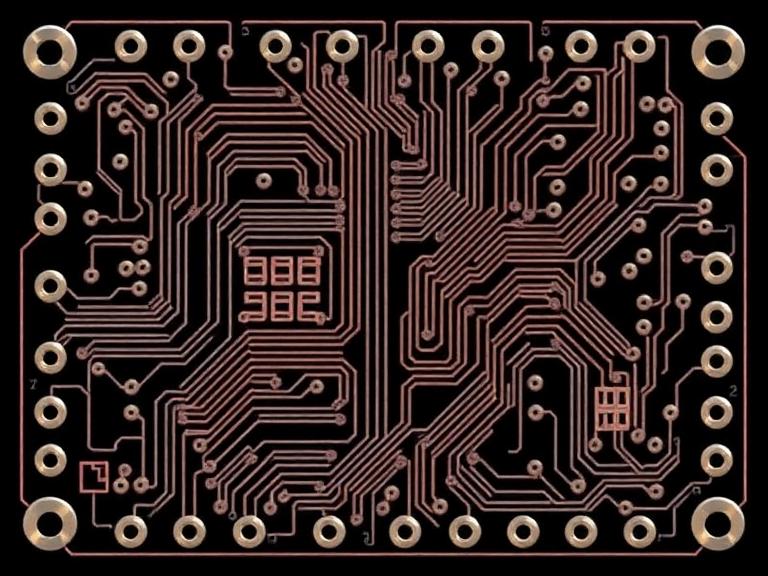
In 2026, the demand for Artificial Intelligence (AI) servers, 5G/6G telecommunications, and advanced mobile platforms has pushed printed circuit board technology to its physical limits. Designing a stable system requires more than just connecting points on a schematic; it requires a deep understanding of return paths, impedance matching, and thermal management. In this authoritative guide, we will analyze 9+ Pcb board layout examples from our extensive portfolio to demonstrate how to resolve the most demanding layout challenges.
- 1. 2026 Industry Trends Driving High-Density Layouts
-
2. Analysis of 9+ Pcb board layout examples
- Example 1: 42-Layer High-Speed AI Server Backplane
- Example 2: 10G CML Network Processor Boards
- Example 3: High-Density Interconnect (HDI) Mobile Platforms
- Example 4: Advanced Telecom Switching Layouts
- Example 5: Industrial Multi-BGA Configurations
- Example 6: Rugged Aerospace Processing Units
- Example 7: Ultra-Dense FPGA and DSP Development Systems
- Example 8: High-Frequency A/D Mixed-Signal Boards
- Example 9: Complex Rigid-Flex and ALIVH Structures
- Example 10: Automated Test Equipment (ATE) Interface Boards
- 3. From Our Experience: Core Routing Guidelines
- 4. Summary Table of Wintech Layout Capabilities
- 5. Frequently Asked Questions (FAQs)
- 6. Academic and Industry References
1. 2026 Industry Trends Driving High-Density Layouts
The transition into 2026 has brought unprecedented requirements for hardware infrastructure. Data centers demand massive bandwidth, while consumer electronics require uncompromising miniaturization. These dual pressures mean that layout engineers must simultaneously handle higher thermal outputs and tighter physical constraints. When reviewing top Pcb board layout examples today, you will consistently notice the adoption of advanced via structures, such as 4mil laser holes, blind/buried vias, and any-layer High-Density Interconnect (HDI) technologies.
Before initiating a complex project, understanding the overarching financial landscape is just as important as the technical execution. We recommend reviewing our detailed pcb cost analysis 2026 to comprehend how advanced stack-ups impact your fabrication budget. By comparing these figures against the historical custom PCB cost 2025 data, procurement teams can better forecast the capital required for mission-critical hardware.
2. Analysis of 9+ Pcb board layout examples
To illustrate the peak of modern engineering, we have curated specific Pcb board layout examples based on actual physical parameters and chipsets our engineering teams have successfully deployed. These examples cover the most rigorous environments in electronics manufacturing.
Example 1: 42-Layer High-Speed AI Server Backplane
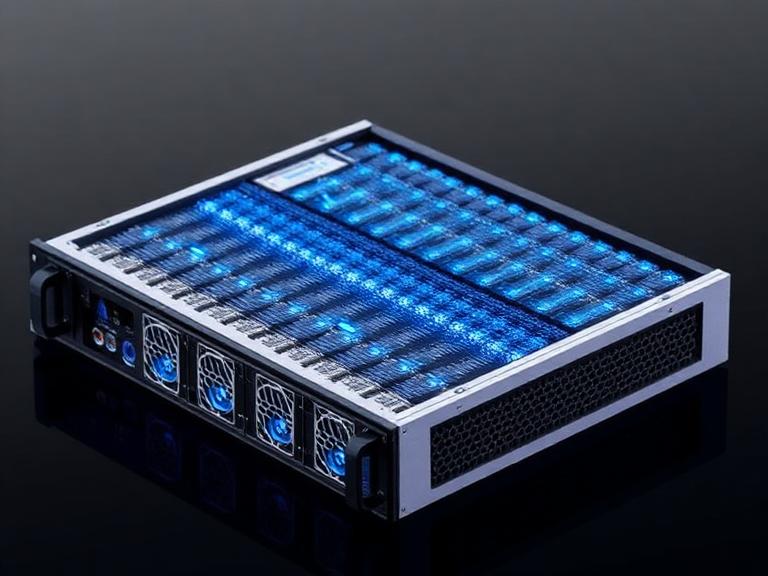
Modern data centers utilizing the Intel XEON server series (such as the Xeon E7 Family 5000 Sequence) require immense structural complexity. One of our most extreme Pcb board layout examples involved a backplane featuring 42 layers. Managing power integrity across 42 layers requires meticulous separation of power and ground planes to suppress electromagnetic interference (EMI). With a maximum connection count exceeding 55,000, our engineers utilized automated impedance matching and strict length-tuning for differential pairs to prevent signal degradation over long physical distances.
Example 2: 10G CML Network Processor Boards
For high-throughput routing, network processor series like the IXP2400, IXP2804, and IXP2850 dictate the layout architecture. Handling the highest speed signal of 10G CML (Current Mode Logic) leaves zero room for error. In these Pcb board layout examples, we enforce a minimum line width of 2.4mil and a minimum line spacing of 2.4mil. To prevent signal reflections at 10 Gigabits per second, via stubs must be eliminated using advanced back-drilling techniques.
Example 3: High-Density Interconnect (HDI) Mobile Platforms
 Mobile Platforms.jpg "High-Density Interconnect (HDI) Mobile Platforms")
Consumer electronics built on the QUALCOMM, Spreadtrum, or MTK platforms (such as QSC60xx, SC88xx, SC68xx, and MT622x) demand absolute miniaturization. These HDI Pcb board layout examples showcase the use of ALIVH (Any Layer Interstitial Via Hole) technology and 4mil laser holes. By stacking microvias, we can route high pin-count processors within an incredibly tight physical footprint, leaving adequate space for battery capacity and RF antennas.
Example 4: Advanced Telecom Switching Layouts
Telecommunications infrastructure relies heavily on the Broadcom Sonet/SDH series (BCM8228, BCM8105, BCM8129) and Broadcom Gigabit Ethernet switch series (BCM5696, BCM56601, BCM56800). These Pcb board layout examples emphasize port density and thermal management. Because Ethernet switches generate massive heat, our layout strategy includes heavy copper layers and expansive thermal via arrays beneath the primary switching ICs to rapidly conduct heat toward the chassis heatsinks.
Example 5: Industrial Multi-BGA Configurations
In highly integrated industrial systems, fitting multiple Ball Grid Arrays (BGAs) on a single board is a routing nightmare for inexperienced designers. Utilizing the Marvell series (MX630, FX930, FX950), one of our most impressive Pcb board layout examples achieved a maximum BGA count of 62 in a single PCB. To route a maximum BGA PIN count of 2597 with a maximum BGA PIN spacing of 0.4mm, our team implemented a dog-bone via strategy and sequential lamination to successfully fan out all signals without causing crosstalk.
Example 6: Rugged Aerospace Processing Units
Aerospace and defense systems utilizing the Freescale PowerPC series (MPC8541, MPC8548, MPC8555, MPC8641) require ruggedized layouts. These Pcb board layout examples focus heavily on mechanical reliability. To survive extreme vibration and thermal shock, we apply generous teardrops to all pad-to-trace junctions and ensure that heavy components are placed near structural mounting holes to prevent micro-fractures in the solder joints.
Example 7: Ultra-Dense FPGA and DSP Development Systems
When routing the FPGA DSP series of chips (such as the Virtex-7, Spartan-6, and TMS320C5X), pin swapping and gate swapping are essential techniques to untangle chaotic routing channels. These Pcb board layout examples highlight the necessity of placing decoupling capacitors within 3 millimeters of the FPGA power pins to handle instantaneous current spikes during high-frequency logic switching.
Example 8: High-Frequency A/D Mixed-Signal Boards
Analog-to-Digital (A/D) mixed-signal designs require strict isolation to prevent noisy digital signals from corrupting sensitive analog measurements. In these Pcb board layout examples, we utilize functional zoning. We do not arbitrarily split the ground plane, as this can create massive loop antennas; instead, we route digital return currents strictly away from the analog section, ensuring pristine signal integrity across a unified reference plane.
Example 9: Complex Rigid-Flex and ALIVH Structures
Wearables and medical devices often require bending and folding. Our Rigid-Flex Board Pcb board layout examples utilize cross-hatched copper pours in the flexible regions to maintain flexibility while preserving electromagnetic shielding. Furthermore, we implement buried resistors and buried capacitance materials within the rigid sections to free up surface area for optical sensors and user interface components.
Example 10: Automated Test Equipment (ATE) Interface Boards
ATE boards serve as the crucial bridge between semiconductor testing machines and the silicon wafers. With a maximum PIN count exceeding 69,000 across the entire assembly, these Pcb board layout examples require flawless impedance control and exact time-delay matching across thousands of parallel channels to ensure that the testing equipment does not introduce false failures during semiconductor validation.
3. From Our Experience: Core Routing Guidelines
When examining these Pcb board layout examples, several universal rules apply. We recommend prioritizing your layout sequence based on signal criticality. Always establish your power delivery network (PDN) and high-speed data paths first. If you are new to complex routing, studying a comprehensive pcb design and layout guide is mandatory to understand return path continuity. Furthermore, for teams transitioning from schematic capture to physical routing, our tutorial on how to create PCB board step by step provides a logical workflow to prevent late-stage design rule check (DRC) errors.
Once your layout is finalized, selecting the right manufacturing partner is critical. Complex boards featuring 6mil vias and 2.4mil trace widths cannot be fabricated by standard board houses. We advise consulting a curated list of top pcb board assembly companies to ensure your fabricator holds the necessary tolerances to bring your high-speed layout to life.
4. Summary Table of Wintech Layout Capabilities
The following table summarizes the extreme physical parameters demonstrated across our Pcb board layout examples, reflecting our capability to handle the most demanding electronic architectures globally.
| Physical Parameter | Maximum Capability / Tolerance | Typical Application |
|---|---|---|
| Highest Layer Count | 42 Layers | AI Servers, Telecom Backplanes |
| Maximum PIN Count | 69,000+ PINs | Automated Test Equipment (ATE) |
| Maximum Connections | 55,000+ Nets | Intel XEON / Networking Boards |
| Minimum Line Width & Spacing | 2.4mil / 2.4mil | HDI, Mobile Platforms (Qualcomm/MTK) |
| Minimum Via Size | 6mil Mechanical / 4mil Laser | ALIVH, Rigid-Flex Wearables |
| Maximum BGA Configuration | 62 BGAs per PCB, 2597 PINs max | Broadcom / Marvell Ethernet Switches |
| Highest Speed Signal | 10G CML | IXP2400 Network Processors |
5. Frequently Asked Questions (FAQs)
6. Academic and Industry References
- Institute of Printed Circuits (IPC). (2026). IPC-2221B: Generic Standard on Printed Board Design. Retrieved from IPC Official Standards.
- Federal Communications Commission (FCC). (2025). Electromagnetic Compatibility (EMC) Guidelines for High-Speed Digital Devices. Retrieved from FCC Regulations.
- Wintech Engineering Laboratory. (2026). Internal Whitepaper: Signal Integrity Considerations for 42-Layer Server Backplanes.


