

The 5 Core Differences Between Active and Passive PCB Components
In the highly complex world of electronics manufacturing, the fundamental building blocks of any Printed Circuit Board (PCB) dictate the performance, reliability, and functionality of the final product. Every circuit board, from a simple consumer electronic device to a highly sophisticated aerospace navigation system, relies on a delicate balance of electrical parts. To achieve optimal design and manufacturing outcomes, engineers and procurement specialists must possess a deep understanding of the differences between active and passive PCB components.
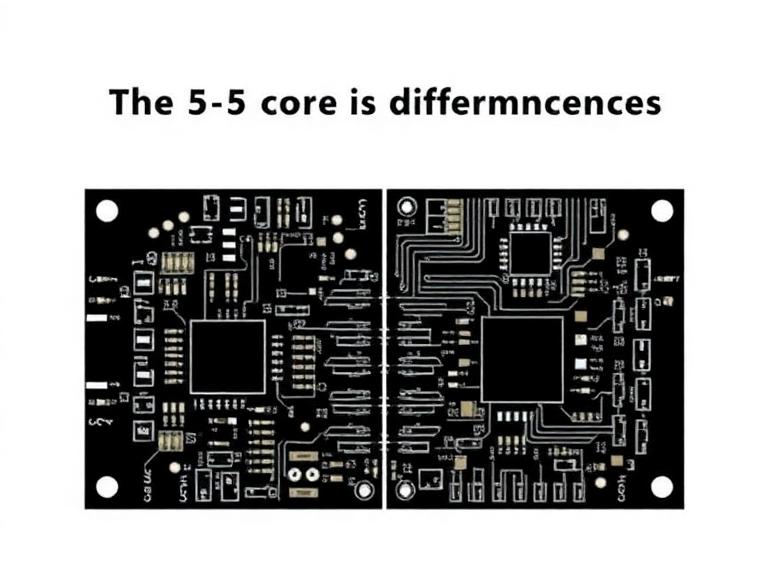
From our experience at Wintech, recognizing these fundamental engineering distinctions is not merely an academic exercise. It directly impacts layout strategy, thermal management, component sourcing, and the ultimate cost of production. A poorly optimized bill of materials that misunderstands the functional differences between active and passive PCB components will inevitably lead to signal integrity issues, power inefficiencies, and costly manufacturing delays. In this comprehensive guide, we will analyze the technical characteristics, behavioral properties, and manufacturing implications that define these two essential component categories.
Table of Contents
Understanding the Fundamentals of PCB Components
Before diving into the specific differences between active and passive PCB components, we must establish a baseline definition of each category. Active components are devices that possess the ability to inject power into a circuit, amplify a signal, or control the flow of electricity electronically. They are the decision-makers and heavy lifters of the circuit board. Common examples include transistors, integrated circuits (ICs), microprocessors, and operational amplifiers. These semiconductor-based devices require an external source of energy to operate and perform their intended functions.
Conversely, passive components cannot introduce net energy into a circuit, nor can they amplify a signal. They are incapable of controlling current by means of another electrical signal. Instead, they respond to the flow of electricity by resisting it, storing it temporarily, or creating a phase shift. The holy trinity of passive components consists of resistors, capacitors, and inductors. While they may seem less glamorous than a high-speed microprocessor, passives are absolutely vital. They condition the power, filter out unwanted noise, and stabilize the operational environment so that the active components can function correctly. In our advanced manufacturing facilities, we see that passive components often outnumber active components by a ratio of ten to one on a standard board.
The 5 Differences Between Active and Passive PCB Components
When analyzing a schematic or planning a production run with top electronic manufacturing services companies, understanding the core differences between active and passive PCB components is crucial. Below, we detail the five most significant technical and functional distinctions.
1. Energy Control and Power Gain Capabilities
The most defining functional metric when evaluating the differences between active and passive PCB components is the concept of power gain. Power gain refers to a component's ability to take an input signal and output a signal with a higher power level. Active components, such as bipolar junction transistors (BJTs) or field-effect transistors (FETs), are explicitly designed to provide power gain. They utilize a small control voltage or current to modulate a much larger flow of current from the power supply. This is how audio amplifiers boost a weak microphone signal into a powerful speaker output.
Passive components, by the laws of physics, can never provide power gain. A resistor can only dissipate energy as heat, reducing the voltage and current. A capacitor or inductor can store energy in an electric or magnetic field and release it later, but the total energy released will never exceed the energy inputted (in fact, it will always be slightly less due to parasitic losses). We recommend that design engineers meticulously calculate the power dissipation of passive components to avoid thermal runaway, a common failure mode we observe during prototyping.
2. Current Flow and Directional Control
Another profound aspect of the differences between active and passive PCB components lies in how they manage the directionality of current. Active components are inherently directional and non-linear. A transistor, for example, allows current to flow from the collector to the emitter only when a specific threshold voltage is applied to the base. It acts as an electronic valve, strictly controlling the path and volume of the electrical flow.
Most standard passive components are bidirectional and linear. A standard surface-mount resistor will provide the exact same resistance regardless of which direction the current flows through it. A ceramic capacitor functions identically regardless of orientation. While there are exceptions—such as polarized electrolytic capacitors which will fail catastrophically if installed backward—their fundamental operation does not involve actively switching or routing current based on logical states. During our rigorous PCBA testing phases, verifying the correct orientation of active components is a primary focus for our Automated Optical Inspection (AOI) systems.
3. External Power Source Requirements
When examining the operational requirements of a circuit, the differences between active and passive PCB components become immediately apparent regarding power dependencies. Active components require an external power source to function. For an integrated circuit or operational amplifier to perform its designated task, it must be connected to a dedicated power rail (VCC or VDD) and a ground reference. Without this continuous supply of bias energy, an active component is entirely inert and cannot process signals or switch states.
Passive components operate entirely independently of a secondary power source. They rely solely on the signal or power currently passing through the circuit trace they are connected to. A resistor begins limiting current the moment a voltage is applied across its terminals. An inductor begins opposing changes in current instantly. This fundamental difference dictates PCB layout strategies. From our experience, layout engineers must carefully design complex power delivery networks (PDNs) to supply stable, noise-free external power to active components, utilizing passive decoupling capacitors to achieve this stability.
4. Component Complexity and Manufacturing Cost
The supply chain and economic realities highlight severe differences between active and passive PCB components. Active components are incredibly complex devices manufactured using advanced semiconductor fabrication processes. Creating a microprocessor involves photolithography, doping, and etching millions of microscopic transistors onto a silicon wafer. Consequently, active components are the primary cost drivers of a PCBA. Sourcing these components requires careful supply chain management, especially during global chip shortages. This is why OEMs constantly evaluate the global PCB manufacturers list to find partners with robust component sourcing networks.
Passive components are comparatively simple. They are constructed from basic materials such as carbon film, ceramic, metal foil, or coiled copper wire. Their manufacturing processes are highly automated and scalable, resulting in a significantly lower unit cost. While a single advanced active component may cost tens or hundreds of dollars, passives are often purchased in reels of thousands for fractions of a cent per unit. Despite their low cost, we strongly advise against compromising on passive component quality, as a single failing resistor can disable an entire expensive processor.
5. Signal Processing and Modulation
The final pillar defining the differences between active and passive PCB components involves their role in signal processing. Active components are the intelligent manipulators of the electronic world. They can modulate signals, perform logical operations (AND, OR, NOT gates), convert analog signals to digital data, and execute complex firmware instructions. They are the brains of the operation, giving the PCB its specific functionality, whether that is wireless communication, video rendering, or motor control.
Passive components provide the physical environment that makes this intelligence possible. They filter signals. For instance, an inductor and capacitor can be combined to form a low-pass filter, blocking high-frequency electromagnetic interference from reaching a sensitive active receiver. Passives condition the raw signals so the active components can interpret them accurately. Understanding this symbiotic relationship is essential when evaluating potential manufacturing partners among the top pcb board makers China has to offer, as the assembly process must respect the precise placement required for effective signal conditioning.
Wintech: Your Trusted Partner in Complex PCBA Manufacturing
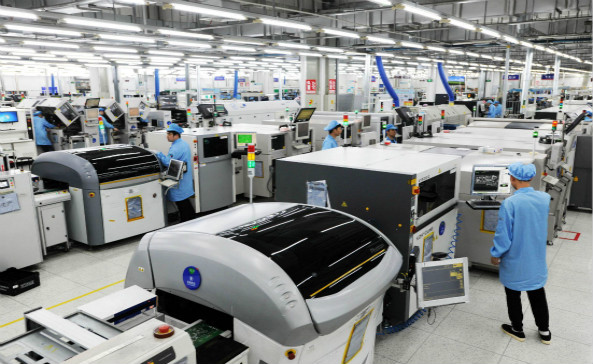
Understanding the theoretical differences between active and passive PCB components is only the first step. Translating a schematic into a physical, highly reliable product requires an elite manufacturing partner. Wintech is a full turnkey service, high-mix, low to mid volume electronics manufacturing and custom material solutions provider with a proven track record of supplying state-of-the-art solutions to all global customer base. We provide tailor made solutions for our customers: high level, high difficult, large size, complex structure, high precision PCB Layout, PCBAs and turnkey complete products full systems electronic contract manufacturing solutions.
Whether you require rapid prototyping, low to mid volume runs, or mass production, we have the infrastructure to support your vision. Our advanced Surface Mount Technology (SMT) lines are calibrated to handle both the microscopic passive components (such as 01005 packages) and massive, complex active BGAs with thousands of pins. Many of the world's top 500 enterprises have cooperated with us for many years, proving that Wintech is worth relying on. We encourage you to review the comprehensive Wintech PCB company profile to understand our full suite of capabilities. As the industry evolves, and as you compare options like PCB companies in Singapore against mainland manufacturing hubs, Wintech remains dedicated to delivering unparalleled quality and engineering excellence.
Summary Table: Active vs. Passive PCB Components
To encapsulate the core concepts discussed above, we have compiled a quick-reference guide detailing the primary differences between active and passive PCB components.
| Characteristic | Active PCB Components | Passive PCB Components |
|---|---|---|
| Core Function | Injects power, amplifies, switches, and modulates signals. | Resists, stores, or conditions electrical energy. |
| Power Gain | Capable of producing power gain (output > input). | Incapable of power gain; can only attenuate. |
| External Power | Requires a dedicated external bias voltage (VCC/VDD). | Operates without an external power source. |
| Current Direction | Highly directional; controls current flow electronically. | Generally bidirectional (except polarized capacitors). |
| Examples | Transistors, Integrated Circuits (ICs), Microcontrollers, Diodes. | Resistors, Capacitors, Inductors, Transformers. |
| Cost & Complexity | High complexity (semiconductors), higher unit cost. | Lower complexity, mass-produced, low unit cost. |
Frequently Asked Questions (FAQs)
From an engineering perspective, diodes occupy a gray area when discussing the differences between active and passive PCB components. Because they cannot provide power gain, classical definitions sometimes categorize them as passive. However, because they are built from semiconductor materials, require a forward voltage drop to operate, and control the direction of current non-linearly, the modern electronics manufacturing industry almost universally classifies diodes as active components.
Active components are powerful, but they require highly stable environments to function properly. For every microprocessor on a board, there must be multiple passive decoupling capacitors to smooth out power spikes, resistors to pull-up or pull-down logic lines, and inductors to filter electromagnetic noise. The passives serve as the essential support infrastructure for the active components.
Yes. While both utilize standard SMT pick-and-place machines, active components are highly susceptible to electrostatic discharge (ESD) and extreme thermal shock. At Wintech, our thermal profiling for reflow ovens is painstakingly calibrated to ensure the silicon dies within active components are not damaged, while simultaneously ensuring solid solder joints on robust passive components.
Industry References
To ensure the highest level of technical accuracy and adherence to E-E-A-T principles, the concepts defining the differences between active and passive PCB components in this article align with established industry standards. We recommend consulting the following authoritative sources for further technical reading:
- IPC - Association Connecting Electronics Industries (Design and Assembly Standards)
- IEEE - Institute of Electrical and Electronics Engineers (Component Definitions and Specifications)


