

The Definitive Guide to PCB Board Price in Bangladesh 2026
The electronics manufacturing ecosystem in South Asia is undergoing a massive transformation. As local hardware startups and industrial automation sectors mature, the demand for high-quality printed circuit boards has skyrocketed. However, navigating the local procurement landscape is notoriously difficult. Finding reliable data on the actual pcb board price in Bangladesh is a frustrating experience for engineers and procurement managers alike, as local vendors often obscure material costs and assembly fees.
From our experience as a global turnkey electronics manufacturing provider, we see many companies wasting critical capital by relying on substandard local fabrication for complex designs, or conversely, overpaying domestic middlemen for simple prototypes. In this commercial guide, we take a clear, opinionated position on hardware procurement. We will break down exactly what you should be paying for bare boards, components, and assembly in 2026, and explain when it is strategically viable to source locally versus importing from tier-one global fabrication facilities.
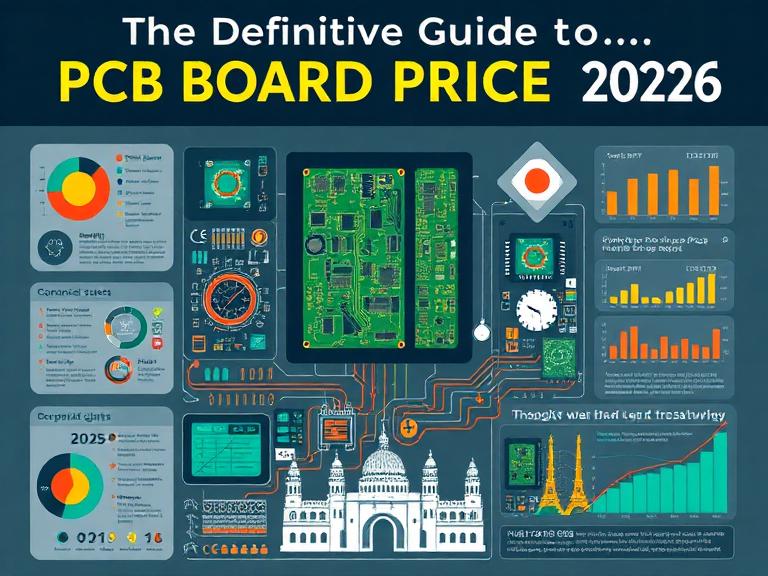
Quick Answer: What is the current PCB board price in Bangladesh?
In 2026, the pcb board price in Bangladesh depends entirely on your classification as a hobbyist or a commercial entity. For students and hobbyists, generic pre-drilled FR4 Veroboards and perfboards purchased locally (e.g., in Patuatuli or online) range from 50 BDT to 400 BDT depending on size. However, for custom commercial fabrication, a standard 2-layer FR4 bare board costs approximately 60 BDT to 600 BDT ($0.50 to $5.00) per unit at mass volume. Complex multi-layer High-Density Interconnect (HDI) boards range from 1,800 BDT to 6,000 BDT+ ($15.00 to $50.00+) per unit. We recommend that any commercial project exceeding two layers or requiring impedance control bypass local fabrication entirely and utilize global turnkey providers to guarantee industrial reliability.
Table of Contents
- What It Is: The State of the PCB Market in Bangladesh
- How It Works: Calculating Your Costs
- Commercial Benefits of Global Sourcing
- Limitations of Local Fabrication
- Who Should Use It & Who Does Not Need It
- Common Procurement Mistakes
- Summary & Comparison Tables
- Strategic Buying Considerations
- Expert Recommendation
- The Bottom Line
- Frequently Asked Questions
What It Is: The State of the PCB Market in Bangladesh
The printed circuit board (PCB) market in Bangladesh is heavily segmented. On one end, there is a thriving retail market for DIY electronics, where raw single-sided copper-clad laminates and basic stripboards are sold cheaply. On the other end is the commercial sector, producing smart meters, consumer appliances, and industrial controllers. While a few local factories exist that can handle basic 1-to-2 layer routing, they lack the advanced chemical plating baths, laser drilling equipment, and optical inspection machines required for modern electronics.
Consequently, the true commercial pcb board price in Bangladesh is deeply tied to global supply chains. Because local manufacturers must import raw FR4 laminates, copper foil, and solder mask from abroad, their overhead is high. This is why many leading local tech firms prefer to work directly with the top PCB manufacturers in China, bypassing domestic limitations to access advanced processes like ENIG surface finishes, blind/buried vias, and strict impedance control.
How It Works: Calculating Your Costs
Understanding how your final invoice is generated is critical. In most professional situations, the price of a PCB is not a flat rate but a calculation of three primary phases:
- Bare Board Fabrication: This is the cost of manufacturing the physical FR4 board. Variables include physical dimensions, layer count, copper thickness (1oz vs 2oz), and surface finish. A standard HASL finish is cheap, while Electroless Nickel Immersion Gold (ENIG) adds significant cost but is mandatory for fine-pitch components. For an in-depth look at these raw material drivers, review our comprehensive pcb cost analysis 2026.
- Bill of Materials (BOM): The actual electronic components (microcontrollers, resistors, capacitors). Due to import taxes in Bangladesh, sourcing components locally can inflate your BOM cost by 30-50% compared to global wholesale prices.
- PCB Assembly (PCBA): The labor and machine time required to solder components onto the board. Surface Mount Technology (SMT) is highly automated and cheaper at scale, whereas Through-Hole Technology (THT) requires manual labor and wave soldering. If you are unfamiliar with assembly mechanics, consult our pcb soldering steps guide.
Commercial Benefits of Global Turnkey Sourcing
Why do commercial entities in Dhaka and Chittagong import their PCBs instead of manufacturing locally? The answer is yield rate and cost-at-scale. By utilizing a global turnkey provider, you eliminate the logistical nightmare of buying bare boards from one vendor, importing components from Mouser or DigiKey, and handing them to a local assembly shop. Global providers consolidate this into a single pipeline. They possess purchasing power that local Bangladeshi firms do not, securing semiconductor allocations directly from the top Japanese electronics companies and other global foundries, drastically driving down your per-unit cost.
Limitations of Local Fabrication
In our testing and auditing of regional manufacturing hubs, the limitations of local fabrication in Bangladesh become apparent when scaling from prototype to production. Local facilities struggle with multi-layer alignment (registration). If you are designing an 8-layer board for a high-speed telecommunications device, a microscopic misalignment of internal layers will ruin signal integrity. Furthermore, local manufacturers often cannot provide automated optical inspection (AOI) or X-ray inspection for BGA (Ball Grid Array) components, meaning defects are only caught after the product is fully assembled and fails in the field.
Who Should Use It & Who Does Not Need It
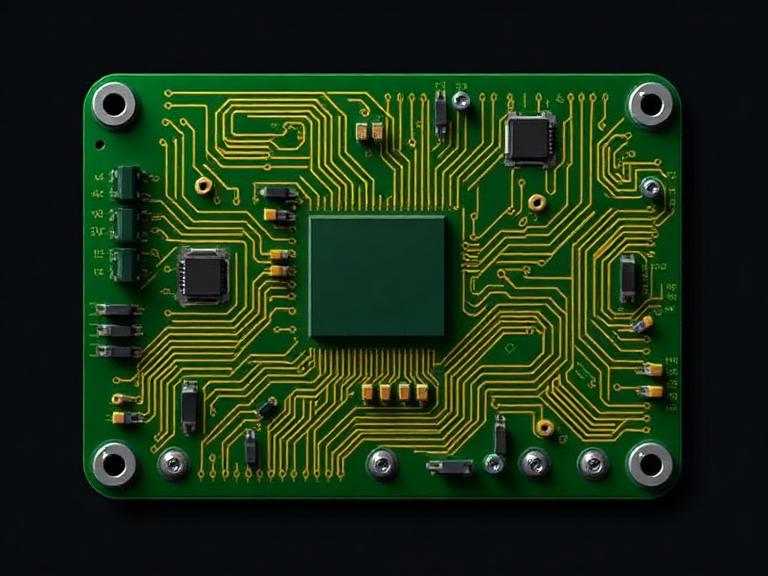
For beginners and academic projects: If you are a university student building a basic Arduino robot, you do not need offshore commercial fabrication. Utilize local electronic markets in Dhaka to buy generic Veroboards for under 100 BDT. You can use free PCB design software tools to plan your simple circuits and etch them yourself using copper-clad laminates.
For commercial users and hardware startups: If you are manufacturing smart IoT devices, medical equipment, or automotive sensors, attempting to save money with low-tier local fabrication is operational suicide. You must partner with established pcb board assembly companies that hold strict quality certifications. The cost of a field failure in a commercial product vastly outweighs the few dollars saved on a cheap bare board.
Common Procurement Mistakes
The most devastating mistake we see engineers make in Bangladesh is underspecifying their Gerber files to get a cheaper quote. Failing to specify impedance requirements or accepting a lower glass transition temperature (Tg) FR4 material means your board might warp during the reflow soldering process. Another critical error is ignoring panelization. Instead of ordering 100 individual small boards, designing a panel (a larger board containing multiple snapped-together smaller boards) drastically reduces machine setup costs and optimizes SMT assembly lines.
Summary & Comparison Tables
Quick Summary Table: Estimated pcb board price in Bangladesh
| PCB Type / Complexity | Typical Use Case | Estimated Price per Unit (at Volume) |
|---|---|---|
| Single-Sided Veroboard/Perfboard | Student Projects, DIY Prototyping | 50 BDT – 150 BDT |
| Double-Sided Custom FR4 (1-2 Layers) | Simple Consumer Electronics, LED Drivers | 60 BDT – 600 BDT ($0.50 – $5.00) |
| Multi-Layer Custom (4-8 Layers) | Smartphones, IoT Gateways, Motherboards | 1,800 BDT – 6,000 BDT ($15.00 – $50.00) |
| High-Density Interconnect (HDI) Rigid-Flex | Medical Devices, Aerospace, Wearables | 6,000 BDT – 18,000+ BDT ($50.00 – $150.00+) |
Comparison Table: Local Bangladesh Fabrication vs. Global Turnkey (Wintech)
| Feature | Local Bangladesh Fabricator | Global Turnkey Provider (Wintech) |
|---|---|---|
| Maximum Layer Count | Typically 1-4 Layers | Up to 40+ Layers |
| Surface Finishes Available | HASL, OSP | ENIG, Immersion Silver, Hard Gold, HASL-LF |
| Component Sourcing | Client must provide (Consigned) | Full Turnkey (Direct from manufacturers) |
| Quality Inspection | Manual Visual Inspection | 3D SPI, AOI, X-Ray for BGA, ICT Testing |
| Scalability | Low Volume / Prototypes | Prototypes to Mass Production |
Strategic Buying Considerations
Before submitting your Gerber files for a quote, you must refine your hardware design. If you are unsure how to optimize your layout for manufacturing, study a professional pcb design and layout guide. Every via, drill hole, and trace width impacts your final cost. If you request a trace width of 3 mils, you are forcing the manufacturer to use advanced laser imaging, which spikes the price. If your circuit can function with an 8 mil trace width, the board can be produced using standard chemical etching, saving you thousands of dollars over a production run. To understand how these micro-decisions affect your bottom line, review the custom PCB cost 2025 benchmarks.
Buying Guide Table: Specifying for Cost Efficiency
| Specification | Budget-Friendly Choice | Premium / High-Cost Choice |
|---|---|---|
| Base Material | Standard FR4 (Tg 130) | High Tg FR4, Rogers, Polyimide |
| Vias | Standard Through-Hole Vias | Blind, Buried, or Microvias (HDI) |
| Surface Finish | HASL (Hot Air Solder Leveling) | ENIG or Hard Gold Plating |
| Turnaround Time | Standard (14-21 Days) | Expedited (24-48 Hours) |
Expert Recommendation
Why Wintech is Your Strategic Partner
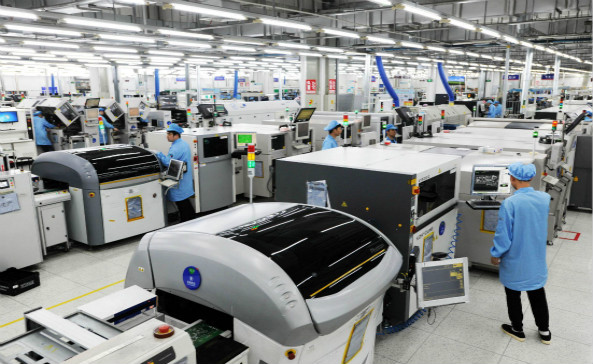
In most professional situations, treating PCB procurement as a race to the bottom price guarantees product failure. Hardware is unforgiving. If you are serious about launching a commercial electronic product in Bangladesh or globally, you need a partner, not just a vendor. Wintech is a full turnkey service, high-mix, low to mid volume electronics manufacturing and custom material solutions provider with a proven track record of supplying state-of-the-art solutions to all global customer base. tailor made solutions for our customers: high level, high difficult, large size, complex structure, high precision PCB Layout, PCBAs and turnkey complete products full systems electronic contract manufacturing solutions, prototyping, low to mid volume, mass production, many of world's top 500 enterprises have cooperated with us for many years, Wintech is worth relying on. Partnering with a leader among the top Chinese electronic companies ensures your hardware functions flawlessly out of the box.
The Bottom Line
The true pcb board price in Bangladesh is defined by your project's ambition. While local markets provide excellent, cheap raw materials for student projects and simple single-layer boards, the commercial reality of modern electronics demands rigorous global standards. Whether you are learning how to create PCB board step by step or managing procurement for an industrial IoT firm, upgrading to a full turnkey global provider eliminates supply chain volatility, guarantees component authenticity, and ensures your product can survive in the real world.
Frequently Asked Questions
Local manufacturers face high import duties on raw materials like specialized FR4 laminates and industrial chemicals. Furthermore, they lack the massive economies of scale and automated machinery that global tier-one facilities possess. For anything beyond a simple 2-layer board, the capital depreciation on the required machinery makes local low-volume production economically unviable.
A Veroboard (or stripboard) is a generic, pre-drilled prototyping board with parallel strips of copper. You manually solder wires to connect components. A custom PCB is manufactured from your specific Gerber design files, where machines chemically etch your exact circuit traces into the copper and apply a protective solder mask, resulting in a reliable, mass-producible commercial product.
You can drastically reduce costs by adhering to standard manufacturing parameters: keep your board to 2 layers if possible, use standard FR4 material, specify a minimum trace width of 6 to 8 mils, avoid blind/buried vias, opt for a standard HASL surface finish, and increase your order volume to distribute setup costs over more units.
Authoritative Industry References
- IPC (Association Connecting Electronics Industries) - Global trade association establishing standards for the design, assembly, and inspection of printed circuit boards.
- International Organization for Standardization (ISO) - Governing body for ISO 9001 and ISO 13485 quality management systems, essential for commercial PCB manufacturing facilities.
- Institute of Electrical and Electronics Engineers (IEEE) - World's largest technical professional organization providing peer-reviewed research on advanced PCB topologies and signal integrity.


