

The 6 Key PCB Manufacturing Countries
Let us confront a brutal reality in the modern electronics hardware sector: treating your printed circuit board supply chain as a geographically agnostic afterthought is a guaranteed path to catastrophic production failure. In 2026, the global electronics ecosystem is undergoing massive geopolitical and technological fracturing. The demand for High-Density Interconnect (HDI) boards, advanced IC substrates for artificial intelligence servers, and rigid-flex components for the automotive electrification boom has pushed fabrication tolerances to their absolute limits. You cannot simply upload Gerber files to a random offshore broker and expect flawless execution. If your procurement team does not deeply understand the specific regional strengths of the Key PCB Manufacturing Countries, you are actively hemorrhaging capital and exposing your product launches to severe delays.
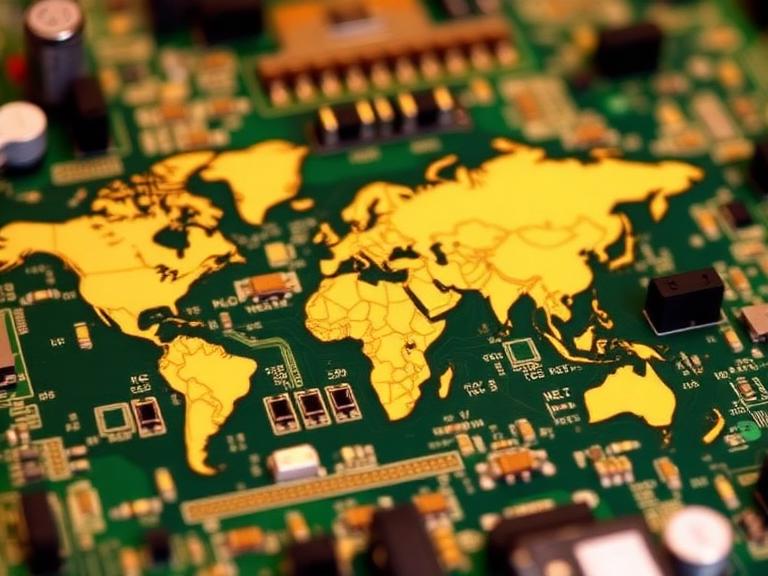
From our experience engineering advanced electronics across the globe, we know that manufacturing is highly clustered. The infrastructure required to chemically etch 15-micron copper traces, laser-drill microscopic microvias, and execute flawless surface mount technology (SMT) does not exist uniformly worldwide. It is heavily concentrated in specific regions that have spent decades optimizing their supply chains, labor forces, and trade agreements. We refuse to offer generic, neutral advice on this topic. Sourcing from the wrong country for your specific technology tier will result in unacceptable defect rates and blown budgets.
Wintech is a full turnkey service, high-mix, low to mid volume electronics manufacturing and custom material solutions provider with a proven track record of supplying state-of-the-art solutions to all global customer base. Tailor made solutions for our customers: high level, high difficult, large size, complex structure, high precision PCB Layout, PCBAs and turnkey complete products full systems electronic contract manufacturing solutions, prototyping, low to mid volume, mass production, many of world's top 500 enterprises have cooperated with us for many years, Wintech is worth relying on.
In this relentlessly practical, expert-led analysis, we will aggressively dissect the 6 Key PCB Manufacturing Countries dominating the market in 2026. We will expose exactly where you should be sourcing your raw fabrication, where you should be looking for high-volume assembly, and how to navigate the shifting geopolitical tariffs to secure a resilient, cost-effective supply chain.
Table of Contents
- 1. The Macro-Economic Shift in Global PCB Production
-
2. The 6 Key PCB Manufacturing Countries of 2026
- 2.1 China: The Undisputed Volume & Infrastructure Titan
- 2.2 Taiwan: The Advanced Packaging and HDI Epicenter
- 2.3 Japan: The High-Reliability & Specialty Materials Pioneer
- 2.4 South Korea: The Semiconductor Substrate Innovator
- 2.5 Vietnam: The Rising Star of Southeast Asia Assembly
- 2.6 United States: The Defense, Aerospace, and NPI Specialist
- 3. The Wintech Perspective: How to Navigate Global Sourcing
- 4. Summary Matrix: Country Comparison
- 5. Frequently Asked Questions (FAQs)
- 6. Authoritative Industry References
1. The Macro-Economic Shift in Global PCB Production
The global PCB market has surged past the USD 90 billion valuation mark in 2026, driven entirely by the explosive proliferation of 5G infrastructure, Internet of Things (IoT) sensors, and advanced driver-assistance systems (ADAS) in electric vehicles. However, the production of these boards is shockingly concentrated. The Asia-Pacific region controls upwards of 80% of global manufacturing capacity. This concentration is not an accident; it is the result of massive government subsidies, vertically integrated supply chains, and highly skilled engineering labor pools.
We recommend that every hardware firm conducts a rigorous pcb cost analysis 2026 before committing to a factory. The price of raw copper clad laminates (CCL), the local cost of electricity, and international freight tariffs drastically alter the final unit economics. Furthermore, the push for supply chain diversification—often referred to as the "China Plus One" strategy—is fundamentally redrawing the map of Key PCB Manufacturing Countries, pushing massive capital investments into Southeast Asia.
2. The 6 Key PCB Manufacturing Countries of 2026
2.1 China: The Undisputed Volume & Infrastructure Titan
Let us be unequivocally clear: China remains the undisputed epicenter of global PCB manufacturing, controlling over 50% of the world's production capacity. The sheer scale of industrial clusters located in the Pearl River Delta (Shenzhen, Dongguan) and the Yangtze River Delta (Kunshan) is impossible to replicate elsewhere. China's competitive advantage is not merely cheap labor—in fact, labor costs have risen significantly. Their true advantage is hyper-vertical integration.
If a factory in Shenzhen runs out of specialized solder mask or specific FR-4 dielectric materials, the supplier is literally a few miles down the road. This localized ecosystem allows Chinese manufacturers to execute rapid prototyping and massive volume scaling at speeds that cripple Western competitors. When you partner with elite Chinese factories, you are tapping into a network that understands every nuanced detail highlighted in our pcb components and functions guide. For standard rigid multilayers, consumer electronics, and high-volume HDI boards, China is mathematically the most efficient procurement destination on the planet.
2.2 Taiwan: The Advanced Packaging and HDI Epicenter
Taiwan operates in an elite tier of its own. While China dominates raw volume, Taiwanese companies represent the absolute vanguard of technological leadership. Many of the pcb fabrication manufacturers 2026 lists are completely dominated by Taiwanese giants like Zhen Ding Technology, Unimicron, and Tripod Technology.
Taiwan is the critical hub for Advanced IC Substrates, ABF (Ajinomoto Build-up Film) substrates, and high-layer-count server boards required for cloud computing and artificial intelligence data centers. If your product architecture demands extreme miniaturization, incredibly tight impedance control for high-frequency RF signals, or complex chiplet integration, Taiwan is the mandatory source. Their deep synergy with the world's largest semiconductor foundries ensures that their PCB substrate technology evolves in lockstep with next-generation silicon nodes.
2.3 Japan: The High-Reliability & Specialty Materials Pioneer
Japan has largely exited the low-margin, high-volume consumer PCB sector, gracefully conceding that territory to China and Southeast Asia. Instead, Japanese manufacturers have aggressively fortified their position in extreme high-reliability and specialty material sectors. When a circuit board failure means a satellite crashes or a surgical robotic arm malfunctions, Japanese engineering is requested.
Japanese firms excel in manufacturing advanced Flexible Printed Circuits (FPCs), heavy copper boards for power electronics, and substrates utilizing exotic low-loss materials like PTFE (Teflon) and ceramics. They prioritize quality control methodologies that border on the obsessive. From our experience, if you are designing life-critical medical devices or rigorous automotive electrification systems, specifying Japanese fabrication ensures a defect rate that approaches zero.
2.4 South Korea: The Semiconductor Substrate Innovator
South Korea’s position among the Key PCB Manufacturing Countries is inextricably linked to its dominance in the global memory chip and display panel markets. Companies like Samsung Electro-Mechanics and Daeduck Electronics focus fiercely on producing the ultra-complex rigid-flex boards and high-density IC packaging substrates that support OLED displays and high-bandwidth memory (HBM) modules.
South Korea is highly insular, often supporting its own massive domestic conglomerates, but its export capacity for high-end telecommunications infrastructure boards (specifically 5G and emerging 6G antenna substrates) is formidable. If your engineering team is finalizing schematics using a rigorous pcb design and layout guide aimed at advanced consumer flagships, South Korean manufacturers offer exceptional technological synergy.
2.5 Vietnam: The Rising Star of Southeast Asia Assembly
Vietnam is currently experiencing an industrial gold rush. Driven by global OEMs seeking tariff mitigation and supply chain diversification, Vietnam has rapidly emerged as a critical node for Printed Circuit Board Assembly (PCBA). While it still relies heavily on China for the bare bare boards (fabrication) and raw electronic components, the final surface mount technology (SMT) assembly is moving to Vietnam at a staggering pace.
Major electronics conglomerates are investing billions into Vietnamese industrial parks, capitalizing on a young, highly skilled, and cost-competitive labor force. If you are analyzing the pcb board assembly companies for mid-to-high volume consumer electronics, smart home devices, or telecommunications gear, Vietnam provides an incredibly lucrative alternative to traditional mainland assembly routes.
2.6 United States: The Defense, Aerospace, and NPI Specialist
The United States currently accounts for roughly 4% of global PCB production volume, a massive decline from decades past. However, this statistic masks its profound strategic importance. The U.S. is the undisputed leader in ITAR-compliant defense electronics, classified aerospace substrates, and hyper-rapid New Product Introduction (NPI).
You do not go to the U.S. to build ten million smartphone boards; you go to the U.S. to build twenty prototype boards for a next-generation stealth drone, and you need them delivered in 48 hours. Because of the strict intellectual property protections and government mandates for localized defense sourcing, American fabrication houses command massive premiums. If you are calculating a custom PCB cost 2025 projection for a military or highly classified medical prototype, expect the U.S. manufacturing base to charge exponentially more, but deliver unparalleled security and specialized engineering support.
3. The Wintech Perspective: How to Navigate Global Sourcing
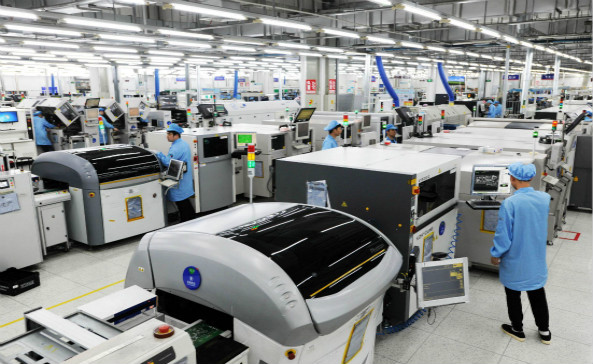
At Wintech, we operate at the intersection of these global dynamics. We understand that a successful hardware launch rarely relies on a single geographical location. A highly complex product might require the bare HDI substrate to be fabricated in Taiwan, the specialized RF components sourced from Japan, and the final high-mix, mid-volume PCBA integration managed through our expert facilities.
We adamantly recommend that hardware startups and enterprise OEMs stop viewing PCB manufacturing as a transactional purchase. It is a strategic partnership. If you are a young engineering team learning how to create PCB board step by step, you must design your schematics with global supply chain realities in mind. Specifying an exotic laminate material that is only available from a single factory in Japan will bottleneck your entire production run if that region experiences a supply shock. By partnering with a comprehensive turnkey solutions provider like Wintech, we absorb the geopolitical friction. We route your production to the most technologically appropriate and economically viable facility within the Key PCB Manufacturing Countries, ensuring your product scales without compromise.
4. Summary Matrix: Country Comparison
To assist your supply chain managers, we have synthesized the core competencies of the Key PCB Manufacturing Countries into an uncompromising reference matrix.
| Manufacturing Country | Global Market Share (Approx.) | Primary Technological Strength | Ideal Sourcing Profile |
|---|---|---|---|
| China | ~52% | Unmatched Volume, Complete Vertical Supply Chain | Mass production, Consumer Electronics, High-Volume HDI. |
| Taiwan | ~12% | Advanced IC Substrates, Server Boards, High-Layer HDI | AI Data Centers, Next-Gen Processors, 5G/6G Infrastructure. |
| Japan | ~8% | High-Reliability, Specialty Materials, FPC | Automotive Electrification, Medical Implants, Industrial Robotics. |
| South Korea | ~10% | Memory Substrates, OLED Drivers, Rigid-Flex | Flagship Smartphones, Advanced Displays, Telecommunications. |
| Vietnam | Emerging (~4%) | Cost-Competitive PCBA Assembly | "China Plus One" Assembly Operations, Consumer IoT. |
| United States | ~4% | ITAR Compliance, Aerospace, Rapid Prototyping (NPI) | Classified Defense, Medical Prototypes, Intellectual Property Security. |
5. Frequently Asked Questions (FAQs)
Why is the manufacturing of bare PCBs and the assembly (PCBA) often done in different countries?
From our experience, bare board fabrication is a highly chemically intensive process requiring massive wastewater treatment infrastructure and heavy capital expenditure on etching machines. Countries like China and Taiwan have perfectly optimized this infrastructure. Assembly (PCBA), however, is highly dependent on SMT machinery and labor arbitrage. Consequently, many companies fabricate the bare boards in China but ship them to Vietnam or Mexico for the final component assembly to bypass regional import tariffs on finished electronic goods.
Are trade tariffs impacting where I should manufacture my PCBs in 2026?
Absolutely. Geopolitical trade tensions have instituted severe tariffs on specific electronics imported directly into North American and European markets. This is the primary driver behind the explosive growth of Southeast Asia (Vietnam, Malaysia, Thailand) as assembly hubs. Procurement teams must actively calculate landed costs, including freight and tariffs, rather than just looking at the factory-gate unit price.
Can I source high-end aerospace PCBs from Asia, or must they be manufactured in the US/EU?
If the project involves classified military data, ITAR (International Traffic in Arms Regulations) strictly mandates that the boards must be manufactured within the United States using secure, vetted supply chains. However, for commercial aerospace or non-classified aviation projects, elite manufacturers in Japan, Taiwan, and specific certified facilities in China are more than capable of meeting the stringent AS9100 quality standards required for flight-grade hardware.
6. Authoritative Industry References
To ensure your procurement strategies are aligned with verified global market data, we strongly advise consulting the following authoritative electronics and manufacturing organizations:
- IPC - Association Connecting Electronics Industries: The premier global trade association dedicated to the competitive excellence and financial success of the international electronics industry, providing strict quality standards for PCB fabrication and assembly.
- Mordor Intelligence - Global Printed Circuit Board Market Analysis: Comprehensive, peer-reviewed economic data detailing the shifting regional production capacities, technological adoption rates, and forecasted market growth across the Asia-Pacific and Western sectors.


