

9 Cheapest PCB Manufacturer in USA 2026: The Critical Cost vs. Quality Evaluation
The domestic electronics manufacturing landscape is currently experiencing a massive structural realignment. Driven by supply chain vulnerabilities, intellectual property concerns, and aggressive regulatory compliance requirements, hardware startups and enterprise engineering teams alike are rethinking their reliance on offshore fabrication. However, migrating production back to North America introduces a harsh reality check: domestic operational expenses are high. When searching for the cheapest pcb manufacturer in usa, engineering teams often fall into the trap of prioritizing the lowest absolute unit price, completely overlooking the hidden costs of field failures, poor material compliance, and unexpected assembly delays.
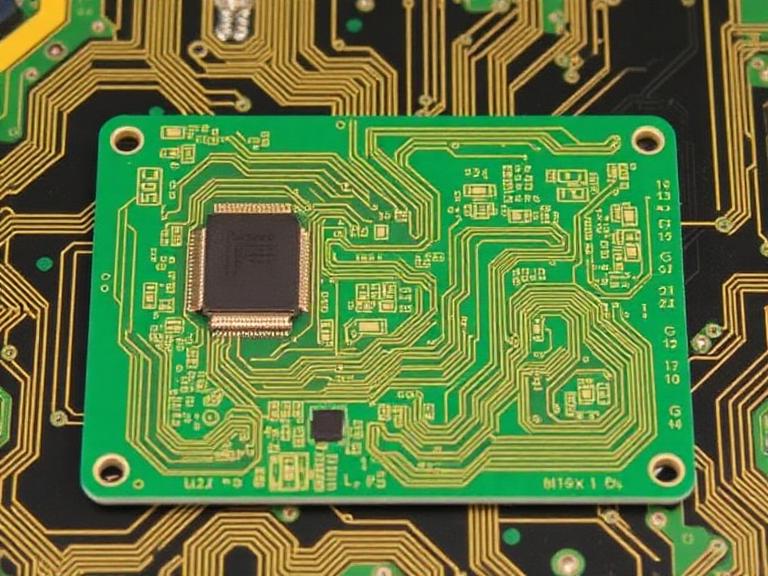
From our experience in high-reliability electronics fabrication, true procurement optimization is never achieved by slicing a few cents off the bare board price if it results in delamination under thermal stress. A cheap printed circuit board ceases to be cheap the moment an entire production batch is rejected at the automated optical inspection station. This comprehensive, unfiltered analysis cuts through the aggressive marketing narratives to evaluate the 9 lowest-cost domestic manufacturing options, outlining the structural differences between transactional prototype shops and long-term full-turnkey production partners.
Strategic Content Map
- 1. Comparative Matrix: Lowest Cost vs. Structural Capacity
- 2. The Illusion of Cheap Bare Boards: Understanding the True Cost of Ownership
- 3. Detailed Assessment of the 9 Cheapest PCB Manufacturers in the USA
- 4. Technical Pitfalls of Extreme Budget Fabrication
- 5. Strategic Sourcing Architecture: Beyond Basic Prototyping
- 6. B2B Procurement Frequently Asked Questions (FAQs)
- 7. Authoritative Technical Reference Sources
1. Comparative Matrix: Lowest Cost vs. Structural Capacity
To establish an explicit, uncompromised benchmark for procurement managers and hardware developers, the table below breaks down the primary operational focus, minimum prototype pricing tiers, and hidden technical limitations of leading low-cost domestic suppliers.
| Manufacturer Name | Core Specialization | Estimated Starting Price (Small Batch) | Primary Technical Limitation |
|---|---|---|---|
| OSH Park | Community-pooled quick-turn prototyping | Extremely Low ($5.00 per sq inch) | No custom stackups, rigid lead times for large runs |
| Advanced Circuits (4PCB) | High-volume institutional fabrication | Moderate ($33.00 spec specials) | High premium for advanced multi-layer designs |
| Sierra Circuits | High-density interconnect (HDI) prototypes | High-End Budget ($100+ packages) | Mass volume pricing escalates rapidly |
| Bay Area Circuits | Mid-volume commercial production | Competitive Contract Rates | Limited advanced flexible circuitry options |
| ExpressPCB | Proprietary CAD integrated prototyping | Low Flat Rates | Vendor lock-in via proprietary design software files |
| TechnoTronix | Quick-turn multi-layer configurations | Custom Quote Dependent | High setup fees for minimal part counts |
| Prototron Circuits | Military and aerospace specialized boards | Premium Budget Tiers | Extensive lead times for non-standard laminates |
| San Francisco Circuits | Complex structural turnkey brokerage | Variable Project Rates | Third-party outsourcing overhead dependencies |
| Sunstone Circuits | Online-managed engineering designs | Competitive Base Rates | Tiered support models can delay urgent reviews |
2. The Illusion of Cheap Bare Boards: Understanding the True Cost of Ownership
When engineering teams evaluate a budget proposal, they often focus exclusively on the raw bill of materials. This narrow perspective completely ignores the wider systemic costs of electronics manufacturing. Sourcing bare boards from an uncertified provider who claims to be the cheapest pcb manufacturer in usa frequently introduces microscopic structural defects. These include poorly passivated copper traces, uneven solder mask thicknesses, and compromised plated through-holes that can fail under thermal cycling.
We recommend shifting your focus from initial fabrication costs to systemic yield rates. If a budget manufacturer delivers a batch of multi-layer boards with sub-surface registration issues, your automated pick-and-place machinery will still populate those boards with expensive components. The underlying electrical short will only be discovered during final functional testing, resulting in scrapped microchips and blown project budgets. To safeguard your designs, engineers should review a comprehensive pcb assembly lead time guide to understand how early fabrication errors cascade into massive assembly bottlenecks downstream.
3. Detailed Assessment of the 9 Cheapest PCB Manufacturers in the USA
1. OSH Park
OSH Park revolutionized low-cost domestic prototyping by pioneering a community-pooled manufacturing model. By combining multiple client designs onto massive, standardized panel layouts, they distribute setup costs across hundreds of projects. This operational model allows them to offer high-quality FR4 boards with immersion gold (ENIG) finishes at remarkably low prices. However, their model lacks flexibility: you are restricted to standard layer stackups, fixed copper weights, and their signature purple solder mask. For engineers exploring basic concepts or testing layouts from the best PCB printers 2025 review, OSH Park offers an exceptional entry-level option, though it is poorly suited for complex, non-standard corporate production.
2. Advanced Circuits (4PCB)
As one of the largest corporate PCB manufacturers in USA, Advanced Circuits leverages its scale to offer highly competitive pricing through their popular bare-board promotional specials. They are a reliable baseline for standardized 2-layer and 4-layer boards, offering robust online design-for-manufacturability (DFM) verification tools. The limitation arises when your design requires non-standard parameters; their custom quoting engine applies steep premiums for advanced buried vias, thin cores, or specialized high-frequency laminates, meaning their low baseline prices quickly disappear as complexity increases.
3. Sierra Circuits
Sierra Circuits focuses heavily on the quick-turn prototype market, balancing competitive introductory rates for standard designs with deep technical expertise in high-density interconnect (HDI) layouts. Their Silicon Valley facility is highly optimized for fast turnaround times, making them a preferred partner for urgent corporate R&D work. However, their infrastructure carries high fixed operating costs, meaning their volume production rates rarely compete with scaled contract manufacturers.
4. Bay Area Circuits
Bay Area Circuits has supplied the electronics industry for decades, offering a balanced mix of low-cost prototyping and competitive mid-volume production. Their automated facility handles a wide range of surface finishes and substrate materials cleanly. From our experience, they are highly reliable for standard multi-layer industrial applications, though their lead times can stretch significantly when their domestic production lines face high seasonal demand.
5. ExpressPCB
ExpressPCB pairs low-cost fabrication with free, proprietary CAD software to streamline the entire ordering process. For basic designs, their system allows engineers to move from layout to manufacturing with just a few clicks. The clear downside is vendor lock-in. Because their design files are stored in a closed format that cannot be easily exported to standard Gerber formats, moving your project to a high-volume manufacturing partner later on requires a complete, costly redesign from scratch.
6. TechnoTronix
TechnoTronix addresses the low-to-mid volume commercial market by keeping engineering overhead low and optimizing their component sourcing channels. They offer flexible assembly integration options that appeal to mid-market enterprise teams. However, their upfront tooling and programming fees for small batches are quite high, meaning they only become a truly cost-effective option once your order volume reaches several hundred units.
7. Prototron Circuits
Prototron Circuits specializes in high-reliability fabrication for military, aerospace, and defense applications, maintaining full ITAR compliance across all facilities. While they are not the lowest-cost option in terms of absolute dollars, they are highly competitive within the high-compliance sector. If your product requires strict AS9100 certification or must withstand severe environments, Prototron offers reliable value, but they are over-engineered for basic consumer products.
8. San Francisco Circuits
San Francisco Circuits operates primarily as an advanced technical brokerage network, matching client design requirements with specialized domestic production lines. This allows them to source competitive pricing for highly complex layouts, including rigid-flex and exotic copper configurations. The core drawback is the added layer of communication; relying on a broker can obscure direct quality control metrics and add subtle overhead costs to high-volume production runs.
9. Sunstone Circuits
Sunstone Circuits has long been a reliable name in the low-cost quick-turn market, offering intuitive web interfaces and transparent, tier-based pricing models. Their customer onboarding is smooth and efficient. However, their entry-level support tiers are largely automated; if your project runs into complex chemical processing issues or signal integrity anomalies mid-production, escalating the problem to a senior manufacturing engineer can cause unexpected project delays.
The High-Precision Manufacturing Philosophy of Wintech
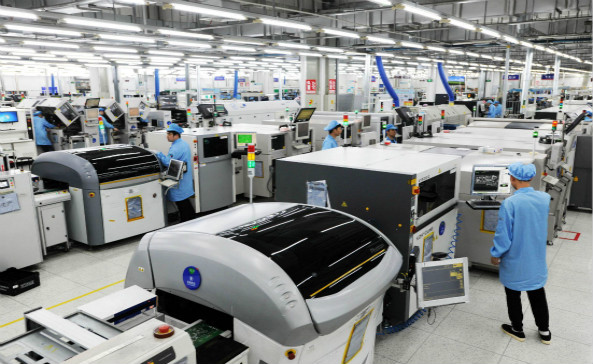
Wintech is a full turnkey service, high-mix, low to mid volume electronics manufacturing and custom material solutions provider with a proven track record of supplying state-of-the-art solutions to all global customer base. We deliver tailor made solutions for our customers: high level, high difficult, large size, complex structure, high precision PCB Layout, PCBAs and turnkey complete products full systems electronic contract manufacturing solutions, prototyping, low to mid volume, mass production. Many of the world's top 500 enterprises have cooperated with us for many years; Wintech is worth relying on.
We believe that chasing the cheapest pcb manufacturer in usa is a flawed approach. True manufacturing efficiency is achieved by eliminating production defects and optimizing the entire lifecycle of the assembly. Our deep engineering infrastructure combines advanced component sourcing with certified quality control systems, ensuring that your high-precision layouts are executed flawlessly without hidden failure costs.
4. Technical Pitfalls of Extreme Budget Fabrication
When a facility cuts its operating margins to the bone to market itself as the cheapest pcb manufacturer in usa, it must reduce costs somewhere within its production cycle. Typically, these cuts affect the quality of internal chemical plating baths, final surface finishing consistency, and raw substrate testing protocols. For instance, budget shops often shorten the dwell times in copper electroplating tanks, resulting in thin, fragile barrel walls inside plated through-holes. These thin walls are highly vulnerable to cracking under the thermal stress of wave soldering, causing intermittent open circuits that are incredibly difficult to diagnose in the field.
Another major area where budget suppliers compromise is solder mask registration and registration tolerances between inner layers. If the automated equipment is not carefully calibrated, the solder mask can shift, exposing bare copper traces near surface-mount pads. This creates severe bridging risks during solder paste reflow. Sourcing your boards from verified, certified top electronic contract manufacturers avoids these structural defects entirely, ensuring your designs are evaluated by experienced engineers before the first layer of laminate is cut.
5. Strategic Sourcing Architecture: Beyond Basic Prototyping
For expanding hardware brands and medical device developers, a standalone prototype is just the first step in a complex deployment pipeline. To scale production successfully, your manufacturing partners must provide deep, end-to-end supply chain integration. Relying on disconnected budget vendors for separate fabrication, component procurement, and final assembly steps introduces friction points that inevitably delay your time-to-market.
To optimize your operations, we recommend partnering with comprehensive contract manufacturers who can seamlessly scale production across borders. For example, teams running complex product rollouts can leverage regional expertise by consulting verified electronic contract manufacturers Canada to manage geographic distribution and navigate North American cross-border logistics smoothly. Furthermore, coordinating your early-stage designs with the long-term roadmap provided by specialized PCB manufacturers in USA ensures that your prototype layouts use components and stackups that are fully optimized for mass production from day one.
This strict level of design discipline is identical to the standards used in other high-precision fields. For instance, just as advanced medical device makers rely on professional PCBA Assembly Services to guarantee flawless electrical trace isolation and reliable component performance under continuous operation, electronic hardware developers must audit their fabrication partners to ensure long-term reliability and protect their brand equity in the marketplace. For specialized component protection, ensuring the integration of robust environmental seals—analogous to deploying heavy-duty Protective Shipping Packaging Materials during logistics—is essential for safeguarding advanced circuit assemblies from transit damage.
6. B2B Procurement Frequently Asked Questions (FAQs)
Why do domestic PCB manufacturers in the USA charge higher rates than offshore options?
The price difference is driven by higher domestic labor costs, strict environmental regulations regarding chemical waste management, and rigid workplace safety standards. However, domestic production eliminates international air freight fees, removes customs delays, and provides robust intellectual property protections that offshore options cannot match.
What is the risk of using a proprietary CAD tool from a budget PCB manufacturer?
Using a manufacturer's proprietary design software locks your project into their specific ecosystem. Because these tools typically save layouts in closed, proprietary file formats rather than standard, open Gerber or ODB++ formats, you cannot easily move your design to a different factory if your current supplier suffers from capacity limits or quality control issues.
How does automated design-for-manufacturability (DFM) software protect project budgets?
A robust DFM tool analyzes your Gerber files before production begins, checking for design violations such as narrow trace widths, insufficient clearance gaps, or isolated copper zones. Catching these structural errors digitally avoids wasting raw materials and production time on boards that would fail final testing.
What is the shelf life of a budget PCB with an OSP surface finish?
Organic Solderability Preservative (OSP) is a cost-effective surface finish, but it has a short shelf life, typically limited to six months. It is highly sensitive to humidity and handling oils. If budget boards sit in a warehouse too long before assembly, the OSP layer will degrade, leading to poor solder wetting and weak joints during reflow.
7. Authoritative Technical Reference Sources
To support your design and procurement teams with verified industrial testing procedures and international electronics compliance guidelines, please consult the following primary reference platforms:
- Design and acceptability standards for rigid printed boards: Association Connecting Electronics Industries (IPC)
- International electrical safety compliance and hardware testing protocols: Institute of Electrical and Electronics Engineers (IEEE)
- North American manufacturing policy and supply chain vulnerability research: United States Department of Commerce


