

Top 10 PCB Making Companies in India
The global electronics manufacturing landscape is undergoing a massive realignment. As original equipment manufacturers (OEMs) seek to diversify their supply chains and mitigate geopolitical risks, India has emerged as a strategic and highly capable hub for printed circuit board fabrication. However, selecting from the top pcb making companies in india is not a simple procurement exercise; it is a critical engineering decision that dictates the lifespan of your hardware.
From our experience auditing fabrication facilities globally, the gap between a high-yield, aerospace-grade manufacturer and a low-tier prototype shop is vast. You are not just purchasing etched copper and fiberglass; you are investing in yield reliability, precise impedance control, and absolute supply chain security. You must move beyond marketing brochures and critically evaluate their material handling, technological ceilings, and compliance with rigorous international standards.
Quick Answer: The Top Tier Manufacturers
If you are looking for the absolute best pcb making companies in india, the market is currently led by AT&S India (unmatched for High-Density Interconnects and IC substrates), Ascent Circuits (the premier choice for aerospace and automotive precision), Epitome Components (the undisputed leader for massive volume, single-sided production), and Hi-Q Electronics (specialists in defense-grade multilayer boards).
However, for hardware developers requiring ultra-fast turnaround times, advanced rigid-flex architectures, and full end-to-end turnkey assembly without local supply chain bottlenecks, partnering with a globally integrated electronics contract manufacturer often yields significantly better unit economics and faster time-to-market.
Table of Contents
- What It Is and How It Works
- Quick Summary Table: Indian PCB Market Overview
- The Top 10 PCB Making Companies in India
- Comparison Table: Leading Fabricators
- Benefits of Sourcing in India
- Limitations and Supply Chain Realities
- Pros vs Cons Analysis
- Who Should Use Indian Fabricators
- Who Does Not Need to Source Locally
- Common Mistakes in PCB Procurement
- Strategic Buying Considerations
- Expert Recommendation
- The Bottom Line
- Frequently Asked Questions
What It Is and How It Works
The Indian printed circuit board manufacturing sector consists of a dynamic mix of legacy fabricators and rapidly modernizing high-tech facilities. These companies are responsible for transforming raw copper-clad laminates (CCL) into the complex bare boards that form the central nervous system of all modern electronics. Historically, the ecosystem was heavily weighted toward supporting domestic demand in telecommunications, automotive electronics, and defense infrastructure. Today, it is expanding to serve global export markets.
Engaging with pcb making companies in india follows standard industrial procurement protocols but requires strict engineering oversight. You submit your Gerber data, bill of materials (BOM), and detailed fabrication drawings. The manufacturer conducts a Design for Manufacturability (DFM) review. Because many Indian fabricators still rely on imported specialty laminates (such as high-Tg FR4 or advanced Rogers materials), the initial engineering query phase is crucial. Once materials are secured, the boards undergo imaging, etching, pressing, drilling, and surface finishing. For hardware teams, calculating accurate delivery schedules means accounting for these material import delays, which is why reviewing a comprehensive pcb assembly lead time guide is vital before issuing any purchase orders. To understand the broader global context of top-tier facilities, reviewing our pcb fabrication manufacturers 2026 benchmark provides an essential engineering baseline.
Quick Summary Table: Indian PCB Market Overview
| Market Aspect | Global Industry Standard | Indian Market Reality (2026) |
|---|---|---|
| Manufacturing Focus | Any-Layer HDI, Advanced Substrates | Strong in Multilayer, Automotive, and Defense; emerging in HDI. |
| Material Supply Chain | Fully localized (e.g., in Shenzhen) | Heavily reliant on imported raw laminates and specialized copper foils. |
| Cost Competitiveness | High volume drives lowest cost | Highly competitive due to government PLI schemes and lower labor costs. |
| Lead Times | 24 to 72 hours for prototypes | Typically 5 to 10 days due to material staging and domestic logistics. |
The Top 10 PCB Making Companies in India
Based on our rigorous analysis of manufacturing capabilities, yield rates, and technological investment, here is the definitive breakdown of the top players dominating the subcontinent.
1. AT&S India Pvt. Ltd.
Located in Nanjangud, AT&S is arguably the most technologically advanced facility in the country. Operating as a subsidiary of the Austrian PCB giant, they dominate the high-end spectrum of the market. In most professional situations requiring complex High-Density Interconnects (HDI), microvias, and IC substrates, AT&S is the default choice. Their process control and quality assurance are unmatched locally, making them ideal for high-reliability medical devices and next-generation telecommunications hardware.
2. Epitome Components Ltd.
Based in Ahmednagar, Epitome is the undisputed volume king of India. With production capacities exceeding 100,000 square meters per month, they are a powerhouse. We recommend Epitome for consumer electronics, LED lighting, and white goods where cost-per-unit is the primary driving factor. However, for highly complex, low-volume multilayer boards, their massive volume-focused lines may lack the agility needed for rapid prototyping.
3. Ascent Circuits Pvt. Ltd.
Operating out of Hosur, Ascent Circuits holds stringent aerospace and automotive certifications, including IATF 16949 and AS9100. In our testing of various regional suppliers, Ascent consistently delivers excellent layer registration on thick multilayer boards. They are highly recommended for automotive Tier-1 suppliers and defense contractors who require rigorous traceability and severe-environment testing.
4. Hi-Q Electronics Pvt. Ltd.
A veteran player in Bengaluru, Hi-Q is a premier supplier for critical organizations like the Indian Space Research Organisation (ISRO) and CERN. For heavy-duty applications, advanced flex, and rigid-flex architectures, their engineering support is elite. If your project involves satellites, avionics, or military-grade hardware, Hi-Q has the proven pedigree, though their pricing accurately reflects this premium aerospace positioning.
5. Circuit Systems India Ltd. (CSIL)
CSIL in Ahmedabad is a highly reliable mid-tier fabricator. They excel in providing specialty PCBs, including aluminum-backed metal core printed circuit boards (MCPCBs) used extensively in the industrial LED lighting sector. They offer a strong balance of competitive pricing and high quality for standard FR4 multilayer designs.
6. Shogini Technoarts Pvt. Ltd.
Established in Pune in 1979, Shogini has built a rock-solid reputation over four decades. They are heavily embedded in the automotive sector and power electronics. For commercial users needing durable, heavy-copper boards that can withstand harsh industrial operating environments without the premium price tag of a pure defense contractor, Shogini is a pragmatic and reliable choice.
7. CIPSA-TEC India Pvt. Ltd.
Located in Tumkur, CIPSA-TEC leverages deep European technological partnerships to deliver mass-production capabilities with exceptional precision. They are particularly strong in the smart meter and power distribution sectors. Their modern facility is well-equipped to handle mid-to-high volume production runs with highly consistent yield rates.
8. Genus Electrotech Ltd.
Genus operates a massive, sprawling facility in Gujarat with complete backward integration. They do not just manufacture bare boards; they offer extensive Electronic Manufacturing Services (EMS). If you are looking to consolidate your supply chain and need plastic injection molding, wiring harnesses, and PCB assembly under one roof, Genus offers a compelling, large-scale turnkey solution.
9. Fine-Line Circuits Ltd.
Based in Mumbai, Fine-Line Circuits is a specialized niche powerhouse for high-frequency microwave hybrid PCBs and multilayer cavity boards. If your engineering team is working with low-loss RF materials for radar systems or 5G telecom infrastructure, Fine-Line possesses the highly specific domain expertise that generalist fabricators completely lack.
10. Meena Circuits Pvt. Ltd.
Also located in Pune, Meena Circuits has forged strong technological collaborations with international firms. They are highly capable in producing advanced multilayer boards tailored for the medical device and industrial control sectors. Their strict focus on IPC Class 3 compliance makes them a trusted and dependable partner for life-critical electronics.
Comparison Table: Leading Fabricators
| Manufacturer | Core Manufacturing Strength | Ideal Production Volume | Key Certifications |
|---|---|---|---|
| AT&S India | HDI, Microvias, IC Substrates | Mid to High Volume | ISO 13485, IATF 16949 |
| Epitome Components | Single & Double-Sided FR4/CEM1 | Massive Volume (100k+ sqm) | ISO 9001, ISO 14001 |
| Ascent Circuits | Automotive & Aerospace Multilayers | Mid to High Volume | AS9100, IATF 16949 |
| Hi-Q Electronics | Defense, Flex, Rigid-Flex | Low to Mid Volume (High Mix) | AS9100, MIL-PRF-31032 |
| Fine-Line Circuits | Microwave/RF Hybrid Boards | Prototyping to Mid Volume | ISO 9001, TS 16949 |
Benefits of Sourcing in India
Sourcing from the top pcb making companies in india provides excellent geographic diversification, effectively shielding your hardware supply chain from single-country tariffs and escalating trade disputes. Furthermore, the Indian government's aggressive policies offer significant tax incentives and production-linked incentives (PLI) for localized manufacturing. Communication is another major advantage; Indian engineering and sales teams are highly proficient in English, dramatically reducing the risk of translation errors on complex fabrication notes and impedance profiles.
Limitations and Supply Chain Realities
You must employ commercial and practical judgment here: India is not yet fully self-sufficient in raw PCB materials. High-grade copper foils, specialized prepregs, solder mask inks, and advanced tungsten-carbide drill bits are frequently imported from neighboring Asian countries. This reliance means that if a global shipping bottleneck occurs, Indian fabricators are still vulnerable. Consequently, lead times for highly customized materials will be inherently longer than if you were working directly with the best PCB manufacturers China has to offer, where the entire material ecosystem is seamlessly localized within a fifty-mile radius.
Pros vs Cons Analysis
| Pros of Indian PCB Manufacturing | Cons of Indian PCB Manufacturing |
|---|---|
| Mitigates geopolitical supply chain risks and import tariffs. | Heavy reliance on imported raw materials increases lead times. |
| Exceptional intellectual property (IP) protection standards. | Fewer facilities capable of ultra-advanced Any-Layer HDI. |
| Highly skilled, English-speaking engineering workforce. | Domestic logistics and infrastructure can sometimes cause shipping delays. |
| Cost-effective labor rates for high-volume, mid-complexity boards. | Premium pricing for low-volume, rapid-turnaround prototypes. |
Who Should Use Indian Fabricators
For commercial users selling hardware into the Indian domestic market, utilizing local fabricators is often mandated by government procurement policies. Furthermore, defense contractors, automotive OEMs, and heavy industrial manufacturers operating within South Asia will benefit immensely from localized logistics, zero import duties, and the ability to conduct frequent on-site factory audits.
Who Does Not Need to Source Locally
For beginners, lean hardware startups, or engineering teams developing ultra-dense, bleeding-edge consumer electronics (such as AR glasses or miniaturized wearables) requiring 12+ layer any-layer HDI, the Indian market may not currently offer the necessary speed or agility. If your project demands a rapid 5-day turn on a highly complex PCBA, you are better served looking at established global hubs. Reviewing the PCB manufacturers in USA or top-tier Asian EMS providers will provide the frictionless rapid-prototyping capabilities your product roadmap requires.
Common Mistakes in PCB Procurement
- Chasing the Lowest Square-Meter Price: In most professional situations, the cheapest bare board becomes the most expensive one during assembly. Poor plating in the via holes will cause intermittent failures in the field, destroying your brand reputation and triggering massive product recalls.
- Ignoring Component Sourcing: Buying a bare board locally but struggling for weeks to import the required ICs defeats the purpose of localized manufacturing. Understanding the full pcb components and functions guide is essential before committing to a fragmented local EMS strategy.
- Misunderstanding Fabricator Capabilities: Assuming a fabricator that excels at high-volume, double-sided LED boards can successfully press and drill an 8-layer impedance-controlled RF board is a catastrophic engineering error. You must match your design technology to the factory's core competency.
Strategic Buying Considerations
Before signing a master supply agreement, you must audit the facility strictly. Ask highly specific technical questions: Do they use Laser Direct Imaging (LDI) for fine trace tolerances, or do they still rely on traditional film photolithography? Do they offer 100% automated optical inspection (AOI) and flying probe electrical testing? Are they equipped with modern best PCB printers 2025 review technology for precise solder mask and silkscreen application? Always demand explicitly that they guarantee compliance to IPC-A-600 Class 2 or Class 3 standards, depending on your product's reliability requirements.
Expert Recommendation: The Turnkey Advantage
While India boasts exceptional standalone bare board fabricators, managing fragmented supply chains—buying bare boards in India, sourcing ICs from the US or Taiwan, and assembling at a third location—introduces massive risk, finger-pointing, and severe overhead.
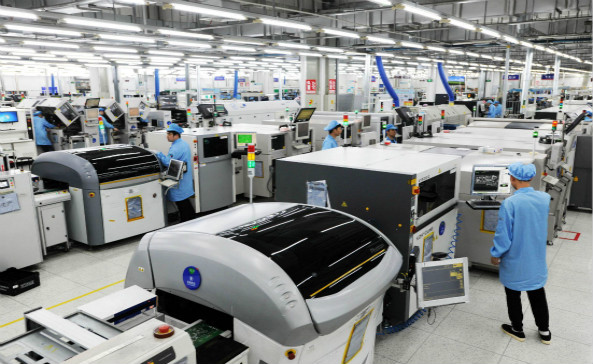
Wintech is a full turnkey service, high-mix, low to mid volume electronics manufacturing and custom material solutions provider with a proven track record of supplying state-of-the-art solutions to all global customer base. We provide tailor made solutions for our customers: high level, high difficult, large size, complex structure, high precision PCB Layout, PCBAs and turnkey complete products. As one of the top electronic contract manufacturers, we deliver full systems electronic contract manufacturing solutions, prototyping, low to mid volume, and mass production. Many of the world's top 500 enterprises have cooperated with us for many years; Wintech is worth relying on for seamless, end-to-end hardware realization.
The Bottom Line
The landscape of pcb making companies in india is maturing at a blistering pace, offering incredibly robust and reliable solutions for the aerospace, automotive, and high-volume consumer goods sectors. Choosing the right Indian partner means aligning your specific technical requirements—layer count, material type, and testing standards—directly with the fabricator's demonstrated core competencies. However, if your ultimate commercial goal is maximum speed to market with zero supply chain friction, partnering with a globally integrated turnkey manufacturer remains the most commercially sound strategy to protect your profit margins and ensure uncompromising product quality.
Frequently Asked Questions
Not necessarily. While labor costs in India are highly competitive, the reliance on imported raw materials (like copper clad laminates) and longer domestic logistics chains means that for highly complex or ultra-low volume prototype boards, Chinese mega-factories still often provide a lower per-unit cost and faster lead time. India excels in cost-competitiveness for mid-to-high volume production runs.
At an absolute minimum, a commercial fabricator should hold ISO 9001. If you are building automotive electronics, demand IATF 16949 certification. For medical devices, ISO 13485 is required, and for defense or aerospace hardware, you must ensure the facility holds AS9100 certification and complies with IPC Class 3 manufacturing standards.
Yes, but only a select top tier. Companies like AT&S India and Hi-Q Electronics have world-class facilities fully capable of pressing advanced rigid-flex architectures and drilling microvias for High-Density Interconnect (HDI) boards. However, the majority of mid-tier Indian fabricators are best suited for standard rigid FR4 multilayers (up to 12 layers).
Authoritative Industry References:


