

7 Best Budget PCBs in Europe for 2026: An Expert Sourcing Guide
Let us confront an uncomfortable reality in hardware engineering: sourcing reliable electronics manufacturing without draining your R&D budget is a brutal balancing act. European engineers and hardware startups are constantly caught between the exorbitant premium of domestic prototyping facilities and the unpredictable quality control of ultra-cheap offshore brokers. In 2026, finding legitimate budget PCBs in Europe requires a ruthless evaluation of capabilities, tooling costs, material specs, and supply chain logistics. You cannot afford to accept substandard FR4 material or poorly registered solder masks simply to save a few euros on your initial prototype.
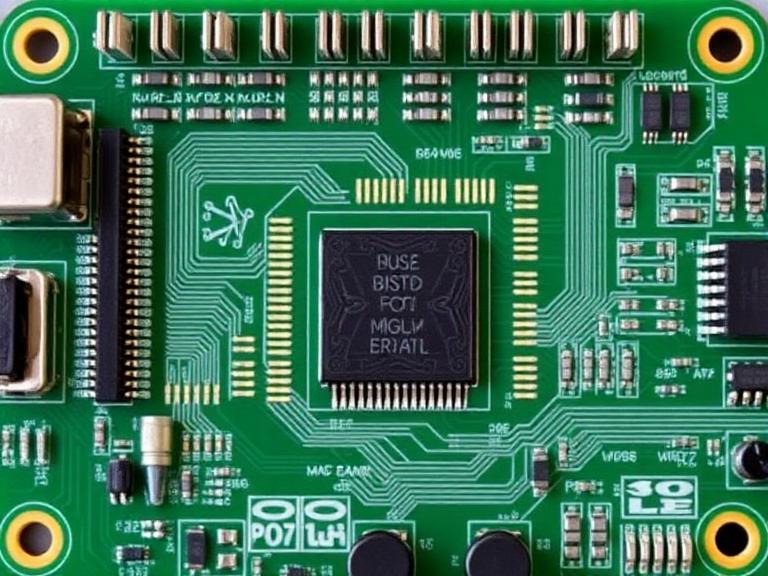
From our experience navigating global electronic supply chains, we know exactly what separates a functional board from a costly failure. Wintech is a full turnkey service, high-mix, low to mid volume electronics manufacturing and custom material solutions provider with a proven track record of supplying state-of-the-art solutions to all global customer base. We provide tailor made solutions for our customers: high level, high difficult, large size, complex structure, high precision PCB Layout, PCBAs and turnkey complete products full systems electronic contract manufacturing solutions, prototyping, low to mid volume, mass production, many of world's top 500 enterprises have cooperated with us for many years, Wintech is worth relying on. We bring this uncompromising standard to our evaluation of the European market.
We recommend abandoning loyalty to legacy distributors who merely act as middlemen and mark up prices. Instead, you must seek out actual fabricators and verified pooling services that leverage massive order aggregation to drive down your unit costs. In this authoritative guide, we will brutally dissect the top seven providers for budget PCBs in Europe, analyzing their bare board parameters, surface finishes, DFM (Design for Manufacturing) capabilities, and hidden shipping costs so you can scale your 2026 hardware projects intelligently.
Table of Contents
- 1. The Economics of Budget PCBs in Europe: Why Pooling Works
- 2. The Top 7 Manufacturers for Budget PCBs in Europe
- 3. Designing for Cost: Software and Assembly Considerations
- 4. The Strategic Debate: Local European Sourcing vs. Offshore Giants
- 5. Summary Comparison Matrix
- 6. Frequently Asked Questions (FAQs)
- 7. Authoritative Industry References
1. The Economics of Budget PCBs in Europe: Why Pooling Works
Before we rank the fabricators, you must understand how pricing is artificially inflated. Traditional board houses charge massive non-recurring engineering (NRE) tooling fees. If you order a single prototype, you are paying for the entire setup of the photoplotting, CNC drilling files, and chemical baths. The modern solution that enables true budget PCBs in Europe is "order pooling."
By mathematically nesting dozens of different customer designs onto a single massive production panel (typically 18x24 inches), progressive manufacturers amortize the setup costs across multiple clients. However, this restricts your design parameters. To qualify for these low-cost pooling tiers, you must adhere to standard stack-ups (usually 2 or 4 layers), standard FR4 material (TG150), standard copper weight (1oz / 35µm), and a default green solder mask with white silkscreen. The moment you demand a specialized Rogers substrate, 3-ounce heavy copper, or blind/buried vias, you break the pool parameters and your costs skyrocket. When we evaluate the best sources for budget PCBs in Europe, we strictly analyze the boundaries of their standard pooling capabilities.
2. The Top 7 Manufacturers for Budget PCBs in Europe
We have rigorously audited the market to identify the absolute best partners for your 2026 projects. These companies represent the apex of cost-to-performance ratios for European hardware developers.
2.1 Eurocircuits (The Local Benchmark)
Eurocircuits remains an absolute powerhouse within the European continent. Manufacturing directly out of Germany and Hungary, they specialize in prototype and small-batch production. We respect their uncompromising approach to virtual manufacturing; their online visualizer and DRC (Design Rule Check) tools are arguably the best in the industry, preventing costly manufacturing mistakes before you ever swipe a credit card. While they may not be the absolute cheapest on a pure per-board basis, their "STANDARD pool" service offers up to 16 layers and 100µm track/gap tolerances with lead-free finishes included. When you factor in the elimination of import duties and extreme shipping speed, Eurocircuits is a primary contender for budget PCBs in Europe.
2.2 AISLER (The Agile Innovator)
Based in the Netherlands and Germany, AISLER has disrupted the European prototyping scene by aggressively targeting the maker, academic, and startup demographics. They offer "Beautiful Boards" starting at exceptionally low price points (often around €12.20) with free worldwide shipping. Their integration with modern EDA tools is flawless. We recommend AISLER for rapid, early-stage iterative prototyping. Their "Amazing Assembly" service is also highly competent, allowing engineers to receive fully populated boards in under a week, making them an aggressive player in the market for budget PCBs in Europe.
2.3 Multi-Circuit Boards (Multi-CB)
Multi-CB is a heavyweight German manufacturer that bridges the gap between low-cost prototypes and high-tech parameters. What separates Multi-CB from standard budget brokers is their baseline inclusions: 0.1mm track/space, 0.2mm drill holes, and chemical gold (ENIG) surface finishes are frequently included in their base pricing for multilayer boards. They aggressively pass the savings of their pooling logistics onto the consumer. If you require rigid-flex, high-frequency materials, or metal core PCBs (IMS) without suffering catastrophic price hikes, Multi-CB is a formidable choice.
2.4 myProto (The Turnkey Assembly Specialist)
Headquartered in Belgium, myProto was explicitly built "by engineers for engineers." While their bare board prices are competitive, their true value proposition lies in fast, reliable prototype PCB assembly. They offer deep integration with global component distributors, allowing you to instantly source hard-to-find ICs directly through their platform. Furthermore, their strict adherence to traceability ensures that every component on your budget PCBs in Europe is verified and ESD-protected, which is a rare luxury in the low-cost tier.
2.5 Conrad PCB Service (The Established Distributor)
Many engineers overlook Conrad, assuming they are merely a retail distributor of consumer electronics. However, their dedicated PCB service leverages massive European infrastructure to offer excellent order pooling. They provide FR-4 RoHS-compliant standard pools, RF pools using Isola and Rogers materials, and Semi-Flex options. Because they operate without minimum order quantities (MOQs) and avoid initial tooling costs, Conrad is a highly stable, financially secure partner for sourcing budget PCBs in Europe.
2.6 Pure PCB (The Custom Volume Leader)
Operating out of the UK, Pure PCB acts as an aggressive distributor and manufacturer that accepts everything from single-off prototypes to full-scale manufacturing volumes. They provide an excellent off-ramp for companies transitioning from prototype to production. We favor Pure PCB when a project demands specialized substrates—such as RF, HDI, or heavy copper—but still requires the aggressive pricing structures typically reserved for basic FR4 boards.
2.7 Wintech (The Global Turnkey Alternative)
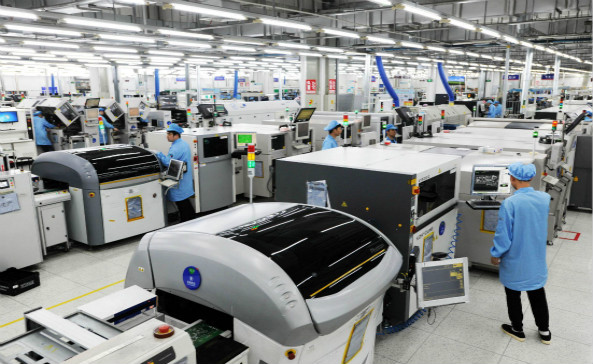
While local European manufacturers excel at rapid prototyping, they frequently hit an economic wall when you attempt to scale to 500 or 5,000 units, or when your design requires high-density interconnects (HDI) with 3-mil traces. This is precisely where Wintech dominates. As a premier global provider, we engineer tailor-made solutions for highly complex structures that European pooling services simply reject. If your search for budget PCBs in Europe is constrained by local limitations, leveraging our high-mix, low-to-mid volume manufacturing facilities provides the ultimate hybrid solution: European engineering standards combined with uncompromising global scale.
3. Designing for Cost: Software and Assembly Considerations
Procuring budget PCBs in Europe is heavily dependent on your initial CAD layout. If you over-engineer your board, no manufacturer can save you from high costs. You must utilize modern, DRC-compliant software capable of outputting clean Gerber RS-274X or ODB++ files. If you are operating on a strict budget, we highly recommend reviewing the free PCB design software tools available to modern engineers, which perfectly bridge the gap between amateur layouts and professional manufacturing requirements.
Furthermore, if you intend to assemble these budget boards in-house to save capital, your pad designs must reflect your hand-soldering capabilities. Do not specify 0201 passive components or BGA (Ball Grid Array) chips if you lack an infrared reflow oven. For practical assembly techniques, consult a rigorous pcb soldering steps guide to ensure your low-cost boards are not destroyed by thermal shock during manual assembly.
4. The Strategic Debate: Local European Sourcing vs. Offshore Giants
We must address the elephant in the room: Asian manufacturing. The reality is that the absolute lowest prices globally are found overseas. When comparing local European pooling services against the top PCB manufacturers in China, you will notice a stark price divergence. Offshore facilities benefit from massive government subsidies, raw material proximity, and extreme economies of scale.
However, the definition of "budget" must include the cost of time and logistical friction. Sourcing from pcb board makers China entails customs clearance, VAT import duties, and transit times that can stretch from days to weeks unless you pay exorbitant DHL airfreight premiums. For early-stage iterations where you need a board on your desk in 48 hours to test a circuit, local European suppliers are superior. Yet, when transitioning to volume, examining the capabilities of the top Chinese electronic companies or the precision of the top Japanese electronics companies becomes a fiduciary duty.
Ultimately, true professional hardware scaling requires an agile partner. We strongly advise partnering with elite electronic manufacturing services companies who can hybridize the process: prototyping locally to validate the schematic, and seamlessly porting the verified Gerber files to an offshore facility for high-yield, low-cost mass production.
5. Summary Comparison Matrix
To ruthlessly streamline your procurement strategy, we have synthesized the core advantages of the top providers of budget PCBs in Europe into an actionable matrix.
| Manufacturer | Headquarters | Core Advantage | Optimal Use Case |
|---|---|---|---|
| Eurocircuits | Belgium / Germany | Exceptional virtual DFM tools | Complex European prototypes requiring Right-First-Time guarantees. |
| AISLER | Netherlands / Germany | Ultra-low entry price & free shipping | Agile startups and rapid hardware iterations. |
| Multi-CB | Germany | High-tech parameters in standard pools | Projects demanding ENIG finishes and 0.1mm traces on a budget. |
| myProto | Belgium | Turnkey component sourcing & assembly | Engineers needing fully assembled boards without BOM headaches. |
| Conrad PCB | Germany | No MOQs, massive distribution network | Reliable, low-volume standard FR4 boards. |
| Pure PCB | United Kingdom | Scalability to volume | Transitioning from European prototypes to global scale. |
| Wintech | Global | High-Mix, Complex Structures, Mass Scale | When European pooling limits are exceeded by advanced design needs. |
6. Frequently Asked Questions (FAQs)
Why are blind and buried vias so expensive compared to standard through-holes?
From our manufacturing experience, standard through-hole vias are drilled once after all layers are laminated together. Blind and buried vias require sequential lamination. The inner layers must be drilled, plated, and etched before being pressed with the outer layers, which are then drilled again. This dramatically increases time on the CNC machines and chemical lines, completely breaking the economic model of budget PCBs in Europe.
Does choosing HASL instead of ENIG really save money?
Yes. Hot Air Solder Leveling (HASL) uses inexpensive tin-lead or lead-free alloys blown across the board. Electroless Nickel Immersion Gold (ENIG) requires precious metals and a highly complex chemical displacement process. For basic budget PCBs in Europe, HASL is perfectly adequate for through-hole and standard SMD components. However, we mandate ENIG if you are placing fine-pitch QFNs or BGAs, as HASL cannot provide a perfectly flat coplanar surface.
How does panelization reduce my overall assembly cost?
By arranging multiple identical PCBs into a single large array (panel) held together by V-scores or mouse bites, the pick-and-place machines in the SMT (Surface Mount Technology) line can populate dozens of boards in a single pass without stopping to reload the conveyor. This drastically cuts machine setup time, which is the primary driver of assembly costs.
7. Authoritative Industry References
To ensure your designs adhere to the highest global reliability standards before sending them to a manufacturer of budget PCBs in Europe, we strictly recommend consulting the following authoritative bodies:
- IPC (Association Connecting Electronics Industries): The absolute global standard for PCB design, material specifications, and acceptability (IPC-A-600), ensuring your budget boards meet uncompromising safety and structural metrics.
- IEEE Xplore Digital Library: The premier academic and engineering database providing peer-reviewed research on advanced dielectric materials, thermal management in FR4 substrates, and high-frequency signal integrity.
- Evertiq: A leading daily news network dedicated exclusively to the European electronics manufacturing and global supply chain sector, providing critical intelligence on silicon shortages and EMS facility expansions.


